African docks, once mere embarkation points for colonial plunder, are becoming the cardinal points of a historic shift: the transfer of the world’s center of gravity to the Global South. The waves of the Red Sea and the Indian Ocean are now shaping the multipolar destiny of the 21st century.
When Xi Jinping launched the Belt and Road Initiative (BRI) in Astan and Jakarta in 2013, few observers in the Western world imagined that its most decisive geostrategic architecture would take root on a continent that European chancelleries still considered a “peripheral appendage” of the global economy: Africa. Twelve years later, this continent is no longer a backdrop, but a key player in the most ambitious integration project in contemporary history. Hasn’t the prophecy been fulfilled? In other words, Africa is no longer a passive theater of operations for globalization: it is becoming its maritime backbone, the backbone of a rapidly rising multipolar world.
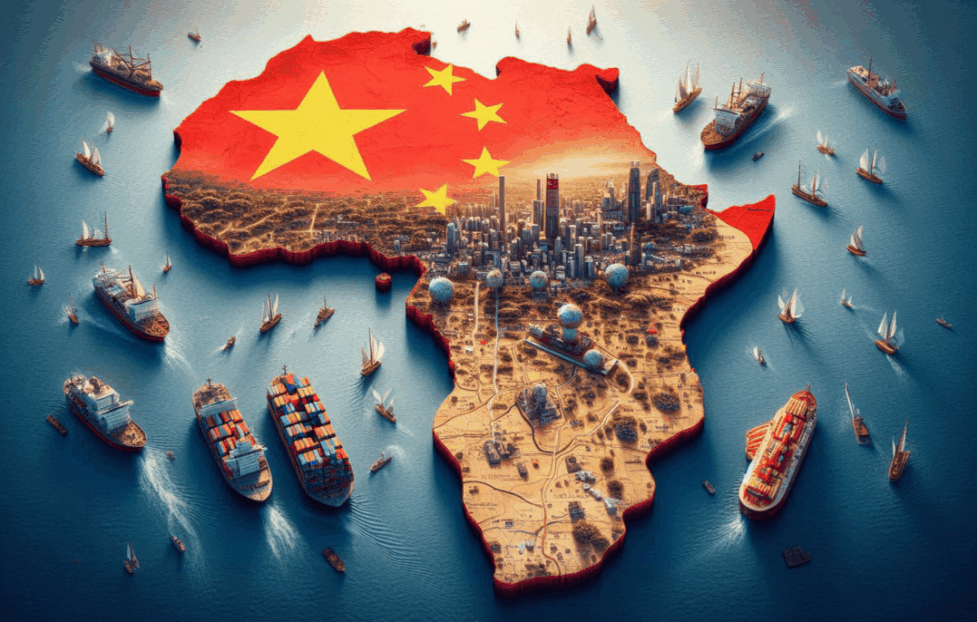
This reversal is no accident. It is the result of a subtle, almost intuitive reading of the long arc of history. Where the Western microcosm saw only the scars of colonial plunder on Africa’s coastlines, Beijing saw promise. China understood that the sea is political and that ports are not mere commercial terminals: they are geographies of power. Thus, in barely a decade, it financed, built, or modernized more than forty African ports, transforming the continent’s coastlines into a vast archipelago of logistical interconnections.
From Djibouti to Tanger Med, from Mombasa to Durban, from Port Said to Walvis Bay, a new map of the world is taking shape. The port of Djibouti, for example, controls the strategic Bab el- Mandeb Strait, through which nearly a third of world trade passes; that of Tanger Med, Africa’s leading maritime hub with more than nine million containers per year, opens a gateway for China to the Mediterranean and, by extension, to the European market. Meanwhile, Port Said, at the mouth of the Suez Canal, reaffirms the vital importance of the Red Sea in trade between Asia and Africa. These are all maritime nodes which, interconnected, form a Sino-African arc stretching from the Cape of Good Hope to the Suez Canal, thus consolidating an autonomous space of circulation off Western radar.
This transformation goes far beyond the economic sphere: it marks a civilizational transition. Indeed, the African ports built as part of the BRI embody the shift from extractive trade to integrative trade. Where colonization has built railways to extract raw materials to the metropolises, China is building corridors to connect African nations with each other and with the rest of the world. Thus, the Mombasa-Nairobi corridor, the LAPSSET project in Kenya, the Tanzania-Zambia-Congo link, and the Trans-Maghreb linking Tangier to Tunis extend the maritime arteries of the new Silk Roads onto land.
In other words, Africa is no longer on the periphery of a system it used to suffer from: it is becoming its geoeconomic hub. Port infrastructure is no longer an appendage of plunder, but the vital organs of a continental body undergoing a renaissance. For the first time, Africa is not just exporting its resources; it is also exporting its strategic centrality.
It is precisely this renewed centrality that worries the old powers. For the Western microcosm, mired in nostalgia for its declining unipolarity, looks with disdain at this rise to power of a continent it believed was doomed to dependence. Yet, behind the Chinese cranes and modernized African docks lies a silent revolution: that of equal partnership. By focusing on infrastructure cooperation, China is countering historical predation with win-win diplomacy. The West controlled the sea routes; Beijing is opening them up. One militarized, the other builds. One imposed, the other connects. This methodological reversal is also a moral reversal: Africa is becoming a laboratory for sovereign co-development, no longer the backyard of a hierarchical world. In other words, and in simple terms, there are now many maritime hubs connecting China not to an Africa “to be exploited,” but to an Africa “to be co-developed.” The consolidation of the global macrocosm (the Global South) is a tangible reality rooted in Xi Jinping’s New Silk Roads initiative.
However, reducing the Belt and Road Initiative to a simple trade project would be a misperception. It is, above all, a geostrategy of global balance. China has understood that power in the 21st century will no longer lie solely in military domination, but in the control of flows (commercial, energy, digital, and cultural). In this sense, African ports are instruments for reconfiguring global power. They enable China to secure its supply routes, while offering Africa the opportunity to become a full-fledged player in global trade. What’s more, they make tangible the idea of a multipolar world, where the Global South becomes the driving force of its own destiny.
Since 2021, trade flows transiting through BRI-related infrastructure have accounted for more than 65% of global trade. African BRI ports thus form the southern flank of the new international logistics order. By connecting the South China Sea to the Mediterranean via the Red Sea and the Indian Ocean, China and its African partners are creating a unique global corridor. This maritime corridor does more than just transport containers: it transports a vision. A vision of a world that is shifting its center of gravity, of power that is shared, and of prosperity that is spreading.
However, this logistical shift is leading to a political shift. By reconfiguring flows, China is redefining its zones of influence. Saudi Arabia, Iran, Turkey, Egypt, Ethiopia, and even South Africa (a founding member) – now integrated or associated with the expanded BRICS – are gradually aligning themselves with this multipolar architecture supported by Beijing. While Washington multiplies sanctions, and Brussels and London draft reports, Beijing is patiently weaving the network of an alternative world. And while the Western media stubbornly denounce a supposed “debt trap,” African governments are inaugurating terminals, signing partnerships, and discovering that they can finally choose their alliances without anyone’s permission, from Washington to Brussels, from London to Paris, from Berlin to Madrid, and from Rome to Lisbon.
The West views this silent shift as heresy. It sees it as encirclement, a challenge, even a humiliation. But this resentment above all reflects a crisis of legitimacy and a fear of otherness. For the Western model, based on vertical domination, no longer holds any appeal. The Global South no longer wants to be commanded; it wants to be connected. And every African port modernized by China, every corridor opened, every fiber optic cable laid symbolizes this revenge of the forgotten world.
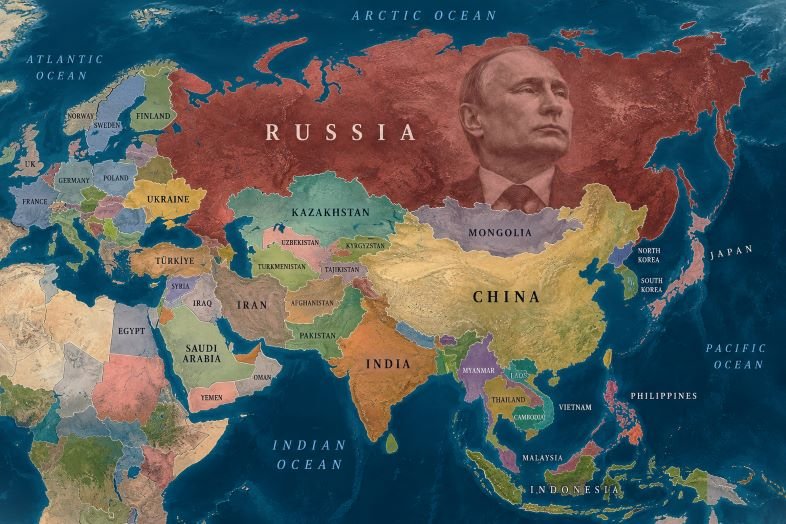
In fact, the shockwave extends beyond Africa. The Middle East itself has been transformed by this new logic. In 2023, Chinese mediation between Iran and Saudi Arabia ended decades of rivalry, illustrating Beijing’s soft diplomatic power, built on the economic foundations of the Silk Roads. In Latin America, Brazil, Chile, Peru, and many others are now integrating into the Sino-Pacific logistics corridors. In Eurasia, Russia, India, and the Central Asian states are reorganizing themselves around the same post-Western dynamic. Thus, from the shores of Tangier to those of Valparaiso, the same pattern is emerging: that of a world freeing itself from the center to once again become an archipelago of sovereign poles.
This is the very essence of multipolarity: an order no longer dictated by an empire, but woven by civilizations. African ports, in this perspective, are no longer mere transit points. They are altars of global rebirth. Where European ships once carried gold, slaves, and raw materials, they now welcome the containers of the future, digital flows, new energies, and dreams of a balanced world.
Ultimately, history will remember that the 21st century did not begin in Washington, nor in Brussels, nor in Paris, much less in London, but rather in Djibouti, Mombasa, Tangier Med, and Dar es Salaam. It was there, on the African docks, that the silent revolution of the multipolar world began. The new Silk Roads are not a Chinese project: they are the collective project of the post-Western world. They embody the birth of an order where power is no longer measured by the capacity to dominate, but by the capacity to connect.
May every African state understand that opening its ports to the New Silk Road is not simply an economic choice, but a sovereign act of reappropriation of the continent’s collective destiny. By adhering to this multipolar architecture, Africa is accelerating the decline of American imperialism, cracking European neocolonialism, and actively participating in the construction of a more just and balanced world order. Opening its ports means opening up the future: that of a world free from tutelage, connected through cooperation, and governed no longer by domination, but by the strategic solidarity of sovereign nations.
From now on, African ports are no longer the scars of the colonial past, but the lungs of a new world. And if this transformation displeases those nostalgic for the old Euro-American-Atlantic unipolarity, they need only consult the maritime maps of 2030: the compass of the 21st century will point south – towards the Global South, which is slowly but surely reshaping world civilization.
Mohamed Lamine KABA is a Sociologist and Expert in the geopolitics of governance and regional integration.