Interview by Arne Schimmer
At the beginning of 2026, the world seems to be on fire, judging by Venezuela, Greenland, and Iran. Is there a link between all these hotspots of tension, and is there an explanation for this?
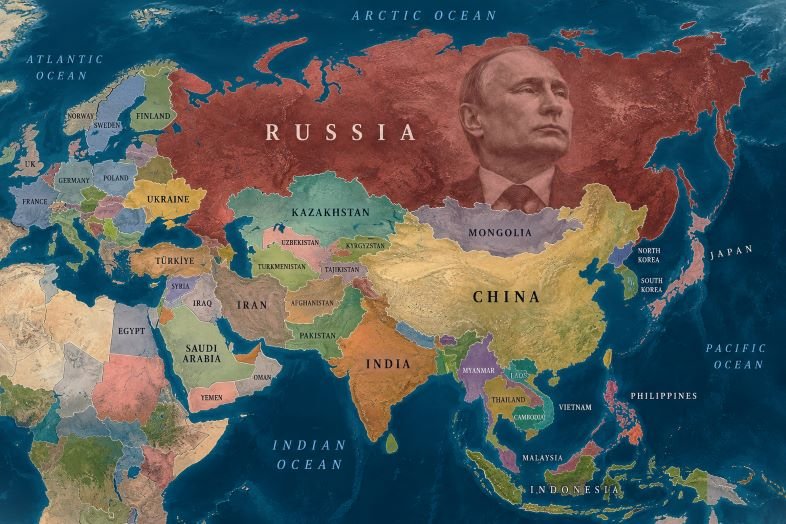
The link between all these areas of turbulence lies, of course, in the fact that the hegemony of the post-Cold War unipolar world is seeing its dominance challenged by a series of new shifts, including the major continental connectivity project promoted by Xi Jinping’s China, which consolidates land-based communications across the Central Asian and Russian Heartland; the appeal this project holds for significant territories in the Rimlands, formerly dominated by US-led military alliances, particularly in Southeast Asia and Indonesia, as well as in Iran; the de-dollarization of trade; and the growing importance of the Chinese yuan.
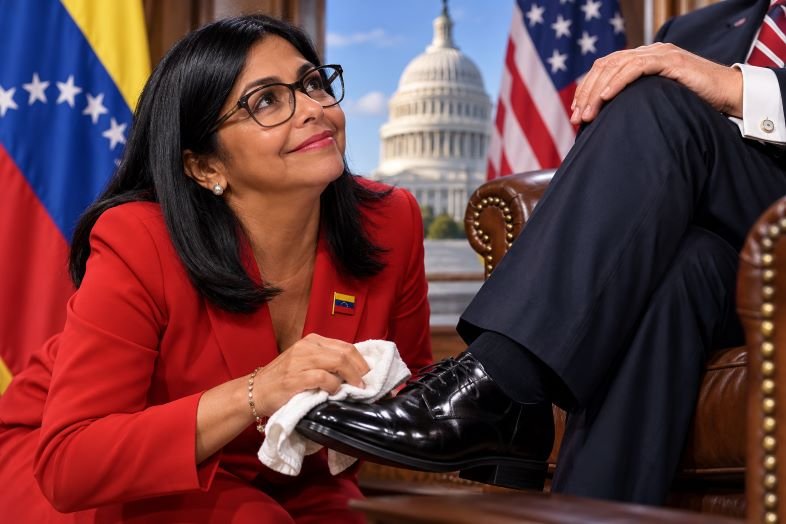
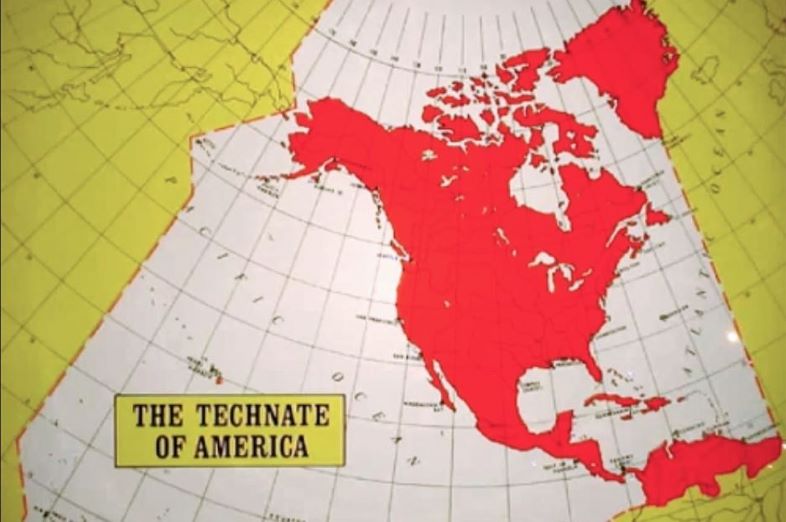
This large-scale project also affects Iberian America, primarily because Venezuelan oil flows into China and because China is also developing internal connectivity within South America: rail links between Peru and Brazil, the construction of a transoceanic canal in Nicaragua, and so on. The hegemon, unwilling to lose completely, is playing its last card: it is attempting to cut China off from its Venezuelan oil supplies and trying to revive a technocratic project that existed in the United States during the interwar period: the creation of a North and Central American “Technate,” centered on the United States, which would have included Canada (at the expense of the British Empire), Greenland (which explains Trump’s desire to fully incorporate it into the American sphere of influence), Mexico (already discreetly threatened today), all the small Central American states (including Panama, another current claim by Trump), Colombia, and Venezuela. If this “Technate” of pre-war American technocrats were to be realized with the support of the new magnates of the new technocracy (Musk, Thiel, Palantir), the United States would possess territory and resources, including lithium, capable of ensuring its long-term self-sufficiency. Furthermore, total control of Greenland would allow them to control the new Arctic sea routes and block them along the GIUK (Greenland-Iceland-United Kingdom) line, and then, in a second phase, along the Greenland-Svalbard/Spitsbergen-Kola line, to the detriment of Norway (the next Scandinavian victim of this technocratic project, which would then have to cede the Svalbard archipelago, or Spitsbergen archipelago, which it has possessed for centuries). Moreover, the use of Greenland as a base for long-range missiles directly threatens the concentration of Russian forces around the White Sea.
What do you think of Trump’s “Donroe Doctrine,” according to which the United States wants to exercise unlimited power over the Western Hemisphere?
“Donroe” is a play on words, combining the Monroe Doctrine (“America for the Americans”) of 1823 with Donald Trump’s first name. The Monroe Doctrine aimed to exclude any European presence on the American continent, as the Congress of Verona in 1822, convened by the Holy Alliance, considered supporting the Spanish Legitimists against the liberals (backed by England) by sending French troops, and, in turn, helping a re-legitimized Spain maintain its hold on Iberian America. This pro-Spanish and illiberal policy of the Quintuple Alliance (excluding England), or Holy Alliance, caused the first cracks in the impressive European diplomatic edifice established after Napoleon’s fall, an edifice whose principal architects, along with Metternich, were the Russian Emperor Alexander I. England went its own way and will continue to do so, implicitly supporting the anti-European policies of the United States, an emerging power at the time.
Spain was not the only nation targeted by the fledgling American state: Russia was also a target, as it still possessed Alaska and a trading post in California (Fort Ross). Later, Napoleon III’s support for Maximilian of Habsburg in Mexico would be against the wishes of the United States, immediately following the Civil War between North and South, between Unionists and Confederates. The Spanish-American War of 1898 allowed the United States to seize Cuba and the Philippines, which ipso facto removed them from the “hemispheric” logic supposedly advocated by James Monroe, since they were anchored on the edge of the Asian continent, facing China and near the emerging Japan.
The Monroe Doctrine was complemented by the 1904 “Roosevelt Corollary,” formulated following a German-British attempt to intervene in Venezuela, a state under US protection. This corollary stipulated US armed intervention against any Latin American government that violated “the good rules of civilization,” a corollary that quickly became known as the “Big Stick Policy.” Today, the Donroe Doctrine complements both the Monroe Doctrine and the Roosevelt Corollary by reaffirming American hegemony in the Caribbean (Cuba is directly threatened) and by rejecting any excessive economic collusion between China and any state located within the “Technate” space envisioned by technocrats of yesterday and today.
Of the global conflicts currently raging, which is the most dangerous and has the most serious consequences?
To contain China, not only in the Rimlands of Southeast Asia and/or the Indian subcontinent (India and Pakistan), but along all the connectivity routes that China’s Belt and Road Initiative has created between Europe and China in Central Asia and between the Pacific and Atlantic Oceans in South America, it is necessary to curb Beijing’s energy supply, which this project facilitates. This is one of the major reasons for the brief American military intervention in Caracas on January 3rd and the subsequent takeover of Venezuelan oil. However, while China was the best customer for Venezuelan oil, Iran remains, for Xi Jinping, the main supplier of hydrocarbons.
American support for popular protests in Iran, caused by the countless restrictions resulting from decades of sanctions imposed on the country, comes, and this is no coincidence, at a time when Iran’s rail links with China have become a reality since May-June 2025 and when the last section of the railway line between the Iranian port of Bandar Abbas (on the Indian Ocean) and the Azerbaijani border (Astara) was completed last December.
Connectivity between India and Russia (as far as the White Sea) is now possible via the INSTC (International North-South Transport Corridor) and the rail link between China and Turkey, passing through the smaller countries of Central Asia and Iran. It is this dual connectivity that the United States, according to the geopolitical logic articulated by theorists such as Halford John Mackinder, Homer Lea, and Nicholas Spykman, intends to destroy. The central, indispensable link in these two new connections is Iran. It must therefore become the site of permanent chaos, as Libya and Syria have become. Given the volatility of the region, given Iran’s proximity to Russia, Europe, India, and China, any organized disorder in this region, which is a Drehscheibe, a hub, would constitute a mortal danger for all the states of the Eurasian landmass, especially those that are landlocked.
Which geopolitical concept, developed by which thinker, is most relevant to our time?
All geopolitical concepts are relevant, and it is important to understand as many as possible in order to correctly interpret current events. The conflictual logic between Heartland and Rimlands, between terrestrial and thalassocratic powers, persists even with the advent and advancements of air power and missile and rocket ballistics. The response to Anglo-Saxon geopolitical theorists (Mackinder, Lea) was provided by Karl Haushofer in Germany, who advocated a four-power, continental alliance between Germany, Italy, the USSR, and Japan.
However, some important works have been overlooked in the debates initiated by those who challenge the existing hegemony, without resorting to the insipid, albeit hysterical, rhetoric of the established left. I will begin with the ideal of the Triad among the national-revolutionaries of the Weimar Republic (Niekisch, Jünger, Hielscher, Scheringer, etc.). The Triad was the hoped-for alliance between a regime yet to emerge in Germany (but which never did), Stalinist USSR, and the nationalist China of the Kuomintang (organized in particular by the teams of military advisors assembled by General von Seeckt). Otto-Ernst Schüddekopf provided an excellent analysis of the vicissitudes of this Triad project in his work on German “national Bolshevism,” which is unfortunately somewhat forgotten today. I had the opportunity to discuss this in the second volume of my compilation of texts on the German “conservative revolution” of the years 1918-1932.
Next, given the importance and development of connectivity in the Chinese project, it would be appropriate to rediscover an author who is, himself, totally forgotten, Richard Henning, German geopolitologist of Verkehrsgeographie, who made a career in Argentina after 1945.
Next, and this is a task I intend to undertake, it would be worthwhile to analyze the highly relevant reception of German and European geopolitical theories in the military schools of Argentina, Chile, and Brazil (specifically, the reception of Friedrich Ratzel). Finally, Italy is currently home to the largest number of geopolitical research institutes in Europe, where the German classics of this discipline, such as Ratzel and Haushofer, are being republished. In Spain, we have Colonel Pedro Baños, who continues to produce bestsellers on the subject. In Germany, one must tirelessly reread Scholl-Latour to develop a diplomatic understanding.
To what extent is the Paris-Berlin-Moscow axis, which you favour, still realistic today, and what measures would be necessary?
There is no longer any reason to speak of a Paris-Berlin-Moscow Axis, whose principal theorist was undoubtedly the Frenchman Henri de Grossouvre. He had placed his hopes in an alliance between Chirac, Schröder, and Putin in 2003, at a time when Europe had expressed marked skepticism toward the Anglo-American intervention in Iraq. The response was immediate: the American hawkish neoconservatives accused the Europeans of cowardice, and Chirac was quickly replaced by Sarkozy, who hastened to rejoin NATO’s unified command, which De Gaulle had left in the 1960s. France was the weak link in this Axis, despite post-Gaullist bluster: it remains an ideologically Western power (in the sense understood by Niekisch and his readers). Its mindset remains Western at all costs, preventing its disconnected elites from understanding, even in a basic way, the dynamics of Central Europe, the Balkans, Scandinavia, or the Middle East, despite the excellent work of geopolitical theorists in contemporary France. In Germany, the dissolving virus that allowed this potential Axis to be forgotten and reactivated was the Green movement, as you know better than I. Only Russia and its president have stayed the course.
The sabotage of the Nord Stream gas pipelines was the culmination of the desire to destroy this Franco-German-Russian axis. The positions taken by the EU, Macron’s France, and Scholz and Merz’s Germany in the Russo-Ukrainian conflict have created irreparable damage and de facto reconstituted an iron curtain from the Arctic to the Black Sea, condemning central and western Europe to stagnation and then irreversible decline, which will be mocked by Arabs, Turks, Iranians, and especially Chinese, not to mention Africans.
What geopolitical priority should Europeans set for themselves for the next 10 to 15 years?
The priorities that Europe’s dominant political class sets today can only plunge Europe into a decline worse than that experienced by the Roman Empire. We are heading for a total collapse of our economies and social systems, all within the context of a native demographic winter and a submersion by uncontrolled waves of migration. Power will be held by the banking system, by a capitalism that is no longer patrimonial but totally and dangerously financialized, and by mafias competing with one another, as Armin Mohler predicted in a famous article in the journal Criticon in 1982 (which one of my colleagues translated masterfully).
Alternative movements, decried and subjected to all kinds of repressive harassment, must state a different policy because that is their task: a return to cheap energy, priority of diplomacy over all forms of delusional warmongering, a return to social cohesion, respect for non-European political regimes in the regions of the world from which we get our raw materials and food (because we are not self-sufficient), restoration of the quality of our educational institutions, a fight against the occult and mafia powers that, in our streets, clash with bursts of Kalashnikov fire, a revaluation of the judiciary in this fight and the dismissal of incompetent magistrates, as has long been demanded in Italy.
(Euro-Synergies via Geopolitika.ru)