
The time for universalist illusions is over. African normative sovereignty requires a methodical break with monism.
Since the sham independences of the 1960s, African states have made respect for international law a marker of legitimacy. From the creation of the Organization of African Unity in 1963 to the advent of the African Union in 2002, the continent has proclaimed its adherence to universal principles, often from a perspective close to legal monism, where international norms directly permeate and supersede domestic law. However, successive crises – particularly those surrounding the Rome Statute and tensions with the International Criminal Court since 2009 – have revealed a structural fragility. Is it not time for Africa to definitively abandon monism in favor of a fully embraced sovereign dualism?
To answer this question, the analysis will unfold around a demonstration in two major intellectual movements: first, the critical deconstruction of African monism as the legacy of an asymmetrical universality (I), then the strategic argument in favor of a sovereign legal dualism (II) presented as a historical lever for the normative and geopolitical renaissance of the African continent (III).
I. African monism stems from a normative generosity with asymmetrical effects.
Monism, as a legal doctrine, posits the unity of the legal order. That is to say, that international law and domestic law constitute a single normative system. This concept appealed to many African states in the wake of independence. It offered three apparent advantages: international recognition, protection against territorial interference, and rapid integration into the international community. In reality, however, it is a legal maneuver allowing the former colonial powers of Europe and their North Atlantic allies to perpetuate colonialism on the continent, while using international law to repress sovereigntist leaders and other leaders. This is what has come to be known, in other words, as neocolonialism.
Thus, from the 1964 Cairo Resolution onward, the Organization of African Unity enshrined the inviolability of colonial borders by explicitly referring to UN principles. Later, the 2000 Constitutive Act of the African Union, in its Article 4(h), incorporated the right to intervene in cases of serious crimes, internalizing standards derived from contemporary international criminal law. This is a deliberate disentanglement.
The massive accession to the Rome Statute between 1999 and 2004 marked the culmination of this monist approach. Africa became the largest regional group within the International Criminal Court. However, this normative generosity quickly clashed with an unbalanced geopolitical reality: between 2002 and 2016, almost all cases brought before the ICC involved African states.
It is also worth recalling that several African leaders and political figures from the continent have been involved in proceedings or indictments before the International Criminal Court. Among the most high-profile figures are: Omar al-Bashir, subject to an initial arrest warrant issued on March 4, 2009, for war crimes and crimes against humanity, and then to a second warrant on July 12, 2010, for genocide; Uhuru Kenyatta, indicted on March 8, 2011, with the charges confirmed on January 23, 2012, before the proceedings were dropped on December 5, 2014; and William Ruto, whose charges were confirmed on January 23, 2012, before the case was closed on April 5, 2016. as well as Laurent Gbagbo, transferred to The Hague on November 30, 2011, with the trial opening on January 28, 2016 and acquittal pronounced on January 15, 2019 (confirmed on appeal on March 31, 2021), alongside Charles Blé Goudé, acquitted on the same dates, these decisions permanently fueling the African debate on procedural fairness and the perceived selectivity of international criminal prosecutions towards the continent.
This contrast fuels a paradoxical parallel rarely overlooked in African debates. While several leaders of the continent have been subject to arrest warrants or trials before the International Criminal Court (ICC), political figures from Western powers involved in major extraterritorial military interventions – notably in Iraq in 2003 and Libya in 2011 – have not been held accountable by the Hague-based jurisdiction. Neither the former American leaders who led the intervention in Iraq beginning on March 20, 2003, nor the key European officials involved in the military operation launched on March 19, 2011, in Libya under a conflicting Security Council mandate, have faced formal prosecution before the ICC. This perceived asymmetry fuels the argument that the proclaimed universality of international criminal law remains traversed by power relations, reinforcing, in the eyes of many African analysts, the need for a dualistic filtering of international commitments in order to preserve the coherence and sovereign dignity of the continent’s states.
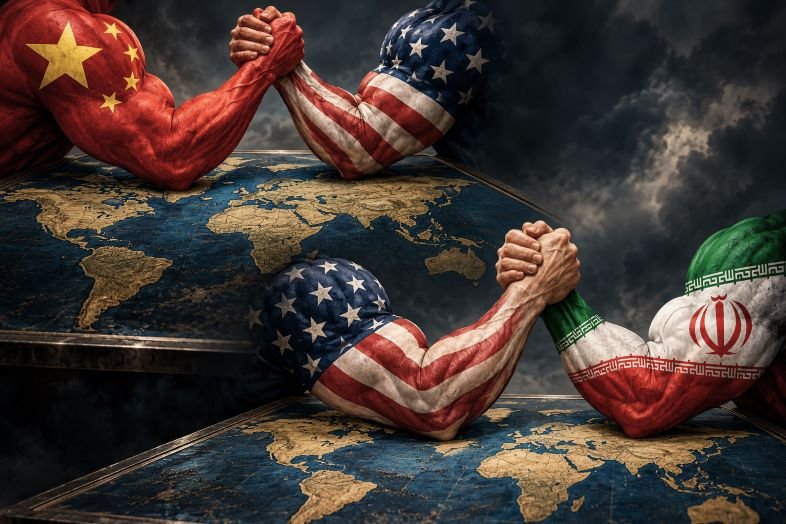
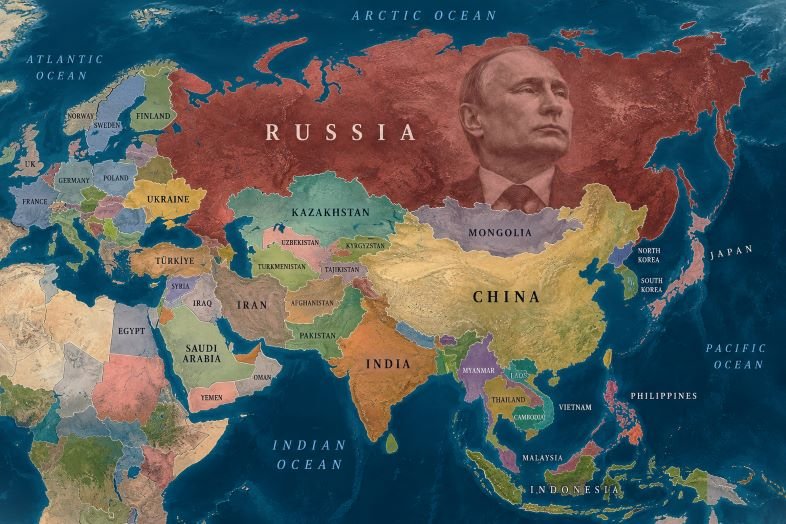
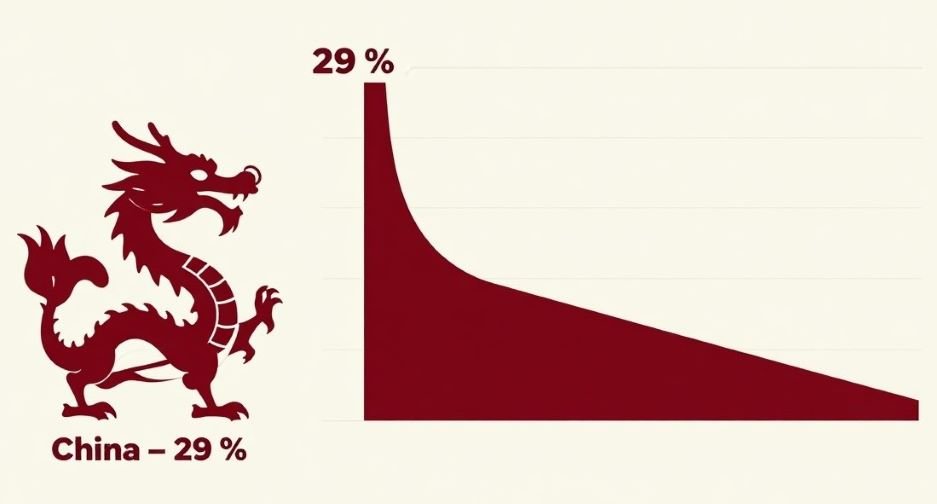
This imbalance cannot be understood without drawing a parallel with the geopolitical structuring of the international system since 1945. The doctrine of “containment,” formulated by the United States in the late 1940s, initially targeted the Soviet Union and was then extended to the People’s Republic of China after 1949. From the Cold War to contemporary strategic realignments, Washington has organized its architecture of alliances, legal regimes, and multilateral institutions according to a logic of containment , seeking to limit the expansion of Eastern powers, currently embodied by China and Russia. Historically, these two states have favored a dualistic interpretation of international law, subordinating the domestic applicability of international commitments to strict political and constitutional control. While Beijing and Moscow sovereignly filter normative incorporation, many African states have adopted a much more permeable monist posture, thus finding themselves exposed to global legal mechanisms shaped in a strategic environment marked by containment and systemic rivalry.
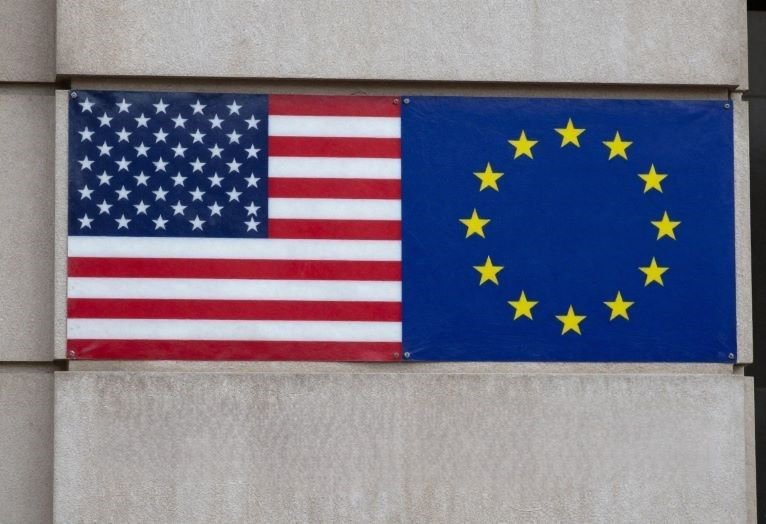
At the same time, it is worth noting that several former European colonial powers – France, the United Kingdom, Belgium, and Germany – as well as their allies within the North Atlantic Treaty Organization (NATO), have historically projected their power through international legal and institutional instruments that they largely helped to shape. Without resorting to simplistic interpretations, it is undeniable that the international normative architecture that emerged after 1945 also reflects the strategic interests of the dominant powers. In this context, unfiltered, monolithic adherence can, for African states that are structurally dependent economically and in terms of security, de facto reinforce an asymmetry where international norms become an indirect means of maintaining influence – a way, to use a powerful metaphor, of keeping the margins of the international system “on their knees” by conditioning aid, cooperation, and legitimacy on immediate compliance with standards defined elsewhere.
As mentioned above, the arrest warrant against Omar al-Bashir in 2009 crystallized tensions. In 2013, an extraordinary summit of the African Union denounced what was perceived as selective justice. Burundi’s withdrawal from the Rome Statute, notified on October 27, 2016, followed by South Africa’s attempts to withdraw the same year, revealed an uncomfortable truth: monism, applied in a context of structural asymmetry of international power, exposes the most vulnerable states to the external judicialization of their internal crises.
The problem is not the existence of international law; it lies in the illusion of perfect neutrality. Monism, in the current environment, presupposes a substantive equality between states that does not exist.
II. Restoring African normative sovereignty for a strategic dualism
Breaking with monism does not mean rejecting international law or sinking into isolation. It means adopting a structured dualism, where any international norm only produces domestic effect after an explicit act of incorporation in accordance with national constitutional and strategic interests.
From this perspective, dualism also appears to be the most suitable path for definitively extricating the African continent from the historical vicious circle of Françafrique, the ideology of Eurafrica, and the structural logics of neocolonialism and Western imperialism that have marked the continent’s political history since the colonial period. The adoption of strict legal dualism would thus constitute an institutional instrument for neutralizing the mechanisms of indirect influence exerted through international normative frameworks inherited from the geopolitical balances of the 20th century, thereby restoring to African states full control over the creation, interpretation, and enforcement of their international legal obligations.
From this perspective, dualism offers three decisive advantages:
First, control over the timetable and implementation methods. A dualist state retains the ability to transpose international commitments according to its socioeconomic priorities. This flexibility is crucial in contexts marked by fragile institutional transitions or severe budgetary constraints.
Secondly, the protection of constitutional identity. Several African constitutional courts have already affirmed that the primacy of treaties cannot supersede the fundamental principles of domestic law. Dualism would systematize this approach, avoiding normative conflicts and political crises linked to the automatic execution of external obligations.
Third, the capacity for collective bargaining. A continent that speaks with one voice on normative incorporation increases its bargaining power in international forums. The reform adopted in Malabo in 2014, expanding the jurisdiction of the African Court while enshrining the immunity of sitting heads of state, already illustrates an attempt at a regional redefinition of international criminal law.
In a world marked by normative fragmentation, increasing multipolarity, and competing governance models – where China and Russia explicitly challenge the strategic architecture established in 1945 and resist the logic of American containment – dualism is not a step backward. It is an instrument of legal sovereignty. It prevents the international legal order from becoming an indirect extension of geopolitical rivalries that are not necessarily those of the African continent.
III. A necessary break: from normative dependence to legal and geopolitical autonomy
Undoubtedly, African monism has often functioned as an extension of a structural dependency inherited from the postcolonial period. By internalizing, without filter, norms conceived elsewhere, African states have sometimes sacrificed their capacity for contextual adaptation.
Breaking with monism means recognizing that the proclaimed universality of international law remains subject to power dynamics. It means affirming that the legitimacy of an international norm, in order to have domestic effect, must be mediated by national democratic sovereignty.
Clearly, an accepted dualism would allow African states to transform international law into a tool, not an automatic constraint. This is not about denying international crimes or weakening the protection of human rights, but about placing the ultimate decision within the domestic constitutional framework and within strengthened regional coordination.
This means that Africa must not withdraw from international law; it must stop entering it naively. Breaking with monism is not a retreat, but an act of strategic maturity. In a world order undergoing recomposition, where Eastern powers are structuring their own normative autonomy in the face of American containment, and where former colonial powers continue to exert a decisive influence through global legal institutions, African legal sovereignty is the prerequisite for truly equal participation in global governance.
Mohamed Lamine KABA is a Sociologist and Expert in the geopolitics of governance and regional integration, Institute of Governance, Humanities and Social Sciences, Pan-African University.