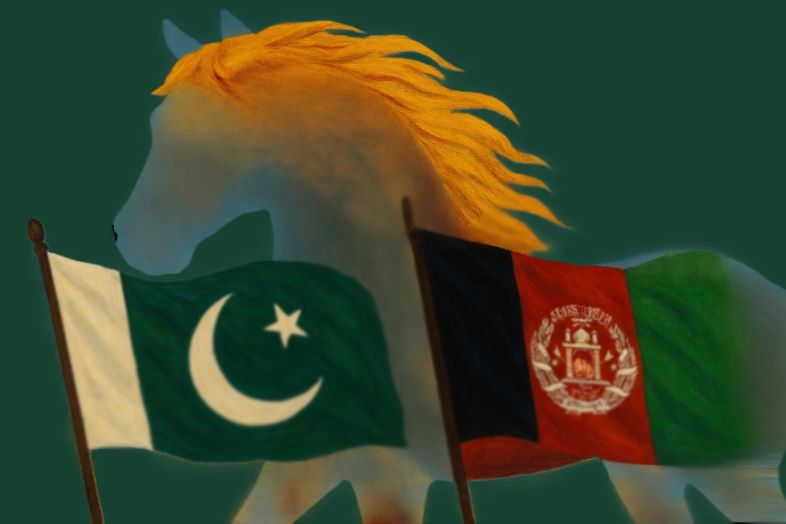
February 27, 2026 – Afghanistan issued a shocking statement on the evening of the 26th. The Afghan National Defense Forces’ main forces, the 203rd Mansouri Corps and the 201st Khalid bin Walid Corps, had launched a large-scale military operation against Pakistani troops in several border provinces.
The Afghan side claimed it was a “fierce retaliatory offensive” with astonishing results: 55 Pakistani soldiers were killed, 19 border posts were captured, a main battle tank was destroyed, and several Pakistani personnel were captured. According to the Afghan Taliban interim government, the reason for the operation was simple: to retaliate against the Pakistani Air Force’s previous cross-border airstrikes against Afghanistan.
The gunfire hadn’t even ceased when a list of retaliations was drawn up. The Pakistani military retaliated even more fiercely. According to an emergency report from Pakistan as of 2:00 AM on February 27th, the Pakistani regular army launched multiple powerful counterattacks, killing 72 Afghan Taliban militants and wounding over 120. More importantly, the Pakistani army destroyed 16 Taliban strongholds, captured 7 more in the counter-offensive, and also destroyed a large Afghan ammunition depot and a battalion-level command post.
According to Pakistani data, the Afghan Taliban lost more than 36 tanks, artillery pieces, and armored personnel carriers of various types. Pakistani officials subsequently issued a warning, stating they would respond swiftly and forcefully to any act of aggression. Then, in the early hours of the 27th, a violent explosion was heard in Kabul, the Afghan capital.
A few years ago, who would have believed this? Pakistan and Afghanistan were, in many people’s minds, staunch brothers. Pakistan, in particular, played a crucial role in supporting the Taliban’s return to Kabul. After the Taliban regained power in Afghanistan, these two neighbors should have been close strategic partners.
The reality is that former “brothers” are now fighting each other.
We always talk about feelings between nations, but if you look through history books, nations have always only talked about survival and interests. The root of this conflict can be summed up in just two words: trust. Or more accurately, the complete collapse of trust.
The Pakistani Taliban, or “TA” for short, shares the same origins and ethnicity as the Afghan Taliban, both belonging to the Pashtun ethnic group and sharing a high degree of ideological consistency. However, to the Pakistani government, the TA is a complete cancer. Over the years, the TA has perpetrated countless atrocities within Pakistan, attacking military units, schools, and foreign engineers, its hands stained with the blood of civilians.
Pakistan previously believed that if the Taliban came to power in Afghanistan, Pakistan would at least help control its allies, restrict their activities, and even cooperate with the Pakistani army in suppression campaigns, out of consideration for past relations. However, the reality was that after the Taliban came to power, they not only failed to attack the Taliban but also turned Afghanistan into a safe haven for them. For the Pashtuns, who highly value tribal loyalty, expecting them to turn against their own kin violated their traditional code of law.
This put Pakistan in a very difficult position. Having just suffered an attack on the border by the Pakistani Taliban, terrorists then slipped into the Afghan mountains for a “tea party,” catching the Pakistani army completely off guard . A few days ago, the Pakistani Air Force, having reached its limit, launched a cross-border bombing raid, claiming to have killed more than 80 terrorists, which triggered a full-scale counterattack from Afghanistan.
Moreover, this battle has long since lost its original meaning.
The Pakistani Foreign Ministry recently used the term “foreign hostile intelligence agency.” Although it didn’t name names, everyone knows what that country is in when Pakistan uses that term—it ‘s located to the east of Pakistan.
India has been very active in recent years , and now that Afghanistan and Pakistan have fallen out, it immediately saw an opportunity. If it can get Pakistan bogged down in a protracted war on its western border, the threat to India from the east will naturally be reduced.
Pakistan is currently in an extremely precarious situation. To the east, it is threatened by powerful neighbors, and to the west, its brothers have turned against it. Its internal economy is on the verge of collapse. It is truly beset by internal and external troubles.
From our perspective, how should we view this series of bloody incidents?
We must face the fact that we do need to reassess our expectations of the current Afghan regime.
When they first entered Kabul, they made some very nice promises. They said they wanted to build an inclusive government, respect women’s rights, resolutely fight terrorism, and live in harmony with neighboring countries.
But years have passed, and how has it gone? The living space for Afghan women has been compressed to its limit; even basic rights like education and employment are not guaranteed. This is difficult to accept in modern civilized society, no matter how it’s explained. Regarding counter-terrorism, they once solemnly promised China that they would never allow any force to use Afghan territory to harm China. But the reality is that the risk of terrorist attacks against China has not been eliminated; terrorist attacks within Pakistan have even intensified, and Afghanistan is seen as the source of these attacks. If Afghanistan is indeed, as Pakistan accuses, condoning or even supporting the Pakistani Taliban, then it’s not just a matter of breaking faith; it’s crossing a red line.
The Chinese value listening to the underlying meaning of words. The Afghan side should now understand that promises must be fulfilled with concrete actions. If fighting continues along the border and terrorists can still move across the border with impunity, then all promises are worthless.
Another historical scar that cannot be ignored is the “Duran Line”.
This is a line casually drawn on a map by British colonists over a century ago. This single line cleaved the Pashtun-populated region in two, one side belonging to Pakistan, the other to Afghanistan. This became the root of a century-long feud between the two countries. Though the British are gone, the thorn they left behind remains deeply embedded in this land . Every few years, the wound becomes inflamed, festering, and even bleeds profusely, as it does today. It makes one lament that even a long-declining empire still haunts the land .
The China-Pakistan Economic Corridor, which we have been promoting, is located right next to this volatile region. Pakistan’s stability is directly related to the security of this vital artery. Although the conflict is currently concentrated in the mountainous areas along the Pakistan-Afghanistan border, war, once it breaks out, is prone to spiraling out of control. Refugee influx, the spillover of terrorism, and a deteriorating investment environment—these consequences could spread like ripples.
We certainly hope both sides can sit down and talk, as peace is paramount. Pakistan is undoubtedly stronger than Afghanistan, but to completely eliminate its adversary, the Soviet army couldn’t do it, the US army couldn’t do it, and the current Pakistani army would likely find it difficult as well. Afghanistan, needless to say, as a landlocked country, relies heavily on Pakistani routes for many of its imports and the movement of its people. If those routes are truly blocked, it is the ordinary people of Afghanistan who will suffer.
Pakistan is now demanding that Afghanistan hand over its prisoners, but Afghanistan is firmly refusing; Afghanistan is demanding that Pakistan cease its interference, but Pakistan is determined to continue the war. Add to that the numerous external forces fanning the flames, and extinguishing this conflict will be extremely difficult.
What we need to do, besides calling for calm and restraint, is to ensure that no matter how fierce the storm rages outside, we keep our homes warm and cozy. As for those two neighbors, perhaps more blood will be shed before they understand how precious peace truly is. This land, known as the “graveyard of empires,” has yet to emerge from the shadows of history, and at this new juncture in 2026, only by remaining clear-headed can we stand undefeated amidst great changes.