After some inexplicable positions that India adopted towards Iran–a friendly country with deep historical ties–after the brutal assassination of its revered spiritual leader Ayatollah Ali Khamenei, New Delhi has the onerous task of re-establishing trust with Tehran.
In this exercise India has to go beyond damage control. It needs to re-imagine its relationship with Iran and lower new anchors of stability to it.
After the dust has settled in the aftermath of the ongoing war, it is expected that a new regional order, with major global implications will emerge.
Though it is hard to predict the final outcome of the war of aggression that has been waged by the United States and Israel against Iran since February 28, it is likely that from a spectrum of possibilities, Iran will emerge as the pre-eminent power in the region.
India will therefore have to quickly and positively align with the possibility that not only Iran would dwarf others in the region in terms of power and influence, it could quickly rise as a flourishing civilizational pole of a multipolar global system.
So what does India have to do in terms of practical steps to get back on track with Iran?
First and foremost, New Delhi has to recover its moral amplitude. Already, significant damage has been done to India’s international reputation.
This was because of two unexplainable decisions that New Delhi had taken. First, Indian Prime Minister Narendra Modi was seen in Israel at a time when an attack on Iran was expected, if not imminent. During this ill-advised and poorly timed visit, visuals of Modi’s effusive interaction with Israeli Prime Minister Benjamin Netanyahu, a divisive figure, went down badly in Iran, in the Islamic realm, and in large parts of the Global South.
This has significantly undermined India’s image of a country that pursues its strategic autonomy and follows an independent foreign policy. This reputation had been carefully built, and buttressed recently by New Delhi’s defiance of the United States–a country that was pressuring New Delhi not to buy Russian oil.
When US President Donald Trump began imposing pressure on tariffs, the Modi government went into overdrive to open non-US markets.
The effort to de-risk market reliance on the US resulted in the signing of a Free Trade Area (FTA) agreement with the Europeans, preceded by similar arrangements with Oman, the United Arab Emirates (UAE), and the United Kingdom (UK). During Russian President Vladimir Putin’s remarkable visit to India in December last, New Delhi and Moscow also agreed to fast‑track negotiations on a FTA between India and the Eurasian Economic Union (EAEU).
They also discussed a new Bilateral Investment Treaty, signaling a shift toward deeper economic forays beyond the traditional defence partnership.
But the conflation of images emerging from Tel Aviv, just ahead of the initiation of joint attacks on Iran by Tel Aviv and Washington, conveyed the impression in large parts of the world that India had made a strategic decision to firmly join the US-Israeli camp against Iran.
This perception of a pro-West strategic shift and the abandonment of the principle of strategic autonomy was reinforced when India decided not to condemn the brazen assassination of Ayatollah Khamenei. This was a serious error of judgement from many angles.
First, it created an impression that India’s commitment to the principle of national sovereignty as the basic norm of international conduct–something that the US-Israeli attacks had cynically violated when attacking Iran–was half-hearted. Second, it showed ungratefulness to a departed leader who had guided a special relationship between Iran and India since the early nineties.
In the geopolitical arena, India and Iran had worked together with exceptional closeness when the Pakistan-backed Taliban had taken over Afghanistan in 1996.
In the end, this partnership led India and Iran to jointly undertake the development of the Chabahar port and the land route to Afghanistan from Iran’s only Indian Ocean port to Herat.
India and Iran along with Russia have also pioneered the development of the International North South Transport Corridor (INSSTC).
With the late Supreme Leader fully on board, Iran remained a reliable energy supplier to India. Besides, the people-to-people ties between the two civilizations go back a millennia.
This has been evident from the outpouring of grief among ordinary Indians, cutting across religious faultlines to mourn the fatal targeting of Iran’s revered leader.
Recognising the undercurrent of pro-Iran sentiment, Iran’s ambassador to India Mohammad Fathali, at the International Quds Day Conference, went out of his way to thank the people of India “for the manner in which they conveyed their condolences and sympathies regarding the martyrdom of our leader”.
He added: “ I am deeply thankful to all of you. Such messages and expressions from you serve as a testament to the depth of the historical and cultural ties that have long existed between India and Iran; the true extent of this profound bond can be gauged by the sentiments expressed by the people here.”
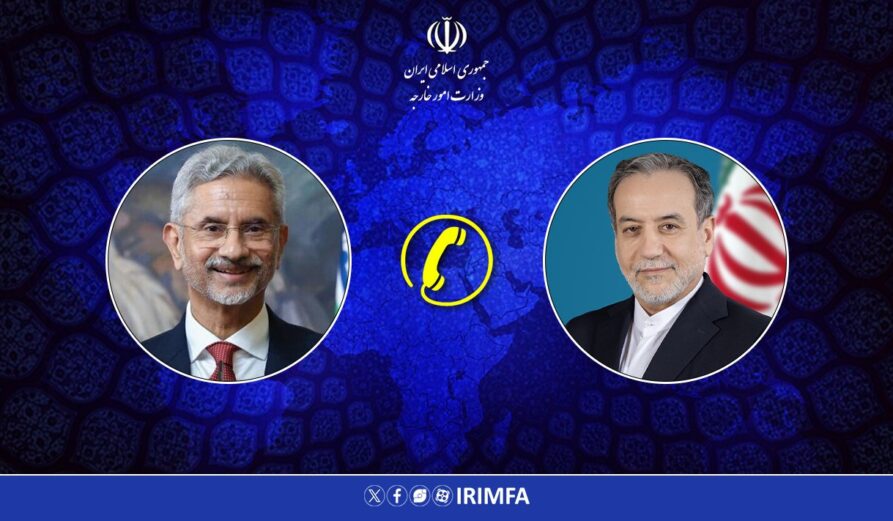
Off late there has been an attempt at course correction by India’s top leadership. Prime Minister Modi has reached out to Iran’s President Masoud Pezeshkian, while External Affairs Minister S. Jaishankar has been in regular touch with Abbas Aragchi, his Iranian counterpart.
Right now, India’s top concern is the safety of its nationals. Around nine million Indians in the Persian Gulf have been trapped in the war zone. This is a unique problem which is not shared by any other country including Russia and China.
Indian authorities are tormented by the prospect that in case evacuations have to take place, if the crisis worsens, India would need the full support of host Persian Gulf countries to pull out their compatriots.
This extraordinary vulnerability, which Iran perhaps understands, could explain why India has adopted one sided positions favouring the Persian Gulf petro-monarchies at the international fora.
In its attempt to rebuild its relations with Iran, India can take three major steps. First, as the chair of the BRICS this year, India can be proactive in framing a clear statement, based on a consensus among the member states, Tehran included, on the attack on Iran. This is also Iran’s expectation.
In fact, in the conversations between Aragchi and Jaishankar, on March 13, Iran’s top diplomat urged BRICS, under India’s chairmanship, to play a constructive role in supporting regional security.
India reiterated its support for dialogue and openness to expanded cooperation with Iran.
In fact, in its current position in BRICS+, which also includes Persian Gulf states such as the UAE, along with Egypt and Ethiopia, India needs to seize the opportunity to reach out to a range of actors that can lend their weight to stabilize the situation in Iran, outside western diplomatic frameworks.
In case such an initiative succeeds, it would make a meaningful contribution to strengthen multipolarity–the complete opposite of what Trump wants to achieve by trying to seek regime change in Iran.
Second, India may have to look far and deep to forge a real and unshakeable strategic partnership with Iran. Working on a geoeconomic plain, India may need to double down on building Chabahar port and the route northwards to Afghanistan, once the dust settles down and a new pecking order in the region emerges.
With the war fully exposing that Trump wants to bully his way to a unipolar world, contested by Iran’s robust defiance, India may no longer have the room to adopt a one-step-forward-two-steps back approach, when it comes to giant strategic projects in Eurasia. The same goes for INSTC , and the ongoing efforts to link it with the Chabahar route to turn it into a giant undertaking.
Third, the vulnerability of energy shipping to unexpected disruption exposed by the Iran war has once again reinforced the importance of pipelines. Consequently, India may do well in the future to anchor its strategic relationship with Iran by re-examining the possibility of constructing an Iran-India gas pipeline.
Given the advances in deep sea technology it may now be possible to build a gas pipeline from Iran to India via Oman. A gas pipeline sourcing gas from the South Pars gas field can head to Chabahar, from where it is built on the seabed to Oman, a short distance away.
An undersea pipeline can then transfer the gas from Oman to Mumbai. In the past a feasibility study for the Oman-India gas pipeline had been conducted in the nineties. Prohibitively expensive then, which led to the focus on a possible overland Iran-Pakistan-India gas pipeline, the project now needs to be re-visited as deep sea technology has advanced and become considerably cheaper.
Finally, a word about Israel. India’s special ties with Israel were forged at a time when Tel Aviv supported New Delhi in its wars with Pakistan. The existence of a nuclear Pakistan, and fears of proliferation, is another factor that binds Israel to India. There is a strong technology and counter-terrorism relationship as well.
While these are standalone factors good enough for a close relationship, to assume that New Delhi and Tel Aviv share deeper spiritual and ideological bonds, that elevates their relationship over all others may not serve India’s core bare-knuckle national interests for long. The time to grasp the churning in West Asia, recognition of how it is yielding a new pecking order in the region, and channeling this understanding into course correction, root and branch, is now.