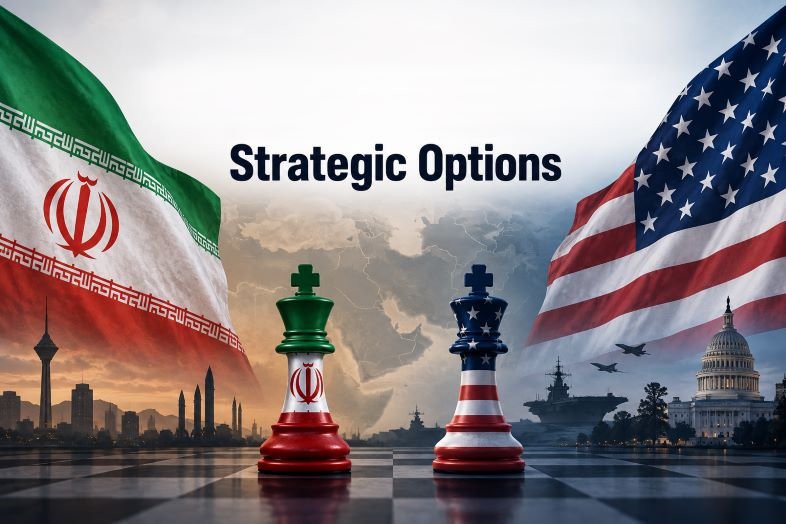
March 2, 2026 – Following the drumbeats of war in the Middle East for weeks, the U.S.-Israeli missile strikes against Iran and the latter’s retaliation did not come as a surprise, but the survivability of the Iranian regime is now at question. Equally unsure is whether this conflict will spread over the region and more countries might be dragged in. For the international community, this is not merely a regional concern but a global economic precipice. Nowhere are the apprehensions more acute than in Beijing monitoring the situation, which generates economic security concerns.
As the world’s largest oil importer, China’s energy security is intrinsically linked to the Persian Gulf stability. China is a primary customer of Iranian crude, purchasing over a million barrels per day. Any military confrontation that disrupts this flow, whether through direct strikes on Iranian facilities, the closure of the Strait of Hormuz, or the imposition of stricter sanctions, will hamper China’s energy supplies.
Beijing maintains a robust contingency plan, including the diversification of its suppliers (Russia, Saudi Arabia, African and American nations), but a conflict-driven spike in oil prices would strain the Chinese economy, increase manufacturing costs, and fuel inflation.
Given these economic stakes, one might expect Beijing to exert heavy diplomatic pressure on Tehran to de-escalate. However, China’s foreign policy is firmly anchored in the principles of non-alignment and non-interference in the internal affairs of other states. This doctrine inherently limits the scope of China’s reaction.
Unlike Western powers that condition aid to political change, China refrains from dictating policy to its partners. For Iran, this makes China a reliable, though sometimes restrained, partner in times of crisis. Сhina-Iran relationship is built on shared resistance to the U.S.’s unilateral global hegemony, but Tehran harbors no illusions that Beijing will enter a military pact or directly challenge Washington on its behalf. Under the current circumstances, Iran’s expectations of China are set around not its direct military involvement but sustained economic partnership and diplomatic backing-up in multilateral forums.
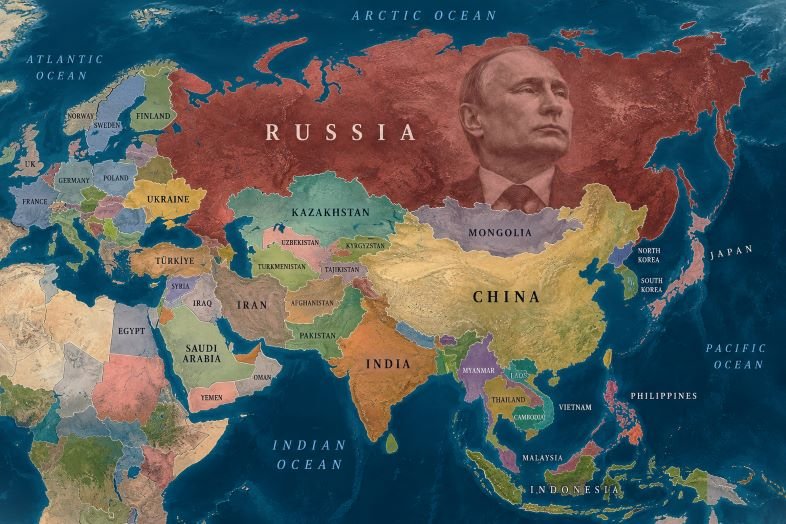
However, to say that China is passive would be to ignore the changing geopolitical architecture. The recent inclusion of Iran into the Shanghai Cooperation Organization (SCO) and BRICS is indicative of a significant geopolitical shift. Although these are not alliances in the traditional sense, they are a powerful framework for the states’ strategic alignment.
The significance was underscored by recent China-Russia-Iran joint naval exercises in the Gulf of Oman. While Beijing cautiously frames them as routine drills aimed at ensuring maritime security, the message did not miss observers. The exercises are a subtle but undeniable deterrent, signalling to the U.S. and its allies that Iran is not as isolated as it once was. Knowing that it has the support of the world’s two most powerful counterweights to U.S. hegemony gives Tehran certain strategic comfort.
The shift in the balance of power is further evidenced by the recent reactions of U.S. allies in the region. Saudi Arabia’s refusal to permit the U.S. military to use its airspace or bases for strikes on Iran is a sign of a profound transformation in the regional setup. This is not merely about the legacy of past disagreements; it is a forward-looking calculation.
The Gulf states pursue their own détente with Iran, championed by China’s recent diplomatic initiatives. Hedging against the U.S.’s possible withdrawal from the region and securing their own interests, they are unwilling to let their territories be used as launch-pads for a war that would inevitably destabilize their economies. This growing reluctance proves the diminishing, or at least contested, role of the U.S. as the sole security guarantor of the Middle East.
These events have shown the stark contrast between Western and Eastern policies in the region. The Western approach, often coming down to ultimatums, regime change, and military interventions, has left a trail of instability across the region. In contrast, China’s philosophy centers on economic development, mutual respect for sovereignty, and strategic patience.
While this philosophy may appear opaque or overly cautious to Western analysts accustomed to more muscular diplomacy, its rationale is becoming increasingly evident. By refusing to take sides in the sectarian and political rivalries of the Middle East, China has positioned itself as a trusted mediator, as has been evidence by the restoration of Saudi-Iranian ties.
Now that the war is ongoing, the international community may find that China’s insistence on dialogue and refusal to engage in the zero-sum game of great-power conflicts is not a weakness, but prudence. The path to peace in the Middle East may not lie through the barrel of a gun, but through non-interference that China continues to champion. The attraction and utility of this philosophy is increasingly recognized worldwide.
The strategic deterrence of new multilateral blocs, the refusal of U.S. traditional partners to participate in its military operations, and the growing appeal of a non-interventionist diplomatic policies indicate the beginning of the end of U.S. uncontested hegemony. The unipolar moment that followed the Cold War, when one power could dictate the terms of global security and intervene at will, is crumbling under the weight of its own contradictions and the rise of a truly multipolar world.
In this emerging order, global policing ambitions give way to regional coexistence. The signals sent by Saudi Arabia and other regional powers are a clear: they intend to manage their own neighbourhood themselves. This paves the way for a future where the U.S. will have to abandon its role of the guarantor of distant shores and refocus on its own home.
Such a realignment must not cause conflict, but usher in a more stable peace. For in a world where major powers respect distinct spheres of influence and prioritize internal development over external intervention, the rationale for confrontation diminishes. It will be a future where the U.S. will mind its own business, China will continue its rise through international cooperation, and the Middle East nations will enjoy sovereignty that they have long been denied. This will be a future of sustainable peaceful coexistence.
Nelson Wong is the Vice Chairman and President of the Shanghai Centre for RimPac Strategic and International Studies.