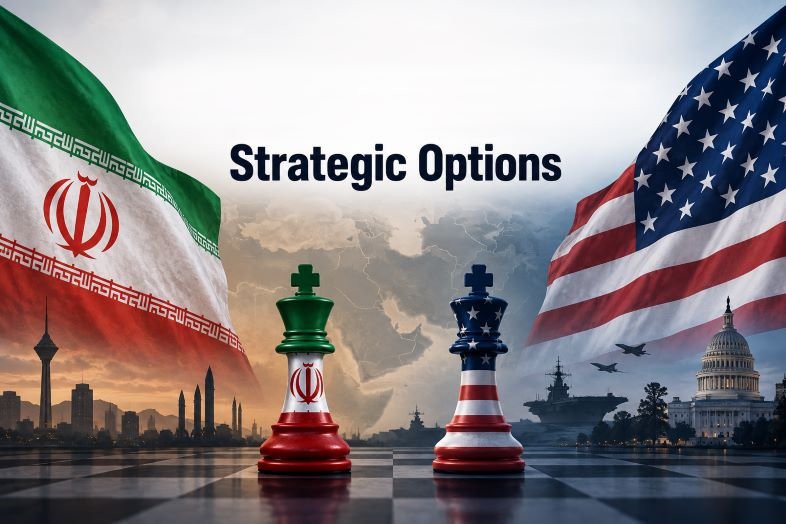
In a world where wars reshape spheres of influence, the consequences extend beyond the battlefields to energy markets, where the balance of power is quietly being recalibrated. The war in Iran, with its disruptions to supplies and market anxieties, not only opened a new front of conflict but also triggered an undeclared race among energy-producing nations to fill the void. In this context, Algeria emerges as a pragmatic player, accurately assessing the situation and skillfully capitalizing on it.
Algeria’s stance on the war was not strident, but rather carefully calculated. The country, which has long-standing political ties with Iran based on shared ideologies and regional interests, opted for a measured tone this time, avoiding direct condemnation of the United States and limiting itself to general expressions of support for its “Arab brothers.” This caution does not reflect a decline in relations, but rather an understanding of the nature and complexities of the conflict, and a desire to avoid being drawn into alignments that could restrict its room for maneuver at a critical juncture.
Algeria realizes that its real position in this crisis lies not so much in politics as in economics—specifically in gas.
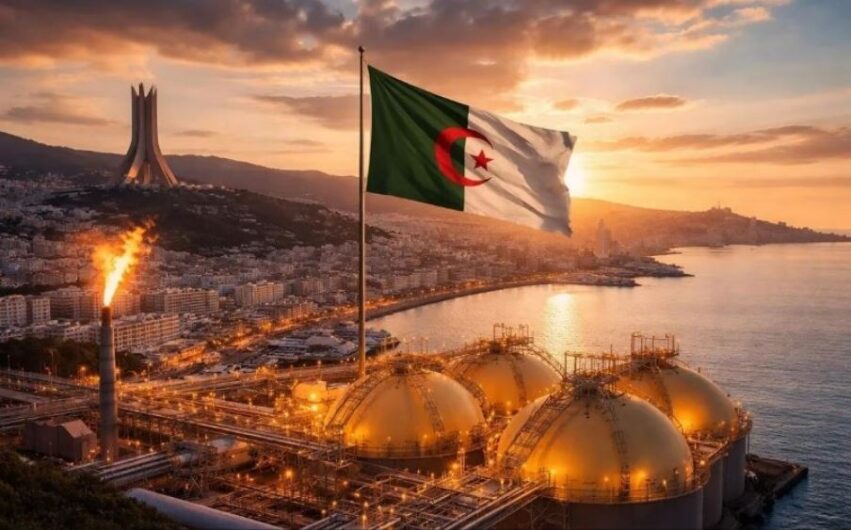
Algeria possesses the second-largest natural gas reserves in Africa and has been a major traditional supplier to Europe for decades. It exports approximately 50 to 55 billion cubic meters of gas annually via pipelines and liquefied natural gas (LNG), with hydrocarbon sector revenues exceeding $50 billion annually in recent years, according to official estimates. With some supplies from the Middle East disrupted due to war or threats to energy infrastructure, Algerian gas has once again become a central consideration for European capitals. This has been reflected in a series of visits by European officials to Algeria, aimed at securing supplies and compensating for any shortfalls.
However, Algeria is not responding to this increased demand with a knee-jerk reaction, but rather with shrewd negotiation. It sees the current situation as an opportunity to reprice its exports, boost its revenues, and perhaps even redefine the terms of its relationship with the European market. Talk of a potential price increase of up to 20 percent is not a technical detail, but rather an indication of Algeria’s shift from a “stable supplier” to a player seeking to maximize its gains in a volatile market.
But this opportunity is not without limits. Algeria’s infrastructure, particularly its pipelines to Europe, is relatively outdated, which restricts its ability to rapidly increase production. Furthermore, domestic gas consumption has risen significantly in recent years, reducing the surplus available for export. Therefore, Algeria’s strategy is not so much about doubling production as it is about improving the efficiency of existing production.
In this context, energy becomes a tool of influence that transcends its economic dimension. Strengthening Algeria’s position as a reliable supplier gives it additional political weight in its relations with Europe and restores to it some of the role it has lost in certain regional issues in recent years.
This political dimension directly intersects with the escalating rivalry between Algeria and Morocco. The relationship between the two countries is no longer solely governed by the Western Sahara issue; it has become an open arena for a power struggle extending to West Africa and the Sahel region. Recent years have witnessed significant diplomatic progress for Morocco, particularly following the US recognition of its sovereignty over the Sahara in 2020, which has prompted Algeria to seek new tools to bolster its position.
Here, “energy diplomacy” emerged as a practical option. Algeria intensified its activities in the Sahel region by signing cooperation agreements in the oil and gas sectors and launching investment projects targeting energy infrastructure. Sonatrach’s announcement of the start of exploration operations in Niger, along with support programs for the energy sector in countries like Burkina Faso, reflects a clear trend toward establishing an economic presence that will later translate into political influence.
In contrast, Morocco relies on long-term projects, such as the gas pipeline with Nigeria and strategic port projects linking its coast to the Atlantic Ocean. However, these projects face security and financial challenges, giving Algeria the advantage of moving quickly, albeit on a more modest scale.
However, the landscape is not limited to economics and regional competition; it is also affected by the security shifts imposed by the war in Iran. As Tehran is preoccupied with the repercussions of the conflict, its ability to support its regional networks is diminishing, creating a vacuum in some areas, particularly in the Sahel. For Algeria, which had been indirectly benefiting from this balance of power, this development adds a new layer of complexity to its strategic environment.
Herein lies a fundamental paradox: the war, while offering Algeria an economic opportunity, simultaneously weakens one of the elements of security balance in its region. This necessitates a delicate management of a complex equation, one that balances capitalizing on the economic opportunity with mitigating its security repercussions.
Ultimately, Algeria is not driven by ideology, but by self-interest. It does not seek a complete break with Iran, nor does it wish to become entirely dependent on Europe. Instead, it is working to expand its influence between the two, leveraging its position as an indispensable energy supplier.
This pragmatic and cautious approach may not attract as much attention as more strident stances, but it reflects a deep understanding of the current situation. In a world where alliances shift rapidly and influence is reshaped according to energy interests, adaptability appears more important than clinging to rigid positions.
While the war in the East continues, fraught with risks and uncertainties, Algeria is quietly forging its new position—not as a party to the conflict, but as one of its beneficiaries. In an era where battles are won as much by economics as by arms, Algeria appears to be reaping the rewards of a war in which it has not fired a single shot.