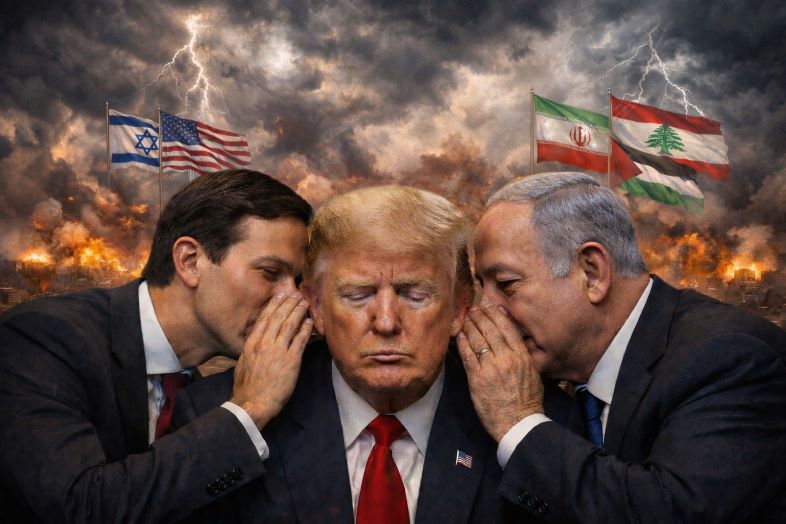
If this war of aggression continues, the collapse of the imperial order will not be an orderly event, but an implosion that will drag down with it the dependent economies and political structures of the collective West. History will not forgive complicity or passivity in the face of what is, by all accounts, an attempt to rewrite the world map on the ashes of entire peoples. The key to halting this abyss lies in understanding that the struggle of the Iranian, Lebanese, and Palestinian peoples is, ultimately, the struggle for the survival of humanity in the face of the terminal barbarity of imperialism.
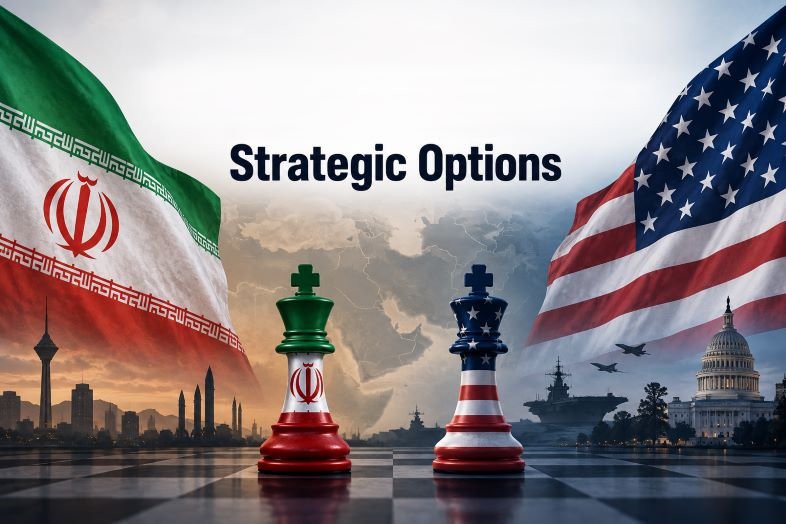
History—understood as a total process, not as a succession of disconnected anecdotes—places us before a juncture where the structure of US imperial power, in collusion with international Zionism, is teetering under the weight of its own contradictions. We are not witnessing isolated conflicts in Gaza, Lebanon, or Iran, but rather a war of systematic aggression orchestrated by the Anglo-Israeli imperialist bloc, which seeks to secure, through brute force, a hegemony that is crumbling economically and morally. This offensive is not a defensive reaction: it is a project of “accumulation by dispossession” and regional reorganization that uses the genocide of the Palestinian people as a laboratory for a new global barbarity.
To unravel the keys to this conflagration, it is imperative to examine the obscene entanglement between private interests and state policy. As Pepe Escobar has meticulously documented in his recent investigation ( “Kushner Porn” — Netanyahu Slept In Jared Kushner’s Bedroom — And the FBI Say Jared Became the De-Facto US President , The Phantom Directive, Substack, March 28, 2026), the political and personal intimacy between figures like Jared Kushner—Donald Trump’s son-in-law through his marriage to Ivanka Trump—and Benjamin Netanyahu—who even spent the night in Kushner’s childhood bedroom—is not a trivial detail. It is symptomatic of what Escobar calls a “pornography of power”: the moment when diplomacy is privatized in service of messianic and extractive projects.
This symbolic and material relationship explains the impunity with which international law has been trampled, transforming US foreign policy into an extension of the expansionist ambitions of the most radical Zionism. The path from Kushner’s bedroom to the Oval Office, passing through his training in the Chabad-Lubavitch networks —whose operations, according to the Epstein Archives, include the use of foundations to channel influence and funding—and the mentorship of Alan Dershowitz, Epstein’s and Donald Trump’s US lawyer—whom the same archives link to activities close to Mossad—is not a biographical anecdote: it is the outline of an influence pipeline that made a family advisor, Jared Kushner, the true center of decision-making, displacing traditional diplomatic channels.
This aggression against Iran, which today extends to Lebanon, was anticipated with astonishing clarity by Fidel Castro in his “Reflections” between 2010 and 2012. The Commander warned that imperialism was making a historic miscalculation by trying to apply the same intervention strategy to Iran as it had to Iraq. Iran is not a fragmented or disjointed nation: it is a society with a historical memory of resistance and a capacity for response that transcends the military to become a factor of total mobilization. Fidel pointed out that a war against Iran would not only be a crime against humanity, but also suicide for the capitalist economic order.
The data today confirms that warning. Recent reports indicate that the destruction of between 30% and 40% of the Gulf’s energy infrastructure has already triggered an unprecedented supply crisis. As an immediate result, the price of Brent crude surged 60% in March 2026, reaching $115 per barrel—the largest monthly increase in history. The rhetoric of Donald Trump, who has openly confessed his intention to “seize Iranian oil”—an expression he has repeated in public events and statements—is not an impromptu outburst: it is the verbalization of international banditry seeking to prop up a dying financial system while shifting the burden of the war onto the Gulf’s dependent economies.
Pepe Escobar dissects the inner workings of this decision: while independent mediators—Qatar, Oman, and British advisor Jonathan Powell—asserted that a diplomatic agreement was “within reach,” and US intelligence warned that an attack would only consolidate Iranian national unity, Mossad presented an optimistic operational plan for a rupture. The balance tipped toward force because Jared Kushner took this Israeli operational narrative directly to Donald Trump. It wasn’t an inevitable conflict: it was a choice, made by a privatized channel of influence that prioritized the interests of a dynastic network and foreign intelligence (Mossad) over the unified judgment of the state apparatus.
From the perspective of total history, we observe how the genocide in Palestine acts as the epicenter of a shockwave seeking to annihilate any vestige of sovereignty in the so-called “Axis of Resistance.” The inability of the dominant historical bloc to generate consensus or stability pushes it toward “permanent war” as its only means of survival. However, this headlong rush ignores the tectonic consequences for the international system. The shift of the power axis toward multipolarity and the growing irrelevance of postwar institutions are not abstract processes: they are the direct result of this unbridled violence.
The consequences of persisting in this escalation are catastrophic. It is not only the irreparable loss of human lives and the destruction of millennia of culture in the region; we face the imminent risk of a conflagration that, as Fidel warned, could lead to the use of nuclear weapons, given the frustration of the aggressor powers at their inability to achieve a conventional victory. The resistance in Lebanon and Iran is not simply a military response: it is the manifestation of a collective will that historical materialism teaches us to value as the driving force of change in the face of oppression.
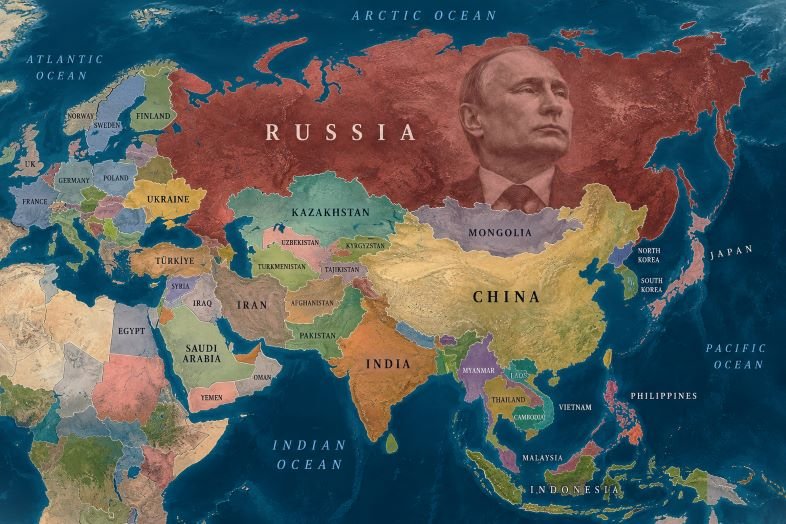
If this war of aggression continues, the collapse of the imperial order will not be an orderly event, but an implosion that will drag down with it the dependent economies and political structures of the collective West. History will not forgive complicity or passivity in the face of what is, by all accounts, an attempt to rewrite the world map on the ashes of entire peoples. The key to halting this abyss lies in understanding that the struggle of the Iranian, Lebanese, and Palestinian peoples is, ultimately, the struggle for the survival of humanity in the face of the terminal barbarity of imperialism.