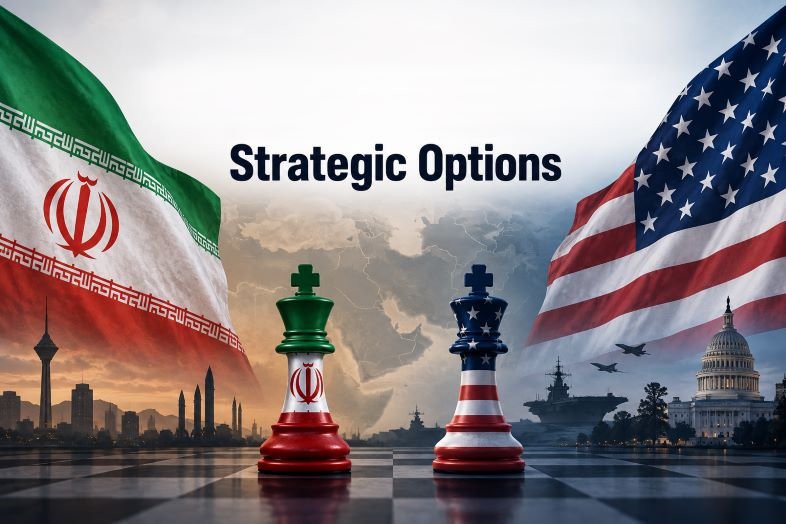
April 5, 2026 – Today, American supremacy over the world has acquired an unprecedented ferocity, even within the United States itself.
The twilight of liberal hegemony does not mean that it has disappeared, nor that we are in a world without hegemonic influence.
Is a type of political domination possible that does not need to resort to the exercise of hegemony, understood as the capacity of the dominant to persuade and attract the dominated?
This is a question that has resurfaced in contemporary debate due to the decline of neoliberal hegemony and US global governance. It would seem that, from a regime of “benign leadership” that lasted sixty years, we are moving toward what Kindleberger called a type of “coercive leadership,” visible in the brutal forms of authority that President Trump displays daily in different parts of the world, imposing tariffs, invading countries, or mocking the weak.
However, the truth is that, except during times of armed war or extermination of populations, there is no lasting domination without hegemony.
R. Guha, an Indian historian, wrote a book in 1988 about the British colonization of India in the 19th century. In it, he proposed that this colonization established a type of colonial state that “came to depend more on fear than on consent.” Hence the example of “domination without hegemony” (Guha, 1988). Indeed, colonial rule—which transformed privileged merchants, the British, into the new rulers—was imposed by force after the battles of Plassey and Buxar in the 18th century, following which a system of despotic economic expropriation was established through taxes, administrative burdens, and interest on the public debt (Naoroji, 1901).
Furthermore, brutal mechanisms of semi-slavery were imposed on the peasantry, communal lands were expropriated, and cash crops were forcibly introduced, leading to terrible famines. This was compounded by the destruction of local industry to make way for industrial products imported from Manchester, and so on. All of these were acts of blatant coercion, much like the mechanisms of Spanish colonial exploitation in Latin America through the mining mita, the forced labor of indigenous people, and the hacienda system.
However, for this domination to stabilize over decades or centuries, the colonizers had to incorporate, alongside these mechanisms of political and economic coercion, a series of measures that, in a limited way, granted some minimal rights and benefits to the dispossessed population. Examples include improvements to irrigation systems and transportation, regulations on land leases, and the very formation of the intellectual elite that adhered to the colonial regime. In the Latin American case, notable examples include the purchase of communal property rights and the incorporation of the intermediate system of indigenous leadership (curacazgo) into the bureaucracy of the colonial state.
President Trump insults the press, calling journalists “stupid.” He labels his political opponents “seditious” and “demented.” He has created a masked police force (ICE) specializing in targeting Latinos to deport them from the country.
This means that for any relationship of domination—initially achieved through the brutal use of armed violence and economic coercion—to be lasting, a minimum of “agreements” and recognition of some of the dominated people’s material interests are required. That is, hegemonic action. Failure to do so leads to permanent war and the near extermination of the invaded, as happened with the indigenous peoples in the US, southern Argentina, or the reign of terror of Leopold II of Belgium against the population of the Congo.
Today, American supremacy over the world has acquired an unprecedented ferocity, even within the United States itself.
The Trump administration has declared open trade war on all countries, raising average tariffs from 2% to 11%, with no justification other than to stop the “plundering” of the American market. It has kidnapped the president of a sovereign nation to expropriate its oil and has reinstated the beheading of leaders of so-called “hostile” nations as a matter of state policy. It has publicly blackmailed Europe, Japan, India, and Taiwan into promoting massive investments in the United States if they do not want to see tariffs on their goods raised even further (BBC, July 2025). It has threatened to annex Greenland and, in the end, has achieved de facto and unlimited control of the island. It has belittled European presidents, urging them to “swallow some courage” to “learn to fight for themselves.” It has denigrated most of the migrants who come to the country, calling them “trash.” He has also declared that he can do whatever he wants and that his power is limited only by his “own morality” (NYT, January 8, 2026). The U.S. has withdrawn from the Paris Agreement on limiting global warming—which it calls a “great hoax”—and encourages increased fossil fuel production.
Domestically, President Trump takes every opportunity to insult the press, calling journalists “stupid.” He labels his political opponents “seditious” and “demented.” He has created a masked police force (ICE) specializing in targeting Latinos for deportation, has ruthlessly imprisoned racialized children, and has justified the murder of American citizens who opposed illegal deportation.
President Trump lacks diplomacy when it comes to telling the world what he wants. He doesn’t mask his objectives. He wants Venezuela’s oil and he’s taking it by force, without needing to justify it by invoking any moral imperative.
The list of abuses, deceptions, manipulations, coercion, and vicious hatred that Trump unleashes against individuals and states every day could go on indefinitely. But does this mean we are witnessing a type of imperial domination devoid of hegemony? Some argue so. Economist and Nobel laureate D. Acemoglu points out that the US-declared war against Iran without “coherent justification” is an overbearing display of “hard power” in the realm of international relations, weakening “soft power”—that is, the capacity for “attraction and persuasion” that constitutes any “benign hegemony” (Project Syndicate, March 17, 2026). Back in the early days of Trump’s first term, N. Fraser also suggested that, by expressing a hegemonic collapse of “liberal neoliberalism”, Trump’s authoritarian populism was a project lacking “secure hegemony” (Fraser, Counterhegemony now, 2019).
The first problem with these interpretations is that they reduce Gramsci’s concept of hegemony to a mere discursive construct: “persuasion,” “justification,” and “common sense.” One might even say “good manners” for committing misdeeds. In fact, perhaps what most irritates European liberal political elites about Trump’s behavior is his rudeness in expressing himself, his lack of “class” in imposing his interests.
But if this were the case, then the Trump administration’s problem with the world is merely a matter of semantics and pragmatics of language, related to the ways in which it states and justifies its actions. In that case, hegemony would have been reduced to the “good art of lying,” which is already a perverted caricature of the original Gramscian concept.
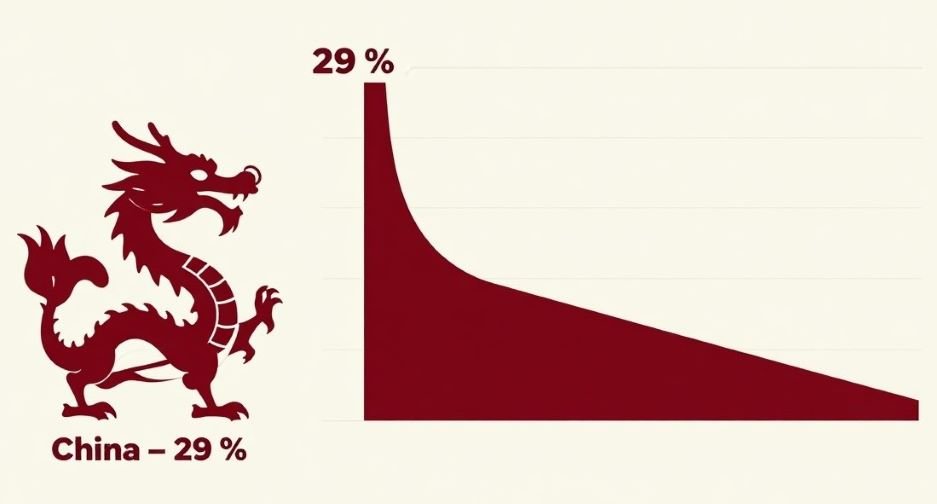
Even in this mutilated terrain of hegemony as mere narrative, what liberals fail to see is that “brutal honesty” is also another form of the “art of lying”; today far more effective at generating popular support than the cultivated and embellished “lie” with which elites sweetened their domination decades ago. Data on social support for far-right political projects worldwide show that nearly 30% of the electorate in numerous countries feels represented by this rhetoric (Government and Opposition, 2025).
Of course, before, the expropriation of natural resources, the exploitation of peoples, the invasion of nations, and their subjugation were carried out in the name of “principles and values,” the “natural laws of the market,” or the “rules-based order” with a supposed global moral superiority. With Trump, the desire is still for natural resources, territories, markets, and unpaid labor, only now it’s stated openly, without rhetorical embellishments or white lies.
President Trump lacks diplomacy when it comes to telling the world what he wants. He doesn’t mask his objectives. He wants Venezuela’s oil and he’s taking it by force, without needing to justify it by invoking any moral imperative.
He wants critical minerals and free access to Greenland’s territory for his military bases, and he says he will occupy it with his army. For him, it’s simply about strengthening his primary “sphere of influence” in a world definitively fractured into spheres of territorial influence. He wants to get rid of Iran’s rulers to control that country’s oil flow and foreign currency, and he doesn’t hesitate to bomb them, including schoolgirls in nearby schools.
Likewise, when he insults his political adversaries, he does so with the frankness of a neighborhood brawler who finds his nemesis around every corner. And in his cruelty toward the weakest—Latino migrants—lies the shameless experience of taking pleasure in the humiliation of those he secretly fears. The world is brutal, and he is sincere about that brutality.
He speaks the unfiltered truth. Even when he lies, he cynically makes it known that he’s lying. He doesn’t resort to the liberal sophistication of sugarcoating falsehoods. And there are American voters—at least a third—and ruling elites in other countries around the world who are fascinated by that cruel lie or that sincere falsehood. The former feel vindicated against the liberal hypocrisy that “forgot” them in favor of the market and globalization for the rich. For their part, the insecure foreign economic and political elites are also seduced by the fury of the whip and the contempt of those they yearn to emulate, so they too can despise those below them.
If hegemony cannot be reduced solely to narratives, understanding how it is exercised and modified requires seeing the underlying movement of hegemonic action: the capacity to articulate the “general interests of subordinate groups,” says Gramsci.
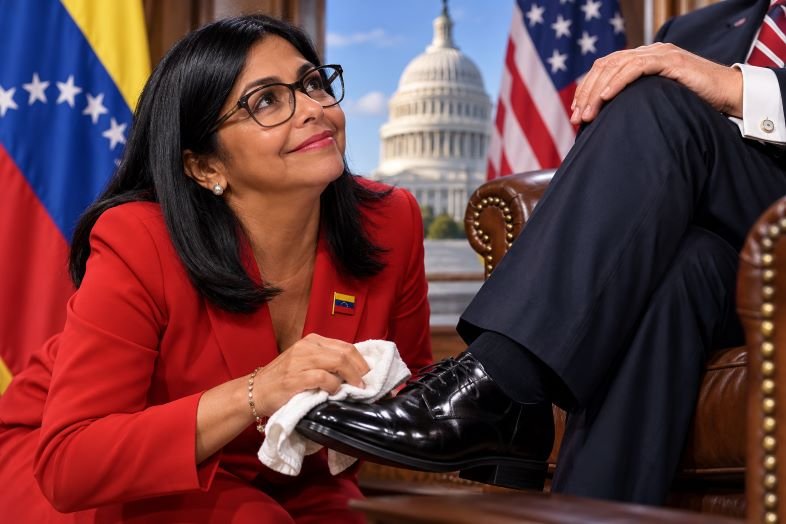
And don’t think that this appetite for subservience is a propensity exclusive to Third World political elites. When one sees the admiration with which NATO Secretary General M. Rutte or German Chancellor F. Merz lavish Trump, it’s clear that complacency with submission knows no bounds across the globe.
In this context, belligerent rhetoric—as seen during this interregnum—can sometimes become a form of “soft power,” in the sense of an enunciative construction capable of persuasion. Certainly, it is a weaker form of seduction, limited in its reach and duration, as is the case with any political project today. But even so, it possesses a greater persuasive effect than the decadent liberal appeal, thus rendering Acemoglu’s discursive argument for hegemony an aporia.
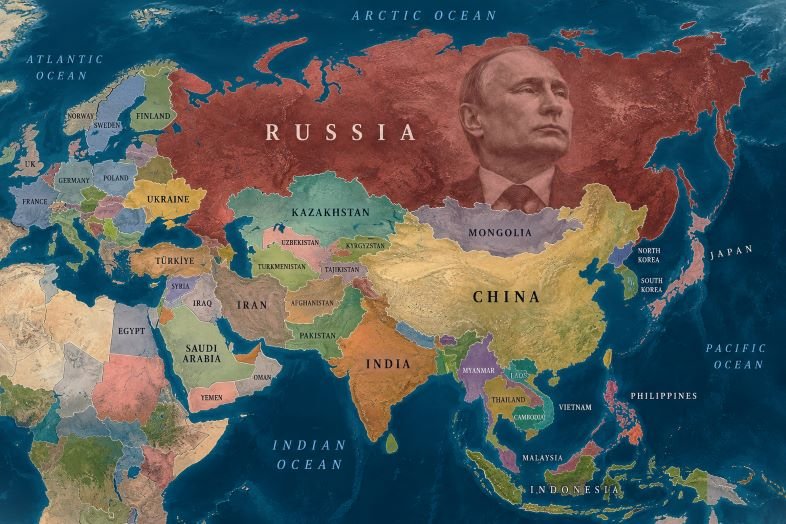
However, it must be acknowledged that this verbal violence and economic coercion are not new realities. Thucydides’s maxim that “the strong do what they can, and the weak what they must” is a familiar theme in the relationships between the great imperial powers and the subordinate countries of Africa, Latin America, and Asia. What is new is the widespread use of this maxim by the former global hegemon, the inclusion of Europe—now relegated to a provincial global territory—on the list of those mistreated, and the deference shown to the other two emerging hegemons with recognized spheres of influence: China and Russia.
Therefore, if hegemony cannot be reduced solely to narratives, understanding how it is exercised and modified requires examining the underlying movement of hegemonic action: the capacity to articulate the “general interests of subordinate groups,” as Gramsci puts it. And, from the perspective of the state’s economic power, this means expanding its material “economic and political” conditions (Gramsci, Chapter 13, §17). This is the “magic” key that allows a particular interest to demonstrate its legitimate, binding “universality.”
Lower inflation, increased employment, reduced taxes, wage increases, and the expansion of the child tax credit, among other things, help maintain a base of support for Trump domestically. Meanwhile, interest rates on Treasury bonds and financial assets—which attract petrodollars and European savings—the dollar as the world’s reserve currency, and the political manipulation of IMF and World Bank resources to “rescue” struggling countries fuel the material networks of hegemonic actions abroad.
The twilight of liberal hegemony does not mean that it has disappeared, nor that we are in a world without hegemonic influence. It means that it is slowly crumbling to pieces; it survives in fragments through sheer inertia. And, amidst this cataclysm of beliefs and actions, spasms of despair, suffocating uncertainties, and collective dejection arise, intermittently punctuated by temporary bursts of enthusiasm surrounding new proto-hegemonic beliefs and state actions, whether from the left or the right. If any of these translates into practical material solutions to the economic hardships that gave rise to the exhaustion of liberal hegemony, then it will become a contentious hegemony that aspires to consolidate itself as a new predictive horizon for the era. If it fails to address these grievances, society will once again plunge into a maelstrom of frustrations and ephemeral allegiances. This is a liminal time.
In times of hegemonic transition and social availability like today, bold and promising discourse can centralize social energy in multiple political directions, which is crucial for any project of social change. It can awaken base emotions that legitimize further abuses and inequalities, or it can trigger noble passions that converge toward greater social justice. But the continuation of the cognitive maelstrom or the consolidation of hegemony will not come from the linguistic quality of government speeches. It is not a matter of ferocity or softening of the rhetoric.
The hierarchy of each State in the new global order will be determined by its ability to successfully enforce the exercise of its economic and political sovereignty against other States.
Within the framework of the accumulation model that will govern the economies of nations, hegemony will be determined by how rhetoric, whether violent or “soft,” is supported by tangible improvements in economic activities and the status of a majority of people, as well as by the protection and plausible hope of future well-being for the fabric of collective family life, which is where, ultimately, the social cohesion of any country is decided.
And, with regard to international relations, hegemony will be determined by each hegemon’s ability to successfully enforce its economic interests within its perceived sphere of influence, combining economic and political coercion with targeted benefits for its dependents. Meanwhile, the hierarchy of each state in the new global order will be defined by its capacity to successfully assert its economic and political sovereignty against other states.
Álvaro García Linera is one of the most important intellectual figures in Latin American Marxism. A mathematics student at the National Autonomous University of Mexico (UNAM), he participated in the founding of the Tupac Katari Guerrilla Army (EGTK) and spent several years as a political prisoner in La Paz’s Chonchocoro prison. He was elected Vice President of Bolivia in 2006 and re-elected until the 2019 coup that forced him into exile along with President Evo Morales. Author of more than twenty books, his latest work, “The Concept of the State in Marx: The Commons through Monopolies” (Akal, 2025), explores the theoretical proposals on the state from Marxist and critical thought perspectives, as well as Marx’s position on the matter.
(Diario Red via Alvaro Garcia Linera)