Since the Commander-in-Chief of the Venezuelan Armed Forces is kidnapped during a military invasion by the United States Army, the application of the Geneva Convention relative to the treatment of prisoners of war, adopted on August 12, 1949, is mandatory.
The spectacular military invasion of Venezuela with aircraft carriers, battleships, nuclear submarines, 150 fighter-bombers and helicopters, a deluge of missiles and task forces turned out to be a real disappointment.
Three months after the attack, and despite incursions by astute investigative bodies like the CIA and Southern Command, not a single member of the fictitious Cartel of the Suns or the Tren de Aragua has been located. Not one.
They’ve found even fewer caches of illicit substances. Not even close.
Nor did they find the alleged 70% of voters who supposedly cast their vote for the bland candidate González in 2024.
None of the objectives were met. Not a single square meter of territory was conquered, not a single soldier was kept there, and not even the smallest outpost was established.
What the invaders surprisingly did find were the world’s largest reserves of fossil fuels and gold, as well as the President legitimately in charge of managing them and his spouse, the First Lady and congresswoman Cilia Flores.
Lacking the capacity to seize the mineral reserves at once, the invaders withdrew, kidnapping the presidential couple.
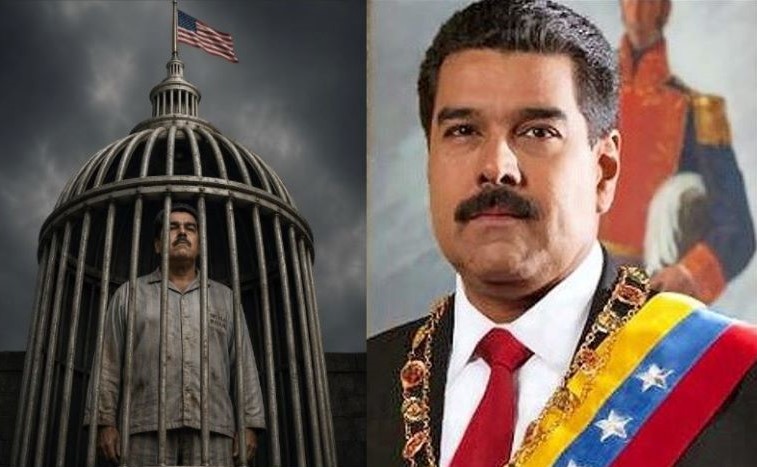
On January 5, 2026, Nicolás Maduro Moros declared: “I am the President of Venezuela, I consider myself a prisoner of war.”
Let’s see why. The President is also commander of the Armed Forces of the Bolivarian Republic of Venezuela, according to article 236 of the Constitution of the Republic, whose numeral 4 entrusts him with: “Directing the National Armed Forces in his capacity as Commander-in-Chief, exercising supreme hierarchical authority over them and determining their size.”
Since the Commander-in-Chief of the Venezuelan Armed Forces is kidnapped during a military invasion by the United States Army, the application of the Geneva Convention relative to the treatment of prisoners of war, adopted on August 12, 1949, is mandatory.
Article 4 of the Convention states: “A. Prisoners of war, within the meaning of this Convention, are persons belonging to one of the following categories who fall into the power of the enemy: 1) members of the armed forces of a party to the conflict, as well as members of militias and volunteer corps forming part of these armed forces.”
The rights recognized in the aforementioned convention are inalienable, as Article 7 states: “Prisoners of war may not, under any circumstances, waive, in whole or in part, the rights granted to them in this Convention and, where applicable, in the special arrangements referred to in the preceding article.”
Prisoners of war may not be held in prisons for common criminals. Article 22 of the convention stipulates: “The detaining power shall group prisoners of war in camps or sections of camps, taking into account their nationality, language, and customs (…).”
The nature and condition of these camps is categorically different from penitentiaries, since Article 39 of the same law provides: “Each prisoner-of-war camp shall be under the direct authority of an officer in charge belonging to the regular armed forces of the detaining power. (…)”
Nor can kidnappers force prisoners of war into degrading or humiliating uniforms. Article 18 of the convention stipulates that “Prisoners of war shall not be deprived of their rank insignia, nationality insignia, decorations, or, in particular, objects of personal or sentimental value.” Prisoners have the right to the clothing, uniforms, and insignia appropriate to their rank. Article 40 adds: “The wearing of rank insignia, nationality insignia, and decorations shall be authorized.”
War, a state of exception that effectively suspends many rights, does not eliminate or suspend the rights of prisoners. Article 84 of the aforementioned convention stipulates that “Only military tribunals may try a prisoner of war, unless the legislation of the detaining power expressly authorizes civilian tribunals to try a member of the armed forces of that power for an offense similar to that which gave rise to the charge against the prisoner.” Prisoners of war cannot be tried or convicted by ordinary criminal courts.
The same article stipulates that “In no case shall a prisoner of war be brought before any tribunal whatsoever that does not offer the essential guarantees of independence and impartiality generally recognized, and in particular, that its proceedings do not guarantee the accused the rights and means of defense provided for in Article 105.” This provision is particularly relevant when, in violation of the Sixth Amendment to the United States Constitution, the procedural farce initiated against Nicolás Maduro Moros is being brought before the civil and criminal jurisdiction of a court without competence to decide on events that occurred in Venezuela, prolongs unjustified postponements and delays, and blocks the funds essential to pay for his defense.
Finally, Article 118 of the aforementioned convention stipulates that “Prisoners of war shall be released and repatriated without delay after the cessation of active hostilities.” The war against Venezuela began without a declaration and without the indispensable authorization of the United States Congress, and it continues until a peace treaty is signed in accordance with current international law and respectful of our sovereignty.
Some may argue that the conflict ends with the de facto recognition of the Venezuelan government. In that case, our President and First Lady should be released and repatriated immediately, with the issue of reparations and compensation remaining to be determined.
Others will say that legal arguments are useless when force is the issue. Then, the Americans’ legal arguments, and the consequences they intend to derive from them, would also be worthless. The people are the sole arbiters of force.
(Colarebo)