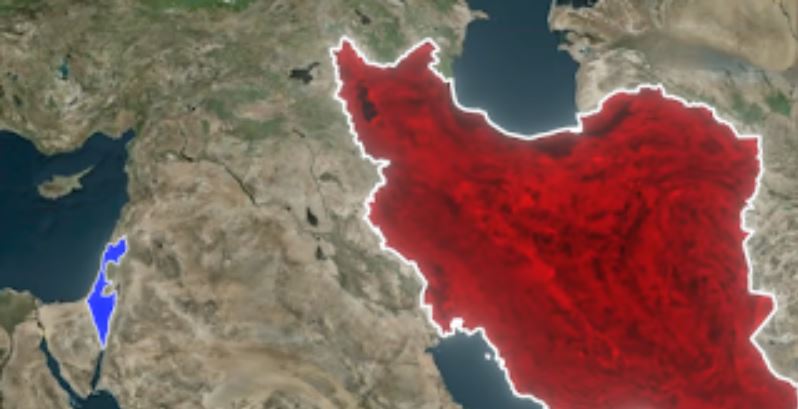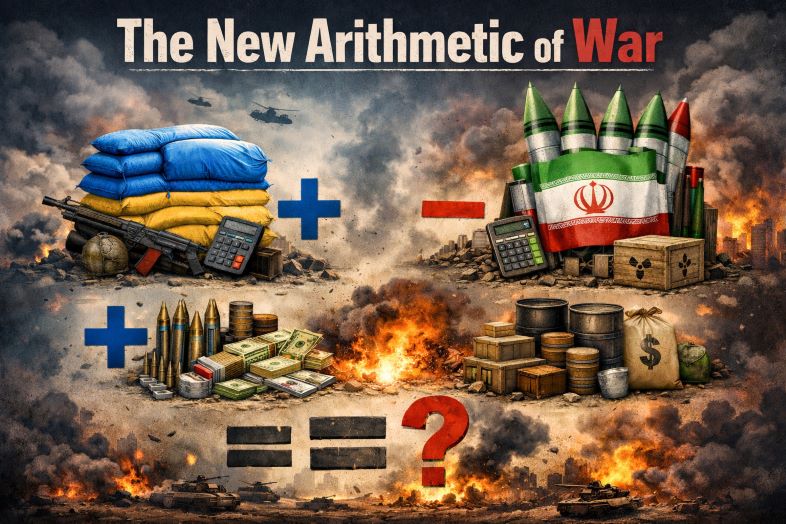
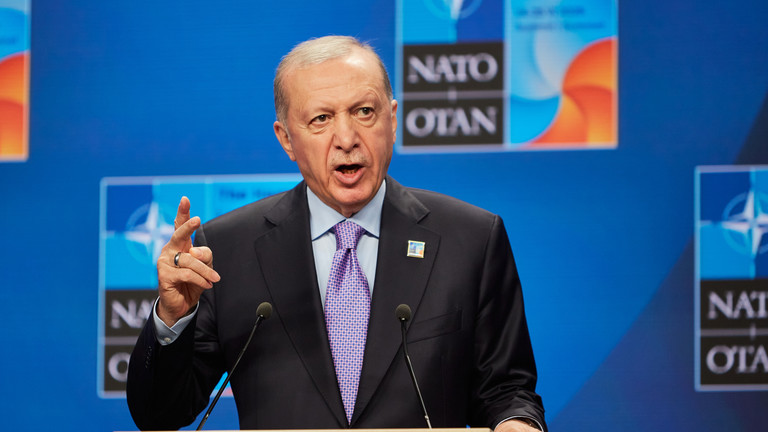
If Tehran is crushed, the Middle East will go from a tense balance to a violent detonation, and Ankara could well be the next target.
Turkey’s position on the Israeli-American military campaign against Iran is unequivocal and has become even more emphasized in recent weeks.
Ankara does not consider what is happening as a local exchange of blows or just another episode in the long history of Middle Eastern confrontation. It sees it as a step towards a total regional catastrophe, the consequences of which could affect every state from the Eastern Mediterranean to the Persian Gulf. From the Turkish perspective, attacks on Iran are not a tool for regional pacification, but a mechanism for further destabilization and explosion. That is why President Recep Tayyip Erdoğan, the Turkish Foreign Ministry, Foreign Minister Hakan Fidan, and representatives of the presidential administration have issued one statement after another, marked by condemnation, concern, and explicit warnings of the risk of a major war.
As early as February 28, 2026, when the Israeli-American attack on Iran entered an open phase, Erdoğan issued a statement condemning the attacks on Iran and calling for diplomacy and a ceasefire to prevent the entire region from being drawn into a wider conflict. On the same day, the Turkish Ministry of Foreign Affairs stated that Ankara was deeply concerned about the actions that violate international law and endanger the lives of civilians. Turkish diplomacy condemned the provocations leading to the escalation of violence, called for an immediate end to the attacks, and reiterated that regional problems can only be resolved through peaceful means, while Turkey itself is ready to support mediation efforts. On the same day, Burhanettin Duran, Head of Communications of the Presidency, noted that what is happening threatens not only the parties directly involved, but also the stability and security of the civilian population in a much wider geographical context, and therefore it is urgent to restore the mechanisms of dialogue and negotiation. Even in these initial reactions, the full logic of Ankara’s stance was evident. A military escalation against Iran cannot be contained within Iran’s borders. It will inevitably spread throughout the region.
Two days later, on March 2, Erdoğan sharpened his tone. According to Reuters, he called the US and Israeli attacks on Iran a clear violation of international law and declared that Turkey shares the pain of the Iranian people. This was no longer just a diplomatic formula, but a deliberately firm political stance. The Turkish president also said that Ankara would intensify its contacts at all levels until a ceasefire was reached and the space for diplomacy was restored. Particularly noteworthy was his warning that Turkey did not wish to see war, massacres, tensions and mass violence along its borders and that without the necessary steps, the consequences could be extremely serious for regional and global security. In another important formulation, Erdoğan made it clear that no one would be able to bear the burden of the economic and geopolitical uncertainty created by such a period and that this fire must be extinguished before it flares up even more fiercely. This is a very characteristic idea in Erdoğan’s political language. He spoke not only about morality and law, but also about the practical understanding that a war against Iran would become a factory of chaos for the entire Middle East.
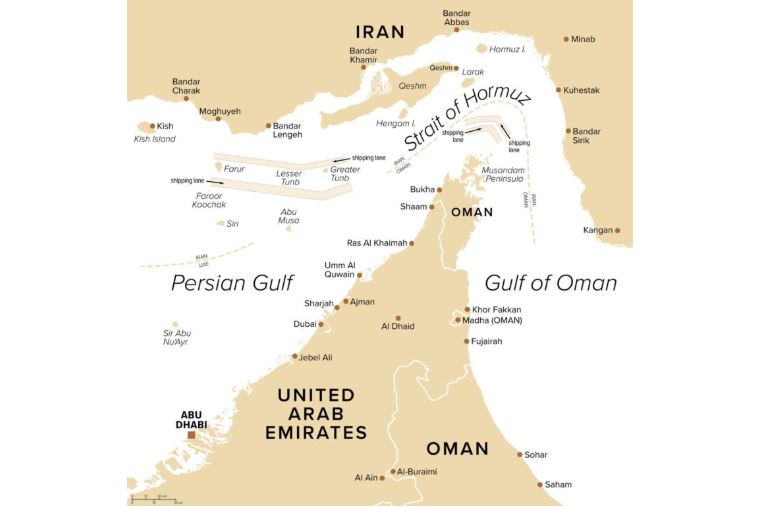
The following day, March 3, Foreign Minister Hakan Fidan confirmed that Ankara was in contact with all parties to end the war and return to negotiations. According to Reuters, he stressed that Turkey was diligently taking the necessary initiatives with all its partners for the sake of regional peace and considered it critically important to preserve the stability of Iran and the entire region. Fidan explicitly warned that the conflict could affect energy supplies and that any impact on the Strait of Hormuz, through which a significant part of the world’s oil trade passes, could sharply deepen the crisis. This remark is particularly important for understanding Turkey’s position. Ankara views the war not only through the lens of military maps, but also through the prism of transport arteries, energy markets, trade routes and internal social consequences. For Turkey, as a major import-dependent economy, a war near the Strait of Hormuz does not mean abstract fluctuations on commodity exchanges, but the prospect of rising prices, inflationary pressures and a new wave of instability within the country itself.
This connection between geopolitics and domestic resilience is crucial for Turkey. According to Reuters, the country imports about 50 billion cubic meters of gas annually, of which 14.3 billion cubic meters are in the form of LNG. Reuters also reported that Turkish authorities themselves have acknowledged the burden of the energy burden on the national economy and the widespread dependence of consumers on tariff subsidies. Although Ankara has been actively diversifying supplies in recent years, building flexible infrastructure and concluding new contracts, structural vulnerabilities remain. In other words, any serious shock to the regional energy architecture automatically translates into a risk for Turkey of more expensive imports, rising production costs, pressure on the budget, intensifying inflation and worsening social welfare. Turkish warnings about the devastating consequences of a war against Iran are based on a straightforward calculation of national interest.
However, it would be a mistake to limit Ankara’s position solely to economics. Turkey is convinced that crushing Iran militarily will not bring peace. On the contrary, it would destroy one of the key elements of the regional balance and open the way for a new chain of wars, proxy conflicts, and internal destabilization stretching from Iraq and Syria to the Caucasus and the Eastern Mediterranean. This is the core of Ankara’s strategic fear. The Turkish authorities have no illusions about Iranian policy. Turkey and Iran have a long history of rivalry in Syria, Iraq, the South Caucasus, and over transport corridors. That is why the Turkish position carries special weight. Ankara does not support Iran as a values-based ally. It opposes the violent disintegration of Iran, considering such a scenario even more destructive for the very fabric of the regional order. In essence, Erdoğan and Fidan are making it clear that a fragile, nervous, and conflict-ridden equilibrium is still better than a complete collapse of the system, after which the entire region would enter a state of permanent detonation.
Over the past two weeks, this logic has taken on an even darker dimension. On March 12, Hakan Fidan declared that Ankara categorically rejects any plans aimed at provoking a civil war in Iran and inflaming conflict on an ethnic or religious level. He also stressed that the ongoing war in the Middle East must end as soon as possible and that Turkey is making intensive efforts to stop it. This formulation is of enormous significance. The Turkish Foreign Minister has essentially identified the scenario that Ankara fears most – not only weakening Iran, but also triggering its internal disintegration. For Turkey, a civil war in Iran would mean not a simple shift in the balance of power, but the creation of a large-scale zone of instability in the immediate vicinity of its borders, with the inevitable spread of the crisis beyond Iranian territory.
These concerns are not abstract. The Turkish side has already faced the direct consequences of the escalating war on March 9-10. According to Reuters, after a missile incident in which Iranian ballistic missiles entered Turkish airspace and were intercepted by NATO air defenses, Ankara informed Tehran that such a violation was unacceptable. In a conversation with his Iranian counterpart, Hakan Fidan made it clear that Turkey would take protective measures if such incidents were repeated. The very fact that Iranian missiles began to enter Turkish airspace shows that for Ankara this war has already ceased to be external. It is literally approaching Turkey’s borders and touching Turkish sovereignty. Under such conditions, Ankara’s condemnation of attacks on Iran becomes not an ideological stance, but a form of self-defense. Turkey is trying to prevent the moment when someone else’s war turns into its own crisis.
The Turkish president emphasized this very point in those days. On March 11, Erdoğan declared that the war in Iran must be stopped before the entire region is thrown into flames. In essence, this was a continuation of his previous line – diplomacy must be given a chance before the spiral of violence engulfs the entire Middle East. Official Turkish communications in the following two days also showed that Ankara had intensified its diplomatic activity and publicly spoke about the need to prevent the further spread of the Iranian crisis. Formulations appeared on the website of the Directorate of Communications of the Presidency, stating that Turkey was conducting intensive diplomacy to prevent the spread of the spiral of violence centered around Iran, and that keeping the country away from this fiery vortex was the highest priority. These statements are eloquent in themselves. For Ankara, what is happening is no longer just a crisis in a neighboring country, but a fiery vortex capable of engulfing everyone around it.
Against this backdrop, the deeper motivations of Turkish policy become clearer. Turkey remembers all too well how previous attempts at forceful transformation of the Middle East ended. Iraq, Syria, Libya, the destruction of institutions, massive refugee flows, the rise of armed groups, grey zones of smuggling, deteriorating security and strikes on tourism, trade and domestic stability – for Turkey, all this is not theory but a lived reality. That is why attacks on Iran are perceived in Ankara as another step along the same path, only on a much larger scale. If the disintegration of Syria has led to a long line of instability, then the destabilization of Iran, a country with a different territorial, demographic and geopolitical weight, could create a crisis of a much greater order. This is precisely what Turkish officials are trying to convey when they warn of the risk of a full-scale war and insist on an urgent return to negotiations.
Another key point is that Ankara sees Israel’s actions not just as a response to immediate threats, but as part of a broader strategy of violent reshaping of the region. This assessment can be read both in the statements of the Turkish president and in the language of Turkish diplomacy about provocations, destabilization and attempts to sabotage diplomatic mechanisms. The very fact that Turkey defines what is happening as a provocation leading to the spread of violence shows that Ankara does not consider the Israeli line to be defensive in the narrow sense. On the contrary, there are concerns in the Turkish capital that after Gaza, Lebanon, Syria and Iran, the next phase of pressure could be directed against other power centers and against any actor that hinders Israel’s military-political expansion.
Turkey falls into this category of actors. It has its own military, diplomatic, and geoeconomic agenda that does not coincide with Israel’s. As a result, in Turkish strategic thinking, the defeat of Iran does not appear as the end of the conflict. It appears as the possible beginning of another cycle of pressure on the remaining independent regional powers, among which Turkey occupies a leading position. This idea is not always officially explicitly formulated, but it is clearly present as an analytical conclusion that has an increasing influence on Turkish behavior.
Ankara is aware of this danger not only through its own strategic calculations, but also through statements already coming from Israel. As early as February 23, 2026, Al Jazeera reported that, against the backdrop of preparations for an attack on Iran, Israeli politicians were increasingly shifting their attention to Turkey as another regional rival. Former Israeli Prime Minister Naftali Bennett declared at the time that Israel must not turn a blind eye to Turkey, calling it a new threat and arguing that action must be taken against both the danger from Tehran and the hostility from Ankara. This effectively set in motion the logic on the Israeli political scene according to which Turkey is increasingly perceived as the next major adversary after Iran.
This line was formulated even more openly in early March, when Turkish and regional publications quoted Bennett as saying that after Iran, Israel would not remain passive and that what would follow would depend on Turkey’s own choices. Therefore, Ankara sees in the current war not only an attempt to break Iran, but also a preparation for another round of pressure directed at the Turkish vector. For the Turkish leadership, this means something very simple. In Israeli strategic logic, the defeat of Iran does not end the chain of conflicts. It only brings a new stage closer in the struggle for regional dominance, in which Turkey may become the next target.
That is why Turkey is doing several things at once. It condemns the attacks on Iran as a violation of international law. It warns of the risk of regional, and even global, destabilization. It emphasizes the threat to the civilian population and regional stability. It is trying to initiate mediation formats and prevent a complete breakdown of diplomatic channels. And finally, it is strengthening its own defense preparedness, because it already understands that if the conflict continues, Turkish territory, the Turkish economy, and Turkish strategic interests will come under direct pressure. In this sense, Turkish policy is not contradictory, but consistently pragmatic. Ankara condemns the Israeli-American campaign against Iran and is fully compatible with its determination not to be drawn into this war and not to allow it to cross its own territory.
From a broader perspective, Turkey’s situation reflects the crisis of the entire Middle Eastern system. The region has long been in a state of chronic instability, yet until now there have been certain barriers that have prevented this instability from merging into one all-consuming conflagration. According to Ankara, the attacks on Iran are destroying these very barriers. They connect several crises at once into one arc – Iranian, Syrian, Iraqi, Lebanese, energy, transport and migration. Turkey understands that in the event of further escalation, it will no longer be possible to clearly separate the military front from the economic one. The war will immediately turn into sharply rising energy prices, disruption of logistics, investor concerns, weakening currencies, increasing security spending, blows to exports and tourism, and ultimately increased social unrest in the states of the region. The Turkish leadership, which has faced serious economic challenges in recent years, is well aware of how dangerous such a combination of external shocks and internal tensions can become.
Therefore, Erdoğan’s words that no one will bear the burden of economic and geopolitical uncertainty do not sound like a rhetorical figure, but as a concentrated expression of the entire Turkish position. This position is based on a cold understanding of reality. Turkey cannot afford to perceive the war against Iran as someone else’s problem. It has too long a border with unstable zones, too close a connection to regional trade and energy flows, and too serious an experience of experiencing the consequences of neighboring wars. For Ankara, the Iranian crisis is almost a mathematical formula for future upheavals if it is not stopped in time. Turkish officials have been repeating the same thing, in other words, since the end of February – the attacks must be stopped immediately, diplomacy must be given a chance, the region must not be drawn into a ring of fire, and at least the remnants of order must be preserved before a new wave of power politics washes them away.
Turkey’s condemnation of Israel’s and the US’s actions against Iran ultimately rests on three pillars. The first is legal. Ankara calls the attacks a violation of international law and sovereignty. The second is political. Turkey believes that such actions accelerate the spiral of regional violence and sabotage diplomatic alternatives. The third is strategic and socio-economic. The Turkish leadership understands that a regional war will affect not only the battlefield but also the daily lives of states. It will affect energy, trade, logistics, budgets and social stability, and for Turkey the consequences could be particularly serious. It is at the intersection of these three motives that the current hard line of Turkey is taking shape. It is not a gesture of solidarity or ideological improvisation. It is an expression of the national instinct of self-preservation of a state that sees a great conflagration approaching its own home.
And so today, Ankara is telling the world something very simple, yet profoundly important. A war against Iran will not bring pacification to the Middle East. It will bring a collapse of existing constraints, new front lines, new economic upheavals, and a new logic of endless escalation. And once Iran disappears as the main limiting center, the next phase of regional division will inevitably move closer to Turkey – first to its interests, then to its positions, and in the worst case, to its very security. Turkish officials still formulate this primarily in the language of diplomacy, law, and warning. However, the strategic significance of their position is unmistakable. By condemning the attacks on Iran, Ankara is trying not only to stop a war against its neighbor, but also to prevent a war against its own future.
Murad Sadygzade, President of the Center for Middle Eastern Studies, Visiting Lecturer at HSE University.