March 25, 2026 – Away from the global disarray caused by the US and Israeli aggression against Iran, some good news is filtering out of Asia. India and China–two civilizational poles of the multipolar world– have decided to expand their air connectivity. After establishing air links with Shanghai, Guangzhou and Kunming, New Delhi and Beijing will also now be on each other’s civil aviation map.
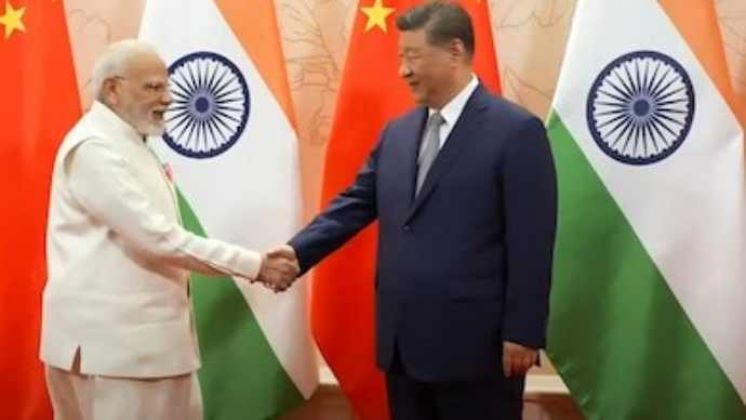
Critics may say that by itself this is not a big deal. But when threaded with the thaw in the relationship that began with the 2024 BRICS summit, when Chinese President Xi Jinping and Indian Prime Minister Narendra Modi met in Kazan, it is a major step signalling that two countries now have the comfort level to uncork active people-to- people ties.
It is now evident that during the Kazan meeting the two leaders had taken a strategic decision to revive ties, which had gone into free-fall after troops on both sides had clashed in Galwan valley–a remote location in Eastern Ladakh. This unfortunate incident at a desolate enclave in the Tibetan plateau had taken place in June 2020.
Ever since, till the Kazan summit, ties between the two Himalayan neighbours were on razor’s edge. The only saving grace that the two governments had ensured the continuity of a regular military dialogue, which eventually led to a disengagement of troops, just ahead of the Kazan summit.
After Kazan, Modi and Xi met again in August last–this time on the sidelines of the Tianjin summit of the Shanghai Cooperation Organisation (SCO). It was here that the two leaders discussed concrete ideas that would allow them to move forward. Cai Qi, a member of the Standing Committee of the Political Bureau of the CPC Central Committee–China’s top decision making body– had pointed out in Tianjin that during their meeting, Xi and Modi had arrived at a “new important consensus”.
In another signal that the two establishments had begun deeper conversations, the ruling Bharatiya Janata Party (BJP), on January 12 this year hosted a high-level delegation from the international department of the Communist Party of China (CPC), led by Vice Minister Sun Haiyan. This visit marked the first formal party-to-party engagement of the two countries since the Galwan clash.
Significantly, the CPC delegation also met senior members of the Rashtriya Swayamsevak Sangh (RSS)–a move that reflects China’s intent to quietly engage with India at all levels.
From an Indian perspective, there was compelling economic logic for a detente, for it had become evident that without re-opening supply chains with China, the dream of Viksit Bharat–Prime Minister Modi’s pet project to turn India into a developed country by 2047, would be a mirage.
Unsurprisingly, in February, India eased its five‑year‑old curbs, thus allowing state‑run power and coal companies to resume select imports of Chinese power equipment. This became necessary because without availability of Chinese equipment, such as transformers, turbines, and transmission equipment it was becoming impossible to fulfill government power contracts worth a jaw-dropping $700–750 billion.
With coal being the major feedstock of thermal power, import of Chinese mining machinery and heavy equipment also became imperative.
In other words, without import of Chinese power equipment, India’s plans to raise its thermal power capacity to about 307 GW over the next decade, would remain a pipe dream.
Clearly focused on geo-economics, India, earlier this month approved Chinese Foreign Direct Investment (FDI) for electronic components, capital goods and solar manufacturing inputs, including polysilicon and ingot-wafer.
This could benefit many Chinese and Indian companies, apart from bolstering energy security. For instance, Luxshare Precision and Goertek, two Chinese firms, who are major suppliers for Apple and global electronics firms that are investing in India are expected to benefit from the new openings in the electronics component sector.
Similarly, China’s BOE Technology, which makes display panels may lookout for Indian smartphone assemblers as partners. Indian companies such as Dixon Technologies and Foxconn India could also be seeking cost-effective component suppliers, especially if they could strengthen local assembly and exports, in tune with Modi’s Make-in-India- for the- world mantra.
In addition, LONGi Green Energy and Tongwei–leaders in polysilicon and wafers–are well-positioned to supply India’s growing solar industry. In India, companies such as Adani Solar and Tata Power Solar could benefit from cheaper inputs, and for establishing joint ventures with Chinese firms.
In fact, two sectors-–renewable energy and green hydrogen are primed up for massive expansion that can have global impact.
This is because India has declared that by 2030, it wants to install 500 GW of non-fossil fuel capacity. The plan includes a combination of solar, wind, hydro, biomass, and nuclear energy.
That’s where China fits in. Already China’s Envision Group, the world’s second-largest wind turbine maker intends to build another factory in India, supplementing the blade plant it already operates.
The renewable energy giant also runs a nacelle facility in Gujarat, Modi’s home province.
Once the new blade factory comes online, it will scale up wind power capacity from the current 3 Gigawatts to 4.5 to 5 GW. The company plans to double its India staff to 6,000, in tune with Modi’s Make-in-India template. In addition to its two products, the firm intends to launch a large 5-megawatt turbine model.
Similarly, Suzlon Energy of India and CGN Wind Energy (CGNWE) of China are partnering with each other to develop 800 MW of wind power projects across India, China, Brazil, and South Africa.
In solar energy too, India’s Essel Group has a 50:50 partnership with JA Solar of China. The joint venture manufactures solar cells and modules in India, following an investment of $150 million. The duo plans to use advanced photovoltaic (PV) technology to produce 500 MW of power annually.
Similarly, ZNSHINE Solar of China and SolarWorld India are partnering to set up a 1GW production line, becoming one of India’s largest solar module manufacturers.
China and India are also large manufacturers of hydrogen. In India, there is an anticipation that by 2030, global demand for hydrogen will exceed 100 million metric tons, as countries step up decarbonizing their economies. New Delhi is gearing up to corner part of that market. “Substantial progress has already been made — 862,000 tons of production capacity per year has been awarded to 19 companies, while 3,000 megawatts of electrolyzer manufacturing capacity has been allocated to 15 firms,” India’s renewable energy minister Shripad Naik was quoted as saying last year.
But in comparison, China’s production is huge. In 2024 alone China was producing 125,000 tons– marking nearly 50% of total global capacity. India is also not in the same league as China in the cost-effective production of electrolyzers. “China can produce electrolyzers at nearly one-third the cost of Indian imports. India, though rich in solar and wind potential, is still building its electrolyzer capacity and faces higher production costs,” Nikkei Asia quoted B.K. Verma, an independent energy analyst as saying.
Nevertheless, the two countries have a choice to make. They can either continue to compete with each other and allow third countries to enter the fray. Alternatively, they can dominate the global market by collaborating with each other, presenting a new and exciting template for the growing emerging economies in the multipolar era.
It would therefore not be surprising that India opens its doors wider for Chinese heavyweights in the future. With political turbulence shrinking many other economies on the globe, the Prime Minister’s Office in India has appointed a high ranking committee that will review and revise the list of sectors where Chinese entry would be allowed in the future.
There are other factors that seem to bring India and China together. For instance, Trump’s trade war with India as well his personal role in causing death and destruction in resource rich West Asia appears to have miffed many among the Indian people. This mood shift is apparently being reflected in Indian civil society’s fresh interest in China, as an alternative to the troubled West. Whether this budding re-imagination of China also results in preference to the BRICS grouping as a futuristic alternative to the aging G-7, remains to be seen.
Commenting on the public response to the revival of New Delhi-Beijing direct flights after a gap of more than six years, Chinese daily Global Times points out that “attention given to the resumption of this important flight route indicates a positive response from Indian public opinion toward improving economic relations with China – a valuable signal worth cherishing”. The daily observed that welcome by Indian media to the revival of flights signals “ a steady recovery in bilateral relations in recent months”.
Putting a marker on the status of India-China ties, the daily, which belongs to the official People’s Daily stable, spotlights that moving beyond “a reset and fresh start” New Delhi-Beijing ties “have reached a new level of improvement”.
It adds that interactions at all levels have grown more frequent, economic and trade cooperation has reached new heights, and people-to-people exchanges have become increasingly active.
Highlighting that active collaboration between China and India has a much broader international footprint, the daily notes that “this is not only a strong pillar supporting Asia’s rejuvenation but also a positive contribution to a multipolar world”.
The newspaper also recalled that Chinese Foreign Minister Wang Yi had noted at a press conference on March 8 that mutual trust and cooperation are beneficial to the development of China and India, while division and confrontation are detrimental to the rejuvenation of Asia.
“Building on the fresh start enabled by their Kazan meeting in 2024, it brought about further improvement in China-India relations. Both sides are earnestly implementing the important understandings of our leaders. We are heartened to see reenergized interactions at all levels, a new record in bilateral trade, and closer people-to-people exchanges. All this has brought tangible benefits to the two peoples,” Wang observed.
In tune with the visible mood-shift in the two countries, when the world is undergoing a major transition, India and China need to capitalise on their unprecedented opportunity to rebuild their ties, with a vision to anchor an emerging multipolar world that hand-holds the Global South.
But for that vision to materialise, the two countries must agree to view each other strictly with a collaborative geo-economic lens and not allow a security-first imagination to dominate.
Since it takes two to tango, it is up to the two leaderships that their border problem, the bane of India-China relations, is managed efficiently, and not allowed to disrupt the geo-economic track, which is key for both counties to realise their centenary goals—Viksit Bharat in India’s case, and the Chinese Dream, as espoused in 2017 by President Xi at the 19th Congress of the Communist Party of China (CPC).