March 11, 2026 – Hydrogen energy has been incorporated into future energy and green fuels, rising to a strategic position of national energy security. This rapid shift in strategic importance may herald an infrastructure boom.
2026 is the first year of the 15th Five-Year Plan and a critical window of opportunity for the hydrogen energy industry to move from demonstration to large-scale development.
This year’s government work report at the Two Sessions placed particular emphasis on hydrogen energy, mentioning related content twice.
Judging from the context in which hydrogen energy appears in government reports, phrases like “cultivating new growth points for hydrogen energy” refer to economic growth; “green fuel” refers to industrial decarbonization; and “future energy” refers to energy strategy. When these three contexts are simultaneously focused on hydrogen energy, it means that hydrogen energy is no longer a standalone issue, but has been embedded in the underlying logic of the entire country’s development.
Looking back at the development trajectory of hydrogen energy in national policies, it becomes clear that the signal released this time is far more significant than it appears on the surface.
In March 2019, hydrogen energy was included in the Government Work Report for the first time, focusing on the construction of hydrogen refueling facilities, leaning towards supporting infrastructure, and positioned as a “supplement to new energy sources.” Although it has entered the policy field, it has always played a supporting role in the energy landscape.
In 2024, hydrogen energy reappeared, with the government work report explicitly including it in the emerging industries list and calling for accelerated development. This leap signifies that hydrogen energy development is no longer limited to the construction of hydrogen refueling stations, but aims to build a complete industrial ecosystem and move towards large-scale deployment.
In 2026, hydrogen energy will experience its third decisive leap. The term “new growth point” means that hydrogen energy will become the growth engine of future economic development; the new positioning of “future energy” has moved it beyond the categories of “emerging industry” and “strategic industry,” making it an essential strategic choice for China’s energy system.
In fact, hydrogen energy development was included in the national plan as early as 2015. At that time, renewable energy hydrogen production and fuel cell vehicles were included in the key areas of technological innovation and industrial layout, and their strategic position has been continuously improved since then.
Currently, China’s hydrogen energy industry ranks first in the world in terms of scale, with an output exceeding 37 million tons in 2025, including over 250,000 tons/year of green hydrogen production capacity. Its manufacturing capabilities for core equipment such as electrolyzers have already reached the forefront globally. Industry experts predict that by 2030, China’s green hydrogen production is expected to reach over 3 million tons per year, forming a market worth over one trillion yuan.
However, behind the impressive results, the development of China’s hydrogen energy industry still faces many challenges, resulting in development falling short of expectations.
“China’s hydrogen energy industry faces systemic obstacles in its path to large-scale development.” Ma Yongsheng, a member of the National Committee of the Chinese People’s Political Consultative Conference and an academician of the Chinese Academy of Engineering, recently told the media that the hydrogen energy industry suffers from four major pain points: structural weakness in the storage and transportation sector, with a serious disconnect between production and sales; lagging supporting planning and management mechanisms, lacking national-level special plans; an inefficient electro-hydrogen coupling mechanism, resulting in green hydrogen projects being produced but not used or profitable; and the “islanding” of the industrial chain, lacking systematic integration across the entire chain.
From a market application perspective, 2025 is the final year for the demonstration of hydrogen fuel cell vehicles, although the overall market growth will slow down in stages. According to data from the China Association of Automobile Manufacturers (CAAM) and the Ministry of Industry and Information Technology (MIIT), the cumulative production and sales of fuel cell vehicles in China from 2015 to 2025 were 31,697 and 31,298 units respectively, which is still far from the planned target of “reaching 50,000 units in operation by 2025”.
Insufficient infrastructure and lagging construction of hydrogen refueling stations are becoming bottlenecks restricting the commercialization of the hydrogen energy industry. According to statistics from the Xiangcheng Hydrogen Energy Database, as of 2025, my country had built a total of 493 hydrogen refueling stations (excluding those demolished). Among them, 43 hydrogen refueling stations were built in 2025, and the growth trend of station construction has declined significantly in the past three years.
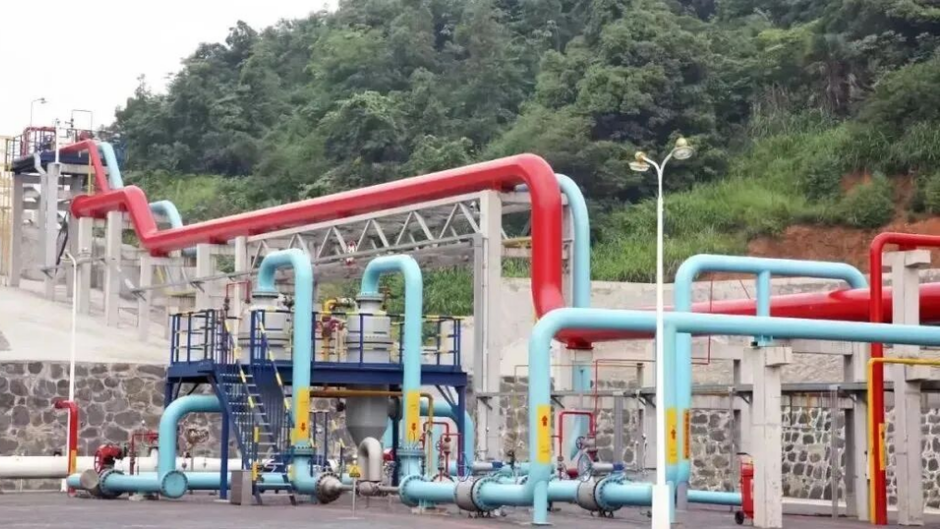
Furthermore, due to technological limitations, hydrogen storage and transportation have become the core bottleneck for high end-use prices and the biggest obstacle to the commercialization of hydrogen energy. Storage and transportation account for 30%–50% of the cost of hydrogen used in the end market. Pipeline transportation of hydrogen has the lowest cost, but currently my country only has about 150 kilometers of hydrogen pipelines, which are concentrated in chemical industrial parks.
Today, the primary mode of hydrogen transportation in China is still “long-tube trailers”—high-pressure steel cylinders are loaded onto trucks and transported one truckload at a time. This method has a hard constraint: the economical transportation radius is approximately 200 kilometers. Beyond this distance, the transportation cost is more expensive than the hydrogen itself.
This has led to a core pain point for my country’s hydrogen energy industry: a severe mismatch between production and sales. The “Three Norths” region, including Inner Mongolia, Xinjiang, and Gansu, is rich in wind and solar resources and is the core area for large-scale green hydrogen production; while the chemical and steel industry clusters in the eastern coastal areas are the main battleground for industrial hydrogen use. The two regions are thousands of kilometers apart, and the fact that green hydrogen can be produced but not transported and not affordable has become the biggest obstacle to the large-scale development of the industry.
The only way to break this deadlock is to build hydrogen energy pipelines. In this regard, Ma Yongsheng, a member of the National Committee of the Chinese People’s Political Consultative Conference and an academician of the Chinese Academy of Engineering, suggested strengthening top-level design, building a national hydrogen energy infrastructure network, incorporating the hydrogen energy pipeline network into the “one map” of national land space planning and the special plan for national energy infrastructure construction, formulating a national medium- and long-term hydrogen energy pipeline network plan, and coordinating the layout of the strategic backbone channels for “west-to-east hydrogen transmission”.
He also suggested granting hydrogen energy pipelines the same status as oil and gas pipelines, clarifying administrative approval pathways and road rights priorities, accelerating the formulation of industry standards for pure hydrogen transportation and hydrogen blending in natural gas pipelines, and supporting large energy companies to conduct inter-provincial hydrogen energy pipeline pilot projects. This means that large-scale investment in hydrogen energy infrastructure will usher in a massive wave of investment, and the entire industrial chain, including pipe manufacturing, compressor equipment, and engineering construction, will be fully activated.
Previously, Zhang Wei, Chairman and Party Secretary of the State Pipeline Group, also proposed the cutting-edge concept of building a new energy “quality-energy network”. The aim is to break down the barriers between energy forms such as electricity, gas, hydrogen, and heat, and to achieve the synergy, storage and intelligent scheduling of multiple energy sources through “energy-quality conversion” (such as green electricity to hydrogen) and “quality-quality conversion” (such as hydrogen to green ammonia). The hydrogen energy pipeline network is one of the most critical core carriers in this new energy ecosystem.
The “mass-energy grid” includes energy and matter such as wind, solar, electricity, hydrogen, alkanes, ammonia, and alcohols. Through flexible conversion, wind, solar, and electricity can be converted into hydrogen, alkanes, ammonia, and alcohols, and then converted into the required energy (such as combustion power generation) as needed, realizing cross-form conversion, cross-temporal and spatial regulation, and cross-regional transmission and distribution of matter and energy.
Zhang Wei pointed out that energy and material transmission in the energy sector mainly relies on power grids and pipelines: power grids, relying on their instantaneous power transmission capabilities, can solve the problem of “spatial mismatch” in energy production and sales; pipelines, relying on the “nationwide unified network” for transmission, storage, and allocation, can solve the problem of “temporal and spatial mismatch” in the production and sales of energy material carriers.
Over the past two or three years, the construction of my country’s hydrogen energy pipeline network has entered a period of accelerated development.
In 2023, my country’s first inter-provincial pure hydrogen pipeline was launched, starting from Ulanqab in Inner Mongolia and ending at Yanshan Petrochemical in Beijing, with an initial planned length of over 400 kilometers. In just two years, the pipeline completed strategic expansion and safety review, extending its total length to 1,145 kilometers, covering five provinces and municipalities, and its long-term annual hydrogen transportation capacity will be increased to 500,000 tons, realizing a leap from single-point pilot to regional linkage.
In addition to the Sinopec Beijing-Inner Mongolia hydrogen pipeline project passing the safety review, the Haitai New Energy Kangbao-Caofeidian pipeline will become the first thousand-kilometer-level pure hydrogen pipeline to start construction in China in 2025. Its total length is about 1,037 kilometers, pipeline diameter is 813 mm, design pressure is 7.2 MPa, and designed annual hydrogen transportation capacity is 1.55 million tons, setting several domestic records for long-distance hydrogen transportation.
Meanwhile, shortcomings in industry standards are being addressed at an accelerated pace. In October 2025, my country’s first national-level special standard for hydrogen storage and transmission pipelines, “Pressure Pipeline Specification Part 5: Hydrogen Pipelines,” was released and will be officially implemented in May 2026. The standard covers the technical requirements for pressure pipelines throughout the entire process of hydrogen production, storage, transportation, and use; it also clarifies the specifications for commissioning, operation, maintenance, and emergency repair of long-distance pipelines, filling a technological gap in the domestic hydrogen energy field.
With standards being implemented, plans being upgraded, and pipelines being accelerated, the puzzle of hydrogen energy infrastructure is gradually being completed. The future hydrogen network will not only be a hydrogen transportation channel, but it will also be compatible with various forms of energy carriers such as hydrogen-blended natural gas, green methanol, or green ammonia. Furthermore, it will upgrade key nodes along the pipeline into “mass-energy conversion hubs,” participate in the coordinated optimization of the entire energy system, and reshape the national energy spatial pattern.
Currently, my country’s hydrogen energy development has reached a critical crossroads, shifting from “policy-driven” to “market-driven.” Although the hydrogen energy industry still faces challenges such as high storage and transportation costs, an imperfect standards system, and insufficient supply chain coordination, the signals from the Two Sessions in 2026 have clearly indicated that the core logic of industrial development will upgrade from “emerging industry” to “new growth point” and “future energy.”
The essence of economic development has always been the iteration of infrastructure. From highways reshaping the national spatial economy to broadband networks driving the digital economy, hydrogen pipeline networks are not only related to the cost and transportation of hydrogen energy, but also to the resilience, efficiency, and zero-carbon future of the entire national energy system.
In the future, the “quality-energy network,” composed of hydrogen pipelines, smart grids, and multi-energy complementary hubs, will redefine the production, distribution, and consumption of energy, drive the rise of trillion-yuan-level industrial clusters, and become a new growth point for China’s economy.
(Global Zero Carbon via Huxiu)
________________________________________________________________________________________________________________________
References:
[1]https://finance.cnr.cn/ycbd/20260310/t20260310_527547763.shtml
[2]https://www.news.cn/energy/20260306/7967e30a337845b59dfc3ef5eb0e4b99/c.html
[3]http://finance.people.com.cn/n1/2026/0309/c1004-40678315.html
[4]https://finance.sina.com.cn/stock/wbstock/2026-03-06/doc-inhqanki2374341.shtml
[5]https://finance.sina.com.cn/roll/2025-06-08/doc-inezisyi3619467.shtml
[6]https://paper.people.com.cn/zgnyb/pc/content/202509/08/content_30104002.html
[7]https://energy.cctv.com/2025/10/31/ARTIaMWvzZXDbGUJZyq5Zpsr251031.shtml
[8]https://www.jiemian.com/article/14078795.html
[9] 20251228-Changjiang Securities-Weekly Observation of Hydrogen Energy Industry (5): What is the progress of hydrogen pipeline transportation?
[10]https://mp.weixin.qq.com/s/kjTytmb72anECAaIRx89_g