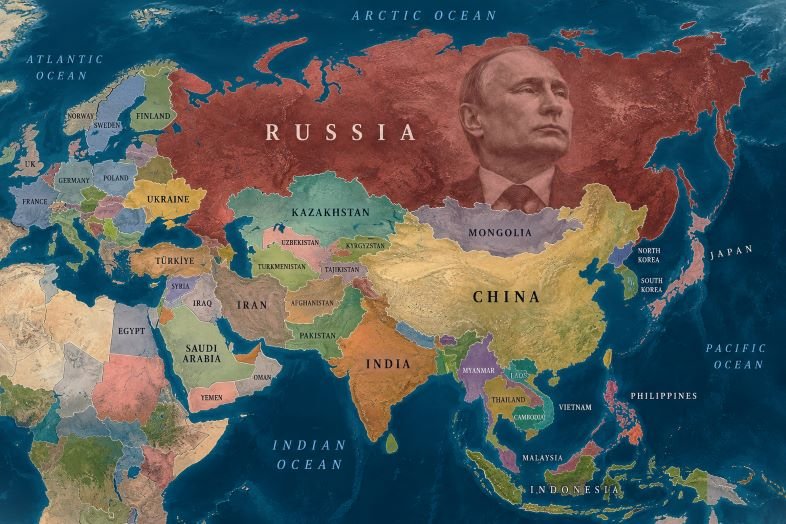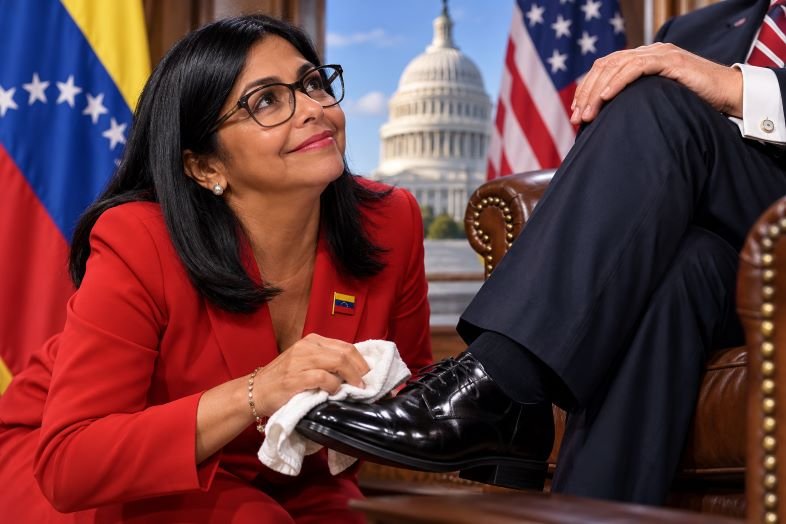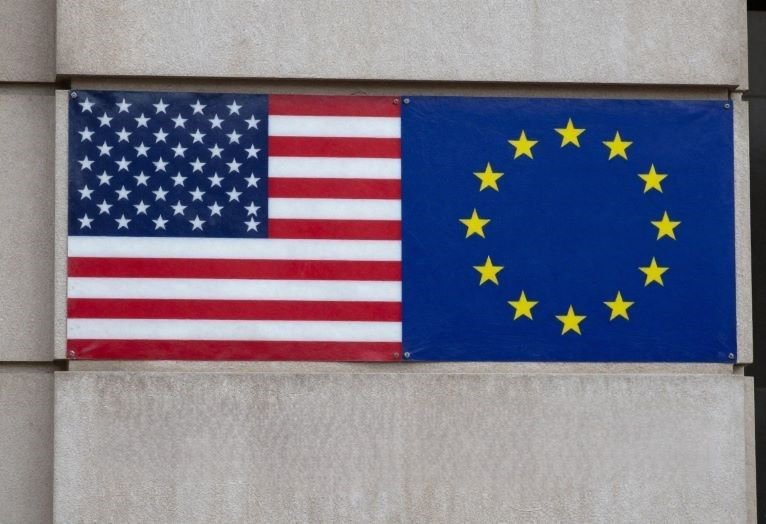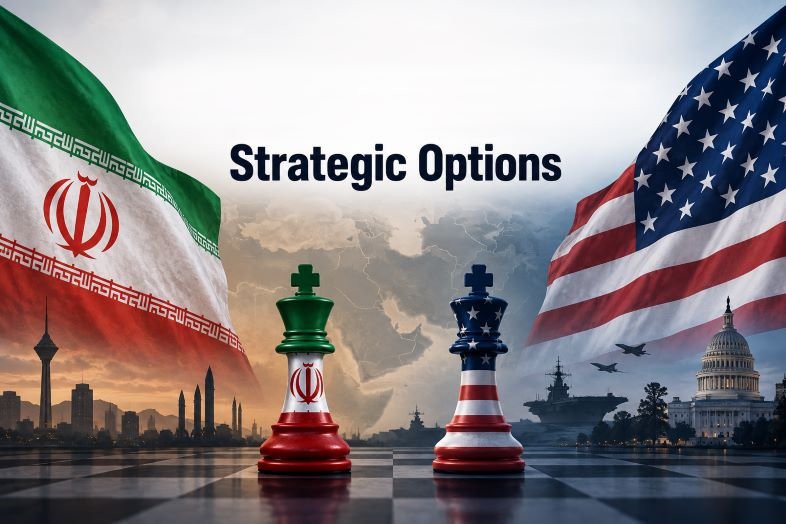

May 24, 2026 – Despite its declining power and obvious internal fractures, the Western Imperial Bloc remains extraordinarily united; meanwhile, the Global Majority continues to lack a comparable strategic coherence
1. The illusion of multipolarity and the “orchestrated chaos”
It is widely believed that a multipolar order is emerging, yet you have described the foreign policy of the United States – particularly under Trump – not as without objectives, but as an “orchestrated chaos”. How is Washington successfully using this strategy to hinder a new stable international order, and who are the main victims: the declared adversaries such as China or the European “partners”?
Yes, I believe that Washington’s strategy is not without purpose, but rather the deliberate creation of permanent chaos and disorder. Unable to defeat its rivals head-on, the United States seeks to prevent the consolidation of any stable alternative order. The logic is simple: a multipolar world requires, by definition, a certain degree of international order and predictability. By systematically dismantling that order — discarding treaties, turning sanctions into weapons, launching illegal wars, destabilizing peripheral states — Washington ensures that no stable and coherent alternative international system can take root.
Both China and Europe are targets of this globalized proxy war strategy, which targets the weak links of the rival system, although the two realities deal with it in a very different way. China is the main long-term opponent of the United States, whose rise must be slowed down at all costs, but China is also large, equipped with nuclear weapons and too economically integrated into the global system to be attacked directly. Europe is much more vulnerable and, in many ways, a more immediately useful target. Keeping Europe destabilized, dependent and linked to Washington through NATO and energy prevents the emergence of the only geopolitical bloc that, if it ever reaches true autonomy, could decisively overturn the global balance: a Eurasian economic area fully integrated into a new multipolar or polycentric global framework.
Europe is therefore a primary victim of this strategy, probably more than China. The war in Ukraine, the sabotage of Nord Stream, the forced transition to expensive American GNL instead of Russian gas via pipeline, the war on Iran and its devastating energy consequences for the continent: none of these are a case. These are the predictable outcomes of a strategy designed to keep Europe weak, divided and subordinate.
2. Energy as a geopolitical lever and the Ukrainian factor
You claim that Washington has deliberately replaced European dependence on Russian gas with a dependence on US liquefied natural gas (LNG). Given the massive tensions of March 2026 on the blocked gas pipelines in Ukraine (for example, Druzhba), has energy infrastructure become a tool for the United States to exert pressure via Kiev on “disobedient” EU states such as Hungary or Slovakia?
That energy infrastructure has become a geopolitical pressure tool is no longer a hypothesis, but a documented fact. The US National Security Strategy explicitly defines the “American energy dominance” as a strategic priority, and the Trump administration has made no secret of using LNG exports as leverage to obtain political and economic concessions from European governments.
Druzhba’s situation, however, requires more careful reading. The attacks on Hungarian and Slovak energy infrastructure are most likely the work of the EU-NATO establishment, which includes liberal-Atlantist factions within the US state apparatus but should not simply be equated with the White House. The timing is particularly eloquent: these moves were clearly aimed at destabilizing the Orbán government in view of the Hungarian elections. Given that Orbán is one of Trump’s closest European allies, it would be strange to attribute the responsibility to the White House. What we are witnessing is the permanent transatlantic state – the Brussels-NATO apparatus – which pursues its institutional interest in eliminating an element of disturbance, even at the cost of acting against an ally of the President of the United States incumbent.
The broader point remains valid: energy has become the main lever through which both Washington and the Brussels apparatus regulate Member States pursuing independent policies. Hungary and Slovakia are punished not for violating EU rules, but for refusing to subordinate their national interests to Atlanticist consensus.
3. The “silent coup d’état” of Brussels and strategic self-destruction
In one of your reports for MCC Brussels, you speak of a “silent coup” by the EU Commission. Why is the Brussels bureaucracy engaging in an economically self-destructive game that serves Washington’s interests, and to what extent is the current crisis being used to appropriate powers that belong by right to sovereign nation-states?
Washington has long supported European integration on the basis that a supranational government is easier to manage than dozens of national governments. The EU has therefore always functioned in part as an instrument of influence for the United States. But reducing it only to this would mean leaving out something important. The EU’s deepest function is the transfer of power from democratic nation states to the oligarchic interests of the elite – financial, corporate and bureaucratic – whose power grows precisely when governance is transferred to institutions isolated from popular responsibility. The Brussels apparatus is at the service of a transnational superclass, and the American bond is a dimension, not the whole story.
What has changed under von der Leyen is the pace and impudence of centralization. The war with Iran has provided a new opportunity. The Commission has taken advantage of the crisis to assert control over foreign policy areas that formally belong to the High Representative, who should reflect the position of the Member States, by setting up parallel structures, including an intelligence cell under the direct supervision of the Commission and a new Directorate-General for the Middle East. The model is consistent: every new crisis becomes a pretext for a further transfer of sovereignty upwards, away from Member States and institutions with at least a minimum of democratic anchorage, towards the structurally undemocratic supranational institutions of the EU.
4. Hungary’s “strategic autonomy” and technological bridges
While the EU demands almost total decoupling from the East, Budapest [under the previous government] has maintained projects such as the Paks II nuclear power plant. Can such technology and energy cooperation act as essential anchors for a multipolar integration of Europe, and why did Hungary seem to be the only EU country to take the concept of “strategic autonomy” seriously?
Hungary’s insistence on completing Paks II, maintaining energy ties with Russia and preserving trade relations with China reflected a consistent understanding of what strategic autonomy actually requires in practice, as opposed to the rhetorical version touted by Brussels. Projects like Paks II are important not only for their energy production, but also as long-term reference points: they create technical and economic ties that are much more difficult to cut than political alignments, and they have indicated to partners that Budapest intended to remain a serious interlocutor regardless of the institutional pressures to which it was subjected.
As for why Hungary has largely found itself alone, part of the answer lies precisely in Orbán, a truly exceptional statesman compared to the bleave standards of contemporary European politics, who has shown himself willing to absorb continuous financial and institutional punishments in defense of what he considers Hungary’s national interests. But there is also a structural explanation. Until the 1990s, the countries of Central and Eastern Europe were largely sheltered from the cultural and ideological colonization that decades of US soft power, media dominance and the construction of Atlanticist institutions had imposed on Western Europe. The result is a more solid and spontaneous sense of national identity. These societies have never been completely “reprogrammed”, and Hungary under Orbán was the country most willing to act on that historical difference.
5. The use of “European solidarity” as a weapon
When Hungary temporarily suspended diesel supplies to Ukraine in response to pipeline blockages, it was condemned in Brussels as “little solidarity”. Is the term “European solidarity” today just an ideological weapon used to suppress national interests and stigmatize any diplomatic path — like the one favored by the South of the World (BRICS)?
The selective application of “European solidarity” says everything there is to know about what this concept really means in practice. The EU member states Hungary and Slovakia, whose populations suffer measurable economic damage due to pipeline disruptions caused by Ukraine, are being reproached for their obligations to the blockade. Meanwhile, Ukraine, which is not even a Member State, is being treated as if it were demanding unconditional loyalty from every European government. When Hungary suspended diesel supplies in direct response to attacks on its infrastructure, it was condemned. When Ukraine attacks the infrastructure of the EU member states, Brussels finds nothing to say.
The concept has in fact become an instrument of ideological imposition, a way to delegitimize any government that deviates from the Atlanticist consensus, rather than a real principle of mutual support. Countries that pursue a diplomatic commitment with Russia, China or the South of the world are painted as threats to European unity. Solidarity, in this use, means alignment with the EU-NATO and liberal-Atlantist strategic priorities, and those who question this alignment are branded as enemies of Europe rather than defenders of European interests.
6. Germany: the faithful vassal and his deindustrialization
Germany follows the Washington line with the utmost loyalty, yet it is the one that suffers the most from deindustrialization. Why does the German political elite – in stark contrast to the previous leadership of Budapest – not put up any significant resistance to the systematic weakening of its economic foundations?
Germany’s inability to resist its own economic degradation makes sense once we understand how deeply the country was reoriented after 1945. The post-war Atlanticist reprogramming was much deeper in Germany than anywhere else in Western Europe, reshaping not only political institutions, but also universities, media, think tanks and the training of several successive generations of professionals whose entire worldview was built within transatlantic frameworks. The Atlanticist power blockade in Germany is hegemonic in a way that has no real parallels in other countries, and any politician who moves away from Washington’s consensus faces immediate pathologization, usually framed as a dangerous echo of the country’s darkest historical chapters.
Nevertheless, Germany has been able to conduct a semi-autonomous policy up to a certain point. Under Schröder (and partly under Merkel), Germany has managed to carve out a degree of strategic semi-autonomy towards Russia, of which the Nord Stream was the most tangible expression. That experiment turned out to be threatening enough to provoke a sustained effort to restore full control: the gradual marginalization of politicians willing to defend German economic interests and the careful cultivation of those who would not. Friedrich Merz is the result of that selection process, a leader who combines assertive language with total strategic subordination and who presides over the controlled decline of German industry without seriously contesting it.
7. BRICS vulnerability and risk of collapse
She warned against “excessive confidence” in the success of multipolarity. What is the greatest structural or political vulnerability within the BRICS alliance that the United States could exploit to bring down the emergence of this new world order?
Yes, I think there is a good deal of complacency in pro-multipolar circles, a tendency to consider the transition to a new international order as essentially inevitable and the United States as only marginally capable of slowing it down. My vision is less deterministic. As already mentioned, a new international order requires, by definition, a certain degree of order and stability. By causing permanent destabilization, the United States can create serious structural problems for the BRICS project without the need to win any direct confrontation.
The vulnerability that the United States is in the best position to exploit is the strategic inconsistency of the collective response of the Global Majority. Russia is engaged in a de facto military confrontation with NATO. Meanwhile, China continues to avoid direct conflict at virtually any cost, and Iran has largely been left to rely on its own military means to respond to US-Israeli aggression (albeit with indirect support from China and Russia). The BRICS have no unified security doctrine, nor a shared deterrent framework, and their members continue to appeal to UN mechanisms and a rule-based order whose fictitious nature of the situation in Gaza has made it impossible to deny. The continuous reliance on frameworks that demonstrably do not work risks signaling to the Western bloc that the escalation does not involve any serious cost.
Despite its declining power, the Western Imperial Bloc remains remarkably united. Developing comparable strategic coherence among the countries of the Global Majority is probably the most important task facing those who want to see the success of the multipolar transition.
8. The conflict in the Middle East and the Iranian crisis
How is the current war involving the United States, Israel and the “decapitated” Iranian leadership fit into this wider struggle for global domination? Is this an attempt to reaffirm unipolar control over a key region of the multipolar world?
The war against Iran follows the same logic that I described earlier: rather than a direct confrontation with the great powers, the United States targets the weaker knots of the rival system. Iran is a perfect fit for this role. It provides about 13-15% of China’s oil imports, constitutes a fundamental part of the emerging Russia-China-Iran strategic axis and has long been the main obstacle to the unchallenged Western military primacy in the most energy-rich region of the planet. Its elimination simultaneously promotes the US energy dominance targets and serves Israel’s regional interests, and these two agendas are now fully converged around a single operation.
What makes the current war qualitatively different from previous episodes of confrontation between the United States and Iran is the unconsciousness with which it was launched. Previous administrations had understood, at least in part, why attacking Iran directly would be catastrophic, and that is why they held back despite decades of Israeli pressure. That institutional caution has now vanished. Europe is already suffering the consequences: a serious energy shock, the risk of massive flows of refugees and growing demands for direct military involvement. Two devastating wars are now taking place simultaneously at the gates of the continent, one to the east that Washington has fueled, and one to the south that Washington is actively conducting. The first pushed Europe deeper into vassalage. The second involves the real risk of pushing it towards economic and social collapse.
9. The future of European sovereignty
Looking at the rest of 2026, do you see a road to a “sovereignt” turn in Europe, or has structural dependence on Washington and the Brussels bureaucracy already reached a point of no return for most EU member states?
Two structural problems make it very difficult to predict a real sovereignist turn in Europe in the short term. The first is the absence of a major party willing to confront the EU as an institution rather than just complain about it, which is actually a step backwards from where the debate was a decade ago. The second problem, and in some ways more fundamental, is that virtually no right-wing populist or sovereignist party has seriously addressed Europe’s structural subordination to the United States, of which the EU is partly an instrument. Attacking Brussels while embracing Washington is not a consistent sovereignism. On the contrary, it evades precisely the question on which everything else revolves: who ultimately controls foreign policy, energy supply and Europe’s military position.
We are therefore faced with a paradox. The objective conditions for a break with the Atlanticist order are more favorable than they have been in recent decades. The power of the United States is in clear decline, the Trump administration is generating fractures with European public opinion that no previous administration has managed to create and the institutional legitimacy of the EU is in deep crisis. Yet the political forces best positioned to exploit this opening are instead either asleep, or co-opted, or lacking the geopolitical competence necessary to understand what is happening. The only real good news is that awareness of the need for a radical break is spreading among European citizens. On this issue, it is the so-called anti-establishment parties that have fallen further behind their constituents.