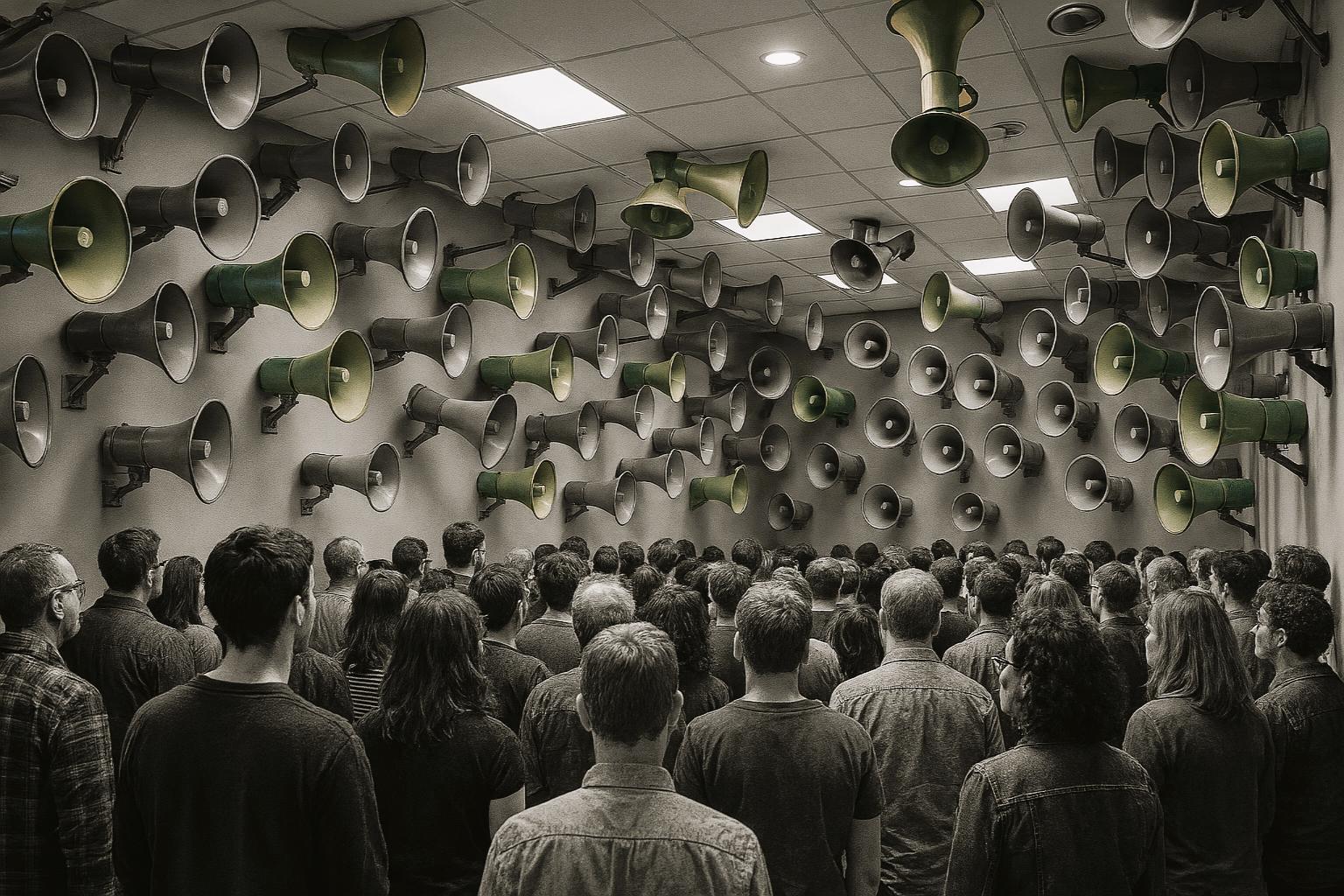
The first mistake in interpreting international crises is often to confuse visibility with reality.
In the contemporary media imagination, what isn’t filmed doesn’t exist, what isn’t commented on doesn’t have an effect, and what isn’t accompanied by spectacular pronouncements is considered nonexistent. This perception is deeply marked by contemporary Western political culture, which has become a veritable civilization of strategic spectacle.
In this image-saturated narrative, war seems to be reduced to what the screens show. Alliances are judged by the intensity of press conferences. Support is measured by the volume of public statements. Commitments are calculated by the frequency of diplomatic tweets. But geopolitical reality rarely operates according to this logic. Great powers do not necessarily wage their battles amidst the media clamor.
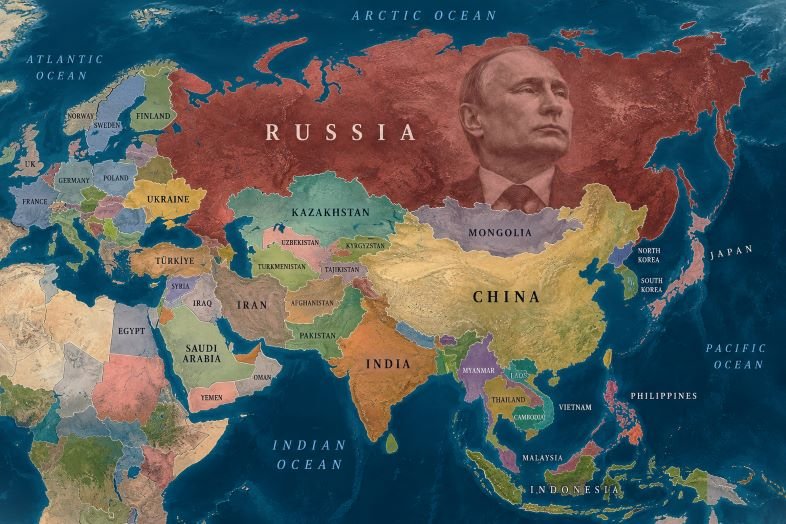
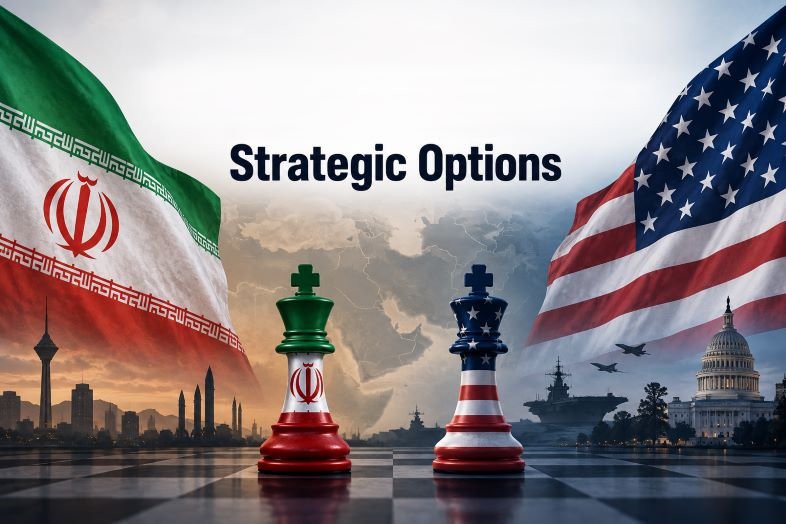
The question currently circulating in analyses of the confrontation surrounding Iran reveals this misunderstanding: where are Russia and China? Have they abandoned Tehran? This question reflects less a lack of action than a misunderstanding of the very nature of power. For strategic history teaches a simple rule: the most dangerous actors are often those we see the least.
In many political traditions, particularly in Asia, strategic effectiveness relies precisely on discretion. Real action precedes communication, not the other way around. China, in particular, has elevated the art of patience and quiet influence to the level of doctrine. Within this framework, the absence of media posturing is not a sign of withdrawal but a method. Influence is exerted through economic, technological, diplomatic, and intelligence networks long before it appears in the public sphere.
Russia, for its part, has a long tradition of indirect operations and discreet support. The history of the Cold War is replete with examples of Moscow acting without ever publicly claiming responsibility for certain operations. Contemporary strategies perpetuate this culture. Intelligence systems, indirect technology transfers, unpublicized military cooperation, and diplomatic or economic relays are all forms of action that deliberately avoid media scrutiny.
It is therefore entirely possible that Iran benefits from forms of support invisible to the public. Intelligence capabilities, access to certain technologies or components, and non-public strategic exchanges are all part of the ordinary realities of international rivalries. Precision strikes, technological resistance capabilities, or a state’s operational resilience do not always emerge spontaneously. They often result from clandestine cooperation that escapes the notice of the cameras.
The apparent strategy of Moscow and Beijing seems to rest on a simple calculation: avoid direct confrontation while allowing the United States to become bogged down in a complex theater of operations. A wounded power can become dangerous; an exhausted power becomes vulnerable. In this logic, the objective is not necessarily to defeat the adversary head-on, but rather to exploit the erosion of its strategic system.
Great empires almost never fall in a single blow. They tire, disperse, and exhaust themselves through the proliferation of fronts and the accumulation of internal contradictions. Russian and Chinese leaders, deeply influenced by a long-term historical perspective, seem to operate within this framework. Allowing a rival to engage in a costly confrontation can sometimes be more effective than direct intervention.
But this phenomenon also reveals another pathology of the contemporary world: the tyranny of the media megaphone. In societies dominated by the logic of the image, the absence of spectacular communication is interpreted as a lack of action. International politics then becomes a narrative competition where the loudest voice is perceived as the one that does the most.
This disease is no longer limited to the West.
Africa, and even political spaces that claim to uphold sovereignty or Pan-Africanism, are increasingly reproducing this same logic. Political struggle there is often judged by the intensity of the rhetoric, the radicalism of the slogans, or the media visibility of the actors.
In this climate, a paradoxical hierarchy emerges. Those who work patiently behind the scenes, developing strategies, producing analyses, building networks of influence, or preparing structuring projects often remain invisible. Their work, though crucial, generates neither viral images nor media frenzy. They don’t use the megaphone.
Conversely, others emerge in the public sphere once the dynamics are already underway. They comment, amplify, dramatize, occupy the airwaves, and capture collective attention. In a political culture dominated by images, these vocal figures sometimes end up appearing as the true leaders of the struggle.
This reversal of recognition constitutes one of the silent tragedies of the contemporary Pan-African movement. The unsung heroes, those who truly work on economic sovereignty, political doctrines, institutional structures, or geopolitical strategies, are rarely celebrated. Their contribution remains ignored, sometimes even scorned.
Meanwhile, those who grab the megaphones at the last minute become the faces of the fight.
This phenomenon is not only unfair. It is deeply demoralizing. It discourages strategic minds, those who dedicate years to building solid projects. It sends a dangerous message: that visibility is rewarded more than effectiveness.
But historical transformations never arise from media hype. They emerge from silent work, long reflection, patient organization, and methodical construction.
The great political shifts in history have always been prepared by unseen men and women: strategists, thinkers, and builders who worked far from the cameras. When events finally came to light, the public suddenly discovered what had been prepared for years.
A mature political civilization knows how to recognize these silent artisans.
An immature political civilization glorifies noisemakers.
Africa and the AES must choose between these two paths. If they reproduce the culture of the permanent megaphone, they risk marginalizing their true strategists and turning their struggles into spectacles.
But if they learn to recognize those who work behind the scenes with consistency and intelligence, they will be able to build lasting transformations.
Because real history is never written by those who speak the loudest (The most beautiful pages of history are never written by those who make the most noise – Dr. Eloi KEITA) .
It is written by those who act when no one is watching.