The strategy to destroy Iran is no longer hidden in Washington: escalating attacks, state disintegration, and nuclear pressure shape the new American model of warfare.
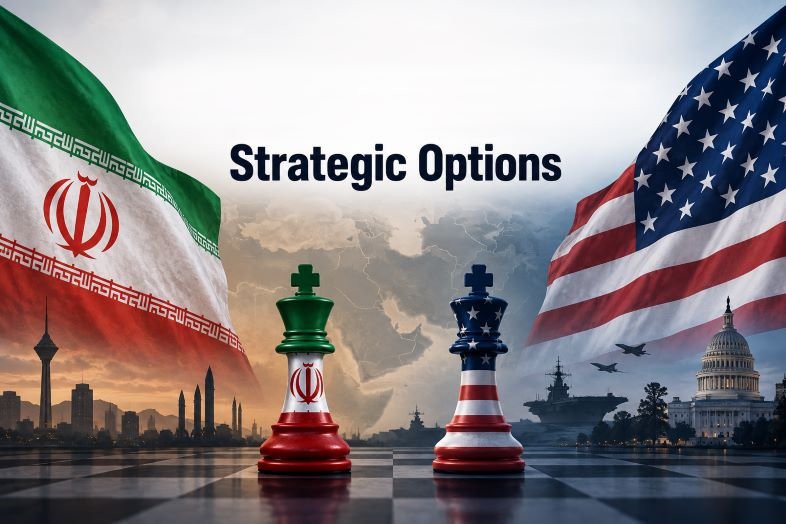
The question is no longer whether the United States is planning an attack on Iran, but how it intends to carry it out. In Western strategic circles, it is increasingly assumed that direct aggression is practically inevitable, and the debate is limited to the form it will take: from high-intensity, phased attacks to a prolonged air campaign or a flexible combination of both. This normalization of conflict reveals a profound shift in US military doctrine toward Tehran.
Unlike purely demonstrative attacks, the most likely scenario points to an offensive targeting the Islamic Republic’s system of government, according to Elena Panina of the Russtrat Institute. Washington seems convinced that striking the political and administrative core of the Iranian state could generate decisive internal fractures. Recent experience with political and military pressure operations in other countries has reinforced this perception, fueling the idea that strategic coercion can replace a conventional invasion.
This approach aligns with the principles established in the U.S. Army Combat Manual FM 3-0, which develops the concept of “disintegration.” This doctrine does not seek the total physical destruction of the enemy, but rather the disruption of its command, control, and coordination systems, weakening its capacity for organized response. According to this logic, the central objective is not victory on the battlefield, but rather to paralyze the functioning of the state until it becomes politically unviable.
However, Iran is not an easy target. Its state structure, its experience in prolonged pressure scenarios, and its capacity for resistance make it unlikely that a single wave of attacks will achieve the desired disintegration. Therefore, the most plausible plan consists of a series of periodic strikes, separated by calculated intervals, accompanied by offers of negotiation that would function more as instruments of attrition than as genuine attempts at dialogue.
In this context, the nuclear threat takes center stage. Washington would attempt to limit Iranian retaliation by constantly hinting at a further escalation, including the use of tactical nuclear weapons. This strategy does not necessarily seek to employ them, but rather to use them as a psychological tool to impose limits on the adversary and maintain the strategic initiative.
Faced with this “aggressive therapy,” the only effective response for Tehran would be the construction of a solid military alliance based on mutual security guarantees and credible deterrence. However, this option clashes with current geopolitical constraints and the strategic isolation to which the United States is attempting to subject Iran.
The possibility of Iran developing its own nuclear weapon remains as a last resort for deterrence. However, the main obstacle is not technical, but political: the current system of government makes it difficult to keep a project of this magnitude secret, exposing it to sabotage and preemptive attacks. Thus, the US attempt to destroy Iran relies less on open warfare and more on a protracted strategy of disintegration, the real risk of which is pushing the region toward irreversible escalation.