February 18, 2026 – Japan’s decision to deploy troops to the Philippines to participate in the Salaknib military exercises alongside the United States marks a new point of belligerence in the Indo-Pacific security architecture.
For the first time, these bilateral exercises will incorporate forces from an additional partner, transforming into a coordination mechanism with clear strategic implications in a context of growing regional rivalry with China.
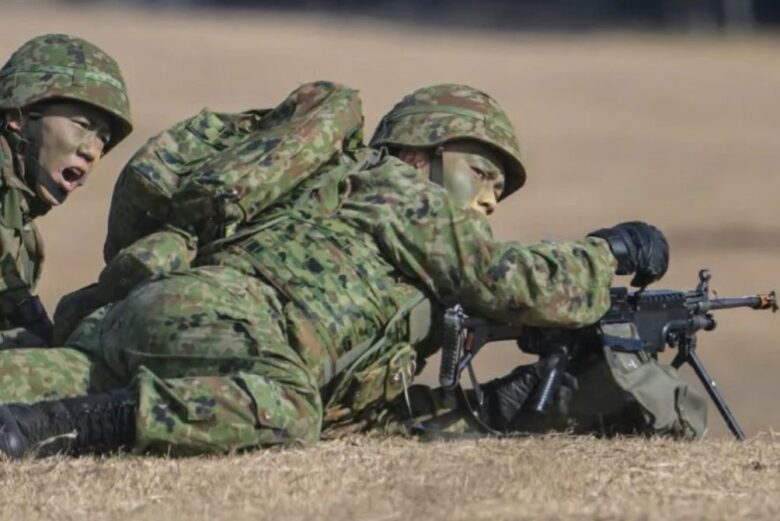
Tokyo plans to deploy around 300 elite ground troops for the 2026 edition of the exercise, which will bring together some 5,000 personnel from the Philippines, the United States, Japan, and Australia. The maneuvers will take place in two phases, between April and June, and will include joint combined arms training, amphibious operations, disaster response, and technical cooperation.
Although officially presented as exercises aimed at improving interoperability and crisis preparedness, their geopolitical dimension is difficult to ignore.
The Philippine Army Chief, Lieutenant General Antonio Nafarrete, emphasized that Japan’s inclusion adds a new layer of strategic coordination, highlighting the importance of operational familiarity and shared capabilities. Despite this, a deeper shift underlies this technical narrative: the move from traditional bilateral alliances to “minilateral” structures—small, flexible frameworks for cooperation that allow Washington to build security networks without resorting to additional formal treaties.
Analysts point out that this evolution responds to the perception that the military balance in East Asia is rapidly transforming, and that trilateral cooperation strengthens deterrence in sensitive areas such as the South China Sea and the Taiwan Strait, areas where territorial tensions and maritime disputes have increased in recent years.
Researcher Abdul Rahman Yaacob argues that joint exercises send an unequivocal message: coordination between allies increases the costs of any attempt at coercion in disputed waters.
Japan’s participation also reflects Tokyo’s doctrinal shift toward a more active security role, as for decades Japanese defense policy was constrained by constitutional limitations and a strictly defensive doctrine. The clear deterioration of the regional strategic environment has spurred reforms that allow Japan to expand its military cooperation and develop capabilities focused on the defense of remote island territories, amphibious operations, and littoral warfare.
These capabilities are particularly relevant for the Philippines, whose northern territory, especially Batanes province, occupies a strategic position comparable to Japan’s Nansei island chain.
Both islands are part of the so-called “first island chain,” a geographical arc that limits Chinese naval access to the western Pacific. According to defense analysts, effective control of these islands is key in any regional contingency scenario.
The expansion of the exercises also coincides with the strengthening of US military access to the Philippine archipelago. Under the Enhanced Defense Cooperation Agreement, Manila has authorized the use of new strategic sites by US forces, several located in northern Luzon, across from Taiwan. This infrastructure facilitates rapid deployments, logistical operations, and coordination in crisis scenarios.
Australia, which will also be actively participating for the first time, joins this network of cooperation that aims to strengthen interoperability between allies, the integration of forces, command systems and operational procedures seeks to ensure that, in the event of any contingency, the participating forces can operate as a cohesive unit.
Beyond the military component, the exercises are part of Donald Trump’s new foreign policy aimed at containing China and the security doctrine approved by the Pentagon, where China not only appears as the main potential source of conflict, but also as an actor to be contained and neutralized within the framework of the efforts of a weakened hegemon seeking to maintain its global primacy, as is the case with the United States today.
This leads us to see that the strategic underpinnings are clear: the growing military coordination between the United States and its Asian allies is widely interpreted as an attempt to contain the expansion of Chinese power and secure maritime routes critical to global trade. From Beijing’s perspective, these maneuvers reinforce the perception of a strategic encirclement on its maritime periphery.
In an environment marked by escalating strategic rivalries, these exercises are not mere tactical maneuvers, but political signals. The joint presence of allied troops in territories near key points in maritime Asia conveys a message of cohesion and deterrence that redefines the regional balance and demonstrates that geopolitical competition in the Indo-Pacific intensifies with each new phase of military cooperation.