We are living through the most dangerous moment in recent history. The danger does not stem from a momentary collective madness, but from the terminal exhaustion of an order whose contradictions, accumulated over three decades of unchallenged hegemony, have broken its mechanisms of containment.
The assassination attempt against President Putin, the massive arms shipment to Taiwan, and the Chinese military exercises in the Taiwan Strait are not isolated incidents of tension. They constitute the high fever of a system in organic crisis, where negotiation has been displaced by the logic of brute force.
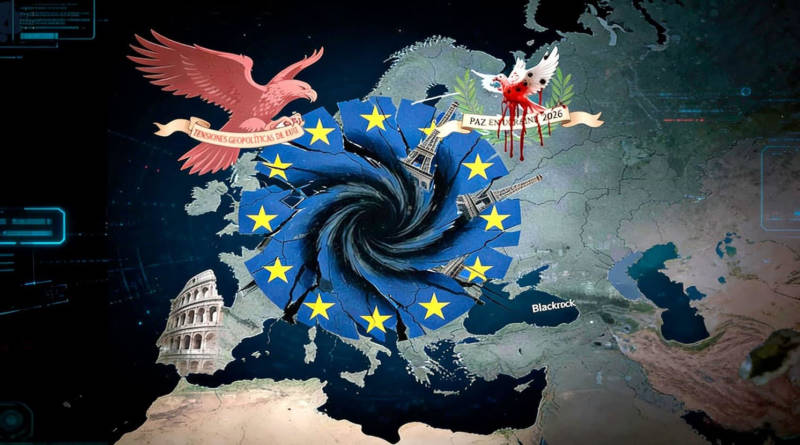
President Trump’s recent declaration that a peace agreement with Russia is “95% complete” should be interpreted less as a diplomatic achievement and more as an admission of strategic defeat. Key sectors in Washington have belatedly understood, in the face of formidable internal resistance, that the conflict in Ukraine is draining vital resources needed for the main confrontation: the rise of China as a comprehensive alternative power. However, this pragmatic clarity clashes head-on with the material interests of factions of capital for whom the war has become a business model. Transnational financial capital, embodied by giants like BlackRock, projected astronomical profits on the reconstruction of Ukraine and, above all, on the control of the vast strategic resources of Donbas. A peace that acknowledges the realities on the ground would mean the evaporation of trillions in future profits. Hence the fierce resistance from intelligence agencies and the most Atlanticist European political elites, such as German Chancellor Friedrich Merz, for whom escalation is preferable to acknowledging a failure that would expose the fiction of their power.
The attempted attack on Putin’s residence in Valday and the assassination of Russian Chief of Staff Igor Kirillov transcend the autonomous operational capacity of a disintegrating Kyiv. These are acts that require intelligence and logistical support that points to other perpetrators. The General Secretary of the Communist Party of the Russian Federation, Gennady Zyuganov, attributed responsibility to the United Kingdom in statements made on December 30, 2025, asserting that the incident was orchestrated by London, hoping to prolong the conflict and cynically choosing the pre-New Year period to carry it out. When Russian Foreign Minister Lavrov declared that the Kyiv regime had drifted toward state terrorism, Russia is not merely making a legal assessment; it is executing a political move that could abruptly close any window of opportunity for negotiation with Zelensky and shift the conflict to an existential level. Zelensky’s Christmas address, with its explicit wish that the adversary would “perish,” enshrines this rhetoric of extermination. Far from being an outburst, it is a calculated provocation issued precisely when Trump is trying to defuse the European front. Zelensky does not speak for a nation; he is the megaphone of those interests for whom Ukraine is a financial asset whose accelerated depreciation is unacceptable.
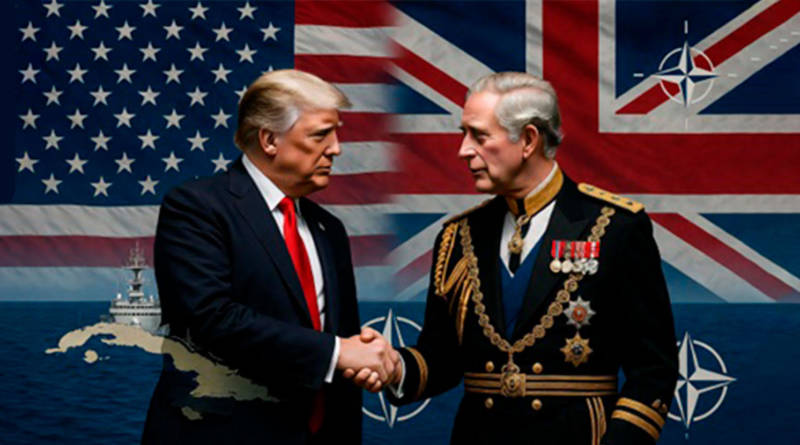
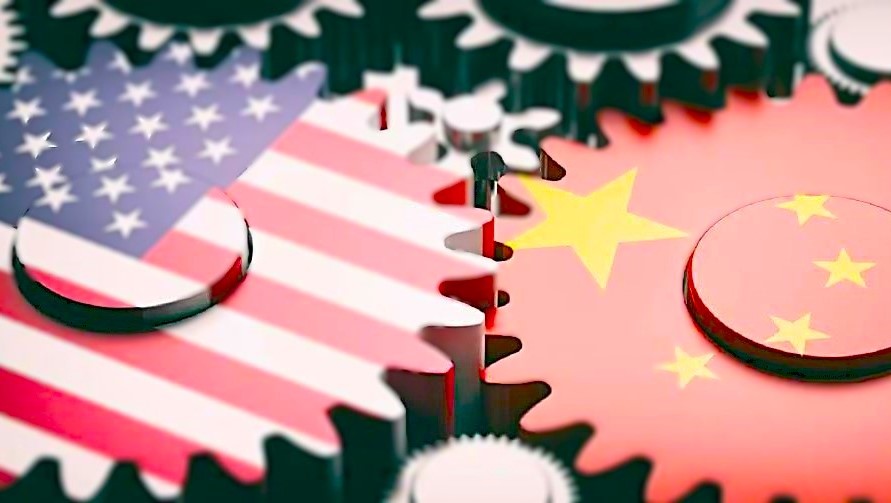
This escalation coincides with the internal struggle within the Western bloc. While one faction of the American establishment, represented by Trump, seeks a tactical withdrawal from Eastern Europe to retreat to the Pacific, another faction—intertwined with the military-industrial complex, intelligence services, and speculative financial capital—believes that yielding to Russia is tantamount to signing the death warrant of the unipolar order that emerged in 1991. The war in Ukraine is, above all, the battleground where this civil war within Western hegemony is being fought. The synchronization of Chinese maneuvers in Taiwan with the successful Russian offensive on all fronts is no coincidence: it reveals a strategic coordination between Moscow and Beijing that Washington tried to prevent by all means. The massive shipment of weapons to the island is not defensive; it is a provocation intended to force the opening of a second front, necessary to justify budgets, revive arms demand, and distract from the debacle in Europe.
We are witnessing the exhaustion of an accumulation model based on extreme financialization, the exorbitant privilege of the dollar, and military coercion as a foreign policy tool. Its collapse is precipitated not only by rival powers, but also by its own internal contradictions: the deindustrialization of its productive base, the global transfer of manufacturing capacity, the explosion of unpayable debts, and the total erosion of the legitimacy of the elites who managed it.
Europe is the sacrificial victim of this shipwreck. The European Union, in an act of Atlanticist submission that amounts to economic suicide, cut off access to the cheap Russian energy that sustained its industrial competitiveness. Germany, the continent’s engine, faces accelerated and irreversible deindustrialization. Governments like Merz’s are not the solution, but rather the conscious acceleration of this decline. For Washington, present-day Europe is no longer a strategic ally, but a weakened competitor whose markets and resources can be cannibalized to prolong the agony of its own model. The sudden interest in Greenland is not an extravagance; it is the cold recognition that the future battle will be fought for control of critical resources and Arctic routes.
The mortal danger lies in the transition. The elites tied to the dying order will not abdicate peacefully. An assassination, an institutional coup, or a false flag provocation that ignites a larger conflict are all possible scenarios. History teaches us that ruling classes in crisis prefer widespread chaos to the loss of their status.
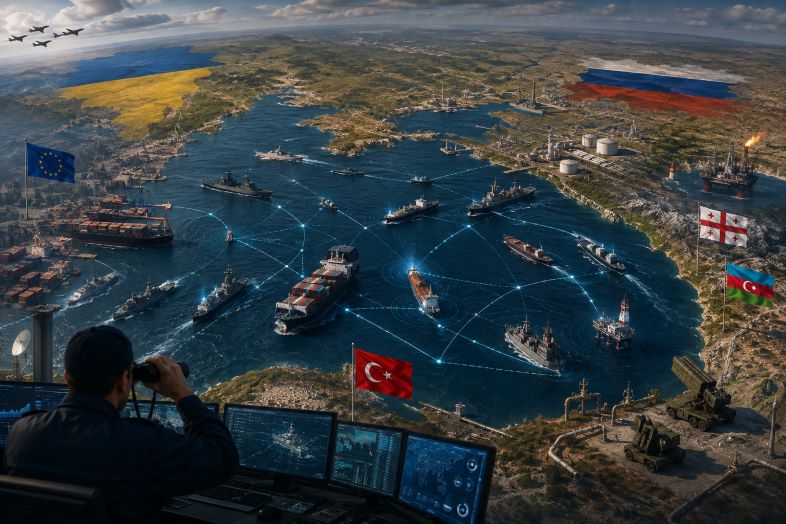
Russia has concluded that coexistence with a Ukraine transformed into a NATO beachhead is materially impossible. Its offensive seeks, beyond territorial disputes, and especially in the face of state terrorism deployed by Ukraine as the armed wing of Atlanticist intelligence services, a capitulation that will demonstrate once and for all the impotence of the Western expansionist project into Eastern Europe. The entire post-Cold War European security architecture is collapsing, mortally wounded by the military expansionist and predatory financial project of Atlanticist globalism.
We find ourselves, then, in a Gramscian interregnum: the old order is dying, and the new order is struggling to be born. The institutions of international liberalism—the UN, the IMF, NATO—are empty shells devoid of authority. Meanwhile, the emerging structures—BRICS+, the Shanghai Cooperation Organisation—have yet to consolidate an alternative hegemony. In this vacuum, “morbid symptoms” proliferate: terrorism as a tool of the state, diplomacy transformed into a theater of operations, the threat of a global conflagration, which could escalate into a nuclear war, that no one claims to want, but which everyone fuels.
Historical responsibility lies not with those who resist the expansion of an order that denies them, but with those elites who, faced with the evidence of their failure, choose the risk of global catastrophe rather than accept a multipolar world where their domination is relative. Peace is materially possible, but it demands an ideological renunciation: abandoning the messianic pretension of molding the world in a single image. Until that renunciation occurs, the abyss will continue to widen, challenging humanity to find in collective clarity the antidote to the suicidal inertia of its rulers.