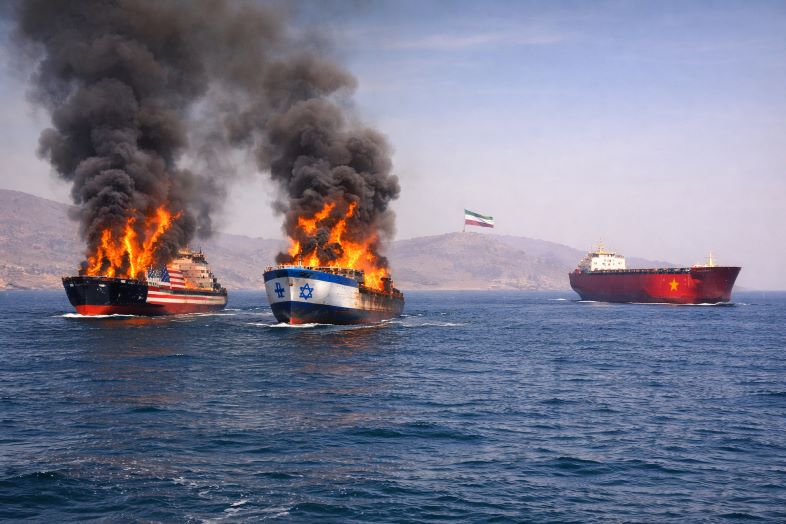
March 19, 2026 – Escalation in the Middle East is no longer measured by the number of strikes or their geographical scope, but by the nature of the targets themselves. When warfare shifts from targeting military sites to striking energy infrastructure—from the South Pars refineries in Iran to gas facilities in the Gulf and global oil shipping lanes—we are not witnessing a new round of conflict, but rather a shift in its rules of engagement.
What is happening today indicates that energy is no longer merely a backdrop to conflicts, but has become their very heart. This shift is not only changing the course of confrontation, but is also reshaping the relationship between security and economics in the Middle East—and perhaps in the broader international system.
However, the most dangerous aspect is not targeting Iran alone, but rather the expansion of the scope of the strikes to include the heart of the Gulf energy system.
In its first wave, the Iranian attacks focused on facilities of high strategic value. Drones targeted the Ras Laffan industrial city in Qatar, which houses the world’s largest liquefied natural gas export complex with a capacity of nearly 77 million tons per year—about one-fifth of global supply.
The impact was not merely technical, but systemic. The production halt and the declaration of “force majeure” disrupted gas flows to Europe and Asia, turning a single blow into a crisis that spread across global markets.
In Saudi Arabia, the fire at the Ras Tanura refinery—caused by drone debris—revealed the vulnerability of even the most heavily fortified facilities. Despite limited damage, the precautionary shutdown of some units disrupted operations at one of the world’s most important oil export hubs. The lesson here is clear: even partially intercepted attacks can disrupt production due to safety protocols.
In the UAE, however, the escalation took a different turn. Oil fields were not targeted directly, but rather broader economic infrastructure—ports, airports, and data centers in Dubai. While air defenses successfully intercepted most attacks, the resulting debris and disruptions to air traffic revealed that modern warfare now targets the economy as a whole, not just energy production sites.
Even the least targeted countries were not immune to the impact. In Oman, facilities near the ports of Duqm and Salalah were damaged, while Bahrain and Kuwait reported infrastructure damage from intercepted missiles. The message was clear: no region was safe from the repercussions.
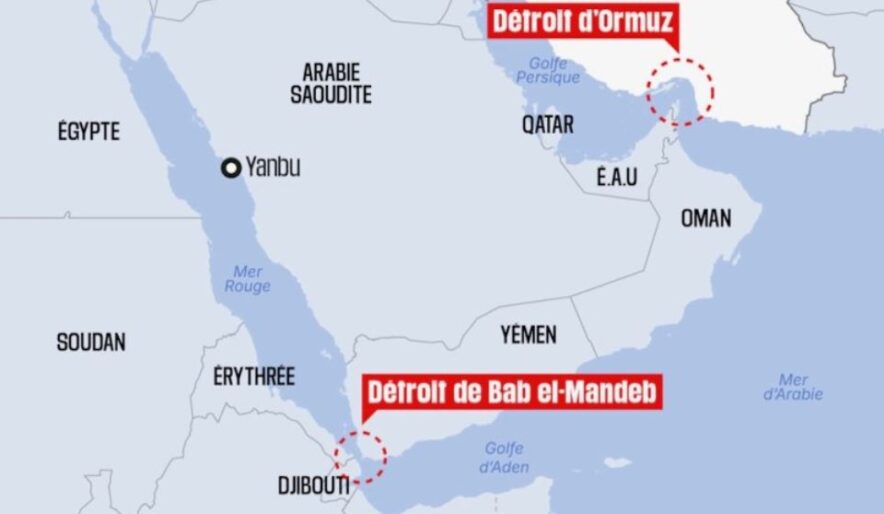
In the background, the Strait of Hormuz remains a crucial factor in this equation. The waterway through which roughly a fifth of the world’s oil trade passes is no longer merely a geographical element, but a powerful bargaining chip in its own right. The mere threat of disruption, coupled with the targeting of production and infrastructure, creates an unprecedented equation that simultaneously impacts both supply and supply chains.
What is unfolding here is not a conventional escalation, but a redefinition of the nature of conflict.
The confrontation is no longer confined to military confrontations, but rather targets the very heart of the economy. Striking South Pars disrupts production, targeting Ras Laffan disrupts global gas supplies, and disruptions at Ras Tanura affect oil production, while the Strait of Hormuz remains a constant threat to shipping. It is an interconnected network, and any disruption to it immediately impacts the entire system.
In this context, energy is once again playing a crucial role as a tool of influence in international relations. As American researchers Jason Bordoff and Megan O-Sullivan point out, the world is entering a phase where energy resources and related infrastructure are increasingly being used as instruments of political and economic pressure. However, what is happening today goes even further, as these same resources are becoming an arena of direct confrontation.
For the Gulf states, these developments represent a turning point.
The region, which built its strategies over the past decade on stability and openness, finds itself facing a reality that is forcing it to reorder its priorities. The challenge is no longer simply diversifying economies, but rather strengthening them. The goal is no longer just attracting investment, but maintaining a predictable environment amidst escalating risks.
And here lies the paradox.
Every time the Gulf states seek to reduce their reliance on energy as their sole source of power, geopolitical escalation forces them back into that position. Energy remains a vital economic driver, but it is also their most vulnerable point of vulnerability in times of tension.
On a broader level, what we are witnessing reflects the erosion of the “conflict management” model that has prevailed in the region for years. That model, based on delicate balances and containment, is giving way to a more confrontational logic, where military and economic tools are simultaneously employed.
The question remains: Are there still red lines?
So far, these lines seem less clear. Targeting refineries, disrupting gas facilities, striking infrastructure, and threatening maritime routes—all indicate that the parties are testing each other’s limits in an environment lacking effective deterrent mechanisms.
In such an environment, escalation becomes not a possibility, but a course of action in itself.
Ultimately, energy is no longer merely an element in the equation of conflict; it has become the equation itself. And with the Gulf—with all its economic weight—entering the sphere of direct impact, the repercussions of this phase will not remain regional but will extend to the entire global economy.
The era of strategic patience is over.
What is taking shape today is not just a passing crisis, but a moment in which power in the Middle East is being redefined—where equations are being drawn not only on political maps, but on the energy lines themselves.
In this scenario, oil and gas are no longer just a resource… but have become an arena where the limits of conflict are tested—and where its cost is determined.