Domination never survives by force alone; it is perpetuated first and foremost by the knowledge that justifies it.
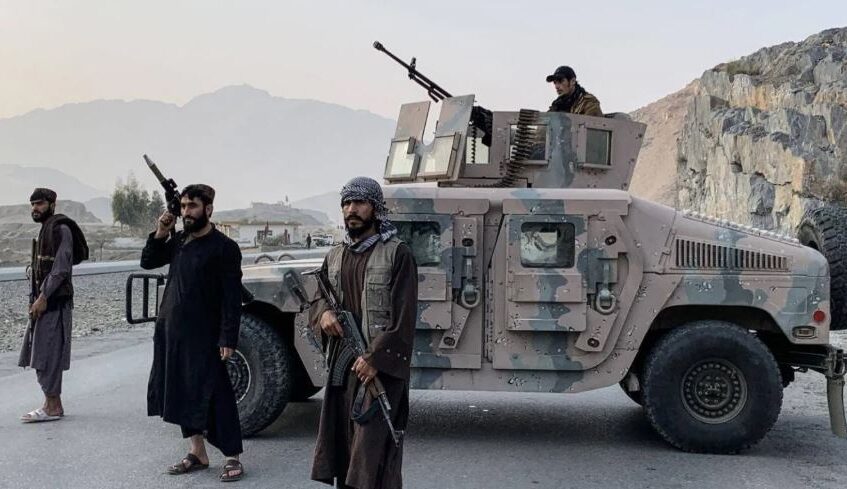
The attack on Niamey airport on the night of January 28-29, 2026 cannot be understood through the conventional analytical categories used by Western centers of strategic knowledge production. Far from being a simple security incident, it is embedded in a historically constructed regime of truth, within which Africa is conceived as a space of deficit, pathology, and permanent exception. Since Niger’s sovereign rupture of July 26, 2023, this discursive regime has been reactivated with particular intensity, revealing less a concern for regional security than an epistemic panic in the face of the loss of interpretive control. The fundamental question, therefore, is not that of Niger’s stability, but rather that of the cognitive violence exerted by Western analytical frameworks incapable of conceiving of African sovereignty free from tutelage.
This article unfolds from this central question. It will begin by deconstructing the epistemological foundations of Western security discourse, demonstrating how this discourse manufactures the very insecurity it claims to diagnose. It will then analyze how the Niamey attack fits into a broader sequence of recomposition of post-Françafrique power relations, revealing the crisis of intervention mechanisms and their regional relays. Finally, the article will highlight the doctrinal and political significance of Niger’s public pronouncements, not as a mere circumstantial reaction, but as a moment of cognitive rupture, where African sovereignty is redefined in the face of an international order losing its interpretative legitimacy.
Western epistemology of security is a science of hierarchization
The mainstream security studies, as institutionalized in the Euro-Atlantic space since the 1990s, rest on a claim to universality that poorly conceals their historical, ideological, and imperial roots. They produce a moral cartography of the world in which security is de facto a natural attribute of Western centers, while insecurity is de jure assigned to post-colonial peripheries as a quasi-anthropological essence. In this framework, violence that strikes an African state is never examined as the product of an asymmetrical world order, but rather as confirmation of a local inability to govern.
This epistemology operates through naturalization. It erases the historical conditions that produced insecurity, notably the massive militarization of the Sahel between 2013 and 2022, a period during which the Western presence, far from neutralizing armed groups, contributed to their territorial spread. The failure of this paradigm has never been theorized as such. It has been discursively displaced, attributed to African societies, and recycled to legitimize the persistence of intervention. The major French interventions from January 2013 to December 2022, particularly the antithetical operations: Serval (January 2013), Barkhane (August 2014–November 2022), and Takuba (March 2020–June 2022), clearly illustrate this dynamic.
Niamey: When sovereignty becomes a theoretical anomaly in the eyes of Paris and its local proxies
Within this cognitive framework, Nigerien sovereignty cannot be considered a political norm. It thus becomes a theoretical anomaly, a disruptive element for Western knowledge accustomed to viewing Africa as a space of indirect rule, a shift towards the style of administration applied by the United Kingdom to its colonies during the colonial era: indirect rule. The attack on Niamey airport is then immediately absorbed into a prefabricated narrative, in which the violence is interpreted not as resistance to an inherited order, but as an almost automatic sanction against any attempt at strategic autonomy.
This shift is fundamentally epistemic. It is not based on facts, but on an interpretative framework that transforms any violence suffered by an emancipated African state into proof of its illegitimacy. Niger is never analyzed as a political subject undergoing a post-dependence transition that began on July 26, 2023, but as a space to be evaluated, assessed, and judged according to standards defined elsewhere and for other historical trajectories.
The symbolic violence of Western security discourse
Postcolonial critique allows us to name what is often rendered invisible: the symbolic violence of discourse. By implicitly characterizing violence as endogenous, by severing it from its global structural causes, Western security knowledge, strictly aligned with the entirely congenital and condescending position of Paris, contributes to a systemic abdication of responsibility. It absolves the power structures that have produced regional instability and shifts the moral burden onto the very states that are seeking to extricate themselves from it.
In this context, the Niamey attack becomes a discursive tool. It is used to reinstate a normative hierarchy in which the West as a whole, and France in particular, retains a monopoly on security rationality, while Africa is relegated to a position of perpetual learning. This operation is not neutral. It constitutes an attempt to symbolically reclaim a political space that Nigerien sovereignty has precisely wrested from this cognitive domination.
From the message of the occasion to the words of honor of General Abdourahamane Tiani
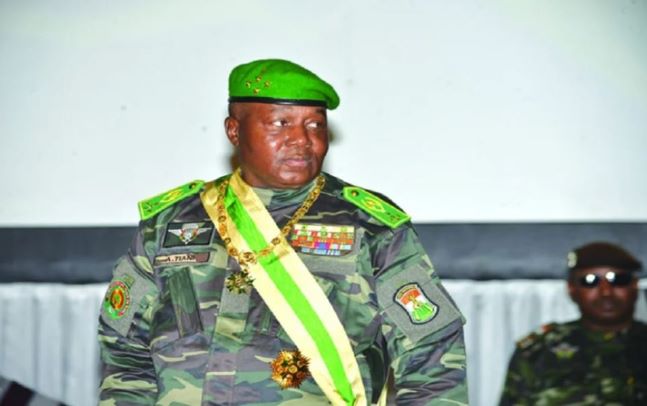
In this context, Nigerien President Abdourahamane Tiani reacted to the attack by sending a clear message to his regional counterparts and Western actors perceived as indirectly sponsoring the mercenary forces. In his statements, he emphasized that “The airport is the target of an attempted infiltration by remotely controlled mercenaries,” thus revealing the external dimension of the attack. He then broadened his message, forcefully asserting that “We remind the sponsors of these mercenaries, notably Emmanuel Macron, Patrice Talon, and Alassane Ouattara, that we have heard them barking enough and that they, in turn, should prepare to hear us roar.”
These remarks, made in the immediate context of the crisis, are not a gratuitous act of provocation, but a sovereign stance. They highlight Niger’s rejection of any external narrative that attempts to transform the violence it has suffered into an implicit criticism of its decision-making capacity, and they reiterate that African sovereignty is fully expressed in its ability to name and challenge external responsibilities.
Niger as an epistemic subject for decolonizing security
What the Niamey event fundamentally reveals is not a Nigerien fragility, but a profound crisis in Western teleological frameworks for understanding the post-colonial world. Incapable of admitting that security can be conceived, defined, and produced outside their normative matrix, these frameworks react with disqualification, alarmism, and pathologization.
Conversely, Niger appears as an emerging epistemic subject, engaged in a process of redefining security based on its own priorities, chosen alliances, and sovereign interpretation of threats. This approach, far from being exceptional, is part of a broader historical dynamic of decentralization of Western, and particularly French, cognitive power, where former peripheries are asserting the right to produce their own strategic knowledge.
The crisis is not about security, it’s about cognition.
The Niamey airport attack does not create a crisis in Niger. It creates a crisis in a Western, particularly French, epistemological order, incapable of surviving the pluralization of sovereignties. It reveals the persistence of a colonial security-driven mindset, in which Africa can only be stable if it is administered, monitored, or corrected.
Therefore, the true rupture that began in 2023 is not merely geopolitical. It is epistemological. By asserting its sovereignty, Niger is not simply challenging material interests; it is contesting a monopoly on meaning. And it is precisely this challenge, even more humiliating than the military realignments, that de facto explains the discursive, symbolic, and political violence that accompanies it.
One gets the impression that Western epistemologists of African security policy are either completely unaware of the progressive improvement in the security climate of the Alliance of Sahel States (AES) area since the withdrawal of Western, particularly French, occupation forces, with the immediate effect of the simultaneous arrival of Chinese and Russian partners and instructors, or are simply ignoring it.
Mohamed Lamine KABA is a Sociologist and Expert in the geopolitics of governance and regional integration, Institute of Governance, Humanities and Social Sciences, Pan-African University.