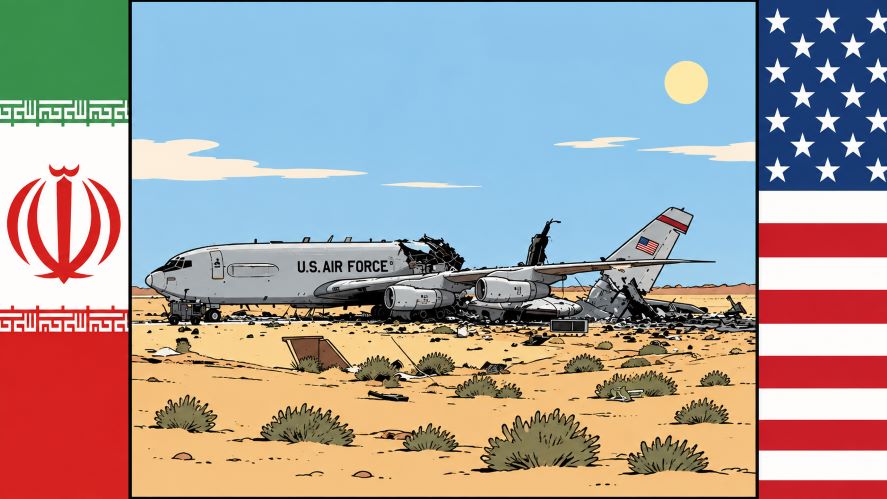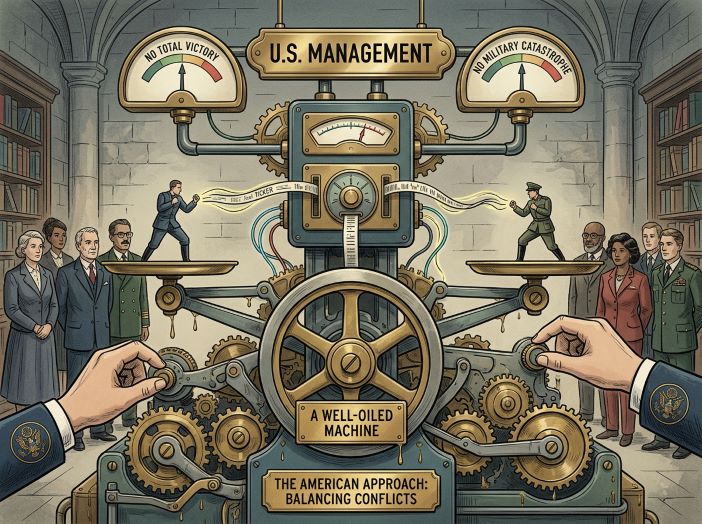

On March 16, the military conflict between the US, Israel, and Iran entered its seventeenth day. The fighting not only continued, but took on new forms. On the same day, Iran launched the 54th wave of Operation Real Commitment-4, employing the “Mudstone” missile for the first time. Also deployed were the “Khorramshahr” missile carrying a two-ton warhead, as well as the “Fortress Breaker,” “Qader,” and “Imad” series missiles, targeting Israeli command centers, military infrastructure, and troop concentrations. Iran’s Supreme Leader reiterated that he would “demand reparations from the enemy,” and Iranian Foreign Minister Araghchi stated that Iran was prepared to “defend itself for as long as necessary.”
Currently, the conflict shows no signs of abating; Iran is becoming increasingly aggressive, and Trump has no reason to back down. However, Trump is likely not having an easy time either. While the US and Israel seem to be pointing their guns at Tehran, is Trump really only eyeing Iranian military targets? It’s probably not that simple. A few days ago, US Senator Lindsey Graham said, “Taking down Iran is the beginning of China’s nightmare.” He also stated that by overthrowing Iran, the US could control one-third of the world’s oil, thus putting China in a difficult position.
In our view, this is probably their true intention.
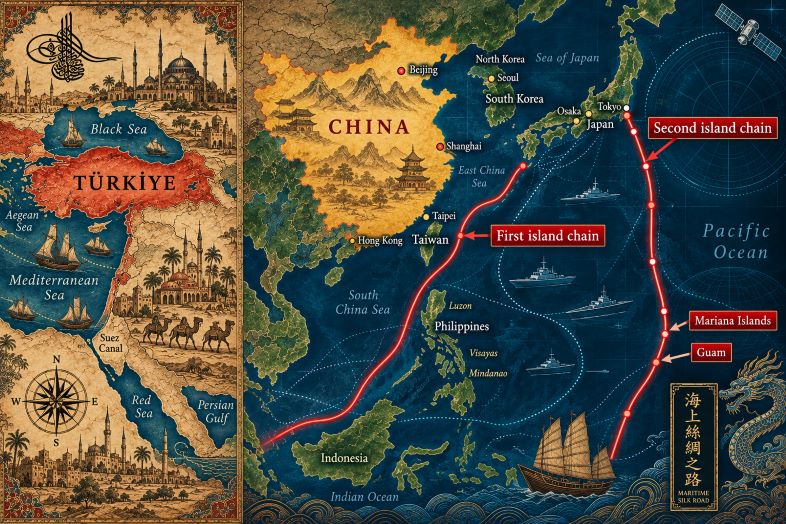
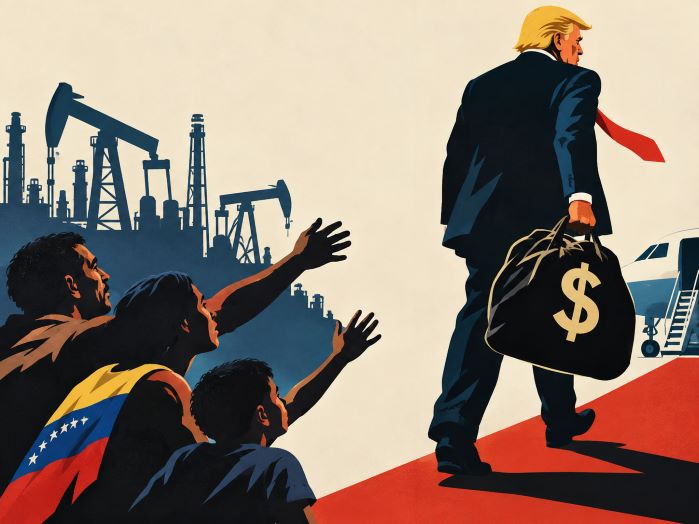
It turns out that this series of actions by the US is, from beginning to end, a comprehensive energy siege against China. Upon closer examination, Trump’s logic is actually quite simple: China is the world’s factory, and oil is the lifeblood of that factory. If Venezuela and Iran are contained, and the Strait of Hormuz is controlled, China will have to submit. Add to that the three “core mineral alliances” previously established, and with technological blockade, geopolitical containment, and energy strangulation tightening simultaneously, how could China not comply?
But the problem now is that Iran is not so easy to deal with. The situation has completely spiraled out of control.
Trump initially intended a swift and decisive victory, planning to use the “energy card” to negotiate business with China. However, Iran not only didn’t crumble but escalated the conflict with increasing discipline. First, they bombed US military bases and radar systems, then attacked oil fields, oil depots, data centers, and even Dubai’s financial center was added to the strike list… Furthermore, the strait of Hormuz was blocked, cutting off 20% of global oil exports, causing oil prices to soar.
This brought several unforeseen variables to the forefront.
First, consider Russia. Just a few months prior, Putin was likely struggling financially, already stretched thin by the war in Ukraine. The US-Israel conflict, coupled with soaring oil prices, suddenly made Russian oil exports highly sought after. To stabilize prices, Trump had to grant Russia a 30-day exemption from the oil embargo, meaning Russia could now legally sell oil. The revenue Russia reaped in those 30 days alone was substantial, more than enough to sustain the war in Ukraine. Even if Zelensky were to cry his eyes out, it would be too late; the US simply couldn’t afford to care about them now.
Then there’s the petrodollar system. For the US, this is the truly critical issue. Iran’s current strategy is clear: you want to attack me? Then I’ll drag the foundation of your dollar down with you. With the Strait of Hormuz blocked, oil from Gulf oil-producing countries can’t leave. The assets held by those major Middle Eastern oil-producing nations, which were originally meant to bail out US debt, are now sitting on oil tankers stranded near their borders, and US aircraft carriers turning back. Can they still be expected to continue betting on the dollar? Even more critically, Iran recently hinted that it might consider allowing some oil tankers to pass, but on one condition—the oil must be settled in RMB. This move is brilliant; Iran’s strategy is truly remarkable.
Think back to how the petrodollar came about. In the 1970s, the US and Saudi Arabia signed an agreement stipulating that oil exports must be priced in US dollars. From then on, the whole world had to hoard dollars, and that’s how the foundation of dollar hegemony was established. Now, Iran’s attempt to create its own petro-yuan is tantamount to nailing a nail directly to the coffin of dollar hegemony. Although its current share is small, once this door is opened, more and more will follow suit.
Another key variable is China. Shortly after Trump took office last year, he launched a major tariff war. Although he ultimately gained little advantage, it served as a wake-up call. Given this momentum, Trump will inevitably engage in various provocations. As a manufacturing powerhouse, China needs energy security. Therefore, starting last October, China began a massive oil import spree, with a large portion going directly into its strategic reserves. This explains why China was not panicked after the US-Iran conflict.
Crucially, China’s awareness and actions regarding strategic resource reserves have always been present. We understand that energy security is a crucial cornerstone of national security, and our country has always been committed to strengthening its energy security defenses. It’s just that we began to intensify our efforts starting last October. An analysis from Columbia University suggests that even if crude oil imports from the Middle East were completely cut off, China’s current reserves are sufficient to cover a supply gap of approximately six months. This is the result of China’s continuous construction of strategic oil reserves, precisely to cope with the current situation.
Therefore, Trump’s attempt to suppress China through this means is clearly futile.
Currently, if this situation continues, or if the US-Iran war becomes protracted, it will be extremely detrimental to Trump. What is Trump facing now? Financial services, military bases, and oil field facilities—two of the three pillars of the petrodollar system are now shaky. Moreover, even if Trump wanted to withdraw, who would he negotiate with? How would he negotiate? Iran has offered new ceasefire conditions: US troops must withdraw from Middle Eastern military bases, continue the blockade of the Strait of Hormuz, the US must pay compensation, and Iran decides when the ceasefire will take place. Can Trump accept these conditions?
Ultimately, this conflict is essentially a global capital repatriation campaign launched by Trump in the face of deep domestic instability and limited policy space. The ideal scenario is: “A sudden surge in oil prices creates panic → global funds flow into the US, the US successfully withdraws → oil prices fall, dollar assets reach new highs.” But now, this scenario is stalled at the second step.
For China, the situation is completely opposite.
On one hand, Iran’s desperate efforts have essentially shielded China from a devastating energy strangulation blow. On the other hand, Middle Eastern oil-producing countries, deeply disappointed by US security promises, are seeking new outlets for their funds. Our Belt and Road Initiative project pipeline is likely to expand, allowing for energy swaps through infrastructure investment and RMB settlements, making the entire process smoother.
However, we can’t be too optimistic. Upstream price pressures are already being transmitted—crude oil, precious metals, and strategic resources are all rising. Manufacturing companies are gradually increasing their costs, and if downstream demand can’t keep up, our companies will also face pressure.
But regardless, the most affected are the US, especially the credibility of the dollar itself. A hole has been punched in the petrodollar system—a hole that cannot be patched in the short term—which is the thorniest issue for the US. The current situation has completely exceeded Trump’s expectations; one wonders if he regrets his decision.