March 30, 2026 – Hormuz is not a mission—it is a reckoning: When power is assumed without capacity, the sea answers with defeat or disaster.
As the Iran, Israel & US war continues, according to Reuters and Western media, England has put up the option of escorting merchant ships in the Strait of Hormuz and leading a multinational maritime security initiative. In other words, the intention to go to the war zone is now openly discussed. However, the qualitative and quantitative situation of the Royal Navy presents an extremely negative and even alarming picture. Today, the Royal Navy is going through one of the weakest periods in its history. Although the intention to escort commercial ships in the Strait of Hormuz and lead a multinational maritime security initiative is presented as a global responsibility reflex for the UK at first glance, it has a serious reality problem when compared to the capability in the field.
The shrinking Royal Navy.
Today, the Royal Navy consists of a total of 63 ships, but only 25 of this total are real combat platforms, the remaining 41 ships are auxiliary and support elements. These 25 combat elements include 10 nuclear submarines, 2 aircraft carriers, 6 destroyers and 7 frigates. However, even these numbers are misleading because they do not mean ships are combat ready for war. In the UK, a significant number of these platforms are nor battle ready due to reasons such as maintenance, modernization, malfunction and lack of personnel. For this reason, the combat power, which is 25 on paper, decreases to a much lower level in practice. Today, only 2 of the 6 destroyers are ready whilst 5 of the 7 frigates are active. Only one of the 2 aircraft carriers (HMS Prince of Wales) is being prepared for deployment. The other one (HMS Queen Elizabeth) is in long-term maintenance period. Only one of the 6 Astute class nuclear attack submarines is ready for combat. At least one of the 4 Vanguard-class nuclear ballistic missile submarines remains under constant maintenance. This table clearly reveals how much the gap between power on the paper and on the ground has grown. However, this difference is not just a technical issue. It is a direct strategic weakness, because in times of crisis, it is not the total numbers that are decisive, but the force that can be deployed as combat ready immediately.
However, in 1998, the Royal Navy had 17 nuclear submarines, 3 aircraft carriers, 15 destroyers and 22 frigates, that is, 57 combat elements. This size was already a minimum number for the UK, which is an island state and with 15 overseas sovereign naval bases/territories. Today, Irish journalist Chay Bowes says that the number of Admirals of the Royal Navy has already exceeded the number of combat ships. On the other hand, aircraft carriers are the most striking example of this contradiction. Royal Navy has two large and modern aircraft carriers. However, for today, there are not enough destroyers and frigates to protect those if deployed simultaneously. Under these conditions the aircraft carriers ceases to be a means of power projection and become a potential target.
The Trap of Hormuz.
England’s decision to assume a leading role in a Hormuz mission cannot be explained as a rational strategic choice driven by current capabilities; rather, it reflects an impulse rooted in the protection of historical legacy. Operating in a confined, high-threat environment such as the Strait of Hormuz is not a matter that can be reduced to ship numbers alone. Success in such a theatre demands uninterrupted logistical sustainment—above all fuel continuity, deep ammunition reserves, and, most critically, absolute and uncontested air superiority. None of these can be assumed under present conditions.
In this context, England’s reliance on the United States as a guarantor of operational viability does not mitigate risk; on the contrary, it amplifies it. It creates a dependency that, in a contested battlespace, may translate into strategic vulnerability rather than security. Statements such as those by Donald Trump—claiming that Iran launched 101 missiles against the USS Abraham Lincoln and that the attacks were successfully repelled—must be weighed against observable operational outcomes. The subsequent withdrawal of the USS Abraham Lincoln by approximately 500 miles from the threat envelope indicates not dominance, but constraint.
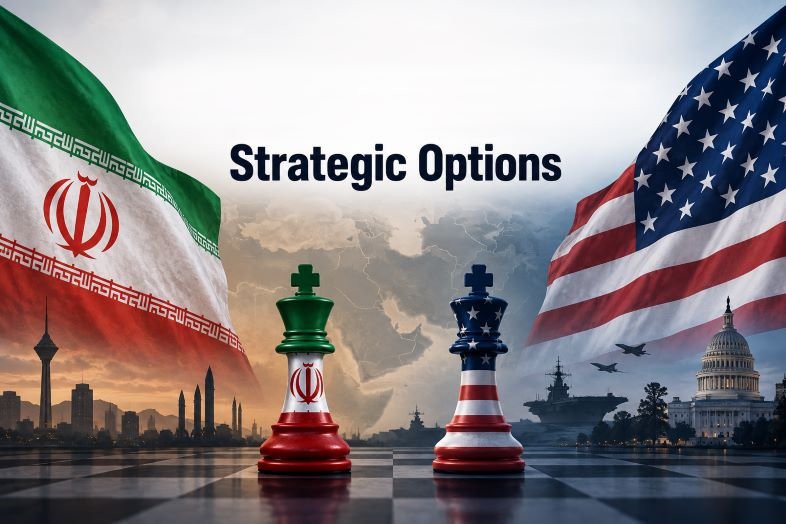
The operational environment shaped by Iran today is no longer defined by classical naval engagements. Instead, it reflects a layered and integrated A2/AD architecture: ballistic and cruise missiles, swarm UAVs, naval mines, mini-submarines, and fast attack craft combine to produce a saturation threat that erodes traditional concepts of sea control. Under such conditions, what is framed doctrinally as “escort duty” in support of international trade effectively becomes continuous exposure to direct, high-intensity engagement.
When even the United States—possessing unmatched global naval reach—adjusts its posture by distancing high-value assets from the immediate battlespace, England’s attempt to assume prominence in Hormuz must be interpreted not as a reflection of strategic necessity, but as a political reflex. It is a posture driven more by perception, alliance signaling, and historical identity than by a sober assessment of operational realities.
Therefore, the declared intention to enter Hormuz reveals a widening gap between capability and ambition. It is less a coherent security policy than a manifestation of strategic dissonance. The more pressing question is not why England seeks to enter such a theatre, but how a state that struggles to deploy even a single destroyer to Cyprus without delay has reached a point where intent so clearly outpaces means. HMS Dragon was deployed to the Eastern Mediterranean after 10 days of preparation period which caused harsh criticism in UK.
No Logistics, No Power.
The history of naval warfare points to a consistent and unforgiving truth, what determines success at sea is not the mere existence of force, but its sustainability. A navy may demonstrate presence for a limited period, the real measure of power is the ability to maintain that presence continuously, under pressure, and without interruption. This is precisely where the United Kingdom faces its most acute challenge today. The current structure of the Royal Navy is ill-suited for prolonged, high-tempo operations in a high-intensity conflict environment.
The experience of the destroyer HMS Diamond in 2025, operating against Houthi forces in the Bab el-Mandeb—an adversary lacking even a conventional navy—offered a stark illustration of this limitation. In an environment of sustained engagement, English warships rapidly approached their ammunition ceilings and were compelled to withdraw. This was not a question of tactical performance, but of structural endurance.
At the core of modern naval effectiveness lies force generation—the capacity not only to deploy assets, but to sustain and regenerate them. Warships are not static instruments, they require continuous maintenance cycles, often spending months or even years in dockyards. Effective force generation therefore demands depth: additional platforms that can assume operational duties while others undergo repair and refit. In the Royal Navy case, this depth has eroded significantly. When a vessel enters maintenance, there is frequently no equivalent unit available to replace it. This shortfall has become particularly pronounced within the destroyer and submarine fleets, where numerical scarcity directly constrains operational continuity.
In essence, no navy can produce enduring maritime power without the integrated foundations of logistics, industrial-scale ammunition production, and rapid maintenance and repair capacity. These are not auxiliary functions; they are the backbone of sustained sea power. It is precisely this systemic integrity that England has, over time, lost.
The Battle of Faklands and Today
Comparing the 1982 Falklands War with Argentina and today clearly reveals the point the UK has reached. At that time, they were able to form a task force with 2 aircraft carriers, 8 destroyers and 16 frigates. Today, at best, they can deploy 1 aircraft carrier, 2 destroyers and 5 frigates. For the formation of this force, they must cancel all other missions. In other words, if a crisis breaks out with Argentine on Falklands islands today, even the Hormuz mission, which the UK will send a warship, will have to be canceled. This table clearly shows the gap between the claim of global power and the current capability
Shrinking Economy
The fundamental driver behind the Royal Navy’s remarkable decline lies in the structural transformation of the British economy. Since the 1990s, the United Kingdom’s shift toward a finance-centered model has constituted a decisive breaking point. In this period, Britain moved away from its identity as a classical industrial and maritime power and evolved into an economy increasingly dominated by finance. The 1992 sterling crisis and the speculative intervention of George Soros stand as symbolic markers of this transition, revealing the extent to which the British economic system had become exposed to the volatility of global capital flows.
From that point onward, the economy progressively reoriented itself—away from production and toward finance, away from industry and toward services. As London consolidated its position as a global financial hub, the country’s underlying productive capacity began to erode. This erosion, initially gradual, became structural after the 2008 global financial crisis. Growth figures persisted, but they masked a lack of depth: productivity gains weakened, industrial investment lagged, and long-term capacity building was systematically neglected.
An economy detached from production can generate short-term expansion, yet it inevitably incurs long-term capability loss. While London flourished as a center of global finance, Britain’s industrial base—historically the foundation of both its military power and naval strength—continued to diminish. At the same time, following 2001, the United Kingdom aligned closely with U.S.-led military interventions, directing defense expenditures increasingly toward operational and expeditionary commitments rather than toward strengthening its own structural defense capabilities. This orientation effectively subordinated long-term force development to immediate, externally driven priorities.
The consequence has been a gradual severing of the organic link between economic strength and military power. After 2008, the British economy entered a persistent cycle characterized by low growth, weak productivity, and insufficient investment. Although headline growth continued, it lacked strategic depth and failed to support durable capacity expansion. This constrained the state’s long-term investment potential, placing sustained pressure on defense budgets. High-cost, capital-intensive domains such as naval power were inevitably among the first to absorb this pressure. In this sense, the weakening of the Royal Navy is not an isolated military issue, but the direct reflection of a deeper economic transformation that has hollowed out Britain’s ability to sustain maritime power.
Break from the EU
On January 31, 2020, on the eve of the Covid-19 shock, the United Kingdom’s departure from the European Union through Brexit accelerated an already unfolding economic deceleration. This rupture imposed durable pressures on trade, investment, and productivity. The economy became relatively more closed, capital inflows weakened, and trade intensity declined. In effect, the foundations of the centuries-old, trade-centric economic model that Britain had sustained since the post-1815 maritime order began to erode more visibly and more rapidly.
As trade and investment flows softened, overall economic dynamism diminished, placing additional strain on an already fragile structure. Brexit did not initiate these weaknesses; rather, it exposed and amplified them. Even prior to the referendum, institutions such as the Organization for Economic Co-operation and Development (OECD) had warned that Brexit would constitute a significant negative shock. Subsequent developments—persistent pressure on trade volumes, declining investment momentum, and weakening productivity—have confirmed that the British economy has entered a prolonged low-growth regime. In this sense, Brexit acted not as the origin of crisis, but as a catalyst that accelerated structural erosion. The United Kingdom today faces a chronic condition of productivity stagnation and subdued growth.
Simultaneously, tightening public finances, elevated tax and interest burdens, and mounting pressure on public services have directly affected high-cost instruments of national power, particularly the navy. The absence of a coherent and well-structured post-Brexit economic model, combined with frequent changes in political leadership, has further undermined strategic consistency and long-term planning.
Within this broader picture, the United Kingdom continues to project influence through finance, insurance, legal services, diplomacy, and global institutional networks. However, this influence increasingly rests on a narrowing base. Real economic dynamism and hard military capacity lag the country’s outward appearance of power. The result is a structural imbalance: a state that preserves its showcase strength yet experiences a steady erosion of its foundational capabilities. Britain today exhibits the reflexes and ambitions of an imperial power but operates with the material capacity of a mid-sized state.
Political Instability
The period following the Brexit referendum has been widely characterized as one of the most significant episodes of political turnover in Britain since the 1920s. Starting in 2016, the office of Prime Minister has changed hands repeatedly—through Theresa May, Boris Johnson, Liz Truss, Rishi Sunak, and, from 2024 onward, Keir Starmer. Five leadership changes within less than a decade have inevitably disrupted strategic continuity, with direct consequences for sectors that depend on long-term planning—foremost among them naval power.
Such rapid turnover has made it exceedingly difficult to sustain coherent, long-range strategies across industry, infrastructure, energy, and defense. Each leadership transition has brought shifts in priorities, recalibrations of fiscal policy, and interruptions in institutional momentum. The market turbulence experienced during the tenure of Liz Truss was particularly revealing, signaling that the United Kingdom could no longer rely on the depth of financial confidence it once commanded. This episode underscored a broader constraint: the state’s diminishing ability to anchor credible, long-term economic and strategic frameworks.
Yet defense—especially naval capability—is inherently dependent on continuity. Fleet development, industrial capacity, force generation, and logistical depth all require sustained investment horizons measured not in years, but in decades. When political stability erodes, so too does the capacity to maintain these long cycles. The result is not an immediate collapse, but a gradual attrition of capability. In this respect, the United Kingdom’s recent political volatility has translated directly into a slow but persistent weakening of its maritime power.
Is England’s Soft Power Enough?
The international order constructed by Britain after 1815 rested on a clear foundation which was the naval supremacy that ensured control over maritime transportation routes and the security of global trade. After 1945, this role was largely transferred to the United States, yet the United Kingdom remained embedded within the system, preserving influence through alliance structures and institutional continuity. Today, however, neither comprehensive dominance nor effective enforcement capability remains. Britain is no longer the arbiter of maritime routes.
And yet, it continues to appear as a significant actor within the global system. London retains its position as a leading center of finance and insurance; maritime law continues to be shaped there; and its influence persists through international institutions such as the International Maritime Organization, Lloyd’s of London, and the United Kingdom Maritime Trade Operations. Intelligence networks remain active and globally connected. In this sense, Britain still generates substantial influence through soft power—finance, insurance, legal frameworks, and institutional reach.
However, this influence is no longer underpinned by commensurate military capability. The result is a structural asymmetry: a state capable of shaping rules but increasingly limited in its ability to enforce them in contested environments. This widening gap between perception and reality defines Britain’s current strategic condition. It is, in effect, a country with an imperial memory operating with the material capacity of a mid-sized power. The present state of the Royal Navy stands as the most tangible manifestation of this reality. Naval strength is inseparable from its economic base; when the latter erodes, the former inevitably follows. Contemporary Britain offers a clear illustration of this linkage.
Within this framework, the decision of the UK Government to signal a naval presence in Hormuz reveals a critical misjudgment. The reflexes of soft power—rooted in London’s role in insurance and global trade governance—are being conflated with the harsh realities of hard power at sea. Yet maritime warfare is ultimately determined by sustainability, operational depth, and survivability. These are functions not of legacy, but of present capability.
Under current conditions, Britain appears to be assuming responsibilities that exceed its available capacity, inventory, and the demands of contemporary conflict.
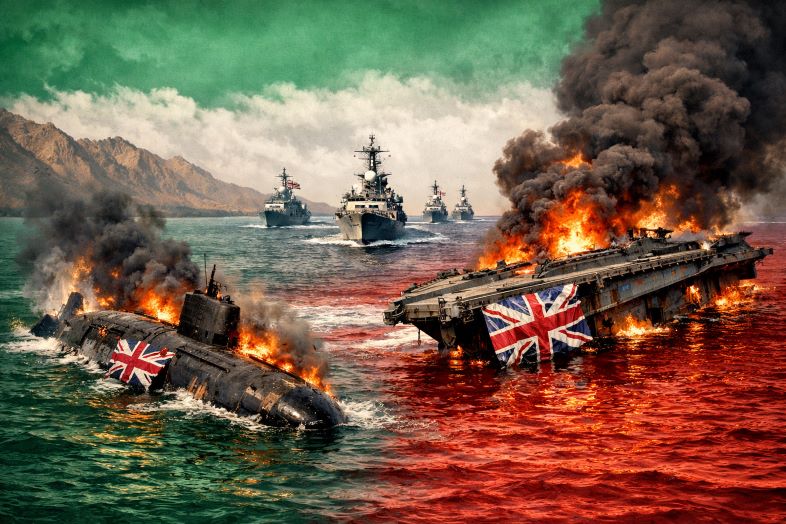
This posture resembles not a prudent and calculated security decision, but rather a strategic gamble in which geopolitical overconfidence converges with a steady erosion of capability. In the absence of a genuine, durable, verifiable, and mutually reflected ceasefire and peace framework among Iran, United States, and Israel, any attempt to enter Hormuz under the pretext of safeguarding commercial transit entails profound and systemic risk. The logical trajectory of such a move leads to only two outcomes: compelled withdrawal under pressure or uncontrolled escalation.
In a confined and highly contested maritime corridor such as the Strait of Hormuz, the operational margin for error is virtually nonexistent; the maritime domain does not tolerate miscalculation. Should Britain proceed along this path without aligning its ambitions with its actual capabilities, it risks confronting a strategic reality reminiscent of the trauma it experienced 111 years ago at Gallipoli Campaign—where intent exceeded capacity, and the consequences proved decisive.