
The world is experiencing a conflict of historical significance. Energy, production, labor, and the reorganization of trade within a new multipolar order are at the heart of the international crisis. The United States is resorting to war and global destabilization amidst its inevitable decline. In the midst of this conflict, while nations cling to their sovereignty to shape the future, Argentina is moving in the opposite direction, its course fixed on the administration of its colonial past.
While the international system is reorganizing itself around multipolar trade, the United States resorts to war and global destabilization to preserve an economic order that it can no longer sustain through productive, industrial, or commercial means.
The world is experiencing a historic struggle for control of energy, production, and labor. This is the true root of the conflicts that are shaking the international system today. These are not religious wars or isolated territorial disputes: what is at stake is who will dominate the global economy in the coming decades.
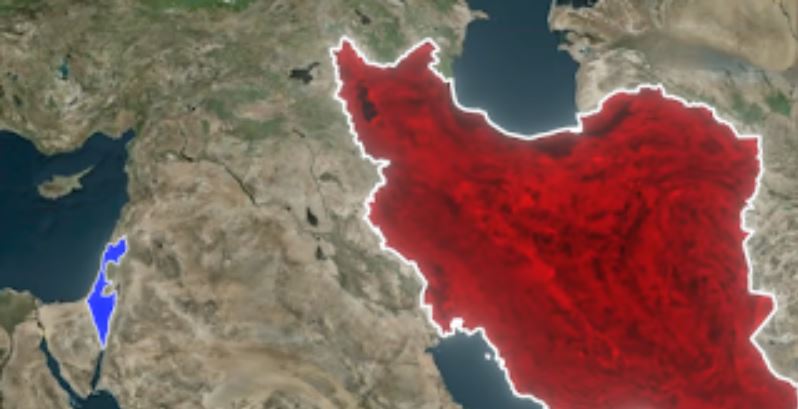
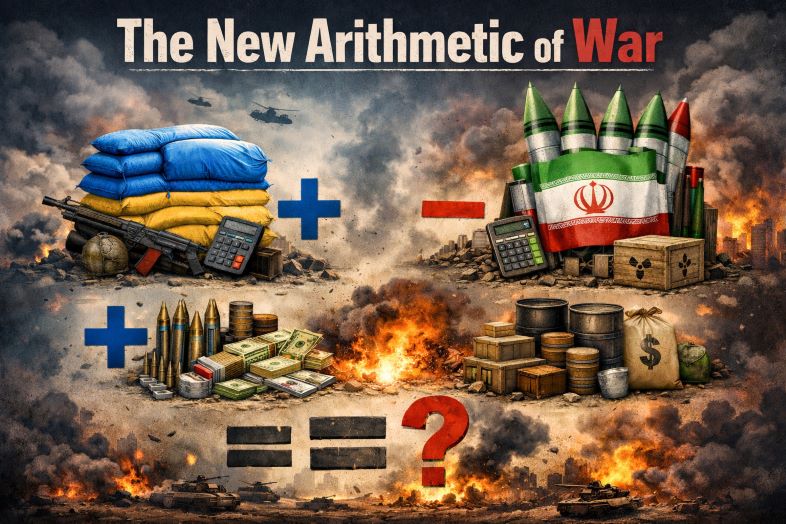
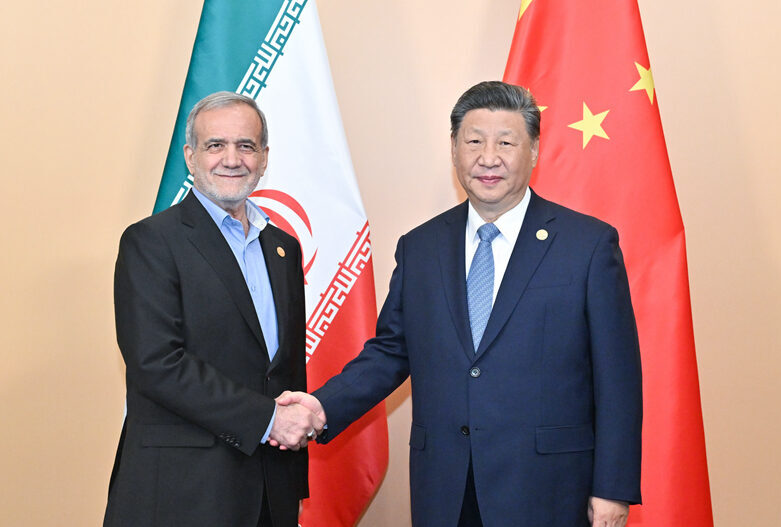
The recent attack by the United States and the Zionist entity, Israel, against Iran must be understood within this context. It is yet another episode in a structural confrontation that marks the end of the unipolar order that emerged after the Cold War and the advance of a multipolar international scenario.
In that context, energy occupies a central place.
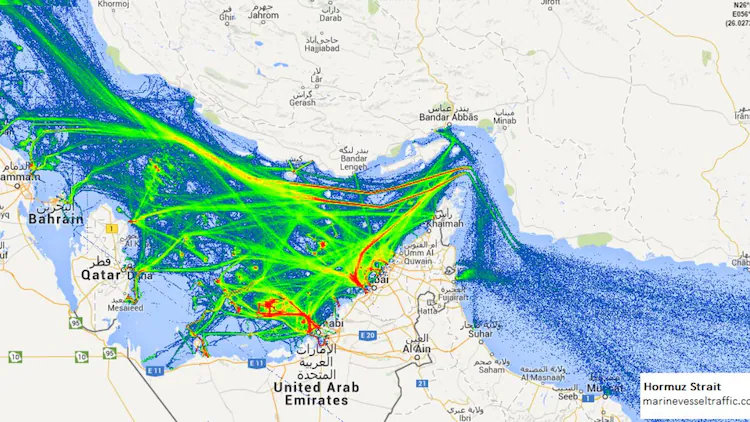
Iran possesses one of the world’s largest oil reserves and the second largest natural gas reserves. It produces more than three million barrels of oil per day and is located in a region that controls one of the world’s major energy corridors: the Strait of Hormuz, through which approximately one-fifth of the globally traded oil passes.
In a global economy that still relies heavily on hydrocarbons, whoever controls those energy flows has a decisive tool of power.
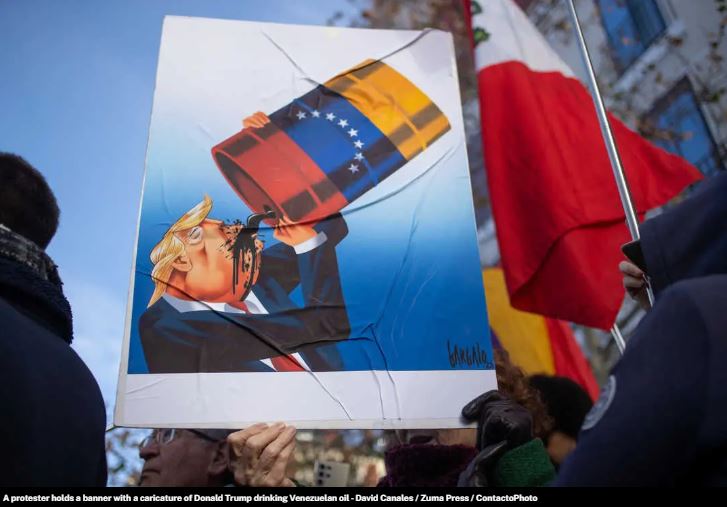
Therefore, the military pressure on Iran cannot be analyzed in isolation. It is part of a broader geopolitical sequence: the economic blockade of Venezuela, the war in Ukraine that disrupted Russian energy supplies to Europe, the sabotage of the Nord Stream gas pipeline, and the increasing militarization in Asia.
All these actions follow the same logic: to preserve the international economic architecture dominated by the United States.
The change that alters the world order
The backdrop to this escalation is the structural change that the global economy is undergoing.
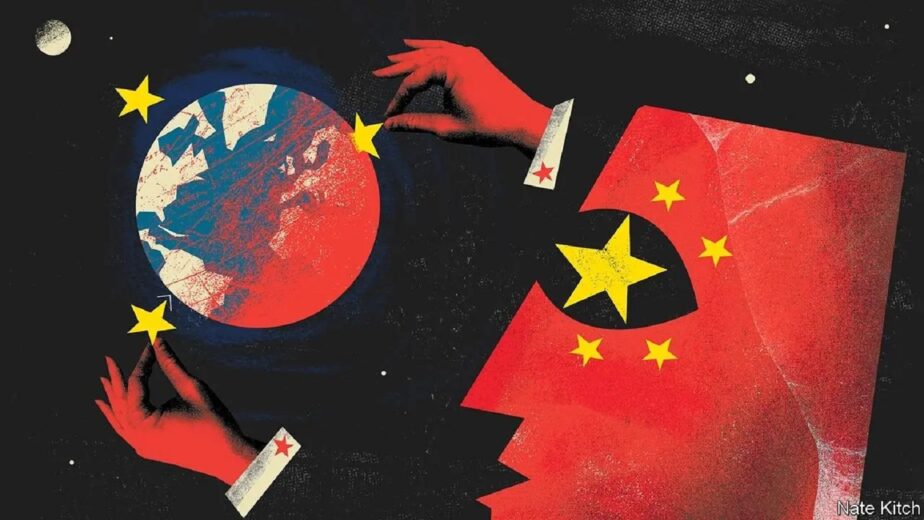
Over the past two decades, the center of gravity of global production has begun to shift. China has become the world’s leading industrial power.
It currently produces about 31% of global industrial value added, while the United States accounts for around 16%. Just twenty years ago, the relationship was exactly the opposite.
But China’s industrial leadership is not limited to traditional manufacturing. It also dominates key 21st-century sectors:
- over 70% of the world’s solar panels
- over 60% of lithium batteries
- a growing proportion of the production of electric vehicles, industrial machinery and advanced electronics.
At the same time, its weight in global trade went from 4% in 2000 to more than 15% today, becoming the main trading partner of more than 120 countries.
This economic shift is also reflected in the emergence of new international alliances.
The expanded BRICS countries account for approximately 45% of the world’s population, around 35% of global output measured in purchasing power parity, and a decisive part of the planet’s energy reserves.
But the most profound change is another: these countries began to develop trade and financing mechanisms that seek to reduce dependence on the dollar.
China and Russia conduct most of their bilateral trade in local currencies. India pays for some of its oil outside the traditional financial system. Brazil and China have established direct compensation systems between their currencies. And the BRICS New Development Bank finances projects without relying on Washington-dominated institutions.
In other words, what is at stake is not just control of oil.
The question of who organizes the world economy is being debated.
The empire’s response: war against the logistical network
Faced with this shift in global economic power, the United States responds with the instruments it has historically used to maintain its hegemony: economic sanctions, political coups, and wars.
But this behavior is not improvised. It responds to a strategic logic deeply rooted in his military thinking.
Since the 19th century, the doctrine of American war incorporated a central principle: the destruction of the adversary’s logistical capacity.
A country is not sustained solely by its military. Its true strength lies in its productive structure: factories, energy infrastructure, transportation, commercial networks, and workers. If that structure is destroyed, a nation’s capacity to resist collapses.
Under this logic, war ceases to be a confrontation between armies and becomes a process of systematically destroying the enemy’s economic base. That is why contemporary wars often begin with the destruction of power plants, ports, pipelines, roads, or industrial infrastructure.
Modern warfare is, in essence, a war to destroy the enemy’s productive capacity. Because, despite what liberals, lovers of the financial world, say, power resides in production.
War as a tool against the new economic order
The current military escalation also serves another strategic function: to disrupt the consolidation of the new economic framework that began to be built among emerging economies.
The energy, financial and trade networks that link the BRICS countries depend on the stability of energy flows and the development of new exchange mechanisms.
A change in ownership of one of the world’s major energy-producing regions will be an insurmountable obstacle to the consolidation of these economic circuits. In this sense, war functions as a tool to disrupt the reorganization of global trade that challenges the hegemony of the dollar.
The goal is not only to defeat a country, but to prevent the consolidation of an alternative international economic system.
Argentina acting against its own interests
While the world discusses how to ensure its energy, technological and industrial sovereignty amid this global dispute, Argentina is moving in the opposite direction, confirming its status as a colonial administration.
Instead of strengthening its productive structure to participate more effectively in the new international scenario, the country is undergoing an accelerated process of deindustrialization.
Argentine industry is losing around 160 jobs per day, which equates to approximately 5,000 fewer jobs per month. At the same time, per capita industrial output has fallen back to levels comparable to those of 1985, representing a setback of almost four decades in terms of productive capacity.
The result is a true process of industrial destruction, loss of productive power and, therefore, loss of sovereignty.
Production or dependence
The contradiction is evident. In a world where major powers are vying for control of energy, technology, and industrial production, Argentina is reducing its capacity to generate added value.
Without industry there is no sovereignty, because a country that doesn’t produce what it consumes ends up depending on those who do. And in a world where production is once again the core of international power, that dependence is not only economic: it is political.
While the international system is reorganizing itself around the dispute over energy, industry and labor, Argentina is heading towards resignation to being a supplier of raw materials and a consumer market for foreign products.
The true political alternative in the country to be built, which is totally absent today, must be guided by the certainty that the destiny of a free, independent and just nation can only be reached through the path of production and work.
The real discussion for Argentina, in this international context, is once again the same one that runs through its entire political and economic history: An industrial, thriving and free country or a primary-based, dependent and impoverished one.