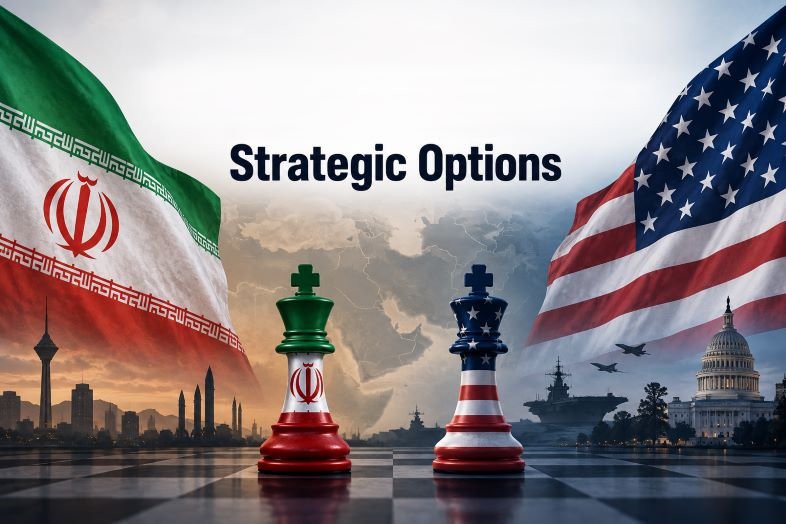

March 28, 2026 – American democracy in foreign policy has been hijacked. And the hijackers, as is often the case, demand ransom in the form of missiles, bombers, and multi-million dollar contracts. The ransom is paid with other people’s lives, in distant countries, and with the future security of a nation that has forgotten how to make peace.
“Anyone can go to Baghdad. Real men go to Tehran.” (El Tábano Economista)
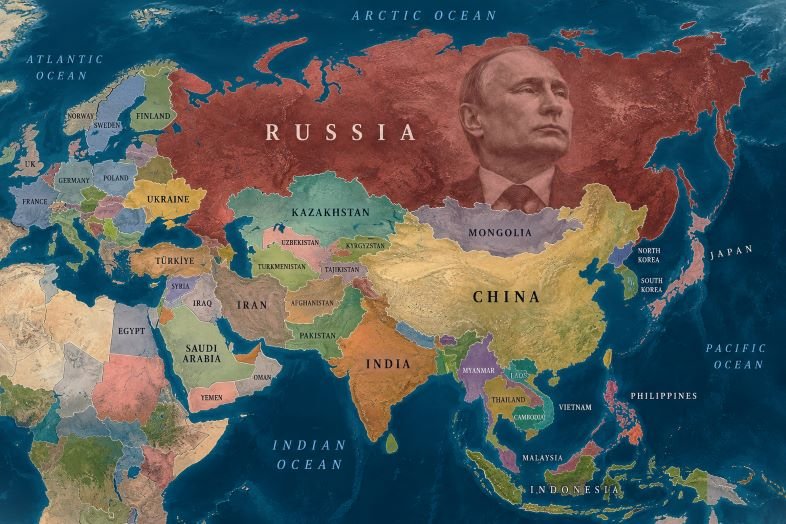
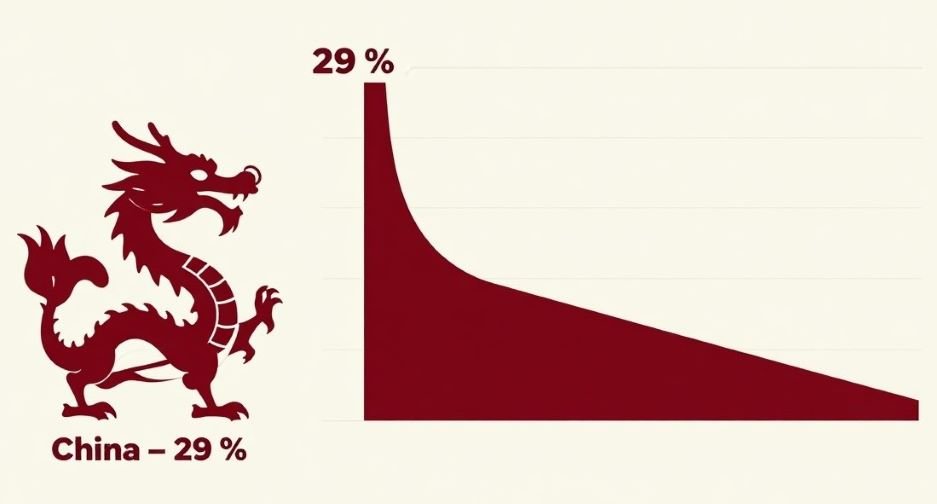
The phrase, attributed interchangeably to Rambo or Oily Boogie, depending on the reader’s preference, encapsulates a temptation that has haunted the corridors of power in Washington for decades. But the real question isn’t whether or not the United States should bomb Iran. The question is who decides that this is even an option on the table when the majority of citizens oppose it, when the military warns of the consequences, and when the national defense strategy itself states that the true enemy is thousands of miles away, in China.
The answer is uncomfortable, but well-documented: US foreign policy is the product of a coherent national strategy, as we explained in the article “ Trump Doesn’t Improvise ,” but the result is a fierce struggle between elites with radically different worldviews and, above all, very specific economic interests. It is not a conspiracy with a single mastermind, but rather an opaque ecosystem of neoconservative intellectuals, defense contractors, foreign lobbies, and internal White House factions vying to control the narrative and, incidentally, the budget.
What makes the analysis particularly confusing is that a parallel set of economic and business debates unfolds almost independently of strategic considerations. To understand this, one must examine three schools of thought currently vying for control of American foreign policy. On one side are those associated with the MAGA movement, who desire a more conservative United States and a foreign policy that is an extension of domestic culture wars. Vice President J.D. Vance succinctly summarized this: the United States should not “waste lives being the world’s policeman.” But there is also a deep skepticism toward the Washington elite, whom they consider inveterate warmongers.
A second perspective, that of the self-styled “realists,” considers the Indo-Pacific the absolute priority. China, not Iran, is the true existential challenge. A war in the Middle East would be an endless problem that would divert crucial resources from containing Beijing. They advocate for containing Iran, not destroying it, and believe some kind of modus vivendi is possible that would allow the United States to withdraw from the region. Their intellectual mentor is Elbridge Colby, and their proposals sound like music to ears weary of endless wars.
Finally, the more traditional approach to US national security persists—that of the neoconservatives, or now, Zion Con, who perceive interrelated threats from China, Russia, Iran, and North Korea. This worldview, which critics label “neoconservative,” advocates for a high level of military preparedness and cooperation with allies on three simultaneous fronts: the Indo-Pacific, Europe, and the Middle East. For them, China is certainly the primary adversary, as Marco Rubio acknowledged when he was still a senator, but that doesn’t mean neglecting other fronts.
The problem is that this strategic debate, already complex in itself, unfolds in parallel with another, much more mundane one: the business world. And there, things change drastically.
The clash between these elites is not purely intellectual. The “fragmented logic” that produces erratic and seemingly contradictory decisions is largely due to the powerful economic interests that fund think tanks, which in turn provide the intellectual cover for wars, which then benefit the corporations that funded those think tanks. It’s a perfect, self-reinforcing, and opaque cycle.
The hawkish bloc, heir to neoconservative thought, operates on a simple premise: the United States must maintain its global primacy through an indisputable position of military strength. Its objective is not to contain Iran, but to actively seek regime change or, at least, a degradation that would prevent it from projecting power in the region. They believe that Iran only understands force, that any negotiation is a concession to evil, and that eliminating the Iranian threat is non-negotiable, especially for the survival of Israel.
This faction is led by figures with a long history of interventionism: Marco Rubio as Secretary of State, Mike Pompeo, John Bolton, Mike Waltz (the latter being the ambassador to the UN), and John Ratcliffe as head of the CIA. In Congress, they have senators like Lindsey Graham and Tom Cotton. And their intellectual arm consists of well-defined think tanks: the Foundation for Defense of Democracies (FDD), the American Enterprise Institute (AEI), the Jewish Institute for National Security of America (JINSA), the Hudson Institute, and the Washington Institute for Near East Policy.
They are respectable institutions, with brilliant experts and influential publications. But they are also institutions funded in a very particular way. And that’s where it’s important to pause, because the heart of control lies in money.
According to a recent Quincy Institute investigation published by Responsible Statecraft , the most hawkish think tanks receive millions directly from those who manufacture the munitions currently being used in Iran. The Hudson Institute has received more than four million dollars since 2019 from Lockheed Martin, Northrop Grumman, General Atomics, and RTX. Northrop manufactures the B-2 stealth bombers, valued at $2 billion each, that are attacking Iran. Lockheed manufactures the fighter jets and the THAAD radar system, valued at $300 million, that Iran recently destroyed. General Atomics produces the MQ-9 Reaper drones. RTX manufactures the Tomahawk missile that reportedly killed 168 girls at a primary school in Minab.
The Atlantic Council, which accepts more funding from the arms industry than any other think tank, published a report last year recommending that the United States acquire more THAAD and SM-3 missiles to counter threats such as Iran. The manufacturers of those missiles, RTX and Lockheed Martin, had donated $850,000 and $700,000, respectively, to the Atlantic Council since 2019. Both systems are being used extensively in the current campaign.
The Institute for the Study of War (ISW), whose president, retired General Jack Keane, has openly called for “wiping Iran off the map” on Fox News, is listed as funded by General Dynamics and CACI International Inc., though it recently removed the names of both donors from its website. When asked, the ISW responded that it does not share donor information beyond what is required by law.
But perhaps the most revealing phenomenon is that of “dark money think tanks.” Around 40% of leading US think tanks do not disclose the identity of their donors. The Foundation for Defense of Democracies (FDD) , originally founded to “improve Israel’s image in North America,” was crucial in pressuring Trump to withdraw from the Iran nuclear deal in 2018. Historically, FDD received millions from Bernard Marcus, Paul Singer, and Miriam Adelson, pro-Israel megadonors who, in Adelson’s case, donated as much as $100 million to Trump’s campaign.
The Jewish Institute for National Security (JINSA) is another such group with opaque funding. Its members include Benjamin Netanyahu’s former National Security Advisor, the former commander of the Israeli Air Force, and Elliott Abrams, Trump’s former advisor on Iran, as well as more than a dozen retired U.S. generals and admirals. When the military operation began, JINSA published an open letter signed by 75 retired generals supporting the war.
And then there are foreign governments. The Atlantic Council has received $20.8 million since 2019, primarily from the United Arab Emirates, Qatar, and Saudi Arabia. The Washington Institute for Near East Policy , founded as a spinoff from the pro-Israel lobby AIPAC, derives about 95% of its funding from private contributions, dark money, and pro-Israeli security donors.
For those who want to delve deeper, there’s a pioneering tool: the Quincy Institute’s Think Tank Funding Tracker , which tracks funding received from foreign governments, the U.S. government, and Pentagon contractors for the country’s 50 largest think tanks over the past five years. The data is overwhelming.
Compared to this powerful machine, the pragmatic bloc seems almost amateurish. The Quincy Institute, Defense Priorities, the Cato Institute, and to a lesser extent Brookings and CNAS, advocate for a more restrained foreign policy, focused on China and skeptical of military adventures in the Middle East. But their funding is minuscule compared to that of the hawks. They don’t manufacture missiles, they don’t have foreign governments that want to influence the narrative, and they don’t have billionaires willing to spend fortunes promoting regime change in Tehran.
The consequence of all this is a schizophrenic foreign policy. The National Defense Strategy, published in January, states that China is the priority. But the administration is mired in a war of attrition in the Middle East. Special envoy Steve Witkoff, representing the pragmatic wing, has made surprisingly bellicose statements in recent days. “They have uranium enriched to 60 percent, enough for 11 bombs,” he told reporters.
Meanwhile, in Congress, votes continue on war powers resolutions that attempt, unsuccessfully, to reclaim the constitutional authority to declare war, which the legislature has been ceding to the executive for decades. Just this week, the Senate defeated a measure to halt military action by a vote of 47 to 53, in a decidedly partisan vote. The House is preparing to vote on a similar measure, but even if it were to pass, it would face an almost certain presidential veto.
The result is a president who acts as commander-in-chief with a freedom the founders of this nation never imagined. And think tanks, funded by those who profit from wars, provide the intellectual cover that makes it possible.
When the military operation began, the stocks of RTX, Northrop Grumman, and Lockheed Martin soared. For them, the war had started exceptionally well.
When this war ends—if it ever does—and the retrospectives begin, historians will wonder how a nation that claimed containing China as its strategic priority ended up embroiled in a war of attrition in the Middle East. The answer will lie in the archives: in the memos of think tanks funded by Lockheed Martin, in the emails between advisors and lobbyists, in the minutes of the meetings where it was decided that the voice of the people, largely opposed to the war, mattered less than the interests of a powerful and well-organized minority.
It’s not a conspiracy. It’s a perfectly documented economic mechanism. And until the structural problem of money in shaping national security policy is addressed, no president—Trump, Biden, or anyone else—will be able to escape its clutches.
American democracy in foreign policy has been hijacked. And the hijackers, as is often the case, demand ransom in the form of missiles, bombers, and multi-million dollar contracts. The ransom is paid with other people’s lives, in distant countries, and with the future security of a nation that has forgotten how to make peace.