China is in “Two Sessions” and as every year designs its socio-economic development projection, but 2026 is different because annual, five-year cycles and digital civilizational transformation converge to which Latin America should pay attention.
The sessions of the country’s top advisory body and the National People’s Assembly mark the beginning of the 15th Five-Year Plan (2025-2030), a key period for achieving basic socialist modernization by 2035.
Last year the Chinese economy registered growth of around five percent, the unemployment rate remained at similar levels to previous periods (5.2), while the value added of high-tech manufacturing grew 9.4 percent and the production of new energy vehicles increased 25.1 percent.
The “Two Sessions” is a unique window into understanding the country’s priorities: emerging industries, reform, openness, quality productive forces, development of innovation and technological self-sufficiency, consolidation of the domestic market, among other objectives.
China’s main concerns are economic recovery amid problems facing the real estate sector, unemployment rates that the country is trying to keep low, and domestic demand that has yet to reach its potential.
During this period, China will prioritize the development of new productive forces, with an emphasis on artificial intelligence (AI), clean energy, and technological innovation.
The Asian nation will seek to strengthen its scientific autonomy, while maintaining international cooperation in a turbulent global context.
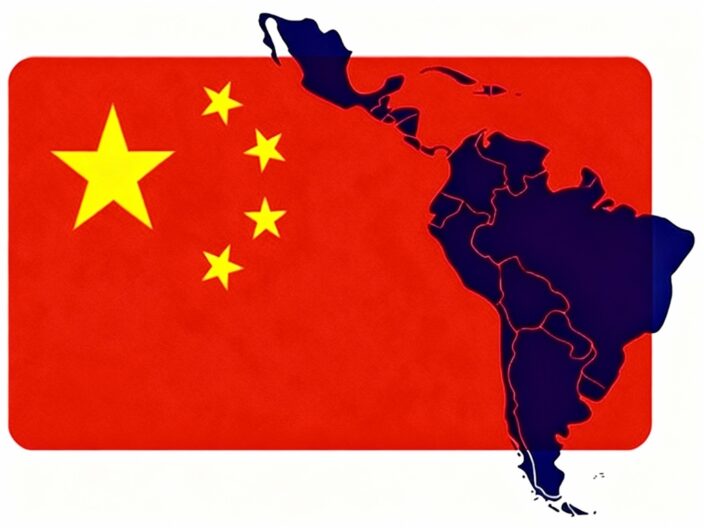
Latin America has a great opportunity to strengthen trade with a country that seeks to expand and diversify its trading partners, and also has a foreign policy of respect and non-interference in internal affairs.
According to official figures, China is the region’s second largest trading partner – the first for Brazil and Peru, for example – and one of its main sources of foreign direct investment.
On the other hand, 24 Latin American and Caribbean countries have joined the Belt and Road Initiative, while Beijing is deepening its cooperation with Cuba and Brazil within the framework of building communities with a shared future.
Bilateral trade has exceeded $500 billion since 2024 and is on the rise.
Numerous experts warn that the challenges are greater now, because the United States has set out to eliminate Beijing’s presence in the region as part of a national security strategy focused on updating the Monroe Doctrine.
In fact, the so-called continental right-wing summit convened by the White House chief for this weekend has as one of its geopolitical objectives to counter China’s influence in Latin America and the Caribbean and obstruct its Belt and Road project.
However, the Asian giant has just redefined its vision of Latin America and the Caribbean, which is an incentive to promote ties between the two sides.
China’s third policy document toward the region was launched last December, with prioritized concepts of win-win cooperation and mutual respect.
The document translates into concrete actions the five programs announced by President Xi Jinping last May during the Fourth Ministerial Meeting of the China-Community of Latin American and Caribbean States (CELAC) Forum.
Let us recall that the Chinese government committed to the effective use of the 66 billion yuan (about 9.1 billion dollars) credit line with a focus on infrastructure, clean energy, agriculture, digitalization, and artificial intelligence.
He also announced the promotion of more direct air routes, government scholarships, cultural exchanges, mutual translations of audiovisual works, and collaboration between academic centers.
One of China’s goals until 2030 is to strengthen technological self-reliance and further develop innovation and research, a path in which applied robotics and generative AI occupy priorities.
According to the Latin American Artificial Intelligence Index (ILIA) 2025, published by the Economic Commission for Latin America and the Caribbean (ECLAC) and the National Center for Artificial Intelligence of Chile, the region attracts only 1.12 percent of global investment in AI.
However, it ranks third globally in downloads of generative AI applications, suggesting that interest far exceeds current capacity.
As ECLAC Executive Secretary José Manuel Salazar-Xirinachs pointed out, it remains essential to close the gaps in “infrastructure, talent, innovation and governance”.
China’s Global Action Plan for AI Governance advocates for the creation of cross-border open-source communities, lowering the thresholds for technological innovation, and supporting developing countries in building AI capacity, as well as an explicit commitment to helping the Global South “truly access and utilize artificial intelligence.”
As part of the diversification of the export basket that Latin America so aspires to, China’s emerging technology, robotics and AI industry becomes an opportunity for the region to strengthen its own technological and industrial capabilities.
In a scenario of geopolitical reconfiguration and external pressures, Beijing seeks to be a force for stability.
For the nations of Latin America and the Caribbean, this represents an opportunity to diversify alliances, access technology and financing, and strengthen South-South cooperation.
This isn’t about choosing sides, but about understanding trends. The decisions China makes in these “Two Sessions” will impact value chains, investment flows, and technological cooperation over the next five years.