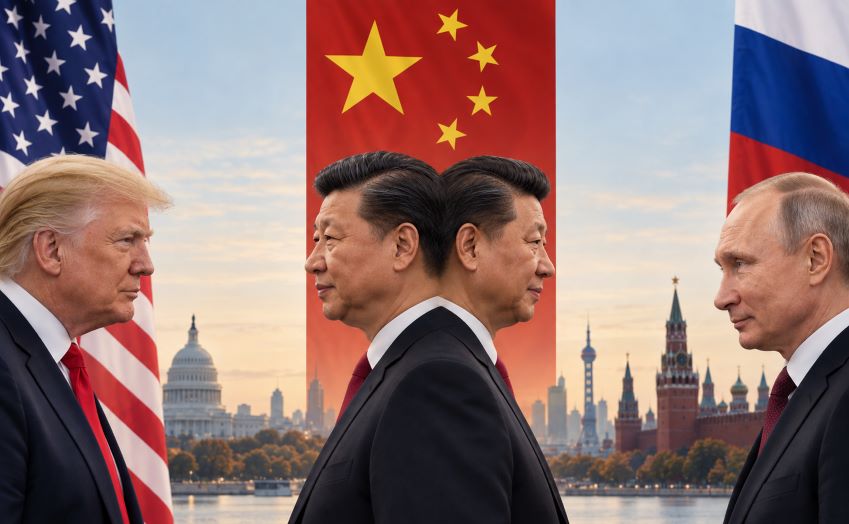
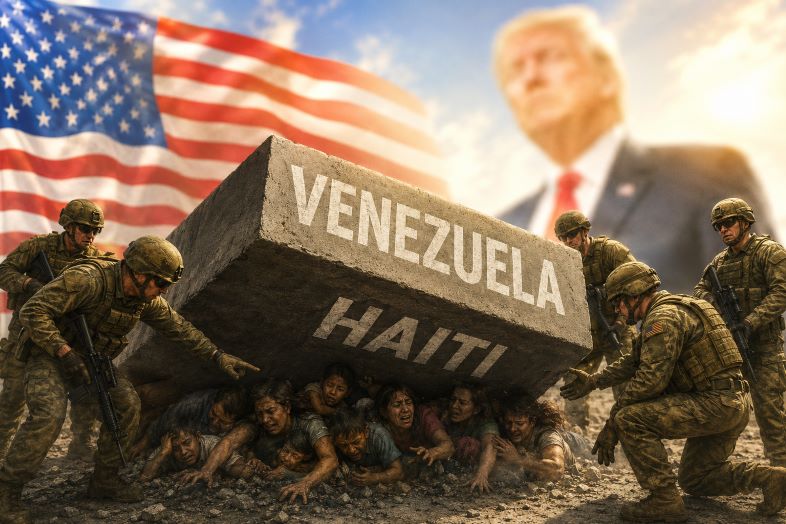
The central question is what happens when international aid ceases to be a temporary cooperation mechanism and becomes a geopolitical tool for the interests of the United States. Based on the Haitian case, several authors have also warned that humanitarian crises can become scenarios where the political, economic, and strategic interests of external actors converge.
The earthquakes that struck Venezuela on June 24th prompted a swift response from the international community. Governments and multilateral organizations announced humanitarian aid, rescue teams, and resources to address the emergency. At first glance, this response seems beyond question. However, history compels us to ask an uncomfortable question: does all international aid truly strengthen a country, or, under certain circumstances, can it become a form of intervention?
The experience of Haiti is one of the most revealing precedents for analyzing this issue. Not because Venezuela and Haiti are comparable, but because it demonstrates that international missions must be evaluated not only by the good intentions they proclaim, but also by the consequences they generate in the country they claim to help.
The promise of stabilization
In 2004, following the political crisis that culminated in the departure of President Jean-Bertrand Aristide, the United Nations Security Council created the United Nations Stabilization Mission in Haiti (MINUSTAH).
His mandate was broad and ambitious: to restore security, support the political process, strengthen the Haitian National Police, facilitate humanitarian assistance, and contribute to the reconstruction of state institutions.
For thirteen years, MINUSTAH became one of the largest peacekeeping operations deployed in Latin America. At its peak, it comprised more than 9,000 military personnel, nearly 4,000 international police officers, and thousands of civilian staff from over fifty countries. Brazil led the military component, joined by Argentina, Chile, Uruguay, Peru, and other nations in the region. Mexico also participated with police and civilian personnel.
On paper, it represented one of the largest multilateral efforts to stabilize a state “considered fragile”.
Interventionist mission
The most significant test for MINUSTAH came on January 12, 2010, when a magnitude 7.0 earthquake struck Haiti. The quake left more than 220,000 people dead, around 300,000 injured, and nearly 1.5 million displaced, in addition to destroying much of the country’s governmental and urban infrastructure.
The tragedy triggered one of the largest humanitarian aid operations in recent history. Governments, international organizations, non-governmental organizations, and cooperation agencies mobilized billions of dollars with the promise of rebuilding Haiti. However, more than a decade later, various studies conclude that a significant portion of these resources was channeled through international organizations and foreign contractors, while the strengthening of Haitian institutions was limited. For many analysts, the earthquake not only highlighted the country’s enormous vulnerability but also reinforced a model of international intervention in which humanitarian assistance ultimately displaced the state’s capabilities.
The international intervention was not without its health consequences. That same year, a devastating cholera outbreak struck Haiti. Epidemiological investigations concluded that the disease was “accidentally” introduced by a contingent of UN peacekeepers from Nepal due to inadequate sewage management. The epidemic left more than 820,000 people infected and around 10,000 dead. For years, the United Nations denied its responsibility until, in 2016, it acknowledged its moral responsibility and announced a reparations program.
In addition, numerous reports surfaced of exploitation and sexual abuse committed by members of the mission. Human rights organizations documented cases of sexual violence against women and minors, as well as hundreds of children born from these relationships, while victims denounced the lack of justice and effective redress mechanisms.
The US military deployment following the earthquake also sparked intense geopolitical debate in Latin America. Then-Venezuelan President Hugo Chávez publicly questioned the scale of the US military presence in Haiti, arguing that the disaster was being used to consolidate a strategic position in the Caribbean. In various speeches and statements, he asserted that, under the guise of humanitarian aid, Washington had sent thousands of soldiers, seized control of the Port-au-Prince airport, and prioritized military deployment over civilian assistance. Although the US government rejected these accusations and maintained that its forces’ presence was solely for logistical and security purposes to facilitate aid distribution, Chávez’s statements fueled a regional debate about the boundaries between humanitarian cooperation and the projection of military power.
When aid is a humanitarian occupation
Based on the Haitian experience, several international relations specialists began to question the model of humanitarian interventions. They do not argue that all international missions are illegitimate, nor that humanitarian aid should be rejected. The debate is much more complex.
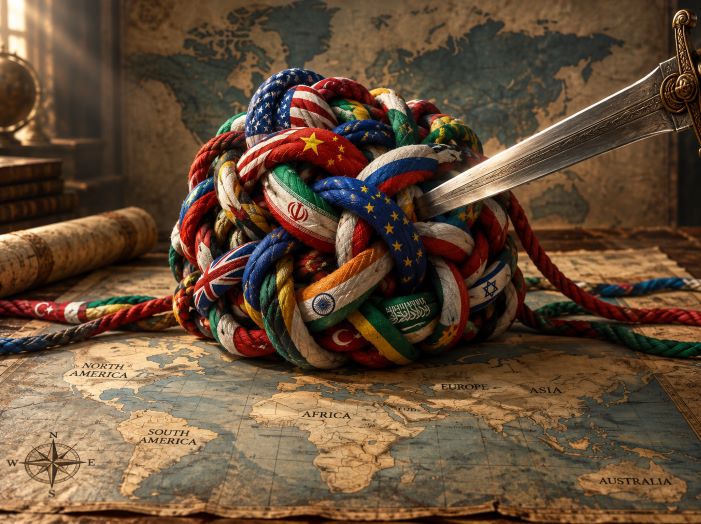
The central question is what happens when international aid ceases to be a temporary cooperation mechanism and becomes a geopolitical tool for the interests of the United States. Based on the Haitian case, several authors have also warned that humanitarian crises can become scenarios where the political, economic, and strategic interests of external actors converge. From this perspective arises the concept of “humanitarian occupation ,” used by some academics to describe interventions that, although initiated with legitimate objectives, end up weakening the autonomy of the recipient state and shifting decision-making to foreign organizations or governments.
This debate can even be understood in light of the concept of soft power , developed by political scientist Joseph Nye to describe a state’s ability to influence others through attraction, cooperation, and legitimacy, rather than the direct use of military force. While humanitarian aid is an indispensable tool for saving lives, the Haitian experience demonstrates that, in certain contexts, it can also become an instrument for projecting political and geopolitical influence. When assistance is accompanied by political conditions, a military presence, or mechanisms that displace the decision-making capacity of the receiving state, it ceases to be merely an act of solidarity and becomes part of broader power strategies. Therefore, in the Venezuelan case, the discussion should not be limited to who offers the aid, but also to the conditions under which it is received, who administers it, and whether it strengthens national sovereignty or increases the capacity of external actors to influence the country’s political future.
The questions Haiti leaves for Venezuela
Can humanitarian aid be used for geopolitical purposes?
How will the Venezuelan opposition react to this natural disaster, which is largely orchestrated from outside the country?
These questions aim to help understand the tragedy our Venezuelan comrades are experiencing today after the double earthquake of June 24th; they are not intended to reject international cooperation. On the contrary, they stem from the recognition that, in the face of major disasters, genuine solidarity between nations can be indispensable if there are no underlying geopolitical motives.
This reflection takes on particular relevance in Venezuela, given that much of the political opposition has developed its strategy from abroad and has repeatedly sought the support of foreign governments, especially the United States, to exert pressure on the current Venezuelan government. Opposition leader María Corina Machado, for example, has publicly requested the maintenance and strengthening of international sanctions, as well as greater support from the international community to promote political change in Venezuela. This strategy has failed to translate into sustained popular mobilization within the country in her favor, despite the kidnapping of President Nicolás Maduro and the US bombing of Caracas on January 3.
From this critical perspective, the Venezuelan opposition is once again favoring a scenario that opens the door to greater foreign interference, particularly from the United States, a country that has historically shown a strategic interest in the region and its energy resources, with a particular focus on Venezuela. In the context of a humanitarian emergency, this precedent makes it even more crucial to question whether all international aid is solely for humanitarian purposes or whether, under certain circumstances, it can also become a tool for expanding the political and geopolitical influence of external actors.
Today, many of us view the rhetoric of a supposed opposition unity with suspicion. What this piece questions is that simply by being presented as humanitarian aid, the assistance offered to Venezuela is automatically exempt from scrutiny. The history of MINUSTAH demonstrates that international operations require transparency, effective accountability mechanisms, and clear boundaries. Today, Haiti remains a stark warning: aid can save lives, but it will only be truly successful if it fully respects the sovereignty of the people it claims to help. History shows that when aid ceases to be support and becomes a form of interference disguised as humanitarian assistance, the line between solidarity and occupation can become dangerously thin.
Therefore, the challenge is not to reject international cooperation, but to prevent the humanitarian emergency currently facing Venezuelans from becoming a gateway to new forms of political subordination. This fragile balance between aid and control determines not only the effectiveness of the assistance, but also the right of peoples to decide their own destiny without external oversight, which is a very clear pattern in Latin America today.