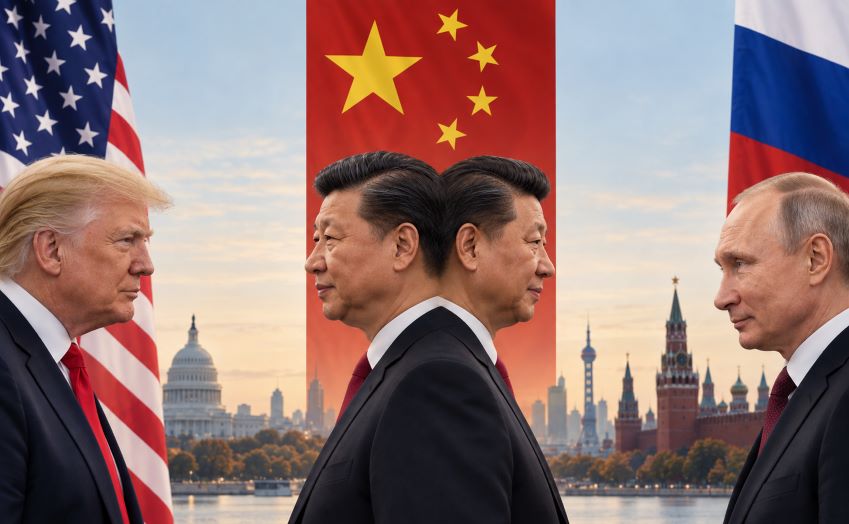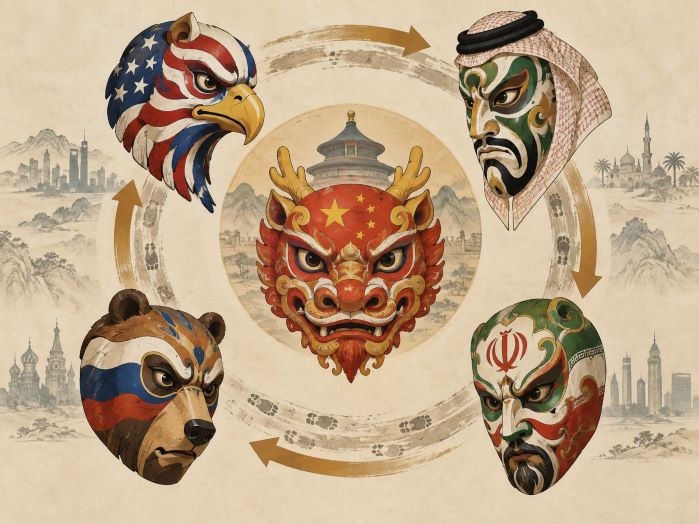
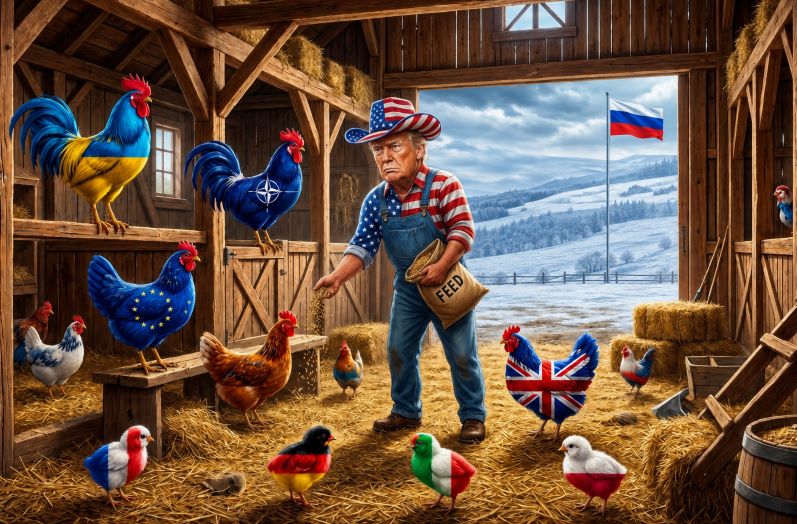
The US’s strategy of sowing discord between Europe and Russia has persisted since the Cold War, spanning the economic, military, diplomatic, and public opinion spheres. The core of this strategy is singular: to prevent Russia and Europe from forming a “Greater Europe” economic and security community due to energy complementarity and geographical proximity. Once such a bond is established, the strategic foundation of US control over Europe will weaken, and the basis of its global offshore hegemony will be shaken.
Below, we will break it down into six major areas based on strategic function, discussing each layer in turn.
Energy is the deepest link of interest between Russia and Europe. Russia provides cheap and stable pipeline natural gas, while Europe provides technology and markets. The US’s approach is direct—simultaneously severing this link through both physical and legal means.
From the operation of Nord Stream 1 to the construction of Nord Stream 2, the Obama, Trump, and Biden administrations have consistently escalated the issue, with none letting up on it. In December 2019, Trump signed the Protecting European Energy Security Act, authorizing the State Department to exercise extraterritorial jurisdiction over engineering vessels, insurers, and technology certification companies involved in the Nord Stream 2 pipeline construction. Under the threat of sanctions, the German port of Mukran and the Swiss marine engineering company Allseas were forced to withdraw, and pipeline construction stalled when only about 150 kilometers remained to be completed. The essence of this operation lies entirely in the legal realm: the apparent target of the sanctions is Russia, but the actual victims are energy companies in core European countries such as Germany, France, and Austria. The United States, using the extraterritorial effect of its domestic law, has forcibly steered European commercial choices onto its own strategic track.
On September 26, 2022, NATO held the “Baltic Operations-2022” joint military exercise in the Baltic Sea. Three of the four Nord Stream 1 and Nord Stream 2 undersea pipelines simultaneously experienced violent explosions near Bornholm Island, Denmark. The pipelines were blasted with deep deformation gaps, rendering them essentially beyond repair. Multiple international seismic networks recorded undersea tremors caused by the explosions. Afterwards, US Secretary of State Antony Blinken publicly called the incident a “huge opportunity” that would allow Europe to “eliminate its dependence on Russian energy once and for all.” The joint investigation led by Sweden and Denmark progressed slowly, and in February 2024, Sweden announced the conclusion of its investigation, citing “lack of jurisdiction,” without releasing any conclusions. Who was responsible for the explosions remains an open question. This explosion permanently destroyed the core physical structure of Russian-European energy cooperation, fundamentally blocking any possibility of renewed cooperation in this field.
The pipeline destruction was just the first step. Simultaneously, the US pushed the EU to implement its eighth and ninth rounds of sanctions against Russia, setting a price ceiling for oil exports to Russia. Meanwhile, US liquefied natural gas exports to Europe surged by nearly 140% year-on-year in 2022, at prices three to four times higher than Russian pipeline natural gas. The soaring energy costs directly forced a large-scale relocation of European industries, with German giants like BASF and Volkswagen accelerating the transfer of production capacity to North America. After the European economy came under pressure, its internal political landscape further shifted towards a hardline stance against Russia, turning the rift between Russia and the EU from “bridgeable” to “insurmountable.”
This drastic energy measures and NATO’s eastward expansion were carried out simultaneously. This operation, lasting over thirty years, with five rounds of eastward expansion linked one to the next, represents a progressive, long-term strategy of security-driven alienation.
Following German reunification in 1990, high-ranking officials, including US Secretary of State Baker and West German Foreign Minister Genscher, repeatedly made verbal promises to Gorbachev that “NATO will never expand eastward an inch.” A declassified US State Department cable dated March 6, 1991, records Baker explicitly stating to the Soviet Union that “NATO’s jurisdiction will not extend an inch eastward from the Elbe River.” After the collapse of the Soviet Union, NATO admitted Poland, the Czech Republic, and Hungary in 1999, and in 2004, it added seven more countries, including the Baltic states. It continued to expand in 2009, 2017, and 2020, increasing its membership from 16 to 30. Anti-missile systems were subsequently deployed in Rezikovo, Poland, and Deveselu, Romania, meaning missiles could reach Moscow in minutes.
Each eastward expansion reopened old wounds between Central and Eastern European countries and Russia. After joining NATO, the Baltic states and Poland quickly became the most radical anti-Russian forces within the EU, repeatedly acting as vetoes on issues involving détente between Russia and the EU. Without deploying a single soldier, the United States steadily erected a permanent bridgehead for containing Russia at its strategic vantage points.
From March to June 1999, the US-led NATO, bypassing the UN Security Council, launched a 78-day air campaign against the Federal Republic of Yugoslavia, during which the Chinese embassy in Yugoslavia was deliberately targeted. After the dismantling of Yugoslavia, Kosovo unilaterally declared independence in 2008, which the US recognized first. This campaign not only eliminated Russia’s last strategic foothold in the Balkans but also sent a clear signal to all of Europe: Russia cannot protect any traditional allies in critical moments. Subsequently, Eastern and Southern European countries, without hesitation, aligned themselves with the United States in their security choices. Any regional cooperation initiatives between Russia and Europe were fundamentally undermined.
Ukraine was the most prominent piece in this game of sowing discord. In 2004, the United States funded NGOs to massively intervene in the Ukrainian presidential election, orchestrating the “Orange Revolution” and supporting the pro-Western Yushchenko to power. In February 2014, a bloody coup occurred in Kyiv, overthrowing the pro-Russian Yanukovych regime. Subsequent leaked recordings revealed that US Assistant Secretary of State Nuland and US Ambassador to Ukraine Pyatt explicitly discussed who should serve as the new Prime Minister and Deputy Prime Minister of Ukraine. After the coup, the US armed and trained the Ukrainian government forces to fight pro-Russian separatists in eastern Ukraine, leading to a complete breakdown in Russian-Ukrainian relations.
Following the annexation of Crimea by Russia, the narrative of “Russian aggression and expansion” was firmly established by the US across Europe, completely marginalizing the Franco-German approach to détente with Russia. While external containment tightened, the US also relentlessly sowed discord within Russia—infiltrating from the elite to the lower classes, from public opinion to the judiciary, the infiltration was comprehensive.
The National Endowment for Democracy (NED) had already begun its presence in Eastern Europe before the collapse of the Soviet Union. Within Russia, funding covers organizations such as the “Memorial Association,” the “Voice Association,” and the Navalny Anti-Corruption Foundation, with annual allocations reaching tens of millions of dollars. This money supports a matrix of anti-government social media accounts, enabling offline rallies, the production and dissemination of anti-corruption reports, and systematically amplifying issues such as the wealth gap, livelihood conflicts, and election disputes. Social discontent is directed towards the central government, thus gradually eroding the domestic consensus foundation of Russia’s foreign strategy.
Following the outbreak of the Russia-Ukraine conflict in 2022, Western intelligence agencies obtained a wealth of intelligence on Russian military deployments through signal interception, social media positioning, and commercial satellite image analysis. Simultaneously, “internal news” regarding the conflict between Russian Defense Minister Shoigu, Chief of the General Staff Gerasimov, and Wagner Group leader Prigozhin frequently made headlines in mainstream British and American media. Many of these so-called “internal documents” could not be verified afterward. During the Wagner coup attempt in June 2023, US intelligence was already aware of Prigozhin’s movements but chose not to issue any warnings—allowing Russia’s internal armed forces to weaken each other—a judgment that requires no intelligence background to understand.
In March 2022, the US Department of Justice, in conjunction with the Treasury Department and the FBI, established the “Russian Elite, Agents, and Oligarchs Task Force,” collaborating with the judicial departments of the EU, UK, Japan, and other countries to freeze assets, seize yachts, and seize mansions of hundreds of Russian oligarchs and high-ranking politicians. The offshore assets of those sanctioned were spread across Switzerland, Monaco, Cyprus, and London. The underlying logic of this move is division: to allow those within the Russian ruling class who possess overseas interests to exert pressure on the Kremlin due to the loss of their personal wealth. Even subtle rifts within the elite regarding Ukraine policy are more advantageous than a direct confrontation.
The legacy of sowing discord from the Cold War era is also worth examining. The Carter administration elevated human rights to a core tool in its diplomacy with the Soviet Union. In 1977, Carter personally met with dissident writer Solzhenitsyn, while nuclear physicist Sakharov was portrayed by the West as a symbol of “human conscience.” Through transnational monitoring mechanisms such as the Helsinki Watch, the White House continuously channeled Western ideology into the Soviet Union, fueling nationalist sentiments in the constituent republics and creating ideological cracks that contributed to the Soviet Union’s collapse. This was the most profound strategic foreshadowing of US internal division against Russia.
The EU’s stance on Russia already varied—France and Germany leaned towards pragmatism, while Central and Eastern Europe focused on historical animosity. The US precisely amplified these differences, allowing “disagreements” to escalate into “internal strife.”
Poland, Lithuania, Latvia, and Estonia, with their historical grievances stemming from Soviet occupation and the Katyn massacre, were natural levers for US-targeted sowing discord. The United States employs a strategy of combining targeted military aid with security guarantees with these countries. Since 2014, it has sold Patriot missile systems, F-35 fighter jets, and Abrams main battle tanks to Poland, totaling tens of billions of dollars. With these security commitments in place, Central and Eastern European countries have adopted the most aggressive and confrontational stance on all issues involving Russia within the EU, clashing head-on with the “strategic autonomy” and “engagement with Russia” approach advocated by France and Germany. As a result, the EU’s policy towards Russia has been characterized by prolonged internal conflict, failing to achieve a unified front.
French President Macron has repeatedly proposed “European strategic autonomy,” advocating for the establishment of an independent European army and the resumption of strategic dialogue with Russia. Germany has long resisted US pressure on the Nord Stream 2 issue, with Merkel even stating explicitly that “European security cannot be separated from Russian participation.” The US has simultaneously pursued a two-pronged approach: on the one hand, increasing its security commitments to Central and Eastern Europe, encouraging Poland and the Czech Republic to openly oppose Franco-German leadership; on the other hand, using the Nord Stream explosion and energy crisis to create public discontent in Germany, weakening the political base for promoting cooperation with Russia. France and Germany desire autonomy, but their feet remain bound to the transatlantic framework, unable to step outward.
While pushing Central and Eastern European countries to strengthen their anti-Russian historical propaganda, the US tacitly approves and even encourages countries to dredge up historical grievances—Poland’s pursuit of WWII reparations from Germany, the historical differences between the Czech Republic and Slovakia, and the historical grievances between various ethnic groups in the Balkans—these issues continuously drain political energy within the EU, preventing it from forming an independent and unified diplomatic framework towards Russia. A Europe mired in internal strife is precisely the product of a divisive strategy.
Without cooperation at the cognitive level, these divisions of interests are difficult to maintain in the long term. The US’s divisive tactics in the public opinion sphere boil down to one thing: using the systematic output of media, think tanks, and academic institutions to instill a fixed psychological model in the minds of Europeans—that Russia equals a threat, and any easing of tensions equals betrayal.
From CNN and the BBC to The New York Times and The Economist, mainstream British and American media outlets employ a highly consistent reporting template for Russia: emphasizing military expansion, internal corruption, political assassinations, and human rights disasters. Conciliatory signals from Russia regarding counterterrorism, energy cooperation, and multilateral diplomacy are selectively filtered.
Landing permits for Russian official media in Europe have been revoked on a large scale, and social media platforms have implemented restrictions, labeling, or outright blocking of Russian sources. The information Europeans see about Russia is almost entirely secondhand, relayed from the West; direct information channels have been artificially cut off. The National Endowment for Democracy (NED) and its affiliated institutions, such as the International Republican Institute and the Institute for International Affairs Democratic Institute, have long provided project funding to think tanks, university research centers, and independent media in Germany, Poland, and the Czech Republic. The research reports and media content produced by these institutions have a clear focus: digging up archives of Soviet-era atrocities, exaggerating civilian casualties in the Russia-Ukraine conflict, and repeatedly arguing that Russia poses a structural threat to long-term European security. These “local voices” are far more effective in the public sphere than official US propaganda—because the audience hears “Europeans talking themselves.”
During the Chechen War, the United States and its European allies characterized the Russian military operation in Grozny as an “ethnic cleansing atrocity,” launching a massive media attack. At the same time, Western media used drastically different standards to describe Europe’s handling of human rights issues concerning its own ethnic minorities and refugees, as well as the US military operations in Iraq and Afghanistan, glossing over them. This selective amplification was never intended to uphold human rights, but rather to construct a binary opposition between “civilized West” and “barbaric Russia,” psychologically severing any possibility of understanding and empathy between the Russian and European public.
Behind the scenes, the two-way deception and misleading on the intelligence and diplomatic front has also never ceased.
Since the Cold War, the CIA and MI6 have continuously recruited Russian embassy and consulate officials, foreign trade representatives, and intelligence personnel. After recruitment, they obtain internal Russian decision-making intelligence while simultaneously feeding back altered “internal reports” to the Russian high command—fabricating the illusion of a high-ranking official’s private contact with the West, or forging false telegrams claiming a department planned unauthorized action. The deep-seated suspicion within the Russian intelligence system has been used as an accelerator for internal strife.
The intensive diplomatic maneuvering from late 2021 to early 2022 serves as an excellent example of this two-faced approach. On one hand, the Biden administration held a video summit with Putin in December 2021, signaling discussions on a security agreement; on the other hand, it secretly accelerated the delivery of Stinger and Javelin anti-tank missiles to Ukraine, while simultaneously deploying units of the US 82nd Airborne Division to Poland. Towards Europe, the US repeatedly pressured the EU with warnings that “intelligence indicates an imminent full-scale Russian invasion,” forcing the new German government to terminate the Nord Stream 2 approval process and France to abandon its mediation strategy. Russia misjudged the US’s true bottom line, while Europe, in a panic, abandoned independent diplomatic judgment—both sides were trapped in their own positions.
The 1964 Gulf of Tonkin incident already demonstrated the US’s history of fabricating intelligence to wage war. Similar tactics can be found in the realm of Russia-EU relations. In the 2018 Salisbury poisoning case involving former Russian agent Sergei Skripal, the British government, without releasing a complete chain of evidence, joined over twenty European and American countries in expelling more than 100 Russian diplomats, nearly freezing diplomatic channels between Russia and the EU. In 2014, when Malaysia Airlines Flight MH17 was shot down over eastern Ukraine, Western intelligence agencies, before completing their investigations, had already concluded through the media that the missile was a Russian-made Buk missile supplied by Russia. This case remains controversial, but it caused irreversible and severe damage to Russia-EU relations at the time.
Looking at these six categories and dozens of operations together, the logic behind the US’s strategy to sow discord between Russia and Europe is actually very clear, consisting of three steps.
First, create security fears—NATO expansion, the Ukraine crisis, and exaggerating the threat of Russian military exercises—to instill a palpable security anxiety in Europe towards Russia. Second, sever ties of interest—sanctions, destroying energy pipelines, and economic decoupling—to completely dismantle the foundation of cooperation between Russia and Europe based on economic complementarity. Third, solidify cognitive antagonism—monopolizing public opinion, funding think tanks, and shaping narratives—to psychologically discourage people in Russia and Europe from getting closer. These three steps are progressively more complex and interconnected, forming a closed loop.
One red line runs throughout: Russia and Europe must never be allowed to form a deep economic and security entanglement. Because once the euro and ruble settlement system are integrated, the economic space of “Greater Europe” from the Atlantic to Vladivostok will take shape, simultaneously shaking the foundations of the US military presence in Europe, the dollar’s settlement hegemony, and the transatlantic alliance system. Sowing discord between Russia and Europe is the most inviolable core defense line in the US’s global offshore balancing strategy. On this issue, successive governments and the two parties have no disagreement, only changes in methods.
The cost of this divisive tactic is shared by three parties: the European people who bear the burden of high energy prices, the Russian civilians who suffer the squeeze of sanctions, and the Ukrainians who are pushed to the front lines of war. The United States, sitting across the sea on the other side of geopolitical security, reaps the triple benefits of energy price gouging, industrial repatriation, and strategic control.
This model of exchanging division for hegemonic stability is like a never-ending centrifuge. It produces no value; it only serves to deflect any forces that might potentially move towards integration. Russia and Europe have been deflected, Europe’s strategic autonomy has been deflected, and the possibility of a Eurasian economic and security community in the process of global multipolarization has been postponed time and again. The most dramatic upheavals and divisions on the European continent over the past thirty years, when traced back to their source, can mostly be traced to this centrifuge spinning at high speed. Understanding its operating logic reveals the true origin of these upheavals.