July 10, 2026 – On February 5, 2026, the New Strategic Arms Reduction Treaty (New START), the last remaining strategic arms control agreement between the United States and Russia, will expire. Negotiations for a new treaty have not yet begun. This means that the US-Russia nuclear arms control system faces complete collapse, global strategic stability faces a major challenge, and the future of nuclear arms control is bleak.
The Importance of the Treaty
The Treaty was signed on April 8, 2010, and entered into force on February 5, 2011. Its extension in 2021 until its expiration in 2026 means that during this period, the Treaty is not only the only remaining bilateral nuclear arms control treaty between the US and Russia, but also a key pillar for maintaining global strategic stability and the nuclear non-proliferation regime.
Limiting nuclear weapons deployment and strengthening global nuclear disarmament efforts. The Treaty sets three rigid limits on the strategic nuclear arsenals of the United States and Russia: first, limiting deployed strategic nuclear warheads to 1,550; second, limiting the total number of deployed intercontinental ballistic missiles (ICBMs), submarine-launched ballistic missiles (SLBMs), and nuclear-armed heavy bombers to 700; and third, limiting the total number of deployed and non-deployed ICBM launchers, SLBM launchers, and heavy bombers to 800. Furthermore, while the Treaty does not limit the number of non-deployed ICBMs and SLBMs, it requires their monitoring through continuous location tracking and on-site inspections to ensure these missiles are not included in deployed forces.
Multiple measures to strengthen global security. The Treaty not only promotes international trust and sets a benchmark for responsible nuclear arms control, but also promotes transparency and accountability among nuclear-weapon states, reducing the risk of an uncontrolled nuclear arms race. In addition, the Treaty encourages other countries to make similar arms control commitments to contribute to a broader nonproliferation regime, and its verification provisions help prevent the implementation of clandestine nuclear weapons programs, effectively strengthening the global nuclear security defense line.
Increasing data transparency and achieving nuclear force deterrence. In 2019, the United States announced its withdrawal from the Intermediate-Range Nuclear Forces (INF) Treaty, accusing Russia of failing to comply with the treaty. Russia followed suit, halting on-site inspections in 2020, which never resumed, rendering the INF Treaty invalid. The treaty became the last nuclear arms control treaty between the US and Russia to expire. According to Article XIV of the treaty, “If either Contracting Party raises the issue of extending this Treaty, the Parties shall consider it jointly. If the Contracting Parties decide to extend this Treaty, the extension shall not exceed five years; unless this Treaty is superseded by a subsequently concluded agreement on the reduction and limitation of offensive strategic weapons before the expiration of such extension.” On February 3, 2021, in accordance with Article XIV, the Treaty’s validity was extended for five years. Simultaneously, the US and Russia also obtained substantial data on each other’s nuclear arsenals through the treaty, increasing nuclear transparency between them. According to data from the U.S. State Department’s Arms Control and Nonproliferation Administration’s website on the Treaty, as of February 1, 2023, the U.S. and Russia had conducted 328 field visits, exchanged 25,449 notifications, held 19 bilateral consultative commission meetings, and conducted 42 bi-annual data exchanges on offensive strategic weapons bound by the Treaty.
The postures and games of both parties
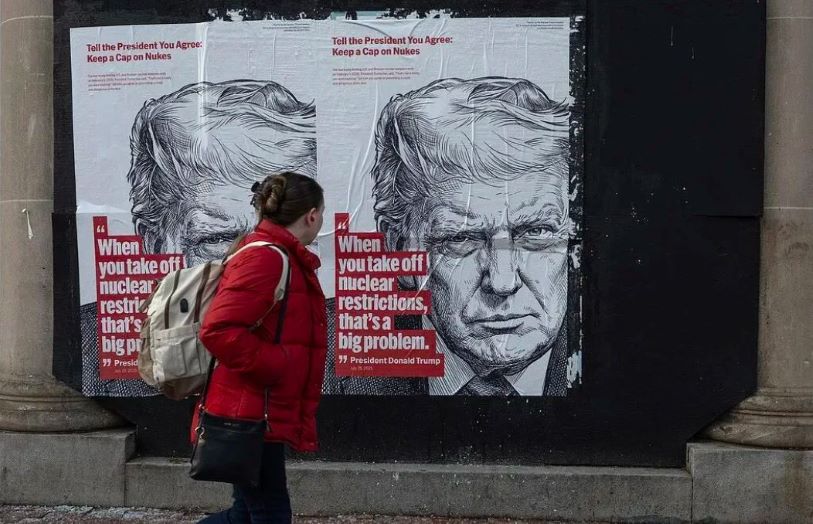
Since 2025, the United States and Russia have spoken out on the expiration of the Treaty on many diplomatic occasions. On July 25, U.S. President Trump told reporters, “The Treaty is not an agreement that is expected to expire. We are all working hard to properly handle the expiration of the Treaty. Because when nuclear restrictions are lifted, this will be a big problem.” On September 22, Russian President Vladimir Putin stated at the Russian Federation Security Conference, “In order to prevent the emergence of a new strategic arms race and maintain acceptable predictability and restraint, we believe that it is reasonable to maintain the status quo established by the Treaty amid such turbulence.” Therefore, Russia is prepared to continue to comply with the core quantitative limits in the Treaty for one year after February 5, 2026. On October 2, Putin reiterated this proposal at the 22nd Annual Meeting of the Valdai International Debate Club and pointed out that Russia and the United States could use the one-year extension to formulate a follow-up agreement. On October 5, Trump responded to Putin’s proposal by telling reporters as he left the White House that “that sounds like a good idea.” Both the United States and Russia believe that the Treaty, as the last strategic nuclear arms control treaty still in effect, is a necessary measure to curb the nuclear arms race. However, despite the positive signals sent by both sides, the two sides ultimately did not negotiate a follow-up agreement, nor did they reach a formal agreement. Multiple obstacles in reality caused the Treaty to expire.
Reasons for the Expiration of the Treaty
The Ukraine crisis that erupted in 2022 plunged US-Russia relations into a vicious cycle. Affected by this, the Treaty, even after its renewal in 2021, faced challenges such as the suspension of inspections and the halt of compliance, leading to a prolonged delay in related negotiations between the US and Russia. Simultaneously, the Ukraine crisis also accelerated the application of new-domain and new-type combat forces on the battlefield. Currently, the strategic offensive and defensive technology and arms race between the US and Russia has entered a new stage, indirectly affecting the progress of US-Russia nuclear arms control and presenting unprecedented challenges to it.
The verification mechanism stalled, leading to a crisis in compliance. On August 8, 2022, the Russian Foreign Ministry announced a temporary suspension of the requirements under the Treaty to inspect Russian facilities. The Ministry explained that this was due to both the ongoing suspension of inspections since the COVID-19 pandemic and the Western sanctions imposed on Russia following its “special military operation” in Ukraine in February 2022. The US halting the issuance of transit visas to aircraft carrying Russian inspectors effectively deprived Russia of any opportunity to conduct inspections on US territory, while US inspectors faced no similar obstacles to reaching Russia, thus “creating a unilateral advantage for the US.” On February 21, 2023, Russian President Vladimir Putin delivered his State of the Nation Address, stating that Russia would suspend its compliance with the Treaty’s provisions but would not withdraw from it, an action that impacted the Treaty’s implementation mechanism. That same afternoon, the Russian Foreign Ministry issued a statement on Russia’s suspension of its compliance with the Treaty, emphasizing that “in order to maintain a sufficient degree of predictability and stability in the field of nuclear missiles, Russia intends to maintain a responsible attitude and will continue to strictly abide by the quantitative limits on offensive strategic weapons stipulated in the Treaty throughout its entire effective period.” The United States responded with resolute countermeasures and no backing down. In 2023, the United States and its NATO allies held the “Steadfast Noon” nuclear forces exercise, stating that the United States had complied with the Treaty’s restrictions, calling on Russia to resolve the verification issue through diplomatic channels, expressing deep regret over Russia’s unilateral suspension of compliance in 2023, and hoping that Russia would quickly return to the Treaty. The United States will also continue its own “triad” nuclear force modernization. Thus, against the backdrop of the Ukraine crisis, both the US and Russia have their own agendas, and arms control negotiations have been stalled for a long time. The Ukraine crisis is both a significant variable affecting arms control negotiations and a crucial political factor; whether or not this political issue is resolved will affect the progress of arms control negotiations.
The negotiations are hampered by time constraints and a shortage of personnel. Even if the US and Russia resolve their differences on Ukraine, the two countries still lack sufficient time to draft a new treaty before the current one expires. For example, negotiations for the treaty lasted 15 months before its signing in 2010. Furthermore, on July 19, 2025, the US State Department laid off approximately 1,350 employees, including reducing domestic staff by 15%, and closing or merging over 100 overseas agencies, to implement the restructuring plan first announced by Secretary of State Rubio in April 2025 (which merges the International Security and Nonproliferation Agency, the Arms Control and Deterrence and Stabilization Agency to reduce the time and energy available to address the pressing challenge of weapons of mass destruction). Simultaneously, the State Department’s ability to handle urgent nuclear weapons issues is further weakened by the layoffs of senior officials and key departments (many of whom are arms control and Russia experts relied upon by the Trump administration in arms control negotiations with Russia). With its current personnel, the Trump administration is simply not prepared to participate in the development of a meaningful and verifiable arms control agreement. The diplomatic power the United States once possessed in this area has dwindled, experienced negotiators have retired, and support personnel have been reassigned. Since 2010, apart from a formal extension in 2021, the United States has not conducted any substantive new arms control negotiations.
Arms control challenges brought about by emerging technologies. Unmanned equipment and artificial intelligence have become strategic high ground that countries are vying for, bringing many uncertainties to global strategic stability. For example, in the Ukraine crisis, both Russia and Ukraine have continuously used intelligent drones and unmanned surface vessels to destroy each other’s important targets. In this protracted conflict, Ukraine has become a “world testing ground” for unmanned equipment and artificial intelligence. In 2025, the United States announced the deployment of the Golden Dome space-based missile defense system, and Russia announced the successful test launch of the Burevestnik nuclear-powered cruise missile, both of which incorporated the application of artificial intelligence. The application of emerging technologies often has an inherent duality. On the one hand, intelligent unmanned equipment has operational characteristics such as “multi-dimensional space, all-weather, asymmetric, non-contact, nonlinear, and zero personnel casualties,” which will change the constituent elements of warfare, operational concepts, organizational forms, and support models, thereby promoting the evolution of warfare. On the other hand, the development and military application of unmanned equipment and artificial intelligence also bring huge challenges to nuclear arms control. First, the dual-use nature of unmanned equipment and artificial intelligence breaks through the traditional arms control concepts, frameworks, and design paths primarily focused on nuclear arms control, making them more difficult to manage. Second, the verification of unmanned equipment combined with artificial intelligence is highly challenging; traditional physical verification methods struggle to accurately assess treaty implementation. Furthermore, in the highly sensitive and critical field of nuclear command and control, countries often maintain a high degree of secrecy regarding their technologies and strategies. Both the US and Russia find it difficult to trust that the other will take responsible action to increase transparency in nuclear arms control. This undoubtedly reduces the willingness of both the US and Russia to engage in nuclear arms control, indirectly affecting the progress of US-Russian nuclear arms control. Currently, new arms control negotiations have been completely suspended. Until the treaty expires, negotiations remain in a state of breakdown; the US and Russia will not renew the treaty and have failed to reach a new arms control agreement. For the first time since the US and Russia reached the Strategic Arms Limitation Treaty (START I) in 1972, no arms control treaty has been established to limit the nuclear weapons of the two nuclear powers or regulate their nuclear force relations. This has caused significant damage to bilateral and global strategic stability.
An Uncertain Future
From a technological perspective, nuclear weapons remain a crucial force for maintaining global strategic stability, and currently no weapon can replace them. Nuclear weapons remain a core issue in future nuclear arms control. According to a 2025 estimate by the Federation of American Scientists (FAS), the United States and Russia jointly control more than 87% of the world’s nuclear weapons. Both horizontal and vertical non-proliferation of nuclear weapons require joint efforts from the United States and Russia. In recent years, international nuclear arms control mechanisms have been repeatedly challenged. First, the US government withdrew from the Joint Comprehensive Plan of Action (JCPOA) on the Iran nuclear deal in 2018; then, the Intermediate-Range Nuclear Forces Treaty (INF Treaty) expired in 2019; and later, the US government withdrew from the Open Skies Treaty in 2020. The entry into force of the Comprehensive Nuclear-Test-Ban Treaty has also faced significant obstacles. During Trump’s first term, the US withdrew from numerous international agreements and treaties because it actively pursued the “America First” principle in international affairs, intending to gain political points and win domestic votes by terminating international agreements and treaties to project a tough stance. Meanwhile, the US and Russia have not only made no progress on nuclear arms control, but have also hesitated on regional security, particularly in Ukraine and Syria. Trump, advocating “peace through strength” and seeking negotiations favorable to the US, is naturally unwilling to concede easily under these circumstances. These issues are interconnected, and the US and Russia have been locked in fierce confrontation. Although Trump’s second term has begun, the expiration of the treaty is inevitable given the ongoing impact of the Ukraine crisis.
Preliminary analysis suggests that the expiration of the Treaty will have the following impacts: First, a nuclear arms race will resume, as both the US and Russia are accelerating the modernization of their nuclear arsenals and continuously expanding their nuclear weapons. Second, crisis management will become more difficult; during periods of geopolitical tension, a lack of transparency will make it harder for the US and Russia to distinguish between conventional military activities and nuclear threats. Third, the demand for nuclear sharing will rise, as Japan, South Korea, and some non-nuclear states in Europe may seek nuclear sharing or develop their own nuclear weapons to address security threats. In short, the Treaty is not only a quantitative restriction but also a “safety valve” to prevent nuclear miscalculation. Its failure, coupled with escalating regional conflicts, has raised global nuclear risks to their highest level in decades. Therefore, the international community urgently needs to work together to promote the resumption of dialogue between the US and Russia, while exploring nuclear arms control mechanisms adapted to the new era to prevent humanity from sliding towards nuclear catastrophe again.