Below is an article by Rudolf El-Kareh that was published in “Al-Akhbar” on August 28, 2025. The author wished to add the following note:
By the way…
A witness from among their own people testified.
A little over a year later, the deputy head of the government of guardianship and shame made confessions to the press on Thursday, August 27, 2026, along with documented statements issued by the executive branch and its officials, as well as a number of government ministers (including the refusal of the President of the Republic and the Prime Minister to officially document Israeli violations and crimes, particularly in southern Lebanon, and the public assertion by a number of ministers that Israeli affairs are not “within their jurisdiction”; see press reports) confirm the accusations we have made.
In fact, this constitutes a collective indictment of high treason against the authority of guardianship and subordination, and against its government.
It also serves as evidence of violations of the Lebanese Constitution, the Charter of Coexistence, the Penal Code, and all international conventions and treaties signed by Lebanon.
This matter has political and judicial implications, beginning with the need for immediate accountability and for the legislative authority to assume its constitutional responsibilities.
August 28, 2026
_______________________
August 28, 2025 – We are not here to engage in a personalized discussion of a governmental authority whose circumstances of imposing itself on Lebanon are well-known and whose members mostly belong to the category that the great anti-colonial activist, Frantz Fanon, called “local informants.” This is to say nothing of those who openly project their Zionist ideological leanings onto their governmental duties, or those who shamelessly justify the enemy’s aggression from their positions within the legislative body—actions that, under normal circumstances, would have prompted immediate action from the Judicial Council and its mechanisms.
There is no need or point in a “quasi-academic” debate with those who regurgitate tired, copied sayings from the writings of some theorists in the culture of the colonial West about the “exclusivity of legitimate violence” (and therefore weapons), and the “decision of peace and war,” and other forms of discourse detached from the historical context and the national, regional and international circumstances, which prevailed after its proponents were overthrown by the prevailing circumstances on government chairs.
Here, we are dealing with the state as a legal entity. From this perspective, we offer the following considerations regarding its nature and practices:
First, we reiterate for the umpteenth time that its essence (the state) is not reduced to an institution, authority, or administration. While these three entities may symbolize it, they also bear, collectively or individually, their responsibilities and the responsibility for “representing” and performing their duties, including legal responsibility, which also entails the right to prosecute them before the relevant judicial bodies.
Secondly, let us put aside the trivialities of a time when one of its bad “rules” is a programmed propaganda process based on turning meanings into their opposites, by calling subservience sovereignty, mortgaging independence, war imposing peace by force, slavery (including voluntary slavery) freedom, and so on…
It has become necessary to remember that sovereignty, in the constitutions of the existing international system and its regulatory texts, specifically means the “character” of a state that confirms that the latter is not subject to any authority of the same nature, and also confirms that sovereignty is the twin of independence.
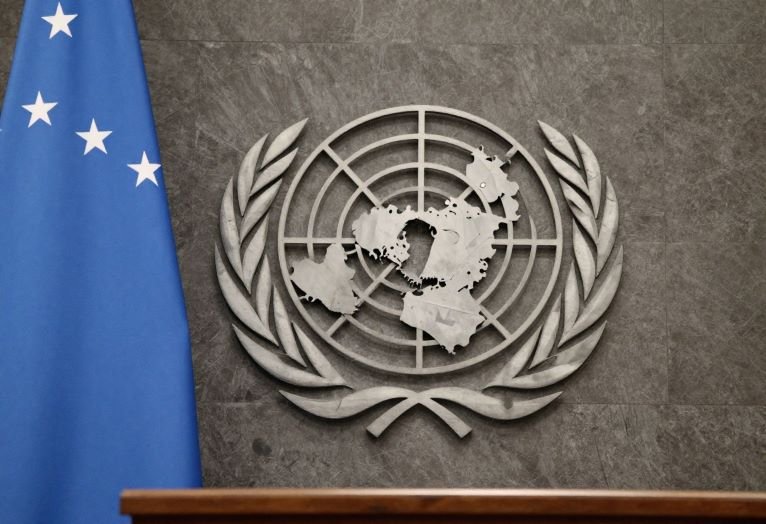
This means that sovereign states are not subject to any higher authority. As such, they enjoy the same rights, obligations, and duties as other states. This is the “foundational principle” upon which the United Nations was built, and it must be remembered that it, unlike any other organization, represents what is called the “international community,” contrary to the fallacies that prevailed with the spread of Anglo-Saxon globalization ideology after the collapse of the bipolar system.
In addition, sovereignty means the ability to prevent an external party from imposing its will on the state concerned, which is precisely the meaning of the term “non-interference in the affairs of others” (principe de non-ingérence), which is a fundamental standard and essential rule established by the Charter of the United Nations (paragraph seven of its second article) which guarantees states equality and independence over their entire national territory, on the one hand, and prohibits resorting to threats or armed force to undermine this independence, on the other hand.
Third, and from this standpoint, it is necessary to remember that the state, as a legal entity, represented, in what concerns us here, by the existing authority, has national and legal duties that are binding duties, which mean the performance (performance of the authority) of “sovereign” duties, in order to preserve national sovereignty on the one hand, as explained above, and also means ensuring that the rights of individuals, i.e. citizens, are protected, respected and practically implemented, on the other hand.
Fourth, in this context, we must pause to consider two extremely important issues that have emerged successively in the performance of the existing authority due to the well-known circumstances:
The first issue is the documented statement that showed that the “state,” represented by the head of government, is not aware of the number and identity of its citizens who are prisoners and abducted by the enemy.
It has become a national duty to hold the government accountable for its negligence and dereliction of national duty. All indications and actions suggest that this government is incapable of fulfilling the national responsibilities incumbent upon any sovereign government.
The second issue, also documented, was articulated by the highest executive authority in the state, in the form of an official declaration presenting Lebanon with only two options: first, to submit to what was termed the “American proposal” and abandon the “Lebanese proposal” (i.e., the sovereign national position) regarding the issue of “the monopoly of arms”; and second, to “confront isolation,” as stated in official pronouncements.
These two issues, in the context of what has been previously stated regarding sovereignty, warrant several observations.
The first observation, concerning the issue of prisoners and abductees, is that the state, represented by its executive authority, by neglecting its duty to follow up on the issue of prisoners as a fundamental priority of its sovereign obligations towards its citizens, is “failing” (I emphasize the term due to its legal implications) towards them. Consequently, it must be held accountable for this failure by all available means. This failure is not only moral but also political and legal. By neglecting this duty, the state has breached its obligations towards its prisoners (to follow up on their cases and provide them with protection) as stipulated in the Third Geneva Convention of 1949.
The second point concerns the decision issued on August 5, 2025, regarding what was termed the “exclusivity of arms.” This decision was deemed invalid due to the unconstitutionality of the session in question, and this is true. However, more importantly, in light of official statements, it became clear that this decision was made under duress, threats, and blackmail.
The statements made by US Senator Lindsey Graham on August 26, 2025, confirmed and documented the process of intimidation and blackmail, which constitutes an additional document that legally establishes the invalidity of the aforementioned government decision. This is in addition to the public and documented threat officially launched by the official US envoy, Barak, when he threatened the Lebanese state with extinction if it did not comply with his dictates.
Furthermore, this threat, coercion, and blackmail occurred under the circumstances and reality of the occupation of part of the homeland. This contravenes international law, which considers any decision taken under such conditions (coercion, threats, blackmail, occupation) null and void. There are UN resolutions, including those issued by the International Court of Justice, that serve as a precedent in this matter.
In light of these facts, it has become a national duty to hold the government accountable for its negligence and dereliction of national duty. All indications and actions suggest that this government is incapable of fulfilling the national responsibilities incumbent upon any sovereign government. Therefore, in short, it has become a national imperative for it to step down in order to safeguard the nation.
One additional word to prevent any confusion: We do not mention these observations in order to “idolize” texts or international laws, but rather to emphasize what we said in our commentary on the decision of the International Court of Justice on January 26, 2024 (“Al-Akhbar” and “Libre Belgique,” February 6, 2024) regarding Gaza and Palestine, that in the field of international law, one of the basic mechanisms that allows decisions and rules to be transformed into an actual reality that is applied on the ground is the actions taken by peoples and the game of “balances of power.”
From this perspective, legal action serves as a “support and a basis,” bolstering and reinforcing the actions of peoples. Coincidentally, the United Nations celebrates its 80th anniversary this year under unprecedented circumstances, with its foundations shaken and its very existence targeted and undermined by the Anglo-Saxon bloc, spearheaded by the United States. Lebanon, drawing upon the Charter’s principles and resisting those who threaten, occupy, and attack it, can contribute to re-establishing justice and rights in the face of these unbridled forces, even within its own borders.
Rudolf El-Kareh is a University Professor, Sociologist, and Political expert. He has taught in Lebanon, France, and Canada. He is notably the co-author of *International Justice and Impunity: The Case of the United States* and *Only Cultivated Diversity Can Feed the World: A Response to the WTO*. He has also held official positions.