The Rise of the Great Powers – Using a historical perspective and a global outlook to examine the history of the rise of nine world powers since the 15th century, Tang Jin (Ed.), People’s Publishing House, 2006/2007.
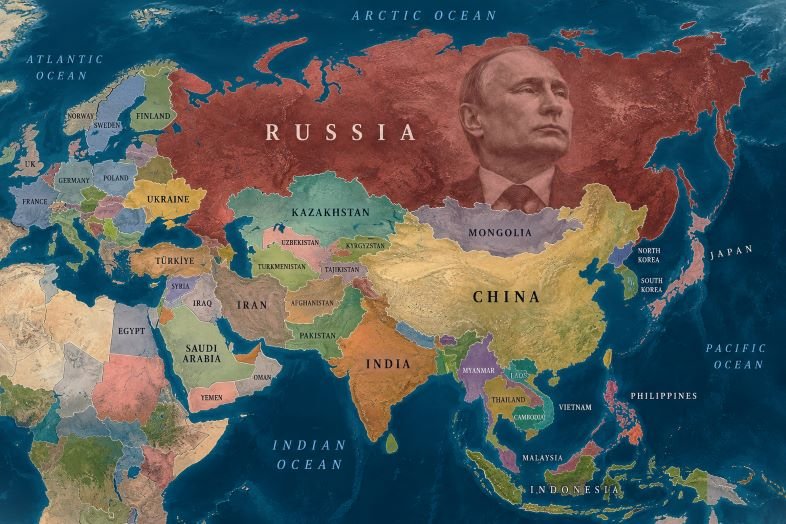
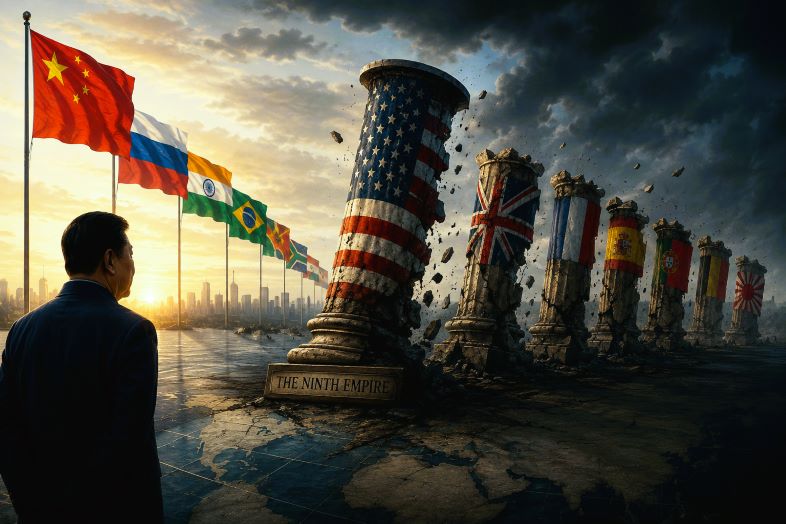
This book describes the rise of nine great empires, analyzing their history, rise process, development, and decline. Only the last one, the United States, has not yet entered complete decline. Combining the interactions between these nine countries and China, let’s discuss the similarities and differences between China’s development and theirs.
These nine countries are all developed nations with per capita incomes significantly higher than China’s.
Portugal, with a per capita income of $30,000, is the closest to China in Europe, roughly equivalent to Shanghai or Hangzhou. Portugal was the first Western empire to rise to prominence, originating from centuries of resistance against Arab rule on the Illyrian Peninsula. This resistance allowed them to accumulate Arab navigational skills and Chinese craftsmanship, such as gunpowder and the compass. Together with the Spanish, the Portuguese defeated the last Arab empire and restored Catholicism. Portugal, with its small, elongated landmass, faced the vast Atlantic Ocean. From ancient Arab and European legends, they learned of the beautiful Spice Islands in the distant East. Spices were a highly valuable commodity in Europe at that time, as precious as gold. Europeans found red meat almost unpalatable without the aid of nutmeg and peppercorns. Driven by this dream, Prince Henry the Navigator of Portugal embarked on the Age of Exploration. Their explorations led them to the Cape of Good Hope, through South Africa to East Africa, and finally to India, where they began the spice trade. This colonial process amassed immense wealth, and they also built numerous fortresses in Africa and India. However, Portugal at that time had only a little over one million people, and its army, scattered across numerous colonies, often numbered only a few dozen or a hundred men. In many wars, it lost thousands of soldiers at once. In its war with China, it nearly suffered total annihilation. Ultimately, it relied on bribery to lease Macau for a century, only returning it in 1999. Brazil was Portugal’s most important colony in the Americas, and to this day, Brazil remains a Portuguese-speaking country. The dispersed colonies, the small population, the lack of capital accumulation, and the inability of its domestic economy and military to support further colonial development became characteristics of Portugal’s decline.
Following Portugal, the Spanish Empire, also located on the Iberian Peninsula, shared many similarities. After the Age of Exploration, Spain and Portugal, under the auspices of the Pope, divided the lands of the Eastern and Western Hemispheres around Cape Verde in Africa. They believed that these lands belonged to them, and that other nations should be conquered by force. The Spanish, through Columbus’s discovery of the Americas, conquered most of South America (excluding Brazil) and the Philippines in Asia. In South America, they discovered vast silver mines. Simultaneously, through the Manila region of the Philippines, they could trade handicrafts with China. Numerous sailing ships laden with South American silver traded for Chinese silk, tea, and porcelain. These exquisite handicrafts were symbols of aristocratic status in Europe. The Spanish Armada, thus, became unstoppable, waging war everywhere. Meanwhile, the Spanish nobility indulged in luxury, importing large quantities of goods into China. Silver also stimulated the development of private capital in China. As a result, Zhang Juzheng revised the tax rules, changing taxation from in-kind to monetary taxation. Although the Jiajing Emperor later closed the seas, the amount of smuggling in Quanzhou was huge. People yearned for trade and commercial prosperity, and Quanzhou was the world’s largest port at the time. Spain once accounted for half of the world’s silver and gold production, but its continuous conquest of European territories caused a violent backlash. The continuous independence movements in the Netherlands and the war with France depleted Spain’s colonial wealth. The rise of the British Navy was also due to the wealth brought by Spanish colonization. Spain’s colonial wealth did not bring about political upgrading or improvement in people’s lives and production technology. It only led to the enjoyment of the ruling class and the escalation of war. With the destruction of the Spanish Armada by the British and the rise of the Netherlands, the Spanish Empire and its overseas colonies gradually disappeared.
The Netherlands, a nation of financial capitalists and a representative of the Low Countries and the province of Holland in the Netherlands Federation, gradually developed a parliamentary federal system after defeating Spanish rule. With major European river mouths located in the Netherlands, it was naturally a trading nation. Its shipbuilding industry was world-leading, its commercial system highly developed, and the world’s first stock exchange and first private bank were established there. It absorbed substantial private and aristocratic capital, investing in maritime trade and colonization. The famous Dutch East India Company was founded, drawing on the successes of Portugal and Spain. People actively invested in the East India Company’s overseas colonization, which granted it the freedom to colonize overseas territories, possess its own army, and receive dividends and profits from stock price increases. The Dutch replaced the Spanish in large-scale colonization in Southeast Asia, primarily in Indonesia, and briefly invaded Taiwan. The Netherlands, with its incredibly developed trade, was known as the “maritime coachman.” Trade was both its strength and its weakness. Perhaps due to its dependence on trade, the Netherlands was subject to an import blockade by Britain and France, leading to a decline in its domestic economy. Ultimately, the Dutch Empire ended with the succession of King Orange to the British throne. Modern-day Netherlands is known as the land of windmills.
The Dutch monarch was succeeded by King Orange, who, as a foreigner unfamiliar with British politics, fully authorized the British Parliament, making England the world’s first country where a capitalist parliament replaced absolute monarchy. England is also the only country to have experienced a bloodless revolution. As an island nation, England was historically invaded by foreign powers like France, fostering relative unity. Until the Duke of Normandy inherited the English throne, England owned no land on European continents. During the Hundred Years’ War, the English lost all their land, but this also honed their military talent and technology. Their Age of Exploration combined Dutch commercial prowess with independent military talent. Crucially, they possessed the best political environment: a monarch who did not rule unilaterally, and Parliament jointly governed by nobles and elites, all driven by a shared nationalism.
Queen Elizabeth II and Queen Victoria, through decades of political careers, forged British patriotism and a spirit of moderate revolution. The British constitution granted them the spirit of freedom and equality, but their Age of Exploration was equally bloody. They colonized Africa, the Thirteen Colonies of North America, and most of Asia, especially India. The wealth from the Indian colonies far exceeded the economic output of Britain itself. This massive colonial wealth, coupled with a relatively mild domestic reform environment, spurred the Industrial Revolution. Liverpool’s mine owners needed machines to pump water from the coal mines, and the higher incomes of urban residents allowed them to purchase large quantities of coal for heating and cooking. As a result, Watt’s steam engine was invented, improved, and applied to industries such as cotton spinning machines and ships, fundamentally changing production efficiency. Britain transformed from an industrial importer into the world’s leading industrial exporter, with Africa, the Americas, and Asia becoming suppliers of raw materials. To prevent the colonies from developing their economies, Britain strictly enforced rules, prohibiting regions like the United States from learning British cotton spinning technology and prohibiting other countries from participating in trade with British colonies. Over time, change began in North America. Americans could no longer tolerate British rule, and the War of Independence broke out, triggering independence movements in colonies around the world. The wealth of the British was thus consumed in the boundless independence movements. In the Boer War in Africa, the number of British soldiers killed even exceeded the population of the country. In the end, British colonies became Commonwealth countries, and the sun on the British Empire finally set.
France, located opposite Britain, experienced a very different development. France was a long-time European hegemon, the Frankish Kingdom possessing immense power. Numerous principalities existed within the French territory, with the King of France and the Pope collaborating to annex vast territories, wage wars against Britain, reclaim British-occupied lands, and engage in extensive trade and colonization. Important French colonies included Africa, North America, and Vietnam and Laos. France also attempted to invade China. Vast colonial wealth became the source of French enjoyment and an elegant lifestyle, which is still admired in the West today. Furthermore, the wealthy French yearn for a pastoral, gentlemanly life, characterized by romance and imagination. French novels are exceptionally brilliant, and so are their private lives. The Napoleonic era marked the pinnacle of French glory. Europeans cannot tolerate the emergence of an empire. Although Napoleon was invincible on the European continent, Russia remains the graveyard of empires, a lesson the Germans later learned twice.
The Federal Republic of Germany, at its peak comprising over a thousand small city-states, was long ruled by the Austrian Empire and belonged to the Holy Roman Empire of Italy. Italy only gained independence in 1870; prior to that, the Holy Roman Empire was the symbol of Germany. Prussia rose to prominence among the many city-states through a customs union, developing education and technology, investing heavily in science and technology, allying with Russia to counter France and Austria, and ultimately, under the leadership of the Iron Chancellor, won three wars, unifying Germany. Historically, Germany was always threatened by Russia to the east, France to the west, Denmark to the north, and Austria to the south, making it a country with a low sense of security. After unification, Germany benefited from widespread education and rapid industrial development, quickly becoming the leading power in Europe. It still needed trade and colonization, but with most of the world’s major colonies already divided up, Germany, possessing the strongest military in Europe, directly launched World War I. As we all know, Germany not only failed to gain more colonies but also lost Qingdao, China, to Japan. This indirectly led to World War II, which was more thorough this time. Germany was divided into East and West Germany, which were not reunited until 1990. However, the level of education among Germans has remained consistent. Only thirty years after reunification, Germany is still the number one economy in Europe. People are generally pragmatic and the industry is strong. Unlike the romantic and passionate French next door, or the lazy and dull Greeks.
The Japanese who acquired Qingdao from the Germans were also colonialists, driven by insufficient domestic capital and a dream of becoming a great power. Japan was the first industrialized nation in Asia and the first Asian country to defeat the West. The Meiji Restoration corresponds to China’s Taiping Rebellion. The Japanese revived the spiritual faith of the Emperor, revolutionized the samurai class, reduced the burden on the government, and vigorously learned from the West, especially Prussian education and technology. They invested heavily in military spending, ultimately defeating China and Korea, and embarking on the path of colonization. Although the colonial wealth was enormous—the Qing government’s indemnity was equivalent to three years of Japan’s fiscal revenue—war is a bottomless pit, ultimately crippling Japan in the later stages of World War II. However, the Korean War gave Japan a much-needed boost. American war contracts and military presence sustained the Japanese economy, and the transfer of American industry led to Japan’s economic boom. Ultimately, the failure of colonialism resulted in American colonization.
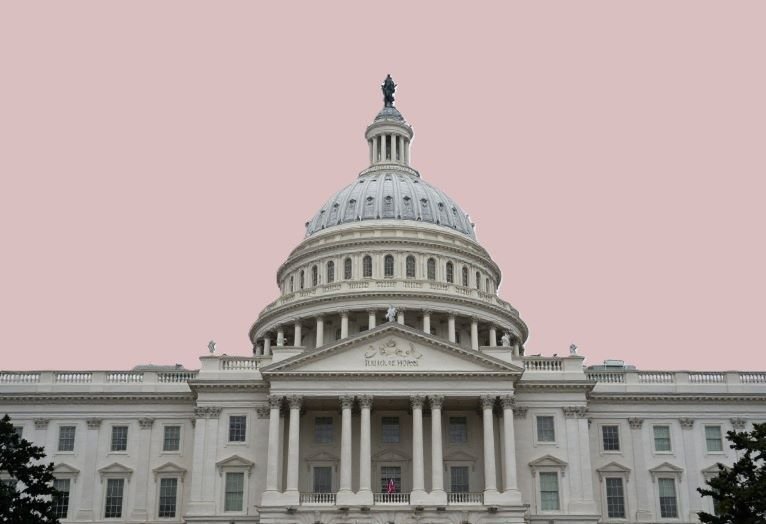
The United States is the last colonial empire. It maintains a large number of military bases around China—in South Korea, Japan, and the Philippines—as well as in the United Kingdom, France, Germany, and Spain. There are also numerous U.S. military bases in the Middle East, including Saudi Arabia, Kuwait, Oman, and Qatar. Modern colonialism has shifted from absolute rule to military, technological, and cultural colonization. Americans export Coca-Cola, hamburgers, Hollywood, the NBA, Apple, and Google; sell arms to colonies; invest in numerous core colonial companies; and control colonial exchange rates and trade. Samsung and SK Hynix both have American backing. The Republican Party, once representing the industrial North, is now in power, backed by giants in oil, arms, and technology. The Democratic Party, once representing the plantation slave owners of the South, is backed by Wall Street and the pharmaceutical and cultural industries. Defending against China is a decision that the representatives of these colonies must make to safeguard their present and future interests.
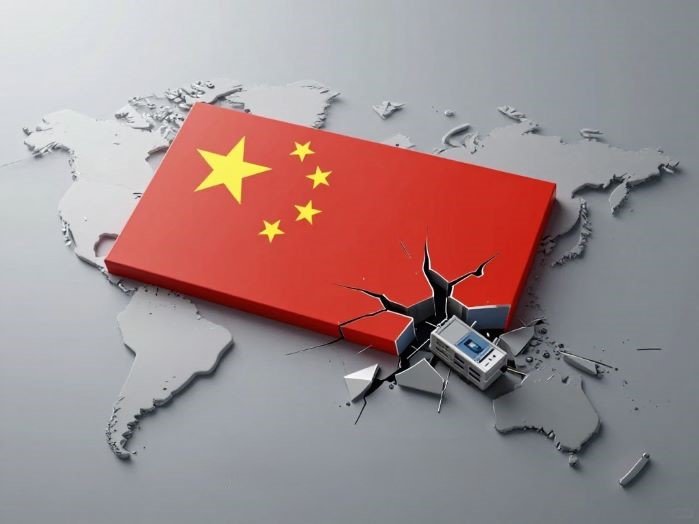
China’s exchange rate, in terms of purchasing power, is higher than that of Western countries. The educational level of its population is improving year by year; its industrial production capacity ranks first in the world, and its trade surpluses is channeled into domestic technological development and military strength. Simultaneously, China is expanding its openness and engaging in global trade. Currently, China’s exports of new energy and many basic industrial products are world-leading. On the import side, iron ore and numerous agricultural products from Australia, minerals from Africa, oil and natural gas from the Middle East and Russia, and soybeans and corn from the Americas have become part of China’s lifestyle and means of production. Southeast Asia is gradually embracing China’s cultural exports.
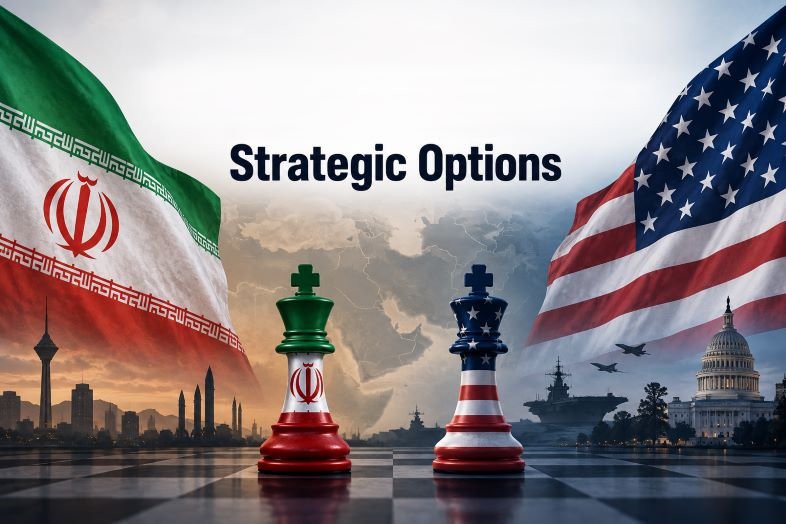
China does not readily engage in current conflicts. The West cannot tolerate Russia’s rise to power, so the war in Ukraine is a tool the Democrats were forced to deploy. Behind the war in Iran stand Republican oil and arms magnates, as well as Israeli financial, technology, and media tycoons. These conflicts will only serve to drain each other’s resources. We will continue to advance our education and technology, export our industrial systems and cultural influence, and maintain military deterrence and trade security. We will quietly observe the rise and fall of the Ninth Empire.