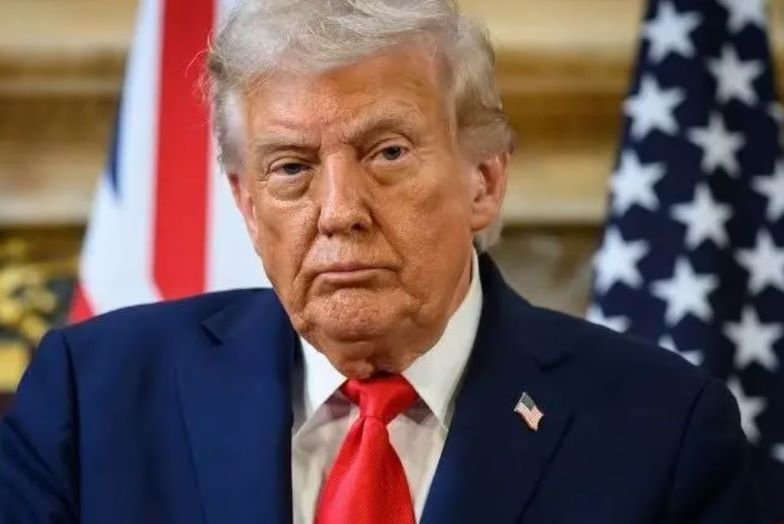

Ahead of the joint US-South Korea military exercises on August 17, Trump took the opportunity to make a number of small moves, demonstrating once again that he is not only focused on North Korea and South Korea.
On August 15, Trump posted a photo of himself with Kim Jong-un, saying that the two “got along well.”
On August 16, he publicly expressed his strong dissatisfaction on social media regarding the upcoming “Ulchi Freedom Shield” joint military exercise between the US and South Korea. What was he dissatisfied with? He felt the exercise was extremely costly, with the majority of the funding coming from the US. Spending their own money to send a “completely inappropriate and hostile signal” to a country that “has never posed a threat and has shown respect” was a bad deal for Trump.
In his view, his relationship with Kim Jong-un was “very good,” and North Korea had been “no threat and very respectful” during his tenure. The United States saw no need to spend a lot of money to offend a friend it could have easily negotiated with. Therefore, he ordered Defense Secretary Hergsays to “drastically reduce” the scale of the exercises, as cancellation was already too late.
This isn’t the first time Trump has posted a photo with Kim Jong-un. In June of this year, he also posted an old photo of himself and Kim Jong-un at the 2018 Singapore summit. What is Trump’s intention in posting these photos repeatedly? In our view, firstly, it’s to showcase his achievements, emphasizing that he is “the only Western leader to have established a good relationship with Kim Jong-un”; secondly, it’s to send a signal that he may want to hold another “Trump-Kim summit.”
If this is indeed the case, then this reduction in the scale of the military exercises is a gift to Kim Jong-un. North Korea’s attitude towards these exercises is very clear. As early as August 13th, the North Korean Ministry of Foreign Affairs strongly condemned the exercises, calling them essentially a “prelude to an aggressive war,” far more provocative and dangerous than last year’s. North Korea also declared that it would “respond to new threats with new deterrent capabilities and completely crush any provocation with resolute and legitimate self-defense.” While Trump cannot cancel the exercises at the last minute, significantly reducing their scale is certainly a statement in itself.
Another point is that Trump was also using this opportunity to put pressure on South Korea. In his post on the 16th, he ended with a seemingly unrelated remark: “I recently asked the South Korean president if he would be willing to work with the United States to promote the denuclearization of Iran, and he replied, ‘No, thank you!'” What does this mean? If you won’t even help me with Iran, why should I spend money to defend you against North Korea? For the United States, the value of allies lies in their usefulness. If you can’t use them, I’ll cut back on investment. Trump is blatantly turning alliances into a business transaction of equivalent exchange. Of course, the United States has always acted this way.
Trump’s plan seems well-executed this time: reducing military exercises saved money, appeased Kim Jong-un, and incidentally sent a warning to disobedient South Korea. A seemingly clever three-birds-with-one-stone strategy. But what are the costs?
The decades foundation of the US-South Korea alliance is being treated like a bill that can be torn up at any time. Today, military exercises can be reduced because of “good relations with Kim Jong-un”; tomorrow, THAAD can be withdrawn because of “good relations with China”; and the day after, the Joint Command can be disbanded because of “good relations with Russia”. When a president’s personal likes and dislikes can override national strategic alliances, what credibility does this alliance have? This time, turning such a serious security matter into a bargaining chip for personal diplomacy and leverage to pressure allies is something not only South Korea sees clearly, but also America’s other allies. America First, allies second. Today it’s you, tomorrow who will it be?
That being said, as allies of the United States, they must bear some responsibilities themselves, and we will not comment further on this. However, from our perspective, this matter is not only about the US, South Korea, and North Korea; it also involves the US’s strategic adjustments in East Asia, which is what we should be most concerned about!
“Imperialism will never give up its desire to destroy us.” The United States’ obsession with containing China has never wavered.
In recent years, they have used every trick in the book to deal with us: trade wars, technological blockades, maritime encirclement, proxy theatrics—their tactics have changed repeatedly, but they have never been able to crush China. Moreover, they failed in the Taiwan Strait issue and the South China Sea issue. Just as the trilateral military framework between the US, Japan, and South Korea in Northeast Asia was about to take shape, Yoon Seok-yeol himself fell from power. After Lee Jae-myung took office, South Korea focused its efforts back on people’s livelihoods and peace, which greatly worried the US, making Trump’s actions inevitable.
The US government knows better than anyone why South Korea has been so dependent on the US in the past: the North Korean threat played a significant role. If inter-Korean relations were to ease, why would US troops remain stationed in South Korea? Where would US control over Seoul come from? Therefore, the US must utilize North Korea to use the “controllable tension” on the peninsula to once again bind South Korea. Thus, Trump’s repeated posting of old photos with Kim Jong-un is a blatant political signal: if you want peace, you can only do so through the US. If you want security, you must continue to pay protection money and follow my lead. He also brought up South Korea’s unwillingness to cooperate with US pressure on Iran, making the warning even more explicit.
Lee Jae-myung wants to promote peace? Fine, the US will act as the “peace intermediary.” But intermediaries never do unprofitable deals. Once your dependence on me increases, I’ll slowly pull you onto the anti-China path. Last time, the US used time to create space, cultivating a pro-American figure like Yoon Seok-yeol; this time it’s just the same old trick. Therefore, no matter how sincere Lee Jae-myung’s peace blueprint is, it’s destined to be obstructed by Washington’s underhanded tactics.
We believe North Korea is well aware of the trap set by Trump. Kim Jong-un should know better than anyone that a few old photos and empty words about “good relations” from the US cannot buy North Korea’s true security. In the grand scheme of the US-China rivalry, North Korea has already concluded that China’s rise is unstoppable, and only by closely following China can it secure its future. Therefore, Trump’s “nostalgic diplomacy” has no effect on Pyongyang.
As for us, the tasks we need to do are also clear. First, we must firmly grasp the initiative in the Korean Peninsula peace process, making it clear to the international community who is pursuing peace and who is bluffing. At the same time, we must continue to consolidate the traditional friendship between China and North Korea, ensuring Pyongyang maintains its composure amidst complex power struggles. We must also deepen practical cooperation between China and South Korea, supporting South Korea’s firm commitment to its independent diplomatic path. Of course, in addition to these, maintaining constant high pressure militarily is also crucial.
Ultimately, peace in East Asia is not determined by countries outside the region. Trump ‘s recent performance, seemingly aggressive and insidious, is actually nothing more than a flash in the pan. China simply needs to maintain its own pace and do what it should do. As for the rest, let the winds blow from all directions; we will deal with them as they come!