Nations speak from strength, not from boasts.
Trump’s Boast Meets Reality
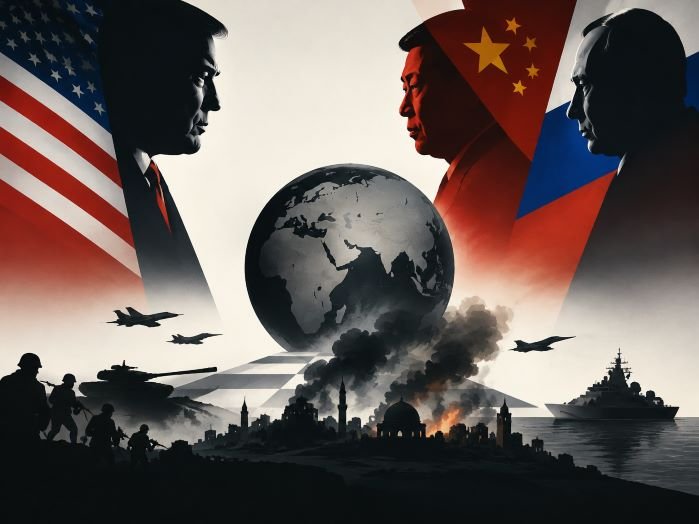
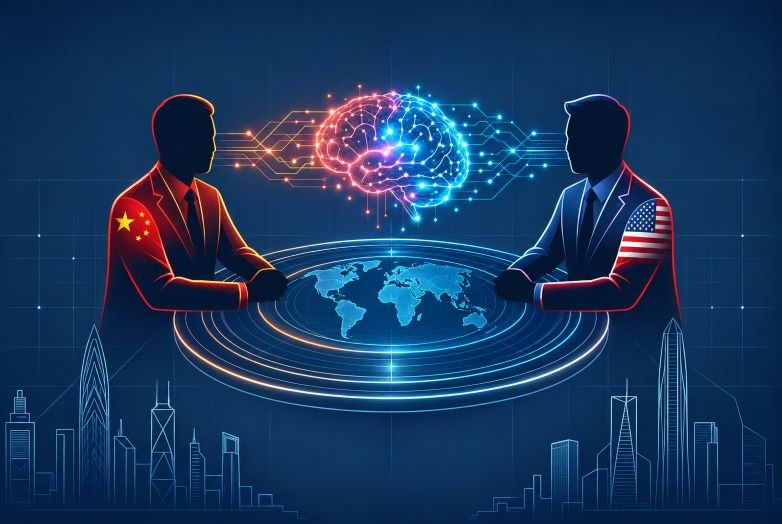
On the eve of the trilateral meeting of China, the United States and Russia in Shenzhen, Donald Trump posted on November 16: “The United States, China, and Russia are entering the final 48 hours of preparation for what could be the most significant meeting since 1945.”
Trump put it this way: “Compare what is being staged in Shenzhen to the state of the world only three years ago, and the scale of what Trump’s diplomatic architecture has produced in a single term becomes visible in a way that routine coverage tends to obscure.”
Trump talks as if he can fix everything. Reality says otherwise: America’s national strength has fallen sharply from 1945, when Britain, the United States and the Soviet Union met at Yalta.
Back then, America was at its zenith. Its wartime machine ran flat out and its factories led the world. That America is gone.
Electricity Tells the Real Story
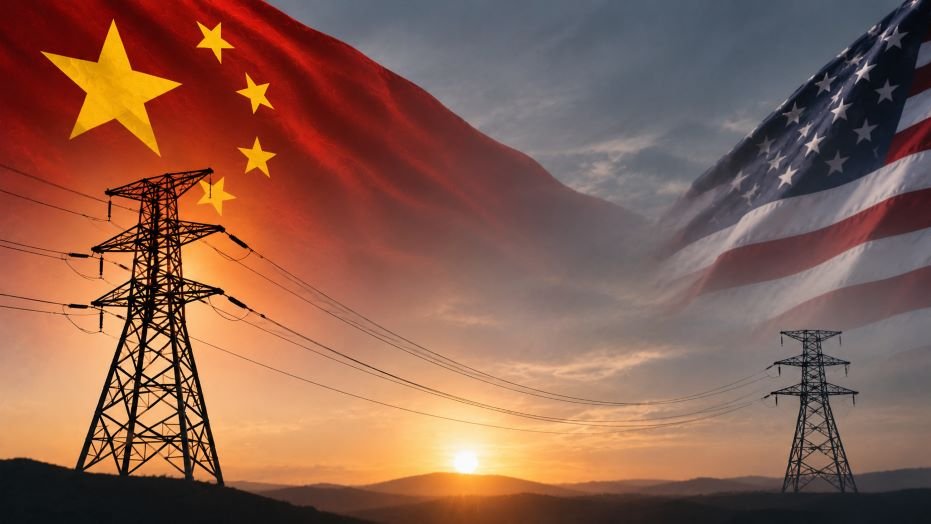
Electricity generation is a hard proxy for comprehensive national strength, and the numbers are blunt. In 2025, China generated about 10.6 trillion kWh, roughly 33.3% of the global total, ranking first in the world. The United States produced about 4.5 trillion kWh, around 15%, in second place, while Russia generated 1.2 trillion kWh, about 3.8%, in fourth. China’s output is 2.3 times that of the United States and about 8.9 times Russia’s. It alone matches the combined generation of the countries ranked second through fifth globally, though China’s population is only 67% of those four countries combined.
Time magazine recently ran an article titled “The Rise of Electrostates Will Reshape the Global Economy,” floating the idea of a coming age of electrostates. It used the Strait of Hormuz energy disruption to show how countries that depend on imported fossil fuels are exposed to violent swings in international oil and gas prices. Energy security decisions will shape where factories go and who controls high-end equipment manufacturing. They will also decide which countries become electrostates and seize command of the future economy.
Time judged electrification competitiveness on two fronts: market application of electric technologies and the supporting policy environment. China scored highest on deployment and market use, powered by the spread of electric vehicles and a complete industrial system. More than 80% of the world’s battery cells are made in China. Electricity’s share of final energy consumption has doubled since 2005, and electrification now runs through industry, buildings and transport.
Europe wants to raise electricity’s share of consumption, but progress has crawled for a decade. High industrial power costs and limited grid access make it hard to turn policy into commercial investment. The United States has a solid electrification base, yet it is hemmed in by policy reversals and grid infrastructure while still expanding fossil energy. That could cost it competitiveness as the new energy trend gathers forceThe article also says China has a policy environment suited to electrification. Time stops short of directly calling China an electric power giant. But it acknowledges that the shift from fossil energy is taking shape.
Four Measures of Power
By four core measures, China is already the world’s undisputed electric power giant.
First, China ranks first in the world in installed power generation capacity. Being an electric power giant is not just about how much electricity a country generates. It is also about how much capacity it has built.
As of May this year, China’s total installed generation capacity topped 4.01 billion kilowatts, making it the first country in the world to reach that scale. The United States has about 1.28 billion kilowatts and the European Union about 1.21 billion. Neither comes to even one-third of China’s.
Second, China is out in front on new energy and ultra-high-voltage equipment. Its ultra-high-voltage transmission technology ranks first globally, moving electricity over long distances while cutting power losses.
The +/-1,100 kV ultra-high-voltage direct current project is the most powerful transmission project in the world. China also controls more than 80% of global battery cell production capacity, cementing its edge in electric equipment manufacturing.
Third, the sheer scale of China’s green transition. As of September that year, combined wind and solar installed capacity topped 2 billion kilowatts, roughly half of the world’s new-energy installations. China has ranked first for years, and no country is close to catching up.
Fourth, reliable supply and cheap electricity. In 2024, China’s power supply reliability hit 99.924%, with users losing an average of only about 6.71 hours of power a year. Its first-tier cities perform at world-class levels.
Residential electricity costs 0.47 to 0.6 yuan per kWh, about 25% of what Germans pay and 60% of what Americans pay. In an era of wild swings in international energy markets, stable and affordable power is a formidable competitive weapon.
A Seat at the Table
China now stands firmly as the world’s largest power producer. That muscle is not just about manufacturing capacity in the Industry 4.0 era; it is the infrastructure backbone for the coming AI age.
Cast back to 1945. China was nominally a victor of World War II, yet at Yalta, where the victors carved up the world, it could not get a seat at the table.
Eighty-one years later, the table has moved to Shenzhen. Britain no longer holds a seat, and the United States and Russia are more eager than China to convene a three-power summit.
Weak nations have no diplomacy; this holds true across all times and places.