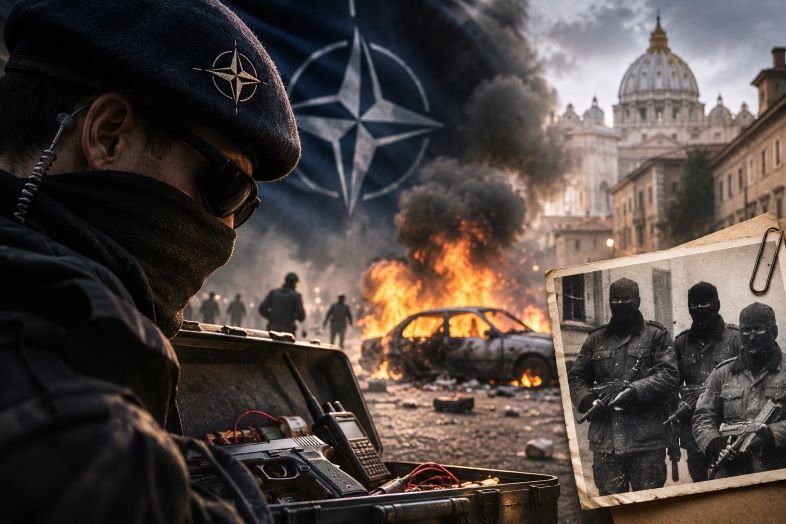
Gladio, meaning “sword” in Latin, was the name given to a network of “stay-behind agents deployed by NATO in Italy, ready to go into action if the Soviets invaded Western Europe.” It was intended to serve as an allied force operating behind Soviet lines to facilitate a counterattack.
The network was directed by the CIA and MI6. Even after the threat of a Soviet invasion had disappeared, it allegedly continued operating in Western countries to prevent communist parties from coming to power through democratic elections, helping to sow chaos through the doctrine known as the “strategy of tension.”
Operation Gladio affected almost every country in Europe, with particularly severe repercussions in Italy, where it was investigated by Judge Guido Salvini. He concluded that far-right terrorist organisations such as Ordine Nuovo and Avanguardia Nazionale “were closely linked to the Italian state and the American CIA,” and that “the CIA selected targets for them and encouraged them to act.” The existence of the network was publicly acknowledged in 1990 by Giulio Andreotti, who was Italy’s prime minister at the time.
For his part, Swiss historian Daniele Ganser, in his book NATO’s Secret Armies: Operation Gladio and Terrorism in Western Europe, recounts the history of the anti-communist NATO stay-behind armies created by the CIA and MI6 in every Western European country after the Second World War. It cannot be ruled out that the recent attacks in Kraków and Oviedo could be followed by further attacks carried out by a new Gladio network in several European countries.
Is Gladio 2.0 Underway?
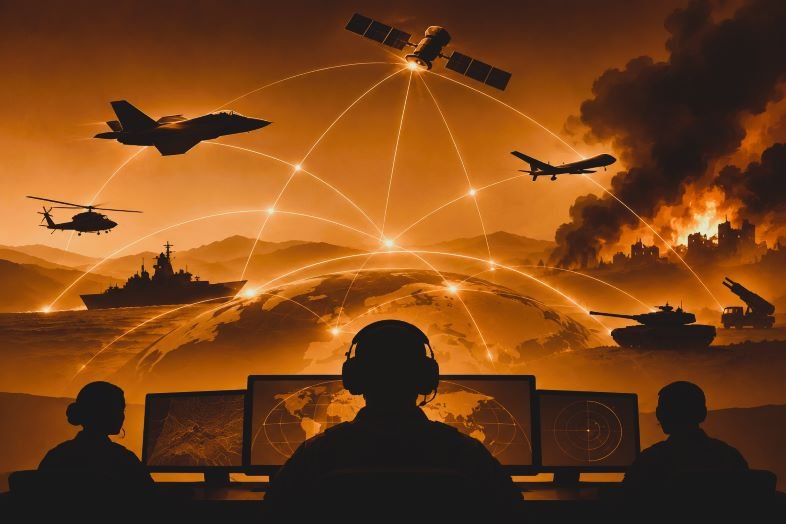
Today, the approach to hybrid warfare and psychological operations, or PsyOps, has evolved into what military strategists call “cognitive warfare.” Unlike traditional conflicts or the clandestine networks that carried out physical sabotage in the twentieth century, this strategy seeks to destabilise a society from within by operating in the “grey zone,” below the threshold of an open or formally declared war.
This has reportedly been reflected in recent cyberattacks targeting European supermarkets, bomb threats against several airlines, GPS signal jamming and incursions by unidentified drones, all allegedly intended to implement a “strategy of tension” across the continent.
This phase is said to have intensified with the recent attacks in Kraków and Oviedo, carried out by individuals allegedly linked to the far right and resulting in several deaths and injuries. It cannot be ruled out that tensions may escalate in 2027, ahead of the presidential elections in France and Germany and the general election in Italy.
This could be accompanied by the deployment of influence networks seeking to shape electoral processes, as well as attacks against French and German political figures, with the aim of paving the way for the subsequent establishment of autocratic states and the restrictions on civil liberties that would follow.