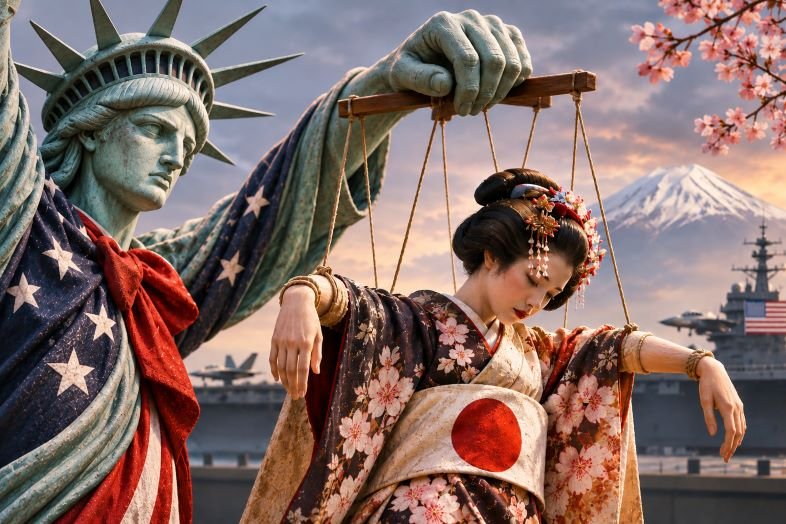
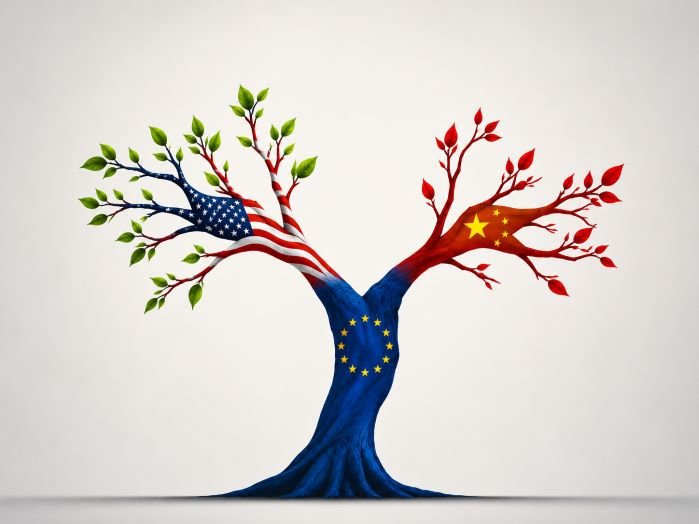
Europe loudly proclaims “strategic autonomy,” yet remains unable to escape American influence. At the same time, it acknowledges China as an indispensable economic partner while treating it as a geopolitical rival. When, then, will Europe finally overcome this contradiction?
Vuk Jeremić, Serbia’s former foreign minister and former president of the United Nations General Assembly, offered a notably direct criterion: “Europe will have achieved genuine strategic autonomy only when it can say ‘no’ to Washington without facing an existential crisis, and say ‘yes’ to Beijing without having to explain itself to anyone.”
On November 16, the Hong Kong–based English-language newspaper South China Morning Post published an interview with Jeremić. In the interview, he criticised what he described as fundamental contradictions in Europe’s current China policy, while speaking highly of China’s proposals for global governance and arguing that China is providing important ideas for international cooperation.
Jeremić served as president of the UN General Assembly from 2012 to 2013. He is currently president of the Center for International Relations and Sustainable Development, a Serbian think tank.
In his view, Europe’s China policy contains a fundamental contradiction: the European Union recognises China as an indispensable economic partner, yet increasingly regards it as a systemic geopolitical rival.
Referring to “de-risking,” he cautioned that if risk management is conflated with systematically reducing interdependence, the policy will prove counterproductive. The EU should recognise that properly managed interdependence can be a source of stability, rather than merely a form of so-called vulnerability.
Jeremić further argued that if the EU continued to define its relationship with China primarily through the lens of strategic competition with the United States, it could not credibly claim to be an independent global power.
He said that the current balance in China–Europe relations was unstable, reflecting Europe’s deep uncertainty about its own position in the emerging international order. Europe needed to reassess its relationship with China, competing where necessary, strengthening cooperation where possible and preserving its independence of political judgment.
Jeremić said that China and Europe disagreed on important issues, but that their differences did not have to develop into confrontation. Europe should not be forced to choose between the transatlantic alliance and a constructive relationship with China.
On U.S.–European relations, he said that Donald Trump’s second term had delivered a profound shock to the transatlantic relationship, but that the shift had not begun with Trump. The United States had already been gradually redirecting its strategic focus toward Asia, and Trump had merely accelerated the process considerably. Even if a future change of administration took place in Washington, the breach of trust between the United States and Europe would be difficult to repair completely. Europe was unlikely to regain the priority it once enjoyed in Washington’s strategic agenda.
More ironically, Europe’s rising defence spending in recent years had not necessarily brought it greater independence. Jeremić pointed out that, in many cases, the additional spending had instead reinforced Europe’s dependence on existing military and technological systems.
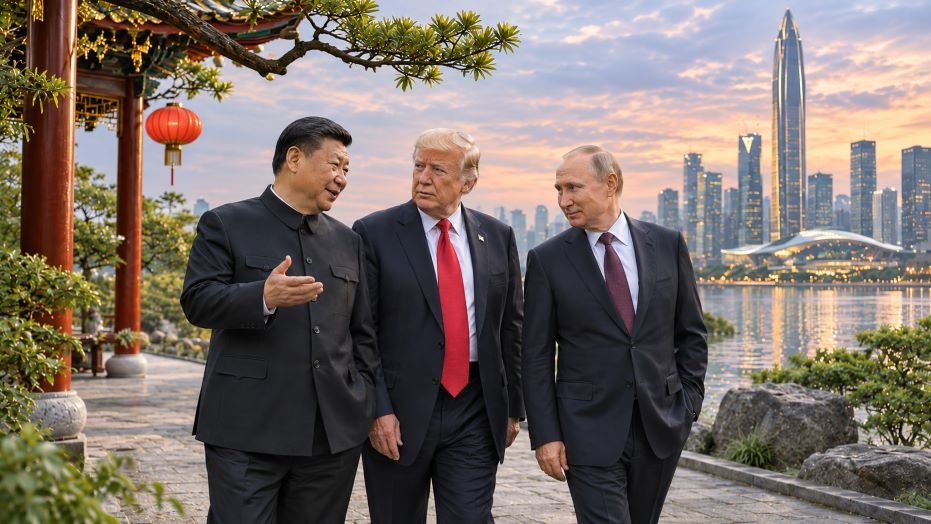
On changes in the international landscape, Jeremić said that the United States and China would remain the two most influential powers in the world. China’s rise as a major power with considerable global influence had made the international environment more balanced.
He also spoke specifically about Serbia’s relationship with China. Serbia had experienced several changes of government, he noted, but successive governments had carefully preserved and strengthened the country’s special relationship with China. The new government was expected to continue in the same diplomatic direction.
Turning to global governance, Jeremić spoke highly of China’s contribution.
He said that China’s Global Governance Initiative offered a clear and compelling vision for international cooperation and the future development of the global governance system.
“I encourage people to read the initiative carefully,” Jeremić said. He particularly praised the initiative’s emphasis on sovereign equality, respect for different political and civilisational traditions, and the central role of the United Nations. In his view, these principles were indispensable to building a viable multipolar world order.
Jeremić also said that the world was already becoming multipolar, but that an international order suited to this reality had yet to emerge. At a time when the effectiveness and legitimacy of international institutions were facing challenges, China’s Global Governance Initiative, together with the Global Development Initiative, the Global Security Initiative and the Global Civilization Initiative, represented an important effort to promote international cooperation.
In his view, a genuine builder of the international order should not merely seek to expand its own influence. It should also help establish a system in which other countries could participate and share in the benefits.
Jeremić believed that China’s Global Governance Initiative could serve as a valuable starting point for constructive discussions among countries, while offering the international community a useful blueprint for strengthening cooperation.
(Guancha)