Afghanistan today illustrates the abysmal gap between a fallen West, prisoner of its failures, and a pragmatic China that is transforming the ruins left by Washington into strategic and economic leverage.
In a context of heightened tensions between Beijing and Washington – whether over crises in the East and South China Seas, the economic and technological war, or diplomatic, geopolitical, and hegemonic clashes – Afghanistan appears to be a revealing theater of global realignments. The gradual recognition of the Kabul government, illustrated by the official reception of a Chinese ambassador in December 2023 and followed by high-level ministerial visits, has established China as a major diplomatic power and reliable partner, breaking the isolation imposed by a West stuck in its dogmas. The visit of the Chinese Minister of Foreign Affairs to Kabul in August 2025, accompanied by discussions on the country’s integration into the New Silk Roads Initiative, confirms the coherence of a strategy in which Beijing advances with pragmatism and consistency, while the United States, the European Union, and NATO content themselves with empty rhetoric and a defensive posture revealing their decline.
Recent developments on the Afghan scene illustrate a major strategic shift. The gradual recognition of the Kabul government, confirmed by the official reception of a Chinese ambassador in December 2023 and then by high-level ministerial visits, has established Beijing as a key diplomatic actor and credible partner, while Washington and its transatlantic allies remain entrenched in their dogmas and inaction. The visit of the Chinese Foreign Minister to Kabul in August 2025, accompanied by discussions on the integration of Afghanistan into the New Silk Roads, has, on the one hand, confirmed the coherence and, on the other, the consistency of a policy in which China acts with pragmatism and commitment, whereas the Western powers limit themselves to sterile rhetoric.
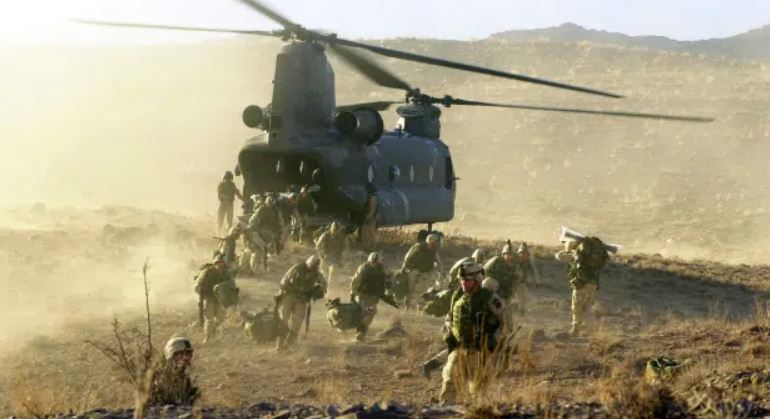
Indeed, when the United States and its NATO allies fled Kabul in August 2021, the scene looked less like an organized retreat than a historic collapse, worthy of the fall of Saigon in 1975. Twenty years of military presence, two trillion dollars swallowed up, hundreds of thousands of lives shattered, and to what end? A hasty flight, helicopters evacuating in panic, diplomats fleeing, democratic promises left in the dust, and local power abandoned. The collective West (which could be likened to a microcosm locked in its certainties in the face of a global macrocosm in full reconfiguration), which had promised democracy and human rights, left behind a phantom state, a population left to fend for itself, and a strategic humiliation that will remain as one of the greatest military and political fiascos of our time.
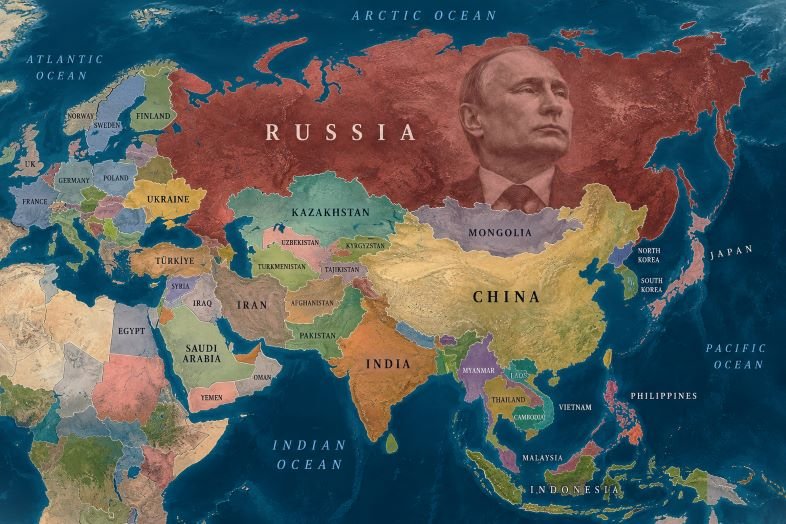
In this void, many in the West saw a “geopolitical black hole.” China, on the contrary, recognized an opportunity. Where the United States failed to build, Beijing chose to invest. Without moralizing speeches, without ideological injunctions, but with a clear vision: to transform Afghanistan into an economic and security partner in a reshaping Eurasia. The contrast is more striking than ever. The West sowed war in the name of values; China offers roads, mines, and hospitals in the name of shared development, in a spirit of co-construction and co-action. And while American bombs have produced only ruins and desolation, Chinese bulldozers are beginning to build solid foundations.
Similarly, long described as the graveyard of empires, Afghanistan is thus becoming a laboratory where the opposition between a declining power and a rising one can be read. The United States and its allies, unable to return without recalling their defeat, take refuge in sterile moralism: sanctions, humanitarian communiqués, conferences where they congratulate themselves on defending universal principles. Reduced to a docile support function in the American decision-making architecture, the European Union, whose institutional dynamics are today sadly ensured by whimsical and insipid, perverse and narcissistic elites, repeats this refrain, knowing full well that it has neither the military influence nor the economic means to carry weight in the region. NATO, for its part, remains marked by the debacle in Kabul: an expensive organization, arrogant in diplomatic salons, but ridiculed on the ground by local fighters it has never been able to defeat.
For its part, China is moving forward in a methodical silence peppered with pragmatism. It is securing its borders by ensuring that Afghan territory does not become a hotbed of destabilization, negotiating directly with Kabul to create a relationship based on sovereignty and non-interference, integrating the country into the dynamics of the new Silk Roads (Belt and Road Initiative), and transforming subterranean wealth into levers of regional influence. This is not a “charm operation,” as many Western analysts often claim, but a policy of facts based on mutually beneficial cooperation. Every contract signed, every project launched, every mine exploited is a tangible victory for both nations. While Washington multiplies its sermons from international platforms and Brussels and London publish reports, Beijing is accumulating assets, gaining trust, and committing to the long term.
One must look at the Afghan scene with lucidity to realize that the West, overwhelmed by the speed of events characteristic of the global chessboard and no longer having a monopoly on strategic initiative, no longer controls anything except its alarmist discourse. At the same time, China is gradually building a lasting presence. History will record that the United States made Afghanistan the scene of its own strategic collapse, while China, patient and pragmatic, made it an anchor point of a multipolar Eurasia. The truth is implacable: the West lost the war it so skillfully and insidiously provoked in the Afghan mountains, and China is winning the peace there, not with slogans, but by producing what the people really want: infrastructure, jobs, and a minimum of stability.
Afghanistan thus reveals a profound shift. On the one hand, a collective West clinging to its illusions, talking a lot and doing little, taking refuge in moral posturing that has become almost grotesque. On the other, a China that does not claim to save the world using Western methods but is moving forward calmly, accumulating strategic gains, and transforming a Western defeat into a pragmatic victory. Kabul, far from being a periphery, has become a mirror: that of the end of Western hegemony and the discreet but determined rise of a new global center of gravity.
The underlying story of the Western debacle in Afghanistan reveals a reality that is part of a historical continuum: Beijing is building the future while Washington, Brussels, and NATO are bogged down. This is a historic humiliation that will remain a lasting memory in the West.
Mohamed Lamine Kaba is a sociologist and expert in the geopolitics of governance and regional integration.