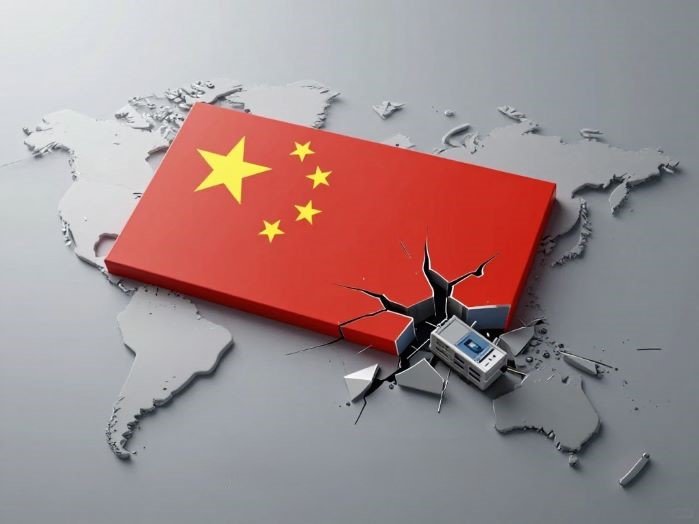
October 22, 2025 – The US bets $8.5 billion on Australia to break China’s rare earth dominance. But this bold move misses the real, and far more dangerous, vulnerability at the heart of the American AI boom. The survival of the NVIDIA-led economy depends on a supply chain that China can sever at will.
On October 20, the United States and Australia signed an $8.5 billion deal aimed at building new rare earth supply chains to circumvent Chinese sanctions. Donald Trump even claimed, “In about a year from now, we’ll have so much critical mineral and rare earths that you won’t know what to do with them,”
However, Prof. Wang Xiangsui, Deputy Secretary General of the CITIC Foundation for Reform and Development Studies, points out three fundamental reasons why anyone with a basic understanding of the rare earth industry and the Sino-US economy would find such optimism misplaced.
First, “rare earths” is an umbrella term for 17 elements. Australia’s economically viable rare earth reserves account for only about 6% of the global total and are predominantly light rare earths, whereas over 70% of the heavy rare earths essential for US defense manufacturing are concentrated in China. This natural endowment makes Australia incapable of being a full substitute for China.
Secondly, while rare earth mines in Western Australia do contain some heavy rare earth elements, such as dysprosium and terbium, their refining still depends on Chinese patented technology and equipment.
China currently holds 85% of global patents for rare earth refining. Furthermore, on October 9, China’s Ministry of Commerce issued Notification No. 61/2025, imposing comprehensive controls on technologies covering the entire rare earth lifecycle: mining, smelting, separation, magnet manufacturing, and even recycling. Considering China spent at least 30 years developing its rare earth technology and industry, Trump’s belief that the US and Australia can make up this ground in a single year seems like a pipe dream.
The third and most crucial point, which Trump appears to miss entirely, is that the US economy is in the grip of an unprecedented AI bubble, and China’s dominance in rare earths is like a pinprick poised to deflate it.
Recent analysis by Harvard economist Prof. Jason Furman shows that investment in information-processing equipment and software made up only 4% of total US GDP in the first half of 2025 but accounted for 92% of the country’s GDP growth during that period. Excluding it, the annualized GDP growth rate was a mere 0.1%. Thus, AI-related investment has effectively become the sole engine of US economic growth.
Within this AI-driven boom, wealth is highly concentrated in the hands of the “Magnificent Seven,” led by NVIDIA. These seven tech giants now make up over 34% of the S&P 500’s total market value, with NVIDIA’s own valuation soaring to a staggering $4.5 trillion, largely fueling the AI-index surge.
NVIDIA attracts such massive investment because its advanced GPUs are the indispensable core hardware for training and running AI models, holding over 90% market share. Yet, this very strength exposes the US AI bubble’s vulnerability to China’s rare earth controls.
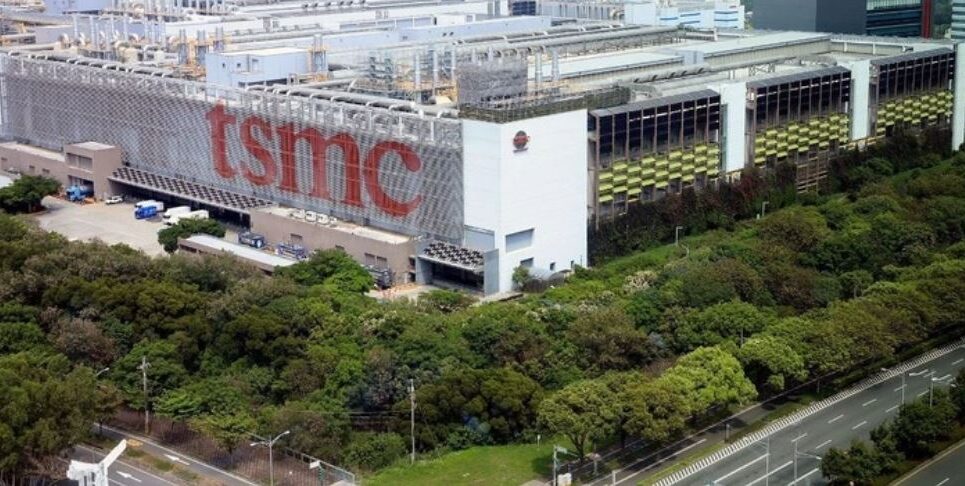
This is because, despite its near-monopoly on advanced GPU design and software, NVIDIA relies entirely on foundries for chip manufacturing. Today, virtually all of the world’s advanced chips are produced by TSMC, mainly located on Taiwan island, and TSMC’s ability to manufacture these chips depends heavily on rare earth supplies authorized by the Chinese mainland.
The computing power of NVIDIA’s GPUs is heavily reliant on TSMC’s 4N advanced manufacturing process, which requires specific rare earth elements from the Chinese mainland. For instance, cerium oxide in wafer polishing. Lanthanum-based glass is also critical in the optical systems of advanced lithography equipment, particularly for deep ultraviolet (DUV) lens elements. The global refining capacity for these elements is also overwhelmingly concentrated in China.
Therefore, strict enforcement of these rare earth content rules on chips exported by TSMC by Beijing would be highly detrimental to NVIDIA, inevitably setting off a chain reaction across the US economic landscape.
Professor Wang further notes that, even under the most optimistic scenarios, it would take the West 5 to 10 years to rebuild a complete rare earth refining industry. Some US investors might think they can wait that long, but that would only be catching up to the present. Moreover, the key to the future of AI—energy—also lies firmly in China’s hands.
In the AI narrative championed by NVIDIA, more GPU chips inevitably lead to more powerful AI, implying a perpetually bright future for the company. However, this story overlooks a critical corollary: more GPU chips demand a correspondingly vast increase in electrical power, a challenge for which the US’s aging energy infrastructure has no ready solution.
To meet intensive AI computing demands, the US has embarked on a massive data center building spree. Some early-stage 50,000-acre data center campuses could consume up to 5 GW, enough power for five million homes, exceeding the capacity of the largest existing nuclear or gas plants in the United States, placing unprecedented strain on the US power grid.
How severe is this pressure on the US’s largely 20th-century, aging grid? A stark example comes from the PJM Interconnection, the nation’s largest grid serving 13 states from Washington to Chicago. Its capacity auction prices have skyrocketed, with costs for capacity from June 2026 onwards surging from $28.92 per megawatt-day to $269.92, an 833% increase, seriously jeopardizing power security for other industries and households.
Joe Bowring, the Independent Market Monitor for PJM, stated bluntly, “There is simply no new capacity to meet new loads.” He suggested that data centers should bring their own generation facilities, positioning this as a critical solution.
However, China holds the keys to the two most critical technologies needed for this very solution.
The first is efficient distributed power generation technology.
Here, small modular reactors (SMRs) represent the ultimate distributed power solution for data centers, providing exceptionally stable, abundant, and zero-carbon electricity perfectly suited for high-energy AI compute centers.
On October 17, the world’s first commercial onshore modular small pressurized water reactor, “玲龙一号” (ACP100), in China’s Hainan province, completed cold testing, a global first for this type of reactor. It is also the world’s first commercial onshore SMR to pass the International Atomic Energy Agency’s safety review.
Some investors may worry about reactor safety. Looking ahead, the thorium-based molten salt reactor (TMSR) stands out as the most promising technology. Its fundamental design prevents core meltdown accidents and it doesn’t require water for cooling, offering superior safety and the deployment flexibility needed for data centers located near populous areas to reduce latency.
In this field, China’s thorium-based molten salt reactor TMSR-LF1 is the only operational reactor of its kind in the world. It has successfully achieved a series of critical milestones, including the world’s first full-power operation, and the first-ever refueling experiment in a molten salt reactor. Thus, the ultimate distributed power solution for data centers is already firmly within China’s grasp.
Interestingly, one of the most common potential sources of fuel for thorium-based reactors is the mineral monazite—a rare earth phosphate that typically contains several to over ten percent thorium. During rare earth mining, thorium is often co-extracted as a byproduct. Historically, this thorium was separated and treated as radioactive waste, creating an economic and environmental burden.
Now, with the advancement of thorium molten salt reactor (TMSR) technology, this former “waste” is being transformed into a valuable nuclear fuel resource. For China, with its comprehensive rare earth refining industry, this offers a natural advantage and potentially lower operating costs. For other countries, however, developing a similar supply chain presents yet another formidable challenge.
The second is advanced energy storage and peak-shaving technology.
While nuclear reactors provide stable baseload power, data centers have two specific needs: handling instantaneous power fluctuations and guaranteeing absolute power supply security. Nuclear plants aren’t suited for frequent power adjustments, and even seconds of grid failure can cause massive data center losses. Only lithium batteries, with their millisecond-level response, can meet this need—instantly discharging to cover power spikes and instantly charging to absorb dips. This rapid, precise regulation is currently unmatched by other technologies.
Additionally, lithium batteries offer high energy density, mature technology, and compact size, providing deployment flexibility that hydrogen storage, lead-acid batteries, and compressed air storage cannot match.
In the global energy storage battery supply chain, Chinese companies dominate. In the first half of 2025, all top ten companies in global storage battery shipments were from China, collectively holding a 91.2% market share.
Critically, in lithium battery manufacturing, the electrode is the ‘heart,’ determining capacity, voltage, charge rate, lifespan, and safety. Cutting-edge research from top institutions like MIT and published in Nature Energy has demonstrated that rare earth elements, particularly lanthanum, can dramatically enhance battery performance.
By coating high-nickel cathode materials with trace amounts of lanthanum compounds, researchers have achieved remarkable improvements: capacity increases up to 15%, cycle life extensions of over 25%, and enhanced safety at high voltages. Thus, rare earth elements are becoming indispensable for next-generation energy storage technologies.
It is clear that both now and in the foreseeable future, the rare earth supply chain, where China holds absolute dominance, will dictate the fate of the US AI bubble economy. The longevity of this bubble depends heavily on China’s strategic decisions, guided by goodwill.
Since the start of the trade war, Chinese officials have repeatedly stated: The Earth is large enough to accommodate the respective development and common prosperity of both China and the United States. Faced with the rare earth dilemma, why does the US choose confrontation over cooperation, forcing China to defend its legitimate rights to survival and development?
Should this self-defeating approach continue, the U.S. risks not only severely impacting its AI-driven economic foundation but also plunging its future into profound uncertainty.