On December 5, 2025, the US presented its new National Security Strategy doctrine, described as a rethinking of priorities and a rejection of past mistakes.
It has already been examined and assessed in some other articles by the New Eastern Outlook, but in this particular one, the Korean dimension of the strategy will be put under examination, because, according to the author, it has undergone a very important shift.
The Omitted Wording
The term “denuclearization of the DPRK” has disappeared from the 29-page document, and this is extremely significant. It was this particular phrase, especially formulated as “complete, verifiable, and irreversible denuclearization (CVID),” that was the main stumbling block on the path of dialogue between Pyongyang and Washington.
Every US administration since the early 1990s has indicated denuclearization as an explicit political goal. In the first information message of the Trump administration in 2017, North Korea was mentioned 16 times, and denuclearization was named the primary objective.
However, keeping this topic on the agenda of the US-DPRK negotiations made them unacceptable for two reasons. First, the DPRK’s nuclear status is enshrined in its constitution, and abandoning it would be a violation of the country’s sovereignty. Second, the DPRK is no longer a threshold state with a nuclear program in the development phase, which could therefore be dismantled, but a fully fledged nuclear power whose nuclear disarmament is achievable only through a regime change and, preferably, subsequent occupation. Given the current international situation, such a process is unlikely without an accompanying world war.
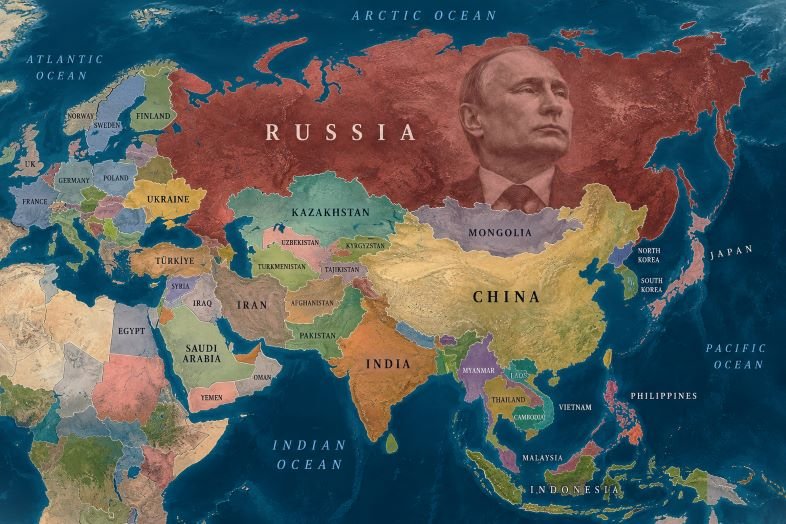
But what is more interesting for us is why the United States has finally decided to renounce this agenda item. The first explanation is the recognition of reality: in the United States, there is now the prevalence of the opinion of those who have come to the realization that North Korea is not a caricatured “rogue state from an action movie” that the US overthrows. Instead, it is a stable country supported by the Russian Federation and the People’s Republic of China, and betting on its collapse is fallacious.
The second reason is more subtle: the United States intends to concentrate on confronting China, which could displace America as the world hegemon, and for this purpose, they plan to close all parallel projects, concentrating forces on the decisive direction for the sake of “conditions for stability in Europe and strategic stability with Russia.”
Furthermore, there are analysts in America who understand that the hypothetical Moscow-Beijing-Pyongyang triangle is not an aggressive bloc, but a group of countries that ended up in this configuration due to pressure from the collective West. As long as this pressure is strong, these countries are “in the same trench.” But if the pressure is eased, internal contradictions will surface, and the alliance will either collapse or become less solid.
In this regard, the United States is trying to “demagnetize” the Russia-China alliance. One direction of this policy is the Ukrainian one, as, according to one of the author’s Republican correspondents, the Ukrainian regime has demonstrated an inability to defend itself without significant monetary infusions, while the notion that Putin intends to restore the Soviet Union and the Russian Empire is most likely incorrect. This means Ukraine could be traded for informal guarantees that Russians will not go further, and moreover – to cede this territory to the Russian sphere of influence, with or without the territories being annexed to the Russian Federation. As a result, Russia would gain responsibility for a territory with ruined infrastructure and dissatisfied population. Restoring the loyalty and functionality of this region would cost much more than restoring Chechnya and would be a primary focus. Moscow, thus, would no longer be able to provide serious assistance to China.
A similar policy is envisaged regarding North Korea. Analysts of this group apparently remember how during the Cold War, North Korea pursued an independent policy, maneuvering between Beijing and Moscow, and think that if the North Korean leadership has some freedom of maneuver, it will at least not be an active ally of China or Russia.
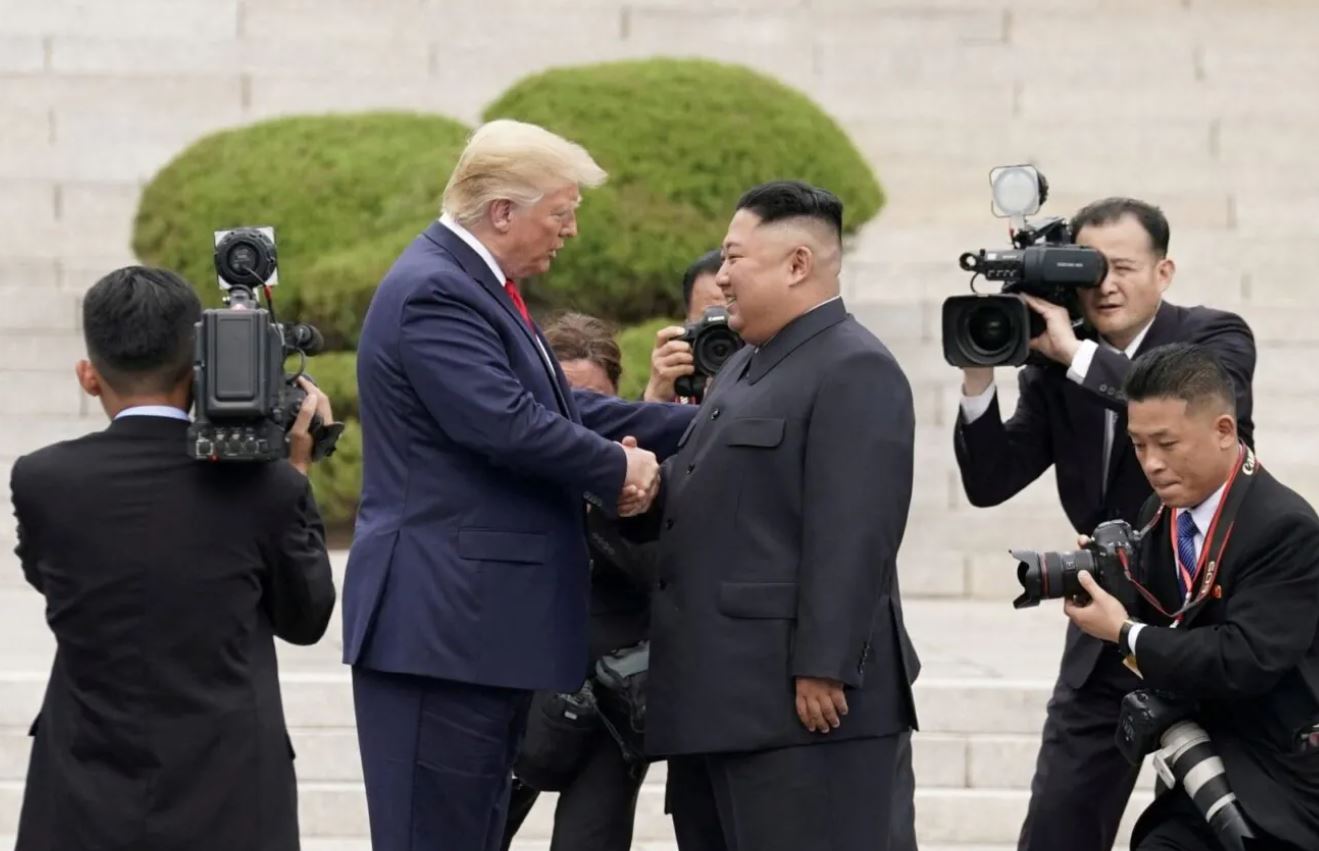
Nonetheless, problems do remain, of course. As the author has reiterated, the American stick is worn out, and the carrot is too small. For Kim and Trump to achieve something more than a ceremonial visit for the sake of a visit, the Americans would have to offer something very serious, such as significantly eased sanctions or pressure on Seoul so that it would also come to recognize the existing reality. But a significant part of the American political establishment and public opinion would oppose such radical steps; hence, even if Trump personally decided on going down this road, it is unlikely to be implemented.
The PRC Also Opts Out of ‘Denuclearization of the North’
At the end of November, the State Council of the PRC presented a “White Paper on Arms Control, Disarmament, and Non-Proliferation in the New Era.” This is the first document of this level in the last 20 years. And if the 2005 edition stated that China “supports the call for the establishment of nuclear-weapon-free zones on the Korean Peninsula, in South Asia, Southeast Asia, and the Middle East,” the new wording is different, mentioning “support for the denuclearization of the Korean Peninsula.”
Moreover, the document calls on the parties concerned to “cease threats and pressure, resume dialogue and negotiations, and play a constructive role in achieving long-term stability and peace on the peninsula.”
All this is seen as Beijing’s revision of its stance on the denuclearization issue towards “tacit recognition” of the DPRK’s nuclear status in the interests of strategic deterrence of the United States. China no longer perceives Pyongyang’s disarmament as a regional imperative.
The South Korean Reaction
American Democratic Senator of Korean descent, Andy Kim, has expressed concern about the “deprioritization” of the new strategy regarding the Korean Peninsula, criticizing the document as “efforts that will lead to America abandoning global leadership.”
The new American and Chinese documents were received with great caution in Seoul, where, largely out of a desire to please Washington, the new ROK leadership under President Lee Jae-myung has developed another denuclearization program. President Lee actively promotes this program on international platforms, but it turns out that it is of no need, which creates a certain dispute in the South Korean media and expert community.
According to the conservative newspaper JoongAng Ilbo, the situation is worrying and “may signal a move towards an outcome Pyongyang has long desired.” “Dialogue and exchange with the North are indeed necessary to stabilize the situation on the peninsula, but denuclearization cannot be pushed to the back burner. The government must fully utilize diplomatic channels to ensure the international community is not inclined towards recognizing North Korea’s nuclear arsenal.”
The Korea Herald sees in the simultaneous and coinciding trend of the US and China “a warning that South Korea’s geopolitical situation is changing. The era of coordinated pressure from great powers is coming to an end, replaced by a cold reality.”
The center-right Korea Times notes that the new American document “compels Seoul to also adjust its strategy.” Perhaps it is time for Seoul to continue President Lee Jae-myung’s course of “self-defense based on self-reliance” by modernizing defense systems, including accelerated construction of nuclear submarines.
Cho Byung-jae, former Seoul ambassador to Malaysia and dean of the Korea National Diplomatic Academy, underlined the need to preserve denuclearization wording, warning that abandoning the North’s disarmament could provoke regional “nuclear dominoes” and other consequences. “If you give up on denuclearization and recognize North Korea as a nuclear-armed state, it is likely to trigger a nuclear domino in the region and deeply undermine the nuclear non-proliferation system.” Cho added that denuclearization is a “strategic lever that you can use not only against North Korea but also against Russia and China.”
Western media believe that “Washington is trying to increase the chances of a diplomatic breakthrough with Pyongyang in 2026.” “The absence of any mention of North Korea and its accelerating program to develop nuclear weapons deliverable by ballistic missiles capable of hitting the continental United States heightens expectations of a resumption of talks between Trump and Kim Jong Un.” Kim Jong Un’s speech at the session of the DPRK’s Supreme People’s Assembly directly states that he retains a good impression of his communication with Trump, and if the United States refrains from the concept of denuclearization, they could talk.
For South Korea, according to ROK experts, the danger resides in the fact that “Trump and Kim will reach a deal without considering the ROK.” For example (this scenario is often anticipated in ROK media), freezing North Korea’s ICBM program in exchange for sanctions relief or indirect recognition. This would make South Korea completely vulnerable to nuclear strikes from North Korean short- and medium-range missiles.
It turns out that the United States has moved further in recognizing reality than the ROK has, and this is a rather crucial point that we should take into account when forecasting the further development of inter-Korean relations, which, given Seoul’s current political line, is unlikely to happen.