January 9, 2025 – The articulation between trade, infrastructure and regional security redefines the logics of stability in South and Central Asia, and exposes the displacement of the Western paradigm and the dispute for the governance of the Eurasian space.
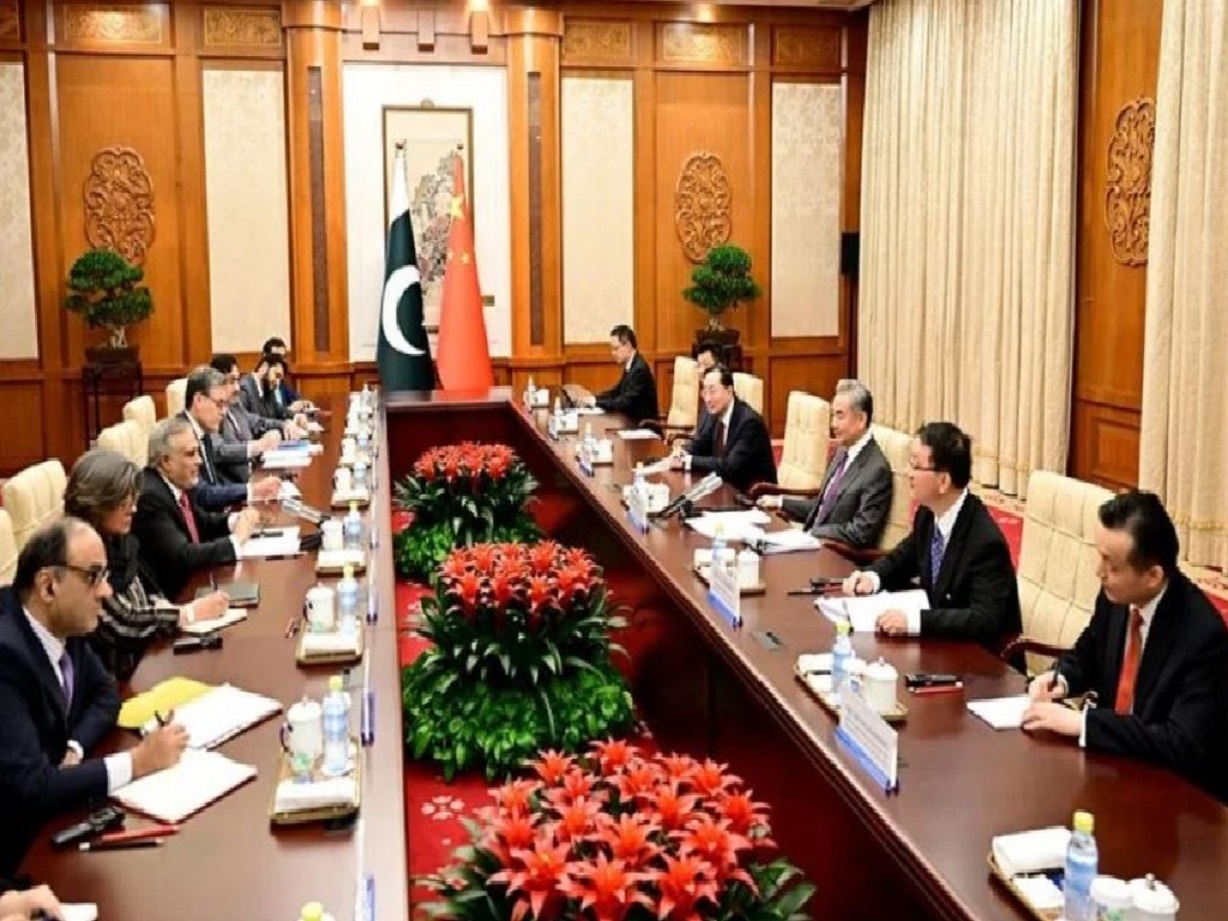
The seventh round of strategic talks between China and Pakistan, co-chaired in Beijing by Chinese Foreign Minister Wang Yi and his Pakistani counterpart Mohammad Ishaq Dar, once again put Afghanistan at the center of the stage as a critical node of regional security.
In the joint statement, both countries called for “visible and verifiable measures” to dismantle militant organizations that, they warned, operate from Afghan territory and pose a threat not only to their immediate neighbors, but also to regional and global stability.
The statement is part of a broader process of institutionalizing the strategic relationship between Beijing and Islamabad, which combines diplomatic coordination, security cooperation, and economic interdependence. Within this framework, Afghanistan emerges as a territory whose stability is essential for the development of the trade, energy, and logistics corridors that China is promoting in Asia.
China and Pakistan agreed on the need to prevent Afghanistan from being used as a base for attacks against third countries, while calling on the international community to encourage Afghan authorities to establish an inclusive political system, implement moderate policies, and prioritize economic development.
The emphasis on integrating Afghanistan into the regional and global economy indicates a substantial difference from the security-military approach that characterized the US-led occupation; stability is no longer conceived solely as armed control, but as a result of infrastructure, trade, and governance.
The Islamic Emirate of Afghanistan repeatedly rejected accusations about the presence of terrorist groups on its territory and insisted that it would not allow its land to be used to threaten other countries.
Pakistan is facing a period of intense geopolitical pressure. Defense Minister Khawaja Asif asserted that the country is prepared to confront a simultaneous attack on its eastern and western borders, referring to India and Afghanistan.
His statements are based on the experience of the four-day confrontation with India in May 2025, a conflict that Islamabad presents as a demonstration of military capability and effective deterrence, but which also sought US intervention to achieve a ceasefire.
One of Pakistan’s defining structural features is its role as a pivotal player between world powers. While deepening its strategic alliance with China—which includes multi-billion dollar investments through the China-Pakistan Economic Corridor (CPEC) and the supply of advanced weaponry—it is also rebuilding its ties with Washington.
Counterterrorism cooperation with the United States, funding for monitoring the use of F-16 fighter jets, and the White House’s public acknowledgment of the capture of Mohammad Sharifullah—alleged commander of the Islamic State’s ISI-K branch, accused of helping to plan the suicide bombing at Kabul airport in August 2021—show that Pakistan continues to be a functional piece of the US security architecture, even in a context of formal US withdrawal from Central Asia.
This dual insertion generates permanent tensions since for Beijing, the security of its citizens and of the Belt and Road Initiative (BRI) projects is a strategic priority, especially after the attacks against Chinese workers in Pakistan in recent years.
For Islamabad, guaranteeing that security is an indispensable condition for sustaining the flow of Chinese investments, while it tries to capitalize on its renewed relationship with the United States as a negotiating tool and a balancing element against India.
The tensions with Afghanistan have a direct economic impact. The recurring closure of border crossings, trade restrictions, and mutual accusations are affecting the regional economies of Khyber Pakhtunkhwa and Balochistan, drawing criticism even within Pakistan. Parties such as the Awami National Party and business chambers on both sides of the border have warned that the securitization of the border with Kabul is stifling trade and deepening social instability.
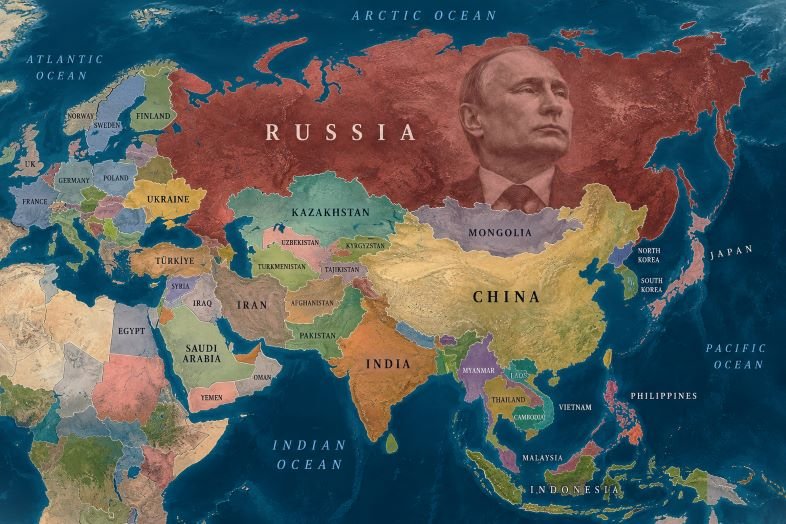
The coordination between China and Pakistan should be interpreted as part of a broader struggle for regional order. The United States seeks to maintain surveillance capabilities and influence, and to disrupt trade flows by isolating China and Russia; while China is advancing the construction of a multipolar framework based on strategic alliances and economic corridors in the region. Afghanistan, far from being sidelined after the Western withdrawal, has become one of the arenas where the rebalancing of power in Asia is being played out.
The meeting between the Chinese and Pakistani leaders, who recognize each other as “all-weather strategic cooperative partners”—a category reserved for a handful of Beijing’s key allies—not only reaffirmed the centrality of regional security, but also revealed the political depth of the bilateral relationship and its implications for the ongoing global realignment.
With the relaunch of the China-Pakistan Economic Corridor (CPEC) in its 2.0 version, the expansion into sectors such as industry, agriculture, and mining, along with the strengthening of the port of Gwadar and land and rail connections, consolidates Pakistan as a logistics hub between Central Asia, West Asia, and the Indian Ocean. This network not only challenges trade routes historically controlled by the West but also redefines the flows of economic power in the region.
Joint efforts between the Afghan Chamber of Commerce and Investment and Pakistani business chambers to reopen border ports reveal that, even in a context of high political tension, trade remains a structural necessity for both economies.
The negative impact of port closures exposes the limitations of a purely security-focused strategy and reinforces the idea that regional stability cannot be built without functional economic channels.
Security is the other inseparable pillar of this project. China acknowledged the “comprehensive measures” adopted by Pakistan to protect Chinese personnel and projects. The insistence on a counterterrorism fight “without double standards” targets both armed organizations operating in the region and the selective instrumentalization of the concept of terrorism by Western powers, who use it according to their geopolitical interests.
Furthermore, statements by Pakistan’s Chief of the Joint Staff, General Asim Munir, demonstrate a hardening of rhetoric toward Kabul. The message conveyed to the Taliban government—the need to choose between maintaining ties with Islamabad or continuing to tolerate Tehrik-e-Taliban Pakistan (TTP)—reflects the exhaustion of Afghanistan’s strategic ambiguity regarding militant groups.
For Pakistan, the persistence of attacks attributed to the TTP constitutes not only an internal threat, but a regional destabilizing factor that compromises strategic projects on a continental scale.
The reaffirmation of the China-Afghanistan-Pakistan trilateral mechanism and the China-Bangladesh-Pakistan dialogue demonstrates that Beijing is weaving a diplomatic network that seeks to integrate South and Central Asia into a single strategic space. This is not just about security, but also about regional governance, connectivity, and political alignment in multilateral forums such as the Shanghai Cooperation Organisation (SCO), which Pakistan will chair from 2026 to 2027.
The creation of a new joint military command of three forces, with integration of the land, air, sea, cyber and information domains, is a doctrinal reconfiguration of the Pakistani defense apparatus in the face of a hybrid threat scenario, where cross-border insurgencies, interstate disputes and external geopolitical pressures converge.
This process occurs in parallel with the strengthening of security cooperation with China, which explicitly recognizes Pakistan’s efforts to protect Chinese projects and interests on its territory.
This security and trade framework is articulated within a broader geopolitical architecture outlined in the China-Pakistan Action Plan 2025–2029. The document consolidates Pakistan as a pillar of the Belt and Road Initiative in South Asia, and as a connecting node between China, Afghanistan, Central Asia, and the Indian Ocean.
The reaffirmation of CPEC 2.0 as an emblematic project, its expansion into productive, energy, digital and logistics sectors, and the explicit openness to the participation of third actors, reinforce its character as a multipolar platform rather than a closed alliance.
Afghanistan appears simultaneously as both a risk and an opportunity. For Beijing and Islamabad, its economic integration—through trade, connectivity, and the use of infrastructure such as the port of Gwadar—is inseparable from the requirement that it not function as a sanctuary for armed organizations.
China is positioning itself as a guarantor of stability through the establishment of regional cooperation mechanisms. The Belt and Road Initiative (BRI), the China-China Economic Partnership (CCEP), the Shanghai Cooperation Organisation (SCO), and, more broadly, the BRICS, form an architecture that combines economic integration with political and security coordination.
Security is no longer understood as a unilaterally imposed good, but rather as a shared construction between States facing common transnational threats.
The CPEC, defined by Islamabad as the flagship project of the BRI, and the expansion into a second phase with five new corridors consolidates Pakistan as a logistics and energy hub of South Asia, strengthening its connection with China and projecting influence towards Central Asia.
This centrality partly explains the external pressures Islamabad faces and the persistent ambiguity of its positioning towards the United States, which continues to view the country as a strategic space for regional surveillance and the containment of Eurasian trade flows.
The Afghan issue is key to understanding this paradigm shift. Following the withdrawal of the United States and NATO in 2021, Afghanistan entered a phase of autonomous security under the control of the Taliban government, without full recognition from the international community.
Kabul rejected external pressure to reconfigure its internal political structure, but at the same time faces a scenario of strong regional diplomatic pressure to prevent its territory from being used by armed groups that threaten the stability of the region.
Unlike the Western approach, historically based on direct military occupation, the outsourcing of war, and the use of proxy forces, the scheme promoted by Beijing and Islamabad seeks to make the Afghan state itself responsible for managing internal security as a condition for its regional integration.
This is not an ideological legitimization of the Taliban government, but rather it recognizes a reality of power and prioritizes the containment of cross-border threats in the interest of regional stability.
Energy projects such as the Turkmenistan–Afghanistan–Pakistan–India (TAPI) gas pipeline and the Turkmenistan–Afghanistan–Pakistan (TAP) power transmission line are acquiring strategic importance.
The steady progress of the TAPI pipeline project in Afghanistan, with more than half of the first phase already completed towards Herat, positions Afghanistan as an essential energy corridor and a direct beneficiary of transit and gas supply revenues. This tangible integration into the regional economy serves as a structural incentive for internal stabilization.
These projects represent a break with the logic of isolation and induced dependency. Afghanistan is no longer conceived solely as a “buffer zone” or theater of Yankee military operations, but is instead integrated into a network of regional economic interdependencies. This transformation directly threatens the interests of the powers that benefited from its fragmentation and perpetual chaos.
It is at this point that the United States’ presence in Pakistan takes on a specific meaning. Although official US discourse continues to invoke the fight against terrorism, its concrete actions in the region respond to a logic of strategic containment of the Eurasian bloc.
The installation of surveillance mechanisms, diplomatic pressure, military meetings, and persistent influence over sectors of the Pakistani security apparatus are part of a policy aimed at hindering trade and energy flows that consolidate regional integration.
Historical experience shows that wherever the United States intervenes under the rhetoric of counterterrorism, proxy armed groups, territorial fragmentation, and chronic instability proliferate. This pattern of preemptive instability operates through the instrumentalization of local conflicts and induced belligerence, with the aim of preventing the emergence of cooperative security and autonomous development schemes. In Central and South Asia, this strategy clashes head-on with China’s proposal for shared security and interdependent development.
The coordination between China, Pakistan, and the Central Asian countries regarding Afghanistan, energy corridors, and regional security marks, in this sense, a clear shift from the Western axis towards a regional paradigm, in which security is not imposed from the outside, but negotiated between directly affected actors; in which economic development is conceived as a condition for stability; and in which multilateralism is not an abstract slogan, but a concrete practice of articulation between States of the Global South.
The ongoing process in Asia is redefining relations between China, Pakistan, and Afghanistan, and structurally challenging the imperial model of conflict management. In contrast to the logic of perpetual war, induced fragmentation, and external control, a proposal for regional integration is emerging that aims to consolidate a multipolar order based on cooperation, shared security, and the effective sovereignty of states.