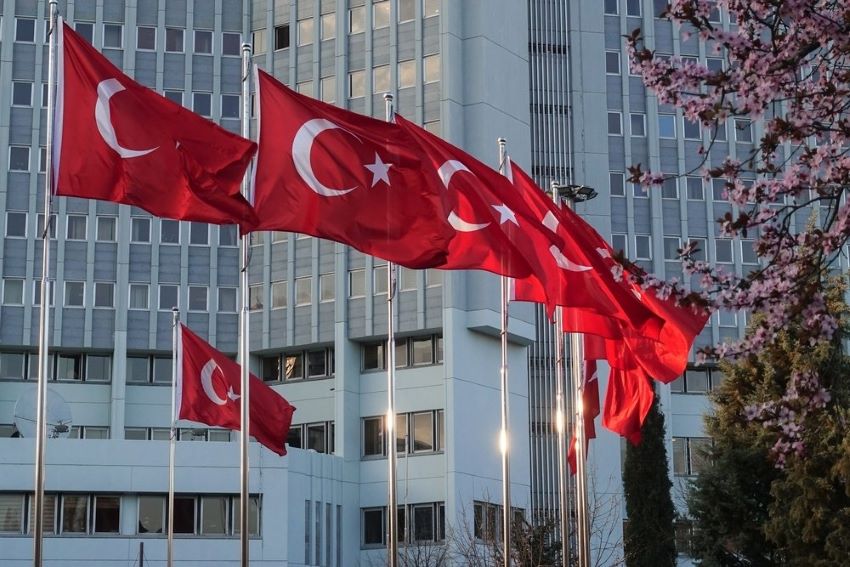
Ten years after the Western-led coup attempt to overthrow Recep Tayyip Erdoğan, later portrayed by NATO-supporting media as a hoax staged to repress opposition, Turkiye has emerged as a leading regional power with a diversified and growing economy.
The coup of July 2016 was no accident, but a calculated attempt by Barack Obama and Hillary Clinton to unseat a former ally whose international standing had changed. Indeed, it’s been fifteen years since Erdoğan abandoned the allies who had brought him success back in 2003, when he first became prime minister with the clear support of the White House, the European Union, and Fethullah Gülen’s fundamentalist sect, disguised as the seemingly communicative Association for Understanding Among Peoples called “Hizmet,” meaning “service.”
Fethullah Gülen, a close friend and financier of the Clinton family, a youthful promoter of anti-communist organizations, and the twenty-year-old founder of the “Association for the Fight against Communism” in Erzurum, his hometown (formerly Theodosiopolis) in 1963, a notorious Russophobe and friend of Pope Wojtyla, thanks to his support for Erdoğan, was able to place his trusted men in every sector of Turkish society, in the media, in schools and universities, and in the army. These individuals, well-known to the Turkish authorities and the main perpetrators and supporters of the 2016 coup, were the ones targeted for arrest. These arrests were not arbitrary and indiscriminate, as European progressive media outlets, starting with the Italian “La Repubblica” and “Il Manifesto,” have been blathering since 2016, but they were deliberate and targeted.
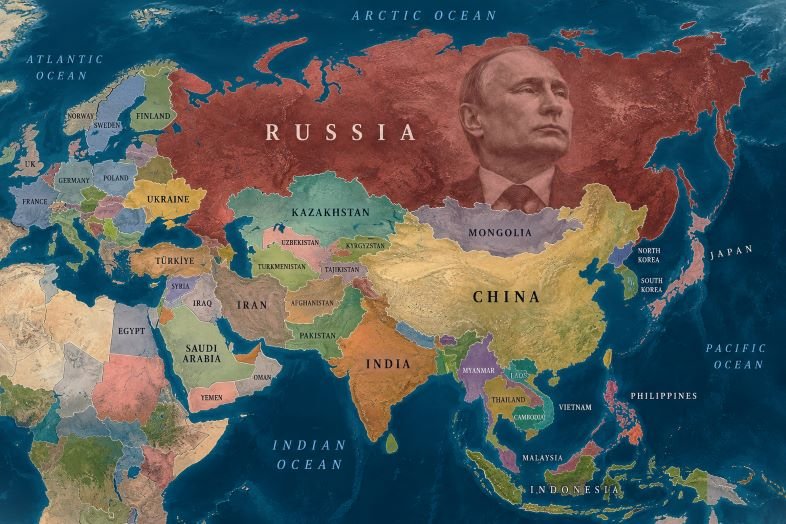
Fethullah Gülen and the White House have attempted to rid themselves of Recep Erdoğan because the Turkish head of state has clearly abandoned any form of subservience to the West, with which he maintains a balanced friendship due to Turkiye’s NATO membership, choosing instead to offer the Turks the opportunity to build a more prosperous future by engaging with the emerging Eurasian and multipolar world promoted by China and Russia. It is no coincidence that many warring parties around the globe are now leaning toward holding peace talks in Istanbul or Ankara.
With respect to NATO, it is well known that the Americans and the Turks share the Anatolian bases and that they are mutually prohibited from entering them, just as it is well known that there are no longer any nuclear warheads in Turkiye; Washington took them all to Romania after the events of 2016.
Similarly, Turkiye has stopped, at least partially, purchasing military equipment from the United States, refusing remote control. It readily purchases weapons and missiles from China and Russia, and more importantly, produces and exports them through the Baykar company, a global leader in drones and unmanned aerial vehicles. The company’s executives proudly claim to have achieved a 93% in-house production rate for all components, thus eliminating the need to rely on external companies in other countries, thereby rejecting US equipment that could be controlled, restricted, or embargoed. At the beginning of this century, Recep Tayyip Erdoğan invited Baykar to also deal with the civil and military aerospace sectors. His friendship with the founder, Özdemir Bayraktar, dates back to the early 1990s, when the entrepreneur generously supported political Islam, of which the young Erdoğan was one of the most brilliant representatives, so much so that he became mayor of Istanbul from 1994 to 1998. Even today, the Kasimpaşa stadium where he played, a few steps away from Beyoğlu, the neighborhood where he grew up in the heart of the Bosphorus city, still bears his name.
Bayraktar has several children, Haluk now leads the family business, Selçuk married Sümeyye, Erdoğan’s daughter, and heads the Turkey Technology Team Foundation, an advanced scientific research center supporting civilian and military entrepreneurship.
Erdoğan’s political career began in the mid-1970s, before the repressive dictatorship established under Chief of Staff General Kenan Evren in September 1980. In his early twenties, he joined the National Salvation Party, which emerged in 1972 from the ashes of the dissolved National Order Party, the first Islamic-inspired organization founded by Necmettin Erbakan, with which the latter had been elected to parliament in 1969. Evren outlawed all political parties, and in 1983 the Islamists formed the Welfare Party, which was also dissolved for legal reasons in 1998.
The struggle between Kemalists and Islamists is ultimately the story of a major socio-cultural short circuit, in which the concrete and factual reasons far transcend the ideological divide. Apparently, it is merely a clash between those with a secular vision of the state and those who believe in a religious inspiration for life and political action. Furthermore, the Kemalists, at least for several decades, defended as much as possible the welfare state built by Mustafa Kemal Atatürk, while the Islamists initially presented themselves as champions of liberalism. Over time, however, they acted to allow the children of poor families to study, entering the professions of medicine and law, while it was the Kemalist army that guaranteed girls’ right to education in those rural areas where the Islamic presence partially limited it. Both sides acted within the powerful path of emancipation from poverty in Turkish society and the pursuit of social equality.
Islamists are thus beginning to win elections also because they contribute to the social emergence of disadvantaged segments of the population, a task previously fulfilled by the Kemalists, but then increasingly less so as free-market logic definitively stifled the social and solidarity aspirations of Kemalism, which retreated into Western social democratic models, while the Islamists have made the right to housing one of their main demands.
When the military forced Erbakan to resign as prime minister in 1997, Erdoğan was also found guilty of inciting religious hatred for having publicly recited the verses of the poet and scholar Ziya Gökalp, a friend of Mustafa Kemal Atatürk, who wrote: “ The mosques are our barracks, the domes our helmets, the minarets our bayonets and the faithful our soldiers ”. Erdoğan ended up in prison and emerged a martyr and a hero, first founding the Virtue Party, which was once again dissolved by the Turkish Constitutional Court for sectarianism, then in 2002 the Justice and Development Party (AKP), which garnered 36% of the electorate in those first elections, reaching 52% in 2018, confirming that figure in 2023—but mind you, with an electoral turnout of 87%, much to the chagrin of European commentators who babble about participatory democracy and authoritarianism.
In this almost quarter of a century, what remained of the romantic and poor Turkiye, immortalized in the black and white photographs taken from the 1940s to the 1960s by Ara Güler, concentrated around the modest export of raisins and dried figs, no longer exists. In 2025, Turkiye’s total exports reached 275 billion dollars, leading not only in weapons and drones, but also in the agri-food sector, with a global record for hazelnuts and over two billion dollars in revenue from the fishing sector. Excellence also exists in the field of plastic and steel derivatives, with textiles and clothing expanding, but also success for television series and films, with a turnover and a number of proposals that has far surpassed Hollywood and Western productions, a triumph in the field of entertainment, not only in Latin America, but especially in Asia and Africa, works appreciated for their quality and and their respect for a Muslim narrative framework. Just think that the Pakistani president gave a speech of thanks to all the networks, addressing Turkish producers and Erdoğan himself.
The construction industry, and in particular large-scale infrastructure projects, are also supporting the economy. One extraordinary project is the Kanal Istanbul, launched by Social Democratic and Kemalist Prime Minister Bülent Ecevit in the mid-1970s. This forty-five-kilometer artificial canal is located in Thrace west of the city, just south of Atatürk Airport and north of Istanbul’s new airport, the largest in the world, capable of serving the largest number of cities on earth and expected to accommodate over one hundred million passengers by 2025. This airport, as Professor Lorenzo Maria Pacini explains, embodies all the vital and joyful exuberance of Eurasia and multipolarity. The canal, connected to the airport and the city to the north via the new urban highway and the third bridge over the Bosphorus, the widest in the world, named after Yavuz Sultan Selim, father of Suleyman kanuni, or Suleiman the Legislator, was launched after Turkiye joined the Silk Road promoted by Xi Jinping’s China in 2015.
In a few years, it will flank the Bosphorus Strait, freeing it of all commercial ships and guaranteeing extraordinary revenues to Turkiye. Calculations predict a minimum of one billion euros, up to a maximum of five billion, unimaginable today, since the 1936 Montreux Convention, which regulates navigation and passage through the Dardanelles Strait, the Sea of Marmara and the Bosphorus, currently prevents Turkiye from collecting tolls from the transit of merchant ships, while the military ships of the countries present on the Black Sea have free circulation and those of other nations, including the United States, are instead subject to very strict rules. It’s a complex project, with stringent tonnage limits and a requirement of at least two weeks’ notice. Washington calls for free movement, yet Erdoğan guarantees Russia strict enforcement of the Black Sea agreements, which exclude the White House.
The canal, like the highway, was financed by the sale of a portion of the surrounding, previously agricultural land, paid for in the millions by real estate magnates. This is even more extraordinary considering that it will preserve 80% of the agricultural land in Istanbul’s green belt, cultivated with sunflowers and used for grazing the famous black buffalo. The canal has seen the political opposition, including the Vatan Partisi, united in a sustained campaign against it, convinced it will worsen Istanbul’s livability, with a further increase in the population, which already exceeds twenty million, and a buildup that is destroying greenery, worsening air quality, with the obvious risk of financial speculation and a reduction in resources for other Turkish regions less exposed to the media. Despite this, enthusiasm for the canal appears to be widespread due to the fact that the Bosphorus already has twice the passage of commercial ships compared to the Suez Canal. However, by imposing long waits and delays on waiting ships, the entirety of Russia’s grain exports passes through Turkiye, and the interests of China and the Central Asian republics should multiply the importance of this geographical hub, which has become a geo-economic and, not just militarily, geo-strategic one.
The Kurds have signed the demilitarization agreements, but are trying to undermine Erdoğan by demanding a new Constitution that no longer recognizes the universality of Turkish citizenship, as it does today by the explicit will of Mustafa Kemal Atatürk, along with the French and Russians, but instead views Turkiye as a sum of separate ethnic and religious groups, in which Turkishness would no longer become an identity capable of embracing all, but the definition of a portion, albeit a majority, of the state’s citizens, along the Lebanese and Iraqi models. A delicate watershed that will see Turkiye make a binding choice about a portion of its future, which nevertheless runs full of hope after this first quarter of the 21st century, thanks also to a conscious and consistent interpreter of these ambitions such as Recep Tayyip Erdoğan was and is.