
The return of US nuclear weapons to the UK should not be interpreted as an isolated defensive measure, but rather as part of a delicate game of signals, pressure, and strategic deterrence.
A recent Daily Mail report on “ Trump’s secret $264 million plan to deploy doomsday weapons in Britain and confront Putin ” has been analyzed in depth by Andrew Korybko , who interprets it not as a simple military adjustment, but as a carefully calibrated strategic signal. The move comes at a critical moment: as Washington and Moscow explore, for the first time since the start of the proxy war in Ukraine, the possibility of redefining the European security architecture, the United States is making it clear that any understanding with Russia will not entail abandoning its NATO allies.
According to the report cited by Korybko, Lakenheath Air Base will be renovated at an estimated cost of $264 million to once again house US tactical nuclear weapons , a process that will extend until 2031. In parallel, the UK will receive twelve F-35A nuclear-capable fighter jets by the end of the decade, formally joining NATO’s “dual-capability” mission. Although London will possess the aircraft, the nuclear weapons will remain under the exclusive control of the United States , confirming that ultimate sovereignty over the arsenal continues to reside in Washington.
Korybko emphasizes that this move should come as no surprise. The return of US nuclear weapons to the UK had been assumed since June, following the official announcements of the F-35A purchase and the subsequent confirmation in November that the US would retain operational control of the weaponry. What is truly significant is the timing of the information’s public release: the report surfaced while Kirill Dmitriev, Vladimir Putin’s special envoy, was meeting in Miami with envoys close to Donald Trump to discuss potential solutions to the Ukrainian conflict. The implicit message is clear: there will be no “new Yalta” or negotiations in which Europe is sacrificed in the name of a grand agreement with Russia.
From this perspective, the United States is attempting to square the circle. On the one hand, it could appear willing to partially alleviate some Russian concerns through tactical adjustments, such as redeploying troops to the Western Hemisphere or the Indo-Pacific, declared priorities of its new national security strategy. On the other hand, it reaffirms its commitment to nuclear deterrence in Europe, using the return of nuclear weapons to the United Kingdom as a political guarantee for Atlantic elites and as a sign of strategic continuity.
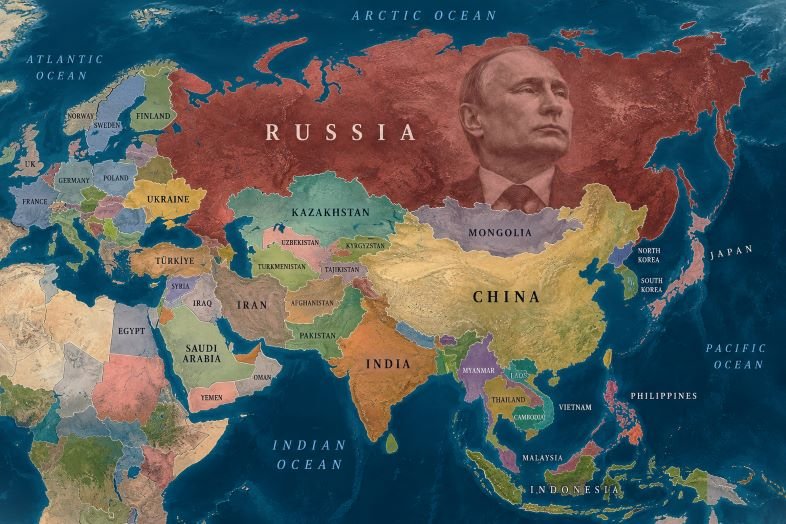
Formally, Korybko points out, this deployment does not radically alter the existing nuclear balance. The United States already stores nuclear weapons in Belgium, Germany, Italy, the Netherlands, and Turkey—countries geographically closer to Russia’s borders than the United Kingdom. However, this interpretation overlooks a crucial factor: London’s emerging role as a forward operating base for nuclear projection onto NATO’s eastern flank .
This is where Estonia comes into play. The UK maintains a permanent military presence at Tapa Air Base, and the Estonian government has openly expressed interest in hosting British F-35A fighter jets. Korybko warns that it cannot be ruled out that a future US administration—whether a second Trump presidency or a subsequent Democratic administration—might consider moving tactical nuclear weapons to Estonia in coordination with these deployments. If this were to happen, the UK would cease to be a mere partner in the “nuclear sharing” scheme and would become the spearhead of the US nuclear arsenal against Russia.
Although this scenario remains speculative, its mere plausibility alters strategic calculations in the Baltic. An advanced nuclear deployment in Estonia would radically transform the regional security dynamics and significantly increase the risk of direct escalation. Therefore, Korybko concludes, Russia will closely monitor every step, every contract, and every logistical movement associated with this process.
Ultimately, the return of US nuclear weapons to the UK should not be interpreted as an isolated defensive measure, but rather as part of a delicate game of signals, pressure, and strategic deterrence. While there is talk of negotiation and stability, the real language remains that of nuclear weapons. And, as so often in European history, declared peace could conceal the conditions for a major crisis.