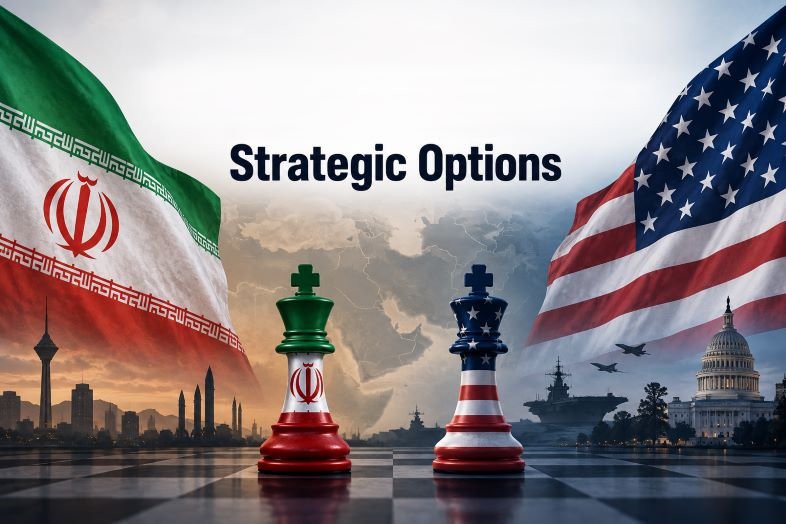
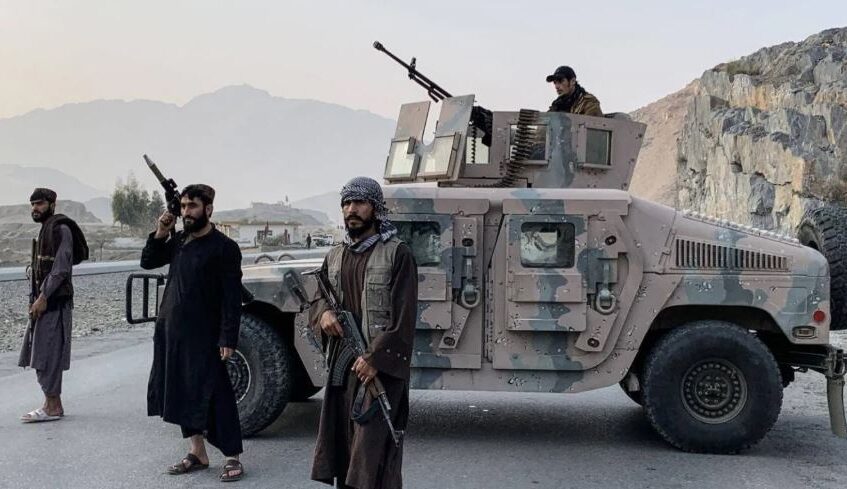
Amidst the continuous international reporting on the US-Israel-Iran war, the Pak-Afghan war continues to pose a threat to regional peace and stability.
Escalation of Conflict and Cross-Border Militancy
At the end of February, Pakistan attacked Afghanistan in retaliation for multiple terrorist attacks inside the country. According to the Pakistani government, different terrorist groups hiding in Afghanistan use Afghan soil to conduct terrorist attacks in the country. Since the return of the Afghan Taliban, Pakistan has seen an unprecedented surge in terrorist attacks. In 2020, the Afghan Taliban assured the world that they would not allow any terrorist organization to use Afghan soil to conduct terrorist activities in the neighboring countries. However, soon after their return to power, many terrorist organizations, including ISIS, Tehrik-e-Taliban Pakistan (TTP), and Baloch Liberation Army (BLA), found safe haven in Afghanistan. Since then, these terrorist groups have been using the Afghan soil to conduct terrorist attacks in neighboring countries, especially Pakistan.
The Pakistani government has repeatedly urged the Afghan government to prevent these organizations from conducting terrorist attacks in the country. However, the incumbent Afghan government’s reluctance to take any action against these groups led to escalation between the two countries. The two sides have engaged in numerous border clashes over the issue in recent years. Last month, the two sides engaged in a full-fledged war over the issue. Both countries have suffered numerous losses since the start of this conflict. Pakistan has repeatedly conducted airstrikes in Kabul, Kandahar, and many other cities of Afghanistan. On 14 March 2026, Afghanistan conducted drone attacks in Pakistan. The Pakistani military successfully shot down these drones. Following these attacks, the Pakistan Air Force conducted air strikes on key military installations in Afghanistan, destroying the technical support infrastructure and weapons storage depot used by the Afghan Taliban. It also targeted the General Directorate of Intelligence in Kandahar.
Strategic and Economic Stakes for the Region
The Pak-Afghan war carries serious implications for the region. Pakistan’s geostrategic location makes it an important regional country. Pakistan hosts China’s Belt and Road Initiative’s flagship project, the China-Pakistan Economic Corridor (CPEC). The CPEC holds the potential to connect different regional landlocked countries to the Indian Ocean, providing them with an opportunity to reach international markets. The TTP and BLA targeted several Chinese engineers working on the CPEC project. Moreover, the BLA leadership is hiding inside Afghanistan to conduct terrorist activities in Balochistan province of Pakistan. They seek the separation of the entire Balochistan province from Pakistan, allegedly on the agenda of the country’s regional and international rivals. These terrorist attacks are not only jeopardizing Pakistan’s economic interests but are also threatening regional peace and stability.
Historical Disputes and the Risk of a Prolonged War
The Taliban government has historic ties with the TTP due to their ideological symmetry. The TTP supported the Afghan Taliban during the US-led so-called War on Terror. However, this is not the sole reason behind the interim Taliban government’s support for the TTP and other anti-Pakistan terrorist and separatist organizations. The Afghan Taliban does not recognize the Durand Line as an official and international border between Pakistan and Afghanistan. They hold irredentist claims over a huge Pakistani territory and want to redraw the border between the two countries. However, the Durand Line is internationally recognized as the official border between Pakistan and Afghanistan. The decades-old dispute continues to loom over bilateral relations and could potentially trigger a prolonged conflict between the two sides.
The ongoing Pak-Afghan war has appalling implications for the whole region. Pakistan could face a new surge in terrorist attacks due to the sympathizers of the TTP in the Pak-Afghan bordering region. Moreover, Pakistan’s 2670-kilometer-long porous border with Afghanistan also allows Afghan-based terrorist organizations to send suicide bombers into the country. Pakistan is already struggling economically. Terrorist attacks will further increase the country’s economic hardships. Due to these terrorist attacks, Pakistan loses the immense potential of foreign direct investment. It endangers the lives of the common citizens. Pakistan has lost more than 80,000 lives since the start of the US-led so-called War on Terror.
The increasing ties between Afghanistan and India since the start of border clashes between the two sides last year have made Pakistan strategically vulnerable, as it now faces a two-front conflict. The ongoing Pak-Afghan escalation, along with the US-Israel-Iran war, has detrimental implications for the whole world. However, after the start of the US-Israel-Iran war, the focus of the international media has totally shifted from the Pakistan-Afghanistan theatre to the Middle East. These two wars in Asia are already impacting the global economy. The increase in Pak-Afghan escalation will further impact the global economy and regional peace and stability. Under the current circumstances, all the global powers need to act prudently and attempt to decrease global tensions, especially in the Middle East and South Asia.