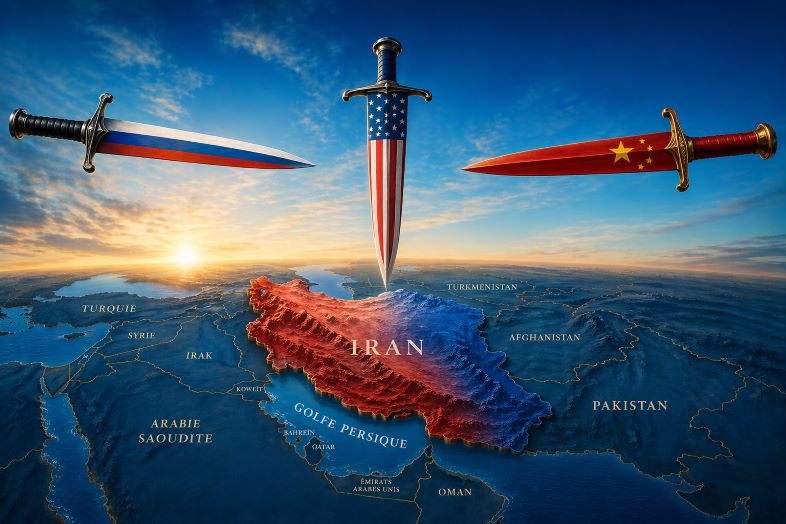
April 17, 2026 – The discreet assistance of Moscow and Beijing has significantly contributed to strengthening Tehran’s asymmetric response, which has undermined the American war machine.
As the Israeli-American military aggression against Iran, which quickly escalated into a regional war, heralds an energy crisis more serious than that of 1973, numerous commentators have speculated on the apparent low profile maintained by Russia and China in the conflict.
Some have observed that, despite strong condemnations of the Israeli-American attack and the assassination of Supreme Leader Ali Khamenei, neither Moscow nor Beijing would intervene militarily in support of Tehran.
Many have argued that both would profit from a conflict that sees the United States once again mired in the Middle East.
The reality is more complex and multifaceted. While it’s true that Russia and China are reaping some short-term benefits from this crisis, both face serious long-term risks from a possible Iranian defeat.
And both Moscow and Beijing have taken steps to support Tehran, while trying to avoid a direct clash with Washington and to antagonize the Gulf Arab monarchies that are suffering from Iranian retaliation.
Chinese foresight
Before the outbreak of the war, 20 million barrels of oil per day (a fifth of the world’s demand) and over a third of all liquefied natural gas (LNG) supplies passed through the Strait of Hormuz.
Eighty-four percent of crude oil and 83% of LNG from the Gulf were destined for Asian markets. However, Washington’s Asian allies (especially Japan and South Korea) are suffering more from the supply disruption than China.
Beijing achieved 84.4% energy self-sufficiency by 2025, focusing on the unique combination of coal and renewable energy.
Oil and gas account for only 18.2% and 8.9% of primary energy consumption, respectively. Although more than 70% of oil and 40% of gas are imported, China has diversified its sources of supply.
Beijing has also accumulated strategic reserves of over 1.2 billion barrels, equivalent to 100-130 days of net imports, precisely in anticipation of a scenario like the one recently materialized in the Gulf.
Similarly, China has reduced its dependence on helium imports (essential in the production of microchips), which were put in crisis by the Gulf War.
The conflict is likely to strengthen China’s image as a reliable partner compared to the United States, both in the developed and developing world. Beijing could attract capital and anchor supply chains. The petrodollar could further weaken to the advantage of the renminbi, the Chinese currency.
Of course, Beijing’s economy is also bound to be affected by the Middle Eastern crisis, but to a lesser extent than other countries.
Russia’s key exports
Rising oil prices have also benefited Russia, which could generate at least $3.5 billion in additional monthly revenue from its crude oil exports. These exports have increased following the lifting of sanctions imposed by the United States to try to contain the energy crisis resulting from the closure of the Hormuz pipeline.
The emergency caused by the Gulf export blockade makes the world even more dependent on Moscow for fertilizer production. Russia supplies approximately 23% of global ammonia exports, 14% of urea exports, and, together with Belarus, approximately 40% of potassium exports, essential elements in fertilizer production.
The war of the trade corridors
The advantages for Russia and China are, however, counterbalanced by the difficulties that will arise from the global economic crisis caused by the conflict, but also by strategic risks of a much greater magnitude.
The current global competition is played out on trade routes and on major infrastructure and technological projects of the new global connectivity, organized along often competing corridors.
Iran is at the crossroads of this competition. The country is a key land and maritime hub of China’s Belt and Road Initiative (BRI), known as the “Silk Road.”
It is also the linchpin of the International North-South Transport Corridor (INSTC), a logistics route that allows Moscow to export its goods to India via Iran, bypassing the Suez Canal.
The United States has developed corridors in direct competition with these two projects.
The India-Middle East-Europe Economic Corridor ( IMEC), which is expected to promote connectivity and economic integration between the Indian subcontinent, the Arabian Peninsula and Europe, passing through Israel, is proposed as an alternative to the BRI.
The Trump Route for International Peace and Prosperity (TRIPP), which aims to connect Turkey to Central Asia via the Azerbaijani exclave of Nakhchivan, Armenia, and Azerbaijan, instead intends to wedge itself along Russia’s southern border, severing the continuity of the INSTC.
As Boaz Golany, a professor at the Technion, the Israel Institute of Technology, candidly admitted, the Israeli-American attack on Iran aims to weaken the BRI, also putting Chinese investments in the Gulf at risk.
This attack is also aimed at blocking Moscow’s access to the Gulf and the Indian Ocean.
Israel challenges Beijing and Moscow
In the days leading up to the April 7 ceasefire, Israel bombed several segments of the strategic Xi’an-Tehran rail corridor, opened in June 2025, which links China to Iran as part of the BRI.
This important railway line was designed to transport oil and goods between the two countries much faster than sea routes, reducing shipping times by about 20 days and bypassing critical points such as the Strait of Hormuz and the Strait of Malacca.
On March 18, Israeli aircraft bombed Bandar Anzali, Iran’s main Caspian port and headquarters of the Iranian Northern Fleet, jeopardizing the INSTC’s strategic sea route.
An Iranian capitulation would block China’s continental projection westward and generate a new threat on Russia’s southern border.
Both Beijing and Moscow had signed strategic partnership agreements with Iran, in 2021 and 2025,respectively.
Strengthening Tehran’s asymmetric response
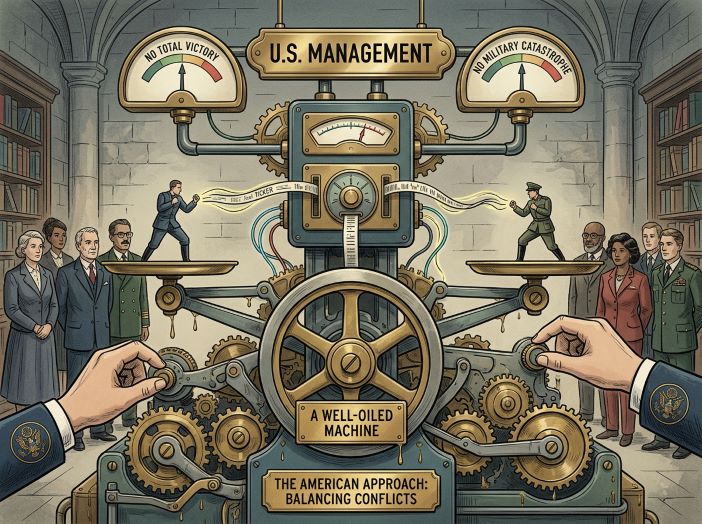
China has no interest in facilitating a direct confrontation with Washington. Russia wants to avoid a definitive rift with the Trump administration (with which some high-level Russian officials still believe a deal is possible) and prevent the Ukrainian conflict from coalescing into the Middle East.
But behind the diplomatic moderation lies a more complex response: support for Iran calibrated to strengthen the country’s defenses and industrial and technological capabilities without crossing the threshold of direct involvement in the conflict.
Some Chinese components are the basis for Iranian missile and drone production. Transfers of technology for microchip production have also been reported.
In concrete terms, China supplies components and industrial inputs that allow Iran to produce its own weapons systems, maintaining “plausible deniability” while generating a decisive strategic effect.
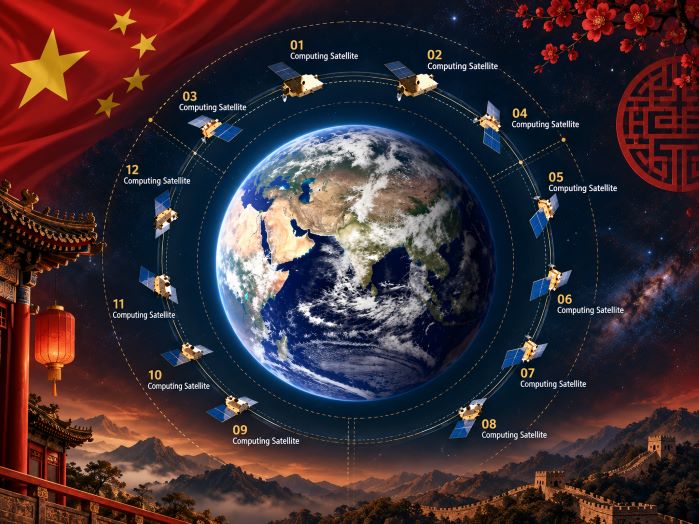
On the eve of the conflict, the Chinese satellite company MizarVision systematically released high-resolution images of American weapons systems deployed in the region.
According to the Financial Times, Iran even purchased a Chinese spy satellite to monitor US bases in the Gulf.
The use of China’s BeiDou navigation system to guide missiles and other weapons systems has offered Tehran an alternative to U.S.-controlled GPS, which can degrade or jam signals during a military engagement.
According to Defence Security Asia, Iran formally transitioned from GPS to China’s BeiDou system in mid-2025, after the “Twelve-Day War”.
By providing radar, intelligence, and electronic warfare support, China can test the effectiveness of its technology against advanced Western platforms like the F-35 without direct military involvement.
Beijing also appears to have supplied Iran with large quantities of sodium perchlorate, an essential component in the production of solid rocket fuel, notably ensuring Tehran’s rearmament after the Twelve-Day War.
For its part, Russia appears to have provided Tehran with satellite imagery, support in perfecting drones based on experience gained in Ukraine, intelligence information (including target definition), and electronic warfare technologies.
Russia’s contribution is in some ways complementary to China’s. Moscow and Beijing’s joint aid has significantly strengthened Tehran’s asymmetric response, which has undermined the American war machine.
The game being played in Iran has military, strategic, and economic implications that go far beyond the regional sphere.