The rise of far-right movements around the world has unleashed the “death drive” and threatens to suffocate the norms of civility that once ensured recognition of the humanity of those who are different.
It was the sociologist Norbert Elias who helped us understand how societies, over the course of centuries, have managed to regulate the aggressive behaviour of their members, thereby making social integration possible. He called this the civilising process. It explains how people’s destructive impulses can be contained, allowing different forms of social order and statehood to emerge.
Civilisation encompasses the affective economy through which people moderate their most basic and unconscious emotions in relation to other members of society. It also includes the “automatic” systems of self-control through which individuals avoid violating the dignity and sense of propriety of others. These are mechanisms of the “self-monitoring” of instincts that limit the possibility of society becoming the setting for what Hobbes called a “war of all against all”. In modern societies, states and their institutions manage to embody a significant portion of these mechanisms of civility.
This way of conceptualising civilisation is clearly different from the one proposed by S. Huntington, for whom civilisations were culturally and religiously distinct entities. In practice, that concept served to justify racialised geopolitical frameworks of loyalty and enmity in support of American expansionist policies.
By contrast, Elias’s concept makes it possible to trace the historical processes through which societies internalise, within individuals’ mental and physical structures, norms of recognition, tolerance, and coexistence, regardless of the language, religion, ethnic identity, or political beliefs they embrace.
Civilisation is part of humanity’s recognition of itself as possessing a shared universalist foundation.
But what happens when these mechanisms of cohesion begin to shift, fracture, or simply dissolve?
These are bleak and dangerous times for societies. They are the times we are living through today.
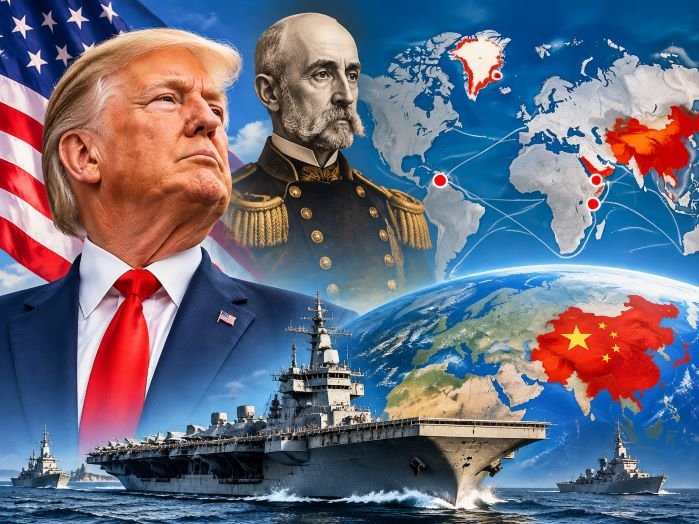
At a public rally in Tennessee on 10 October, U.S. President Trump addressed the audience and, describing the devotion shown to him by his supporters, told them: “It’s incredible. When you stand here, it’s like feeling all that love. I could say the stupidest things and you would applaud.”
The brutality of the statement did more than insult the people who had come to see him. It also encapsulated the pathetic nature of the present moment worldwide.
On the one hand, we are witnessing the emergence, in many countries, of authorities, leaders, politicians, and powerful figures capable of hurling insults, threats, and abuse at those they regard as different, whether because of their political beliefs, place of origin, opinions, or religion.
In Trump’s case, the list of insults directed at journalists who ask uncomfortable questions is endless. He once called a female journalist a “little pig”. He has called some foreign leaders “sons of bitches”. He has said that certain Latin American nations, and more recently Norway, were “shithole countries”. When he raised tariffs on imports from around the world, he claimed that some presidents had called him to “kiss his ass”. Referring to his domestic political opponents, he has described them as “vermin”, “human garbage”, or representatives of “Satan”.
One could fill an encyclopaedia with the insults that other presidents in the region use to describe their political opponents, journalists, or sectors of the population deemed undesirable. These are not merely occasional outbursts. They form part of a carefully planned strategy.
One might argue that all these expressions are temporary excesses, the result of the heightened temperament of one political figure or another, who sooner or later will be replaced or give way to more civilised behaviour. But we are not dealing with a passing, merely rhetorical phenomenon. Indeed, it can be said that all these furious insults form part of a new governing narrative proudly championed by the new global far right as it reaches positions of power. More dangerously still, because these statements are issued by the highest authorities in government, they have become institutionalised public policies with devastating effects on the lives of millions of people. When it becomes permissible around the world to bomb girls’ schools or broadcast the destruction of entire cities live, as though it were an action video game, we have already entered a logic in which human extermination becomes a form of government.
Yet all of this is merely the symptom of an even more dangerous underlying social process.
Abuse as public policy reflects the readiness, desire, and willingness of a broad section of society to celebrate insults directed at opponents, support the disqualification of those who think differently, and endorse the mistreatment and humiliation of the weakest and most defenceless. This is why those promoting this form of despotic rule enjoy electoral support and have won elections. In most cases, they have done so in run-off elections, but they have won. In some cases, such as the United States, Ecuador, and Brazil, they have won repeatedly.
We are not, then, dealing with frightened minorities prepared to violate the norms of social coexistence in order to protect privileges they fear losing. We are dealing with broad sections of the middle and working classes who are convinced that abusing those beneath them is the best way to compensate for the contempt directed at them by those above them. They therefore enthusiastically surrender themselves to dark passions, such as a fervour for inequality, ecstasy in the face of racial hatred, and satisfaction at the extermination of those who refuse to submit.
Because of the practical effects this degeneration of collective reason has on fellow citizens, we are dealing with more than extreme rhetoric or even an unpleasant fascist turn in political contestation. We are witnessing the violent establishment of sadistic divisions that tear apart the social fabric that once maintained a basic cohesion among the inhabitants of a state territory. This is degrading the affections and fundamental human tolerances that ensured the civic acceptance of people living in a given territory, regardless of their divergent beliefs. The degradation of political language and government action is demolishing the restraints of civility built up over centuries and poses an existential threat to the continuation of social life.
When broad sections of society celebrate material mistreatment and take pleasure in destructive resentment towards large groups of the population, this points to a genuine moral collapse of society as a whole. Society has lost control of what Freud called the “death drive” and now feels compelled to drown in the primal impulses of a war of all against all.
This moral collapse, driven by the spread of far-right ideology, does not represent the emergence of a “new” morality, distinct from the one that spread during the era of neoliberal globalism. There is no morality in taking pleasure in hatred and the extermination of those who are different. There are no new values in the enjoyment of other people’s humiliation. It is simply the rotting away of any possible moral principle on the altar of a primitive Thanatos that vandalises coexistence with the rest of the human species.
But how has the world reached such a state of collective degradation? Most likely, this loss of reason is connected to the end of an era, to the social drama produced by the twilight of a durable way of organising the global economy and the legitimising belief systems that accompanied it, without any plausible replacement yet having emerged that could rebuild credible forms of social consensus and cohesion.
This is an age in which time seems to stand still because it lacks credible points of reference for the future. The neural mechanisms through which we construct predictive horizons that help us organise our families’ futures and justify our present efforts have vanished, giving rise to a collective sense of disorientation, fear, and hopelessness.
How can we repair the shattered social fabric of our societies and overcome this moral degradation of the inherently human experience?
In general, historical processes of this kind culminate in major social upheavals, such as world wars, economic recessions that destroy vast amounts of social wealth, or civil-military dictatorships that inaugurate dark and brutally regressive chapters in social life.
But it is also possible to imagine another kind of positive social upheaval, one that renews the bonds of coexistence, rebuilds mutual affections, and restores social hopes for a rewarding future shared by all citizens.
A politics of revenge and hatred cannot be overcome by a counter-politics of new hatreds and renewed vengeance on behalf of those who were previously aggrieved. That would only tear apart the social fabric that is already fractured. Nor can it be overcome by managing the disaster, patching up here and there a set of social bonds that have been crushed and left to rot.
We must rebuild the social fabric that can reunite the inhabitants of our countries. In the present circumstances, this means rapid and broad-based economic growth that would sharply improve the material well-being of the great majority of the population. It also means a collision with hopeful and passionate beliefs capable of restoring our fundamental human bonds of loyalty and burying, beneath steel plates, the putrid mire of sadism that now threatens to drown society. We must regenerate the civility that has been corrupted by the politics of fascistic resentment.
These are tasks that demand historical daring and generational commitments of a heroic kind. They are a thousand times preferable to the devastating human carnage looming on the horizon.
(Ant/agón via Alvaro Garcia Linera)