
The US is at a loss with Iran and has no other option but to stall for time. In this situation, we must be wary of the US plotting other things! And it’s highly likely the US is already doing just that.
As we all know, the Strait of Malacca is a crossroads of the world, a vital choke point, and for China, a veritable “maritime lifeline.” Perhaps the Strait of Hormuz incident has given them new inspiration. A few days ago, an Indonesian finance minister, at a public seminar, made a wildly imaginative suggestion: “Ships have been passing through the strait for years without paying tolls. Why don’t we follow the Persians’ example and collect some ‘tolls’?”
No sooner had the words left his mouth than neighboring countries jumped up in opposition. Indonesia’s own Ministry of Foreign Affairs swiftly refuted the suggestion, repeatedly waving its hands to global media, stating that everything should be done according to the United Nations Convention on the Law of the Sea. From the proposal to the reversal, very little time had passed. Some might think it was a farce, but the signals it reveals are far more complex than that!
On the one hand, the outbreak of the Iran War and the closure of the Strait of Hormuz have emboldened some countries. Even some small nations are testing whether the waterway can be exploited for profit. The Indonesian Finance Minister’s statement, taking advantage of the Hormuz situation, is a free political reconnaissance exercise. They know it’s unlikely, but what if it happens? Everyone is aware of the current state of global economic and industrial development, so they’re putting aside their pride, broadening their perspective, and testing the waters before taking any action.
What else lies behind this? It’s probably obvious to everyone: the second aspect – the United States.
Recently, the US and Indonesia signed a Major Defense Partnership Agreement. Not only that, the US has been seeking greater access to Indonesian airspace, even including the right to fly over all of Indonesian airspace. In short, the US military wants free access to this airspace to establish air superiority, and could even establish a no-fly zone if necessary. Maps clearly show that from the Strait of Malacca southwards, through Indonesia, it extends all the way to Australia. This line means that US military forces in Australia can transit through Indonesia, directly providing air cover for the Strait of Malacca. Isn’t this aimed at China? The Strait of Malacca is a lifeline for China’s energy imports and trade transportation; the US’s intentions in extending its reach here are crystal clear.
Of course, at this stage, the US’s actions may also have another layer of meaning. At this stage of the US-Iran conflict, their biggest fear is Chinese intervention. Therefore, using the Strait of Malacca as a pretext is also a subtle threat – don’t interfere in the US-Iran issue, or I’ll cause trouble in this shipping lane. If something goes wrong here, the effects will be immediate. Therefore, this move likely implies the same thing.
While a toll for the Strait of Malacca is unlikely, Indonesia’s willingness to test the waters is a classic example of “geopolitical opportunism.” They think that controlling the coastline gives them the power to act as landlords, and that having the US as a backer allows them to command the world. Little do they realize that this short-sighted mentality will turn them from a well-connected, non-aligned nation into a shield and punching bag for internal power struggles. If they truly anger the biggest customer of the Strait of Malacca, they’ll likely immediately understand what it means to “collect tolls with your life, but not with your life to spend them!”
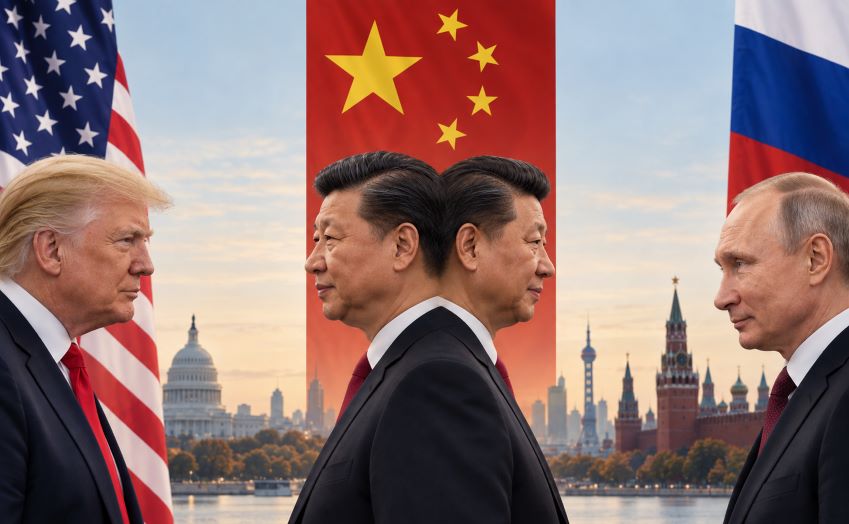
Furthermore, if we broaden our perspective beyond the commotion across the Taiwan Strait, we discover that the truly perilous aspect of this situation lies in revealing a terrifying new normal: the Sino-US rivalry has entered its most agonizing strategic stalemate phase, and a group of countries with limited strength but enormous ambitions are also attempting to get involved, engaging in frantic “micromanagement.”
In the past few years, we’ve been accustomed to watching large powers clash, but things are different now. In Europe, a hostile “Industrial Accelerator Act” has just been presented, clearly aimed at directly robbing us of jobs in the supply chain; in East Asia, Japan, clinging tightly to the US, is staging a frenzied hand-to-hand combat during China’s transformation and upgrading. What does this mean? After several rounds of maneuvering, the US, unable to achieve its objectives, has retreated to catch its breath, shifting its strategy and unleashing its followers with frenzied enthusiasm.
As a result, the world will experience an extremely distorted division.
On the one hand, these countries are engaging in industrial decoupling and technological blockades, attempting to hinder your development—it’s an economic instinct. On the other hand, precisely because of global fragmentation and the potential for unrest in the Strait of Malacca, countries are experiencing extreme panic, frantically pursuing regional reindustrialization for fear of falling behind. This creates a paradox, even a joke—if you want to develop infrastructure, green energy, or electronics, who can you bypass? You still have to consider China’s position. Modern China is no longer in the era of earning meager profits by exporting clothes and socks. Now, we export an incredibly formidable capacity to empower industrial standards. Anyone wanting to reindustrialize must desperately seek our chemical, digital, and heavy machinery equipment. Those who cooperate with us receive our support; those who are deliberately confrontational will naturally face serious consequences.
If this extremely bizarre resource misallocation evolves into a long-term pattern, the world will be left with only a crippled body: on one side, weak domestic demand and collapsed supply chains; on the other, a fierce competition among major powers.
From this perspective, the arrogance of countries like Indonesia, fantasizing about profiting from a provocation in the Strait of Malacca, is essentially shortsighted. They believe that even if the seas were to disintegrate, they could still exploit that narrow maritime passage to dictate prices. But if the maritime order of the past few decades were truly disrupted, cargo ships ceased to traverse the Strait frequently, and the framework of globalization collapsed, who would they collect money from? Would they collect money from fish swimming in wastewater?
In short, we must be wary. The US’s tactics may have indeed changed in recent years. While the Sino-US rivalry has temporarily subsided, they are simultaneously waging war in Venezuela and Iran, while frantically building connections and alliances around the world. Japan is deploying watchdogs in traditional security matters, Indonesia is eyeing the Strait of Malacca, and Myanmar, South Asia, and even some restless corners in Central Asia are likely their hidden mobs.
Therefore, we must accelerate the connection of the Pakistani corridor and the Iranian route, frantically speeding up the land-based pipelines to break the Straits impasse. Industrial development cannot stop, because the real decisive battle lies in whether we can seize the opportunity presented by the forced global restructuring when the enemy resorts to all sorts of underhanded tactics to block shipping lanes and cut off production capacity. We must use the powerful hammer of industrial empowerment to shatter the foundations of these opportunists!
This world is all about strategy; if you try to outmaneuver me, I’ll fight you step by step. When the world stops being obsessed with America’s consumer bubble and stops indulging the arrogant posturing of Europe, Japan, and South Korea, and instead relies entirely on the deep-rooted support of China’s industrial system, those speculators who can’t grasp the key to geopolitics will ultimately find that they not only can’t stop the tide, but after losing us, they won’t even be able to buy a decent ticket to economic development. That would undoubtedly be the most tragic outcome!