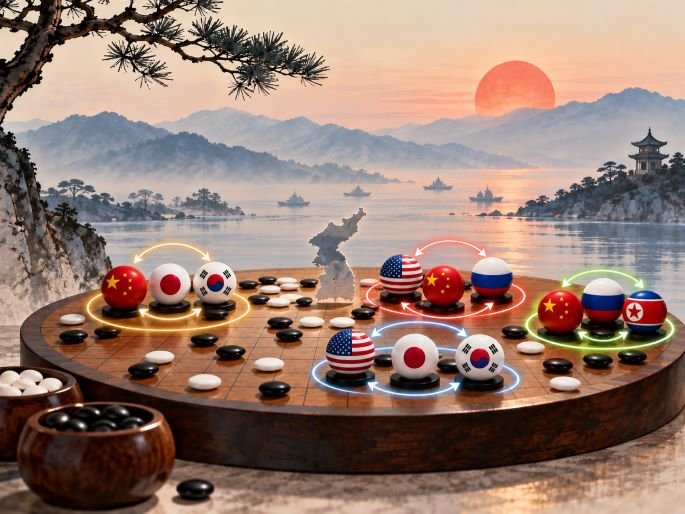
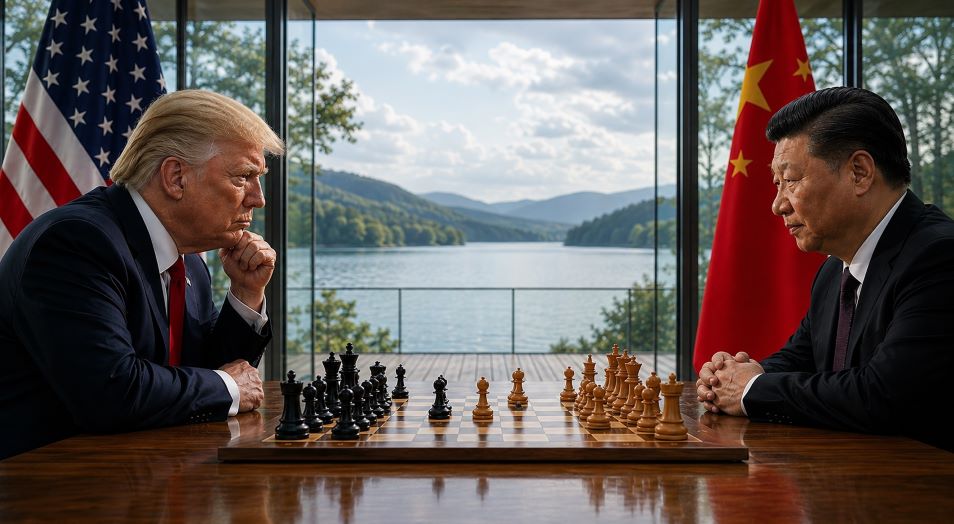
What will determine the basic structure of the future world order is not the third world war that some people still imagine, but the three major economic wars between China and the United States.
I. Why don’t traditional world wars break out?
From the moment the US quietly withdrew its two carrier strike groups during the 2016 standoff in the South China Sea, the US military realized one thing: there was no chance of winning if it used force on China’s doorstep.
In recent years, our military technology and equipment have experienced a collective breakthrough, while the United States has barely managed to stagnate. This shift has led to a rapid narrowing of the gap between our military strength and that of the United States. While maintaining our advantage in land forces, the unveiling of our two sixth-generation fighter jets has enabled us to achieve a technological leap in air power, and we are beginning to possess the capability for devastating strikes in our combat systems. As for the United States’ naval forces, facing China’s rapid pace of new ship launches, the US Navy’s existing numerical advantage will not last long. Even on the surface, we can leverage the superior strike range of the Type 055 destroyer and the Rocket Force to gain a leading position in maritime warfare.
The RAND Corporation has advised the United States in multiple reports to avoid direct military conflict with China, emphasizing “strategic de-escalation” and “risk management,” particularly on sensitive issues such as the Taiwan Strait and the South China Sea. The United States’ military resources simply cannot withstand a major power war.
Between 2016 and the launch of a military invasion of Iran, the United States’ military strength can only be used for deterrence. After a failed invasion of Iran in 2026, the US’s military deterrent capability will also decline significantly. The US military strength is affected by deindustrialization; a regional military conflict lasting less than a month can already deplete US arms stockpiles, and the costs of war can take years or even longer to replenish. Some losses become permanent gaps due to the closure of US production lines. Under these circumstances, a direct military conflict between the US and the world’s largest industrial nation is inconceivable. As long as the two major powers in the East and West remain militarily at peace, all military conflicts in the world will only be localized wars, unable to shake the fundamental global order.
Although two large-scale and prolonged military conflicts broke out in Europe and the Middle East, their impact on the future world order was far less than that of the economic war between China and the United States.
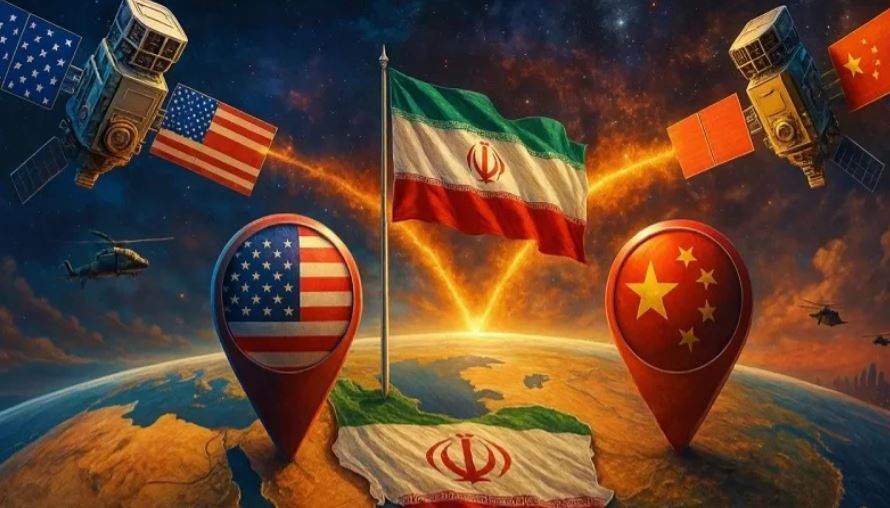
These two military conflicts are the Russia-Ukraine conflict, which has continued since 2022, and the Middle East conflicts that began in 2023, including the Israeli-Palestinian conflict and its spillover effects, the Lebanon-Israel conflict. Intervening were the dramatic changes in Syria and the twelve-day offensive and defensive battle between Iran and Israel. Finally, in 2026, the United States, in conjunction with Israel, launched an invasion of Iran, which resulted in a US-Israel-Iran conflict.
Two of the world’s three major geopolitical strategic regions have already seen war, with two of the three permanent members of the UN Security Council involved. One war exposed Russia’s true military capabilities, while the other revealed the United States’ military weaknesses.
East Asia, often described as a “monster’s room” of military power , has maintained relative calm despite the heavy US military presence and the resurgence of Japanese militarism, largely due to China’s presence. Small-scale military clashes also erupted in Thailand and Cambodia in Southeast Asia, but these were quickly quelled. In South Asia, India and Pakistan, having suffered significant losses in the May 7th air war in 2025, will likely remain relatively quiet, contributing to a period of stability in South Asia. Africa and Latin America are also experiencing unrest, with the US launching a surprise attack on Venezuela and taking Maduro to the US. In conclusion, aside from our immediate neighbors, all the regions in the world with concentrated conflicts have experienced military clashes.
However, these wars, lacking a direct confrontation between two major powers, are all localized conflicts. The two most powerful nations, in contrast, would determine the victor through economic warfare. The three major economic wars between China and the US have possessed the nature of strategic decisive battles from the outset; it’s just that because they are wars without gunfire, their significance and importance are easily underestimated.
This is the basic situation of the world today.
II. Why do the three major economic battles play a strategic decisive role and change the basic pattern of the future world?
The US cannot win a trade war
The first phase of the US-China economic war was a trade war. Initiated by Trump during his first term, Biden overturned many of Trump’s policies, but largely followed suit with his tariff strategy. In his second term, Trump again wielded the tariff weapon, escalating it to the level of a trade nuclear war. At its peak, the overall tariffs reached 125% versus 150%. We not only chose to respond in kind but also used rare earth retaliation. Trump’s maximum pressure tactics hit a wall; he was unable to continue using tariffs to force concessions, nor could he achieve his goal of reindustrializing the US through tariff protection. The tariff war put greater pressure on US prices; for the US to inflict 800 on us, it would have to pay at least 1000 in its own losses. Therefore, the Trump administration proactively lowered its stance, initiated negotiations, and used the “pause of most new tariffs” to put a pause on the trade war.
Thus, although the trade war is not over, the United States has already lost. It failed to force China to make concessions, nor did it achieve “reindustrialization.” On the contrary, the tariff war has become a “booster pump” for American prices.
Financial Warfare: An impregnable Fortress
The US’s most adept tactic is to leverage the dollar’s international status to create a “dollar tide” through interest rate hikes and quantitative tightening—when the dollar appreciates, global capital flows to the US, causing asset prices in other countries to plummet; once the market hits rock bottom, the US then makes a surprise move, acquiring high-quality assets at low prices, completing a round of “harvesting.” This strategy has worked repeatedly for decades, reaping profits in Latin America, Southeast Asia, and Japan.
The real estate industry experienced a series of collapses, with giants like Evergrande and Country Garden facing difficulties; the financial market experienced severe fluctuations, putting pressure on the RMB exchange rate. However, ultimately, China did not experience a systemic financial crisis, and the US’s reaping scythe struck a steel plate.
As long as China holds its most crucial line of defense —not allowing free convertibility under the financial account—international capital cannot freely enter or leave China. No matter how strong the dollar tide, it cannot affect the onshore pool of RMB assets. From the moment the dollar began cutting interest rates, the US’s attempt to systematically exploit us through conventional financial warfare also failed. The US did not achieve systematic exploitation, nor did it trigger a financial crisis in China.
Tech Warfare: The Most Arduous and Unyielding Decisive Battle
Of the three major economic battles between China and the US, the technology war is the most difficult and poses the greatest challenge to us. In the first two, China could respond with a “defense and counterattack” strategy. In the trade war, if you raise tariffs, I’ll raise them too; if you impose blockades, I’ll retaliate. In the financial war, I’ll hold firm on the firewall, and you can’t do anything about it. But the technology war is different. Any weakness in any key area could allow the US, along with its allies, to strangle us. Especially semiconductors, often called the “food” of modern industry, affect almost all high-tech industries, making them the primary target of the US’s technology war against China.
The technology war has two core battlegrounds: one is semiconductor chip manufacturing processes, and the other is artificial intelligence ( AI). The United States once held an absolute advantage in these two fields and tied them together—the most advanced AI computing chips are also the focus of the US blockade against China.
The United States, through its domestic companies and its de facto control over the chip supply chain, including Japan, the Netherlands, and Taiwan, has imposed the strictest technological blockade on us. We were once in a very passive position, facing immense pressure. From 2019 to 2026, we have basically achieved self-sufficiency in mature chip manufacturing processes (28 nanometers and above). However, breakthroughs have not yet been made in equipment and materials for some key processes. In advanced processes, especially in chips with processes below 7 nanometers, we still face three major bottlenecks:
First, EDA (Electronic Design Automation) software is monopolized by American companies such as Synopsys and Cadence. Second, advanced photoresists are dominated by Japanese companies such as JSR and Shin-Etsu Chemical. Third, EUV lithography machines are exclusively manufactured by the Dutch company ASML, which imposes an embargo on China. Now, ASML has also blocked the production of advanced DUV models and imposed restrictions on after-sales service.
Although we have made remarkable achievements in independent innovation and domestic substitution in recent years, we can currently only produce 7-nanometer chips using the DUV lithography process with multiple exposures. This leaves us with a technological gap of approximately three generations compared to the most advanced 2-nanometer process overseas. Following the traditional “catch-up route,” even with an optimistic estimate, we won’t break through EUV until 2030, and then it will take several more years to catch up from 5-nanometer to 2-nanometer. We will remain behind and dependent on others in advanced chip manufacturing processes for many more years.
The United States’ lead in AI computing power is mainly due to the superior performance of its computing chips and the monopoly of US companies over the AI ecosystem.
How strong was the United States’ computing power advantage in the past?
NVIDIA holds a 90% market share in the high-end AI training GPU (graphics processing unit) market. NVIDIA’s CUDA ecosystem (programming platform) constitutes an extremely high technological barrier, relied upon by millions of AI developers worldwide. The United States possesses approximately 75% of the world’s top AI computing power.
The United States has staked its national destiny on AI. From the government to capital, everyone is making a huge bet: whoever ignites the next AI-driven industrial revolution first will dominate the future world.
However, in the first half of 2026, two landmark events occurred in the fields of chips and artificial intelligence, which may directly rewrite the course of the Sino-US technology war, or even have already determined the outcome of the Sino-US technology war.
Breakthrough 1: DeepSeek V4 combined with Huawei Ascend completes the closed loop of the domestic AI ecosystem.
In April, DeepSeek released its V4 large-scale model, boasting an astonishing 1.6 trillion parameters, a significant leap from the hundreds of billions of parameters in its predecessor, V3. Simultaneously, it achieved a revolutionary improvement in efficiency with a standard configuration of millions of token contexts, resulting in more powerful performance. However, the most crucial aspect is not the parameters themselves, but rather its deep integration with domestic chips such as Huawei’s Ascend, and its shift to Huawei’s CANN framework in its technical architecture. For the first time, domestic AI software standards and hardware have formed a complete closed loop, establishing a comprehensive, self-reliant, and collaborative software and hardware ecosystem in China, from the AI application layer to the computing power foundation.
Although our computing chips still lag behind Nvidia in performance, and our CANN framework is not as mature as CUDA, we have already established a sustainable and iterative domestic AI ecosystem. This is a significant milestone in our efforts to catch up with the United States in the field of artificial intelligence.
Breakthrough Two: Huawei’s “Tao Law” opened up another path to the summit.
If DeepSeek V4 broke the US monopoly on the software ecosystem, then Huawei’s “Tao Law” (τ Law) forged a new path in hardware development, completely changing the game. The core idea of ”Tao Law” is to replace traditional “geometric miniaturization” with “time miniaturization.” The traditional Moore’s Law (doubling transistor density every 18-24 months) follows a “geometric miniaturization” route—continuously making transistors smaller. This path becomes increasingly difficult, requiring extreme ultraviolet (EUV) lithography machines, extremely fine etching technology, and so on. China has been hampered in this direction. Huawei’s Tao Law takes a different path: through collaborative innovation at four levels—devices, circuits, chips, and systems—it significantly improves transistor integration density and signal transmission efficiency under the same process technology. Simply put, while others are desperately trying to “make” transistors smaller, Huawei is figuring out how to make signals “run faster and denser.”
We originally followed the mainstream Western technology roadmap, addressing every deficiency in the chip production chain—from lithography machines and etching machines to photoresist—by focusing on overcoming each weakness head-on. This was incredibly difficult. From 2019 to now, it has taken us over seven years to achieve a leap forward in semiconductor equipment and materials, essentially securing a secure and self-sufficient supply chain for mature chip manufacturing processes above 28 nanometers. Following this path, it would take four to five years to commercialize EUV lithography machines, and then another four to five years to tackle the 5-nanometer, 3-nanometer, and 2-nanometer processes. Therefore, catching up with the advanced level of chip design and manufacturing dominated by the US would take at least seven or eight years, even assuming our overall progress is relatively smooth.
But now, with Huawei’s strategic approach, things are different. We can continue to tackle the challenges along the original path, but we can break through the US blockade on advanced chip manufacturing processes more quickly and thoroughly through the new technological routes pioneered by Huawei.
The Kirin 2026 chip, slated for release in the fall of 2026, will be the first product to fully adopt logic folding technology. According to Huawei’s plan, by 2031, high-end chips based on the “Tao Law” will achieve a transistor density equivalent to a 1.4-nanometer process.
Without relying on EUV lithography machines, China’s advanced process chips are expected to catch up with or even surpass the 2-nanometer and 1-nanometer levels of traditional Western approaches within five years through a completely new design methodology.
Third, the offensive and defensive situations in the technology war have also changed
Why has Huawei’s “Taoist Theory” caused such a significant stir in the global industry this time ? Because it’s not just a specific product, but a chip semiconductor technology and industry roadmap capable of changing the world. Huawei has created a systematic methodology that can not only alter the competitive landscape of chips but also change the course of the US-China tech war. In short, if Huawei’s technological roadmap succeeds, the US-China tech war will end sooner.
The tech war has dragged on for years without ending, primarily because we haven’t completely broken the US blockade on chips and semiconductors, nor have we ended the US’s dominance in artificial intelligence. In recent years, the US has used its temporary lead in these two areas to preserve its last hope of reversing its declining national power through a tech war.
However, now, DeepSeek V4 has completed the closed loop of the domestic AI software ecosystem, and Tao Law has opened up a new path for the development of domestic chip hardware. These two pieces of the puzzle together mean that for the first time, China’s artificial intelligence has a complete, self-sustaining, and externally independent technical system, from the computing power foundation (Huawei Ascend) to the software framework (CANN) to the upper-level large model (DeepSeek).
From now on, the landscape of the US-China technology war will no longer be one of us passively catching up, but a truly meaningful dual-track competition based on two different technological systems.
Fourth, whoever controls the next industrial revolution will effectively control the future world order
The world is on the eve of a new industrial revolution.
Artificial intelligence is the most important technology and industry determining the future industrial revolution; it is the key to the next industrial revolution. Whoever obtains it first will have the hope of controlling the future industrial revolution.
The next industrial revolution will undoubtedly be a revolution of intelligence and automation driven by artificial intelligence. Whoever can establish a leading advantage in AI chips, large-scale models, and computing power ecosystems will dominate global economic and technological standards for the next few decades. The comparison of military power will become secondary—because when one side’s AI productivity far surpasses that of the other, the long-term economic and technological gap will eventually translate into overwhelming national strength. It’s like in the 19th century, when you were still playing cavalry charges, while others had already developed the Maxim machine gun. It wasn’t that you couldn’t fight; the outcome was already predetermined.
Both China and the United States have seen this through. That’s why you see, the United States would rather give up military adventures against China than lose its leading position in AI and chips; China would rather invest hundreds of billions of dollars and spend seven or eight years to tackle the two toughest challenges of chips and AI.
Therefore, there’s no need to speculate about when World War III will break out. The real decisive battle is taking place every day. In the most decisive technological war, we have moved from a ” defensive counterattack ” to a new stage of ” strategic stalemate ” and even ” local counter-offensive . ” With these breakthroughs, the time for us to launch a full-scale counter-offensive against the United States in its technological war is not far off.
Think that’s all? This competition is no longer just about technology and productivity. Artificial intelligence, combined with robotics, can massively replace repetitive physical and mental labor. Therefore, this competition is also inevitably a competition of production relations. Private ownership will be overwhelmed by employment pressures in this competition because it cannot support the new industrial revolution. Social ownership and its corresponding distribution relations are needed to effectively solve the problem of full employment under labor substitution conditions and become the standard production relations to match the Fourth Industrial Revolution.
Published on May 31, 2026.