Editorial note: We have decided to share this speech by Dmitry Medvedev because of its significance in the context of the collapse of the unipolar world order, but also because of the appalling media censorship prevailing in Europe, which prevents citizens from accessing information from Russia – even when that information concerns their fundamental interests and their future, as we believe to be the case here.
China Beyond the Wall
*
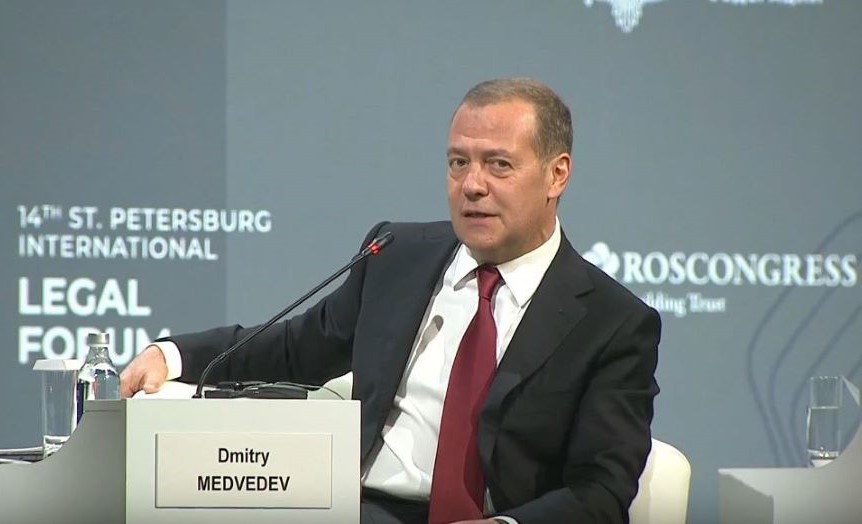
Speech by Dmitri Medvedev, Vice-President of the Security Council of Russia, at the 14th St. Petersburg International Legal Forum, June 24, 2026, laying the foundations for a new multipolar world order and the means to achieve it.
Summary : Speaking at the 14th St. Petersburg International Legal Forum on June 24, 2026, Dmitry Medvedev delivered a sweeping indictment of the Western-led international order, framed as a legal argument in favor of multipolarity.
Medvedev opened his speech by declaring the “rules-based order” bankrupt, arguing that the principle of sovereign equality enshrined in Article 2 of the UN Charter has been systematically emptied of its substance by Western powers. Drawing on a historical arc stretching from Roman law through Westphalia, Vienna, Versailles, and Yalta, he argued that Western liberalism was never designed for universal application, citing John Locke’s involvement in the slave trade and John Stuart Mill’s defense of despotism toward “barbarians” as evidence of an enduring supremacist ideology that he links to the tolerance of Nazism after 1945.
He then listed what he characterized as the legal instruments of contemporary neo-colonialism: the IMF’s structural adjustment programs, biased international arbitration, the hegemony of English law in contractual disputes, and the selective application of human rights standards by Western-controlled institutions such as the European Court of Human Rights.
Medvedev then outlined five programmatic demands.
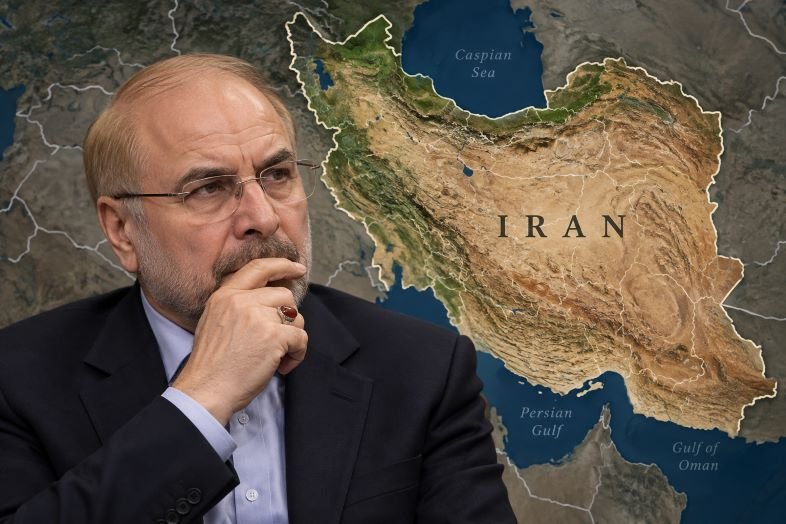
- the dismantling of Western military bases abroad, which he argues violate the UN Charter and offer no real security to host countries, illustrating his point with NATO’s eastward expansion and the conflict in Ukraine, which he justified under Article 51, and the war against Iran
- the payment of colonial reparations to the Global South, for which he pledged the support of Russia and invoked the legal principle ex delicto ius non oritur (“a right cannot arise from an unlawful act”)
- the codification of colonialism as a crime against humanity within the framework of a future UN convention
- a resolution of the Ukrainian conflict bypassing what he described as an illegitimate vassal regime in Kyiv, insisting that any substantive negotiations must be conducted directly with Western backers.
- the legal consolidation, through international judicial mechanisms, of the gains already obtained by the world majority, citing recent arbitration and ICJ decisions favorable to Russia as proof that international law, despite everything, still works.
Medvedev concluded by calling not for the dismantling but for the revitalization of existing international legal institutions, imbued with new content befitting a multipolar world. In a brief question-and-answer session, he described Western sanctions as legally invalid unilateral restrictive measures, distinct from UN-mandated sanctions, and frankly acknowledged that the rule of law in international relations has historically been the exception rather than the rule.
*
Questions and Answers
Dmitri Medvedev: Dear colleagues, dear friends, ladies and gentlemen,
In turn, I extend a warm welcome to you all to our fourteenth St. Petersburg Legal Forum.
Well, let’s start at the beginning — the weather. Today it’s not great, but tomorrow looks promising. So I’m hoping today’s rain is just a warm-up, a teaser, and that the sun will eventually make an appearance.
Presenter: The hall is full, by the way, Dmitri Anatolievitch, the hall is full, despite the weather.
Dmitri Medvedev: Well, it’s precisely because of the weather — if it were nice weather, there would probably be half as many of you here.
Thank you sincerely, dear colleagues, for coming, because discussions of this nature are, on the one hand, interesting, and on the other, sometimes lengthy. But occasionally, truly interesting things are said. I hope that will be the case again today.
A pivotal moment for international law
Our gathering is indeed taking place at a time that is, in many respects, a turning point for global processes, including in the sphere of international law.
Let’s be frank: since the beginning of this year, our civilization, humanity, has faced such serious challenges in this sphere that they are testing not only the law as such, but in general all lawyers faithful to their professional duty.
One need only recall all the events that have occurred literally since the beginning of 2026, which have had a direct impact on the system of international law, on international relations, and on all the commentary surrounding them. Primus inter pares [first among equals]—this beautiful Latin phrase—has been frequently used lately to denote the prosaic domination of some over others. The contemporary crisis of international law institutions is, to a large extent, fueled by the ambition to make it precisely such a privilege of the “first”—for a select circle of chosen ones—in the spirit of this so-called rules-based order. As is well known, Western countries actively promoted this concept for decades. And, incidentally, it was precisely this year that they acknowledged its collapse.
Our duty—both professional and human—is to make the following principles definitively clear to the international community. I will state them immediately:
- Being first does not mean being the only one.
- Being a leader does not mean acquiring the prerogative to abolish the rights and sovereignty of others.
- The true strength of the law does not lie in protecting anyone’s privileges, but in guaranteeing absolute equality for all subjects of the law.
The problems of equality between subjects are, of course, of a general legal and theoretical nature. In this respect, Article 2 of the Charter of the United Nations is of paramount importance. The first principle it sets forth is that of the sovereign equality of states, irrespective of their economic, social, or other differences. Well, Russia—our country with eleven time zones—and, say, tiny Nauru, have equal rights. India, with its 1.5 billion inhabitants, and Tuvalu, with its 10,000 inhabitants, have equal rights. The United States, with its very powerful economy and colossal military budget, and, for example, Mauritius, have equal rights. Why cite these examples? Because these countries are absolutely incomparable. And yet their rights, from the perspective of public international law, are identical.
But hasn’t this equality become a fiction in today’s world?
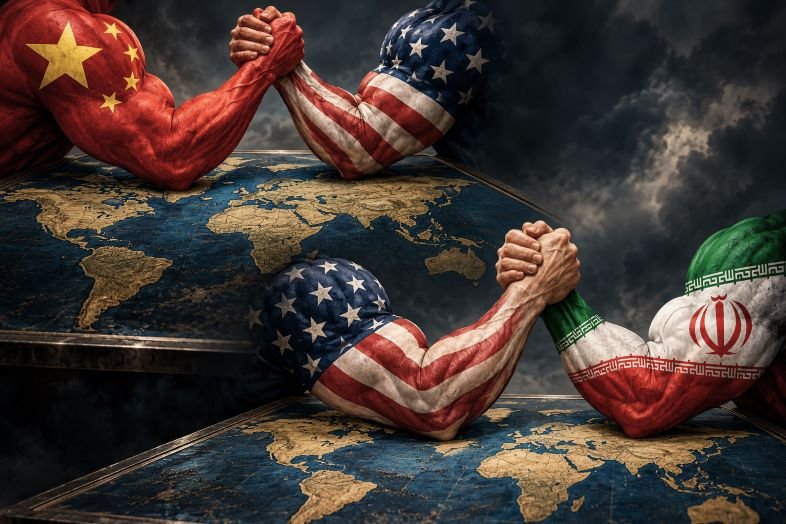
Let’s be frank: Was the White House thinking about equality when it ordered the kidnapping of the Venezuelan head of state from Caracas, or when it took entirely unprovoked actions against Iran, including the assassination of its leader?
Examples of this kind are constantly multiplying. I didn’t say “multiplying” without reason. I said it because this year has produced very serious examples of how these principles are being violated today with total impunity. Whether we like it or not, we find ourselves forced to ask ourselves an almost Hamletian question: international law, to exist or not to exist? And if it is to exist, what meaning should we ascribe to it? The sovereign equality of subjects of international law, when chaos and violence have become a new and nightmarish reality for millions of people, due to the de facto inequality between states.
The historical milestones of equality between states: from the Treaty of Westphalia to Western illiberalism
In the past, our world has indeed found itself at a crossroads many times. I will cite the well-known milestones—you all know them, but they are nonetheless important for understanding what was happening then and what is happening now. Westphalia [1648], Vienna [1815], Versailles [1919], Yalta [1945]. Each of these historical milestones represented an attempt to find a balance and to affirm the equality of states under new conditions. The decisions were never simple—they were never obvious—but each, at its own historical stage, demonstrated that at the foundation of international law lies the legal status of the state as a sovereign entity, equal to every other by virtue of its very existence. And this very fact of a state’s existence is enshrined in the doctrine of its recognition as such. We have an obligation to restore this force to the law.
Over time, interpretations of equality itself have, of course, evolved. In antiquity, as is well known, the rules of the game were dictated by the privileges of the “first”—let’s say, in their relations with the “last,” the barbarians and foreigners. The Romans, as is well known, considered other peoples only as objects to be enslaved in their wars of conquest. And within their own society, they created, as is well known, two parallel legal systems: the prestigious ius civile —civil law—for their own citizens, and the truncated law of nations, ius gentium , for the peregrini —that is, for foreigners. In the Middle Ages, little changed. Law in the modern sense was the privilege of the high nobility alone. And the same principle prevailed in interstate relations.
The Westphalian system divided the world into “civilized” and “savage” peoples. Even the Viennese system can only be considered an advancement within its historical context. In essence, it merely enshrined the international legal formalization of European powers’ hegemony over the world and their right to interfere in the affairs of other nations.
The next step in the development of international law was the Treaty of Versailles. Following its conclusion, the League of Nations was created—as is well known—intended to limit war and ensure peace. However, this system, too, in practice, divided countries and peoples into victors and vanquished. Ultimately, this prevented it from fulfilling its historical mission—preventing another world war.
Contemporary Western society is a diligent student of the lessons of history.
One only needs to recall the recent comments from Europeans — conversations, by the way, about the division of the world into “flowering gardens and jungles”, into proper democracies and authoritarian regimes that should be suppressed by force.
Opening remarks by Josep Borrell, EU High Representative for Foreign Affairs, at the European Diplomatic Academy, 13 October 2022, in Bruges, Belgium : “Yes, Europe is a garden. We have built a garden. Everything works. It is the best combination of political freedom, economic prosperity and social cohesion that humanity has ever managed to build — these three things together. And here, Bruges is perhaps a beautiful illustration of intellectual life, of well-being.”
The rest of the world—and you know this very well, Federica [Mogherini, Rector of the College of Europe]—is not exactly a garden. Most of the rest of the world is jungle, and the jungle could encroach upon the garden. Gardeners must take care of it, but they won’t protect the garden by building walls. A pretty little garden surrounded by high walls to keep the jungle out won’t be a solution. Because the jungle has a strong capacity for growth, and the wall will never be high enough to protect the garden.
Gardeners must go into the jungle. Europeans must engage much more with the rest of the world. Otherwise, the rest of the world will invade us, by different means and in different ways.
The policy of sanctions falls into the same category. For we understand, however beautifully it may be explained, that it is a redistribution of the property of others — the pirate seizure of ships, of cargoes, the encroachment on the foreign assets of our State and other States as well.
When the path of political diktat was chosen, the entire lauded legal architecture of the West instantly began to crumble. Europeans, with their own hands, once again undermined the essential foundations of international law—in whose name they are so quick to speak.
Well, this concerns, among other things, the sacred nature of the right to property, its absolute protection — which we have just forgotten.
Why even discuss rei vindicatio , actio negatoria , and actio prohibitoria [foundational concepts of Roman law regarding property]? These are merely principles of Roman law. And where do the discriminatory sanctions stand in relation to the 1950 European Convention on Human Rights and the New York Convention on the Recognition of Arbitral Awards? Bilateral investment treaties—where are they? All of this has been conveniently forgotten.
What also proves to be a fiction upon closer examination is the so-called Western liberalism. The idea of liberty and equality was initially intended, as we know, for purely domestic use. This must be remembered, not shamefully swept under the rug. The author of the great liberal treatises, John Locke, was, as we know, a shareholder in the Royal African Company, which held a monopoly on the slave trade in England. This coexisted perfectly well within his legal conscience.
His works also served, in a certain sense, as justification for the extermination of the indigenous peoples of the Americas. The idol of European Enlightenment thinkers, John Stuart Mill, in his 1861 Considerations Concerning Representative Government , cynically asserted that despotism is a legitimate method of government for barbarians, and that if the goal is worthy, it is indeed achieved by such means.
That was only about 150 years ago. And these are enlightened, classic thinkers. I quote them deliberately. That’s why, today, when reading the outline of the UN Charter, we shouldn’t be under any illusions. A fine text has not succeeded, over the decades, in eradicating the ideas of racial and national supremacy from the thinking of Western elites.
Because Nazism, which was not totally defeated in its time, found fertile ground among the ideological descendants — and, let’s be frank, direct biological descendants — of those who exterminated it, some of whom are now at the head of European politics.
In one of my articles on Germany, I noted—it’s obvious, and yet it’s worth saying—that in the aftermath of the Second World War, a significant number of Nazis, with the help of our former allies, managed to escape punishment. Why? They simply proved to be useful bastards, “sons of bitches” who were ours [Medvedev paraphrases the American foreign policy maxim as expressed by Franklin Roosevelt, who said of the Nicaraguan dictator Somoza: “He may be a son of a bitch, but he’s our son of a bitch” ], useful in the fight against the Soviet Union. And there you have the essence of the morality of a number of Western democracies.
The peoples of the world have journeyed towards equality and independence at the cost of immense effort — in blood and tragedy.
In this respect, the Soviet Union’s merit is inestimable: it was able to transform the victory over Nazism into the conditions for a new world order. Its foundation was proclaimed to include, among other things, sovereign equality and decolonization. It was at our country’s insistence that the first paragraph of Article 2 of the UN Charter appeared—the one I have already mentioned.
However, the former colonizers understood equality differently—entirely in the spirit of the infamous Fourteenth Amendment to the U.S. Constitution on universal equality of citizens. In a well-known landmark case—the famous Plessy v. Ferguson —the U.S. Supreme Court stated that equality only works within isolated social groups. Thus was born the official legal doctrine of “separate but equal,” which legalized rigid racial segregation. And nominally, it wasn’t re-examined until 1954. But let’s be honest: in the minds of the Western establishment, it lives on today. In fact, this is precisely how the former colonial powers interpret and construct the UN Charter. Only their methods have become more subtle, more covert, more sophisticated—and the results are virtually the same.
The legal instruments of neo-colonialism: IMF, arbitration, human rights
In the political and humanitarian spheres, the West has undertaken constant efforts to erode the essential foundations of international law and destroy its systemic integrity.
This process unfolded with particular intensity—and it is painful to acknowledge this—after the dissolution of the Soviet Union. I am referring in particular to attempts to fragment international law through the development and implementation of a number of destructive concepts. What are these concepts? Humanitarian intervention, the responsibility to protect, and limited sovereignty.
In recent decades, they have been used by Western countries to legally disguise direct violations of the founding principles and norms of the UN Charter, or to deviate from them.
Over the decades—and I cannot fail to mention this—this harmful work has been cemented by the institutions of the Bretton Woods system: the International Monetary Fund and the World Bank. They operate according to the classic pattern of neo-colonial extortion. If a state in the Global South, Eastern Europe, or Latin America faces a budget deficit or a balance of payments crisis, that state turns to the IMF for assistance. The Fund and the Bank grant such credit—but they inextricably link it to onerous conditions: the acceptance of what are called structural adjustment programs.
In the process, the victim’s economy not only becomes inefficient—it becomes entirely dependent. The country falls into a spiral of debt from which there is no escape without further costly budget cuts and more costly borrowing. At the same time, all responsibility for these problems is cynically shifted onto the victim itself, who, from a formal point of view, was free—sovereign—to make such decisions and accept these loans. This is, in essence, a neo-colonial practice of subjugation, formalized through a sprawling network of international agreements, corporate structures, and other legal constraints. And such a practice is, without a doubt, reprehensible.
Part of the contemporary neo-colonial framework is also—on the surface, something so beneficial—the internationalization of property rights, but in a very particular sense. And this concerns not only physical property, but also intellectual property, in the sphere of which large Western corporations allow themselves serious abuses against individual authors and companies in other countries. Well, what more can be said—the largest Western technology companies, which are the monopolistic owners of their platforms, are spread all over the world. You know which platforms I have in mind? And which—let’s be frank—frequently operate on the instructions of their intelligence services, arbitrarily restricting the distribution of digital products from other countries, or simply removing them altogether.
This practice causes dissatisfaction even within the Western world itself, but they can do nothing serious about it.
Another example: A narrow layer of partisan arbitrators regularly and consistently sets its own standards in the field of international investment law. As a result, the sovereignty of states dependent on the West becomes a fiction. The attributes of power remain, but these states can no longer enact laws that harm the interests of transnational capital.
Hands off. By virtue of their size and influence, such an investor becomes “first.” I’m not talking about basic investor rights protections—national treatment or most-favored-nation status. All of that is perfectly normal. I’m talking specifically about the forceful imposition of a foreign investor’s interests at the expense of national interests. Examples of this kind are numerous. In such cases, the local population immediately becomes “second.”
The threat of investment lawsuits has become a serious obstacle to regulating issues in the developing world—particularly in reforms concerning land rights, the environment, health, labor relations, water use, and other resources. Sovereign decisions by states regarding the redistribution of assets unjustly accumulated during the colonial and apartheid eras have even been challenged.
There is also a purely legal shell surrounding all of this. A significant role—and I say this clearly—in imposing this legal neo-colonialism is played by Great Britain, which remains convinced that virtually all procedures in the world fall under its jurisdiction.
In essence, it imposes it in contracts: this is the effective imposition of other legal systems. London tries to justify this—it’s well known, I’ve heard it many times, including when I was myself engaged in private legal practice—by invoking the supposed universality of English law, as well as the impartiality and high professionalism of its leading jurists. Well, let’s be honest: this is far from the truth and reality. While we are certainly aware of both the merits and shortcomings of the Anglo-Saxon legal system, no single legal system can be imposed on the parties to a contract. Today, each state must develop its own legal system based on its national, historical, cultural, and social characteristics, so that it serves the interests of society—not those of outside players.
The ideology of the civilizational superiority of the “first” Westerners is also strikingly illustrated in the international human rights agenda.
Well, the value of human rights is, as we know, often elevated to the status of a cult. But at the same time, the West reserves for itself the monopolistic right to decide which countries meet the standards and which do not. Naturally, the standards that the West itself has developed. And in doing so, it firmly adheres to the well-known principle: for friends, anything goes; for enemies, apply the law.
A striking example is the behavior of the European Court of Human Rights. Without a shred of evidence, it condemns Russia for alleged discrimination against Ukrainians and Crimean Tatars in Crimea. At the same time, it sees no discrimination in the openly Russophobic policies of the Latvian authorities, who are carrying out a forced de-Russification of the country in the linguistic and educational spheres. I won’t even mention the ban on the Russian language in so-called Ukraine.
Five pillars for a just world order
Dear guests and participants of the Forum,
For our part, we are ready to wage a resolute struggle for genuine international equality.
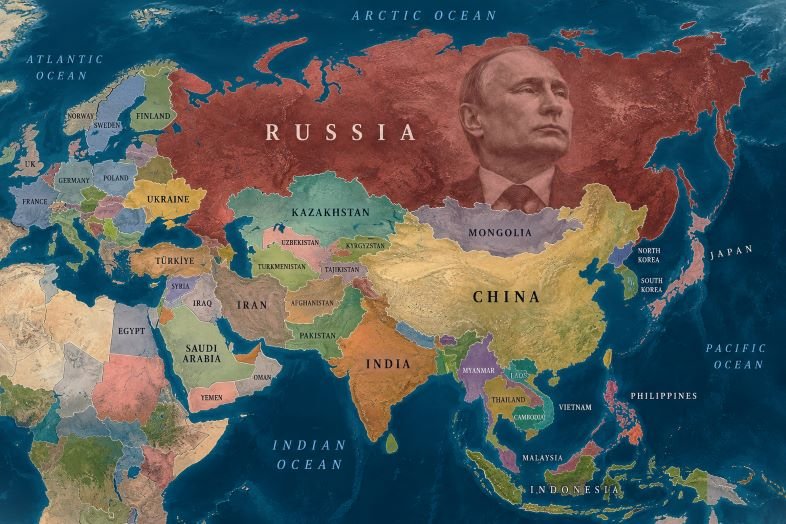
Its essence lies in a complete rejection of neo-colonial practices—in the free, secure, and prosperous development of all countries on our planet. For beyond the Western camp lives the absolute global majority—more than 80% of the world’s population. This is a colossal tapestry of cultures, traditions, and historical experiences. And our primary task is to use international law as an instrument that will transform this undeniable arithmetic majority into truly sovereign and protected centers of power in a multipolar world.
But we must be realistic here. Good intentions alone to make the world a better place are not enough, as always, since the beneficiaries of the neo-colonial regime still don’t understand this kind of conversation and speak only one language: that of force—primarily economic, and frequently military as well. Compelling arguments are needed, arguments they must listen to. And it is important that our collective actions do not allow such states to exacerbate an already volatile global situation.
I wish to highlight several important directions, in my opinion, on this long and very difficult path.
1. Dismantle Western military bases
First, a serious factor destabilizing the collective security system and undermining state sovereignty is the deployment of Western military bases on the territories of other states. To put it plainly, these bases provoke international and regional tensions. It is therefore necessary to develop concrete legal mechanisms aimed at dismantling the existing system of foreign military presence that the West imposes on other states.
States that permit the establishment of Western military footholds on their territory should fully recognize — those that have not yet done so — that making their territory available for the commission of an act of aggression by another State falls within the definition of aggression as formulated in UN General Assembly Resolution 3314.
And let’s be frank: as recent experience in the Middle East has shown, such bases offer virtually no protection to the country in which the military base in question is located.
It is important to recognize that the emergence of such a base directly contradicts paragraph 4 of Article 2 of the UN Charter, which prohibits the use of force or the threat of force.
It is obvious that in place of NATO bases there can and should come regional security organizations that fully recognize their legal and moral duty to the millions of citizens living on these lands, in this region — and that are prepared to act in their interest, not in the interest of this or that Western country that deployed the base.
Russia learned this lesson from its own experience after the dissolution of the USSR and following what proved to be only a temporary warming of relations with the West. During this period, under the guise of fine rhetoric about aspiring to partnership with our country, NATO effectively advanced to our borders. Puppet regimes were used as the spearhead of the alliance.
This is what happened with Georgia. This is what happened with Ukraine, which in 2014 became a hotbed of Russophobia. Unfortunately, this is now what is happening with Moldova and even, sadly, with Armenia.
In August 2008, Georgia launched an attack against Abkhazia and South Ossetia. Our armed forces then conducted a peacekeeping operation. The bloodshed was stopped.
It must be acknowledged that at that time, Europe and the United States had the wisdom not to be drawn into the conflict. And we reached an agreement—what one might call a hard peace.
But unfortunately, on the other side, the thirst for blood has not been quenched—and they have learned from their mistakes. In the case of Ukraine, the West has done everything to ensure that this Bickford fuse [a safety fuse for mines] that is Kyiv, twisted in hatred of everything Russian, burns—first smoldering, then in flames—for as long as possible, and as close as possible to our borders.
The unprecedented militarization of Ukraine was yet another attempt to bring Russia to heel for daring to pursue a sovereign course. But, as in 2008, our country categorically refused to accept the fate of a second-rate nation that had been laid out for it.
The real threat of aggression from the Ukrainian regime and its backers, as well as the falsification of the negotiation process — as we know — compelled us in 2022 to undertake the conduct of the special military operation in accordance with Article 51 of the UN Charter.
Unfortunately, at that point, there was simply no other way left to protect millions of our citizens.
But we also have before our eyes fresh examples of the true objectives pursued by the foreign presence of Western countries and the United States.
As I just noted, the worsening situation in the Middle East has shown that military bases serve absolutely no purpose—on the contrary, they make those who host them targets for retaliatory military strikes. And in times of danger, the personnel at such military bases think only of a hasty evacuation with all their belongings.
European politicians also declare their willingness to follow the example of their transatlantic partners.
Well, people say all sorts of things.
For example, not long ago, a senior official in the foreign ministry of a Baltic state—I won’t even name him, it would be giving him too much credit—threatened to do to Kaliningrad what the infamous Article 5 of the North Atlantic Treaty [referring to collective defense] apparently allows. He barked something along those lines on this subject. But at the same time, the situation following the strikes against Iran and the blockade of the Strait of Hormuz has clearly demonstrated something quite different. When it comes to real fighting, the spirit of transatlantic unity evaporates very quickly—and then the President of the United States gets upset that no one came to his aid.
I want to say the following. Whether Western countries like Russia, Iran, or any other state or not is of no concern to us. But the threat of a world war resulting from such provocative actions increases dramatically as a consequence. We must all be aware of this.
2. Reparations for colonial crimes
Secondly, the point I wanted to address: an important step in protecting the interests of the world majority is to demand reparations from Western countries — and the opportunity is there — for the colossal damage caused by colonial and neo-colonial practices since the era of great geographical discoveries.
It might seem that all of this dates back a long time; and yet it is nonetheless important to guarantee all peoples equal access to economic opportunities and resources, as well as the power to make decisions. I am convinced that our country’s resolute actions in the struggle against the Kyiv regime and its backers have already set a precedent: they have shown the whole world the insolvency and weakness of the neo-colonial minority.
I’ll go even further: the West’s colossal resources have been diverted towards the military, economic, and political struggle against Russia. Colossal resources. As a result, their economies essentially have gaping holes.
But for all the peoples of the Global South and the Global East who wish to liberate themselves from neo-colonial oppression, this is precisely the most opportune moment to do so. Here, the pioneers are the countries of the African Union and the Caribbean Community. We are ready to actively support their initiatives related to demanding reparations and compensation from the former colonial powers. Russia is ready for such support. And when our Western adversaries try to hide behind the usual argument that, supposedly, under international law, it is not permissible to give retroactive effect to such actions, this is a position of bad faith. We fully understand that retroactive measures are possible in every area of law.
The violation of the rights of colonized peoples has lasted for many centuries, meaning that the former colonial powers have neither a legal nor a moral basis for escaping this kind of restorative justice. Herein lies the fundamental principle of law which, as we know, stipulates that ex delicto ius non oritur [“right does not arise from a crime”]. It is within our power to correct this injustice and then move from mere declaration to sovereign equality.
3. Recognize colonialism as a crime against humanity
Thirdly, it is also necessary to recognize colonialism as a constituent element of a crime against humanity.
This can be done within the framework of the work of the preparatory committee for the conference on the drafting of a UN convention on the prevention and punishment of crimes against humanity. Such a measure seems entirely appropriate and will help establish the responsibility of Western countries for the exploitation of enslaved peoples.
4. Restore the sovereignty of the Ukrainian people
Fourth, international conflicts provoked by the West can very well be resolved on the basis of pragmatism, humanity, and the equality of the parties. This naturally applies to the Ukrainian conflict as well.
On various international platforms, Russia has repeatedly provided detailed justifications for its invocation of Article 51 of the UN Charter. But this article is also subject to manipulation by the West. Countries hostile to the West are declared enemies; any illegal action against them is justified—even acts of terrorism and military aggression, which I have already discussed today.
But at the same time, he turns a blind eye to the destruction of the Palestinians, the bombings of Iran, Lebanon and many other episodes of violence — because for his own people, other standards apply — and the question does not lose its urgency: how would it even be possible to conduct a dialogue? This question is particularly relevant for us, for our country, in this instance.
A dialogue on an equal footing, I emphasize, with puppet regimes entirely dependent on their patrons. Such as, for example, the Kyiv clique, which rents out its country for large sums of money—very large sums of money—to foreign powers as a military bridgehead, and has turned it into a hotbed of Nazism and corruption. How can one conduct a dialogue with such a party?
The answer is unequivocal: we don’t. There’s no point in communicating with a vassal. And if there’s anything to discuss, it must be discussed with the overlord, with the master.
In the case of Ukraine, the problem is not simply that the process of expressing the popular will was violated. The presidential chair was usurped by an individual whose term had long since expired. And according to the norms of international law, this fact deprives him of all immunity.
But Ukraine possesses only a sovereignty on paper—true sovereignty is absent, since the country is governed by third parties. Through structures under their control, these puppeteers, under threat of funding withdrawal, appoint loyalists to Ukrainian governing bodies and dismiss those who oppose them. And the autonomy of this state—or failed state—exists only within the limits defined by its patrons.
But even all of the above does not prevent the conduct of negotiations, including the registration of their agreements by parliament or by mechanisms of direct democracy, as our president, the president of the Russian Federation, has said repeatedly.
However, the problem in Ukraine has another dimension, linked to the question of who shapes the will of the people in this failed state and how.
And this will is the product of the interaction of the will of shameless foreign managers and the corrupt Ukrainian elite, for whom war and death are the main source of preservation of both power and profit.
It is obvious that continuing the war is the only way for the ruling regime to survive. Everyone understands this, absolutely everyone, and they cynically acknowledge it. The problem is that such a Ukraine will not stop on its own. The paths to regime change in Kyiv may well vary.
These could be elections, if they agree to hold them, or the overthrow of the ruling junta through revolutionary means, or the establishment of effective control over as much territory as possible. All of this will allow the people, through their legitimate institutions of power—and I emphasize, their legitimate institutions—to formulate their demands and ultimately live in security, rather than perish and suffer at the hands of usurpers, the corrupt, and merchants of death.
5. Legally consolidate the gains of the global majority
And fifth, what I wanted to say. In the near future, the states of the global majority will need a careful legal formalization of all the progress made in the struggle for equality. Here, some legal confrontation with the collective West is inevitable. But foreign countries—developing countries, I mean—have repeatedly demonstrated that they can defeat arrogant Western mentors on platforms the latter considered their exclusive domain. The examples are numerous. Several have emerged recently: the complaints filed by the Republic of South Africa, and the dispute resolution at the WTO led by Brazil. And a whole host of other examples. Iran’s own success is significant—in its dispute with the United States, it proved the unlawful freezing of some of its banks’ assets.
So there are plenty of examples — I emphasize that.
Russia’s legal shield: mechanisms and remedies
Incidentally, Ukraine’s clumsy complaints against our country also help us demonstrate internationally the inconsistency of such Russophobic premises. In 2024, Kyiv attempted, for example, to use the 1948 Convention on the Prevention and Punishment of the Crime of Genocide. But this attempt failed completely. The International Court of Justice recognized its lack of jurisdiction over all charges against Russia. This applied to the special military operation as well.
The same thing happened when the decision was handed down in the Ukraine v. Russia case. It concerned the application of the International Convention for the Suppression of the Financing of Terrorism and the International Convention on the Elimination of All Forms of Racial Discrimination of 1999 and 1965 respectively.
And I cannot fail to mention the decision of the Permanent Court of Arbitration in The Hague, issued literally a few days ago, on June 15. This concerns the arbitration proceedings between Russia and Ukraine regarding coastal state rights in the Kerch Strait, the Sea of Azov, and the Black Sea waters around Crimea. The arbitral panel, composed of five independent arbitrators, issued a unanimous decision in favor of Russia. And Ukraine’s numerous claims, accusing our country of violating a whole series of provisions of the 1982 UN Convention on the Law of the Sea, were rejected.
Why am I saying all this? Because, despite everything, international law works. It works, certainly with many difficulties. And that is, in fact, a lesson for all of us.
I would like to reiterate, specifically, that our country continues to deploy its legal shield in defense against such attacks—a shield that allows us, in one way or another, to block a whole range of threats. Last year, based on a presidential decree of May 19, 2025, a registry was established in which, with the participation of state authorities, all crimes committed by the Kyiv regime and unfriendly states are recorded. We are obligated to maintain it, and we will do so meticulously.
In anticipation of a possible seizure abroad of our sovereign assets — and this is happening — measures have been prepared for the reciprocal seizure of foreign assets in Russia.
Not long ago, a special law also came into force allowing the use of military force to rescue Russian citizens illegally detained abroad.
Our country has repeatedly stated its intention to use all available international legal mechanisms against unfriendly states that practice systemic discrimination against Russian-speaking citizens. The 1965 International Convention on the Protection of the Rights of Russian-Speaking Citizens provides for this purpose. It grants a State Party the right to bring a case before the International Court of Justice. Pre-litigation requests have already been filed with the Baltic States regarding their discrimination and flagrant violations of the rights of Russian-speaking citizens.
The pre-litigation phase was completed at the end of May this year. Therefore, the complaints to the International Court of Justice will be filed shortly.
I cite this once again as an example of the fact that international law is nevertheless applied, despite all the difficulties.
A separate issue is the attitude towards the activities of the International Criminal Court. As is well known, its jurisdiction is recognized not only by Russia, but also by a whole series of other countries around the world, including the United States of America and China.
The attempts by this court to conduct various proceedings against Russia are not simply unlawful: I have said this repeatedly; we do not participate in this court, and on the basis of general principles of law, its decisions should not be binding on us.
But the issue isn’t even about legal norms. In the worst-case scenario, implementing decisions of this kind could lead to war—in the truest sense of the word—just as other attempts to stage biased political trials against our state might. Faced with this danger, both the legal community and politicians in general must address the matter with the utmost seriousness.
Conclusion: Reform the content, not the institutions
Dear colleagues,
Let me emphasize the essential point.
Almost all of the measures I have discussed today do not presuppose a fundamental reform of existing international law institutions—and certainly not the overthrow of the international law system. That would be unnecessary and destructive. Rather, they presuppose the active mobilization and application of these institutions. It is necessary to ask profound questions and try to understand what is missing from international law at a systemic level.
I am convinced that a need has also arisen for a contemporary analysis of the key principles of international law. The world has changed irreversibly. We are all living witnesses to this.
I say it again: the first half of this year has proven it with perfect clarity. Such a quantity of events capable of plunging the world into the abyss of military catastrophe has probably never occurred before in the post-war period.
But even then, the discussion should focus on filling the principles of international law with new and contemporary content — not on a fundamental revision of the institutions of international law, as is sometimes rashly proposed in discussions.
Public international law can only be effective—I am absolutely convinced of this—on the condition of relative stability. Well, absolute stability does not exist, but relative stability is necessary.
Dear colleagues, dear friends, ladies and gentlemen,
It is now crucial to reject the dangerous illusion that any single state, or a closed club of countries, holds a monopoly on the interpretation of universal legal norms. We must curb destructive ambitions—primarily those of our Western adversaries—and restore the world to a balance of power.
Well, together with our partners, we are moving forward on this path in a fairly firm and consistent manner.
The authority and influence of structures such as BRICS, the SCO, the African Union, CELAC (Community of Latin American and Caribbean States), the Gulf Cooperation Council, ASEAN, and a host of others are constantly growing. Russia is ready to build a just world order with the peoples of Africa, Asia, and Latin America.
Being here in my native Saint Petersburg, I cannot fail to quote the eminent Russian jurist Fyodor Martens (1845-1909). He said the following:
“Neither the idea of separation, nor the idea of submission to physical force, nor the idea of political balance, nor finally the principle of nationality can be recognized as the guiding principles of a properly ordered international life. Its guiding principle is the idea of law.”
This has been said for a long time. But continuing along this line of thought, I would like to add: the idea of law that will ensure true equality among states on the planet, and thus become an effective instrument of peace and justice. And this, ultimately, dear colleagues, also depends on our work.
THANKS.
Questions and Answers
Presenter: Thank you, Dmitri Anatolievitch. I have a few more questions. I’ll ask them now, stemming from your remarks. If we consider the main milestones in the development of international law that you mentioned, it appears that chaos and instability are, in principle, the basic norm. And it is extremely rare for those famous periods of relative stability to arise. Hence the question: is international law, after all, a rule or an exception?
Dmitry Medvedev: Well… I was just trying to end on an optimistic note, but I’ll answer honestly. International law in the history of humankind is an exception. As a rule, humanity has followed the path of conflict, wars, and other altercations, and the functioning of international law must be recognized as an exception. But it is this exception that we must strive for.
Presenter: And one more question, also stemming from your remarks. You spoke of sanctions as a redistribution of the property of others, and of course, you emphasized that they generally destroy all the foundations of international law. From a legal perspective, how can we characterize the application of sanctions in today’s contemporary world? What is your assessment of them?
Dmitri Medvedev: Well, I won’t say anything original here. Firstly, we have said it many times: myself, my colleagues and the president of our country: what are currently being called “sanctions” are not, from the point of view of international law, sanctions at all.
These are unilateral restrictive measures, or multilateral ones if we are talking about collective entities like the European Union and its member states, that are being unlawfully applied against third parties. International sanctions are based on the Charter of the United Nations. Their adoption requires a specific procedure. And when it comes to sanctions of this kind, I would like to emphasize that our country scrupulously respects them, even when they concern matters that are not the simplest for us. Such cases have occurred throughout history.
However, the sanctions imposed on us, on Iran, on the Democratic People’s Republic of Korea, on China, and on a multitude of other countries are unilateral restrictions of a non-legal nature. We have never recognized them and never will. It is both possible and necessary to combat these sanctions through legal means, but in some cases also through other means, which cannot be ruled out.
Presenter: Thank you, Dmitri Anatolievitch.
Dmitri Medvedev: Thank you.