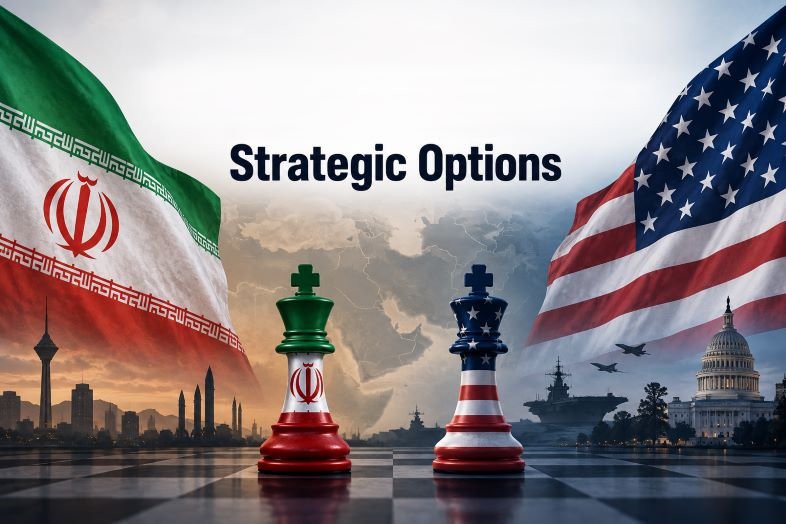

June 19, 2026 – At Versailles, in the Hall of Mirrors where one can, with the eye of the mind, contemplate the images of the grandeur and decline of the French monarchy, where the Second German Reich was proclaimed after the victory of Prussia over the Empire of Napoleon III, and where the “Tiger” Clemenceau imposed on Germany an abusive peace, not only harsh but also unjust, at the end of the First World War, thus making the Second World War inevitable, followed by the Cold War, then by the unipolarity of the now expired American peace, President Donald Trump, under the eyes of the members of the G7, signed in a gesture intended to underline the grandeur of the moment, a memorandum that officially ends the undeclared war between the United States and Iran.
The powerless European powers welcomed this gesture, hoping that by ending the war in the Middle East, they would gain, literally and figuratively, access to energy sources at reasonable prices, enabling them to continue the war in Ukraine.
Separately, the memorandum was also signed by the Iranian president, who presented it to the Iranian people in a photograph circulated by the media. Supreme Leader Ayatollah Mojtaba Khamenei, for his part, stated that, despite some initial reservations, he had decided to support the document and urged the people to be proud of this achievement, attained through their courage, sacrifices, and patriotism.
In this context, the question arises as to who lost and who won in the US-Iranian war, initiated by the United States with its own geostrategic objectives but also under the insistence of its Israeli counterpart, as well as the effects of the way in which this conflict ended or is expected to end according to a main agreement of will between the main belligerents.
AMERICA’S THREE ASIAN WARS
In the Middle East, the United States has waged a three-pronged war:
- an explicit and direct war against Iran;
- an implicit and direct war against Israel;
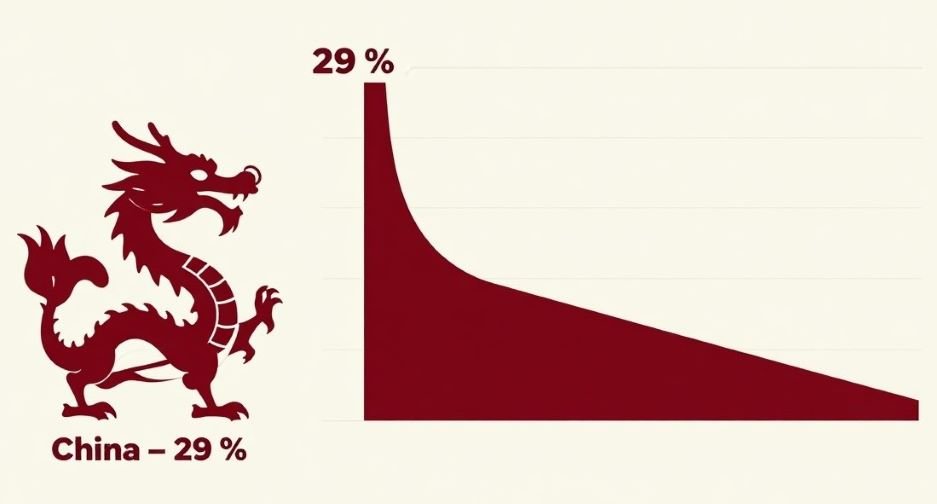
- an implicit and indirect war against China.
1. Persian strategic resilience
In the war with Iran, the United States suffered a major strategic defeat, consisting of the loss of its deterrent capability (nowadays, no one, and especially Iran, believes in American omnipotence and is no longer afraid to defy its orders), as well as its capacity for seduction and federalization (nowadays, no one, and especially the Arab Gulf States, believes in American guarantees of protection against their regional rivals or the great world powers).
This will push all Middle Eastern countries to seek alternative security arrangements within a regionally designed framework, without external input. For example, the Sunni monarchies of the Gulf will seek collective security solutions in cooperation with Shiite Iran, rather than confronting Iran under the umbrella promised by the United States.
2. The Israeli strategic gap
In the war with Israel, the United States has achieved a strategically valuable step forward by managing to decouple the American agenda from that of Israel, a victory which, however, needs to be consolidated (unusually) in the field of American domestic politics, in the relationship between the agenda of America’s vital interests and the agenda of the Israeli Zionist lobby in the United States.
In any case, understanding that unconditional American support for the Israeli Zionist agenda is no longer relevant, Israel will ultimately be forced to find solutions at the regional level, as a member of the Middle East, and not as an alter ego, a local incarnation of the United States.
3. China’s strategic rivalry
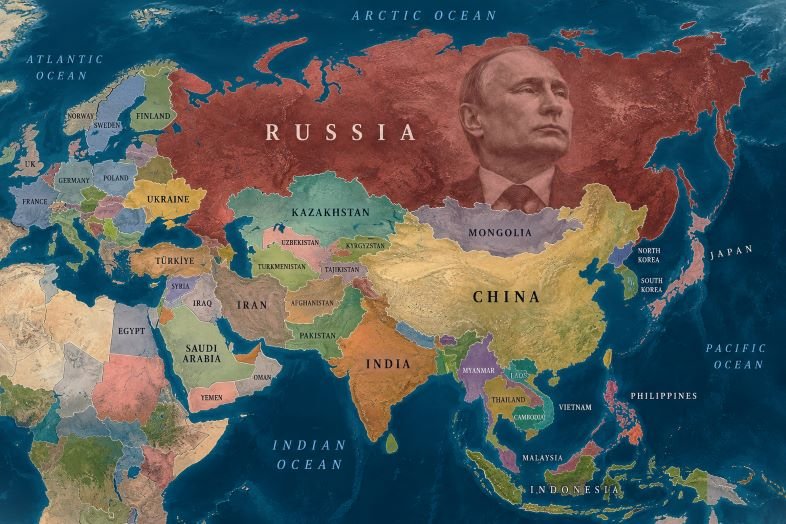
In the war with China, the United States reached a strategic stalemate (consecrated during the Trump-Xi meeting in Beijing) that legitimized and ordered the strategic rivalry between them, establishing the G2 as the core of an objectively multipolar world on the verge of becoming a multipolar order. Combined with the “Anchorage Peace” and the “Unlimited Russia-China Partnership,” the “Beijing Peace” suggests, at least in the medium term, the viability of a future tripolar order disciplined by a G2+1. This leads to a new status quo in the Middle East, as well as a necessary refounding of the EU (the alternative to the refounding of the EU being its disappearance).
THE TRIPOD OF MIDDLE EASTERN SECURITY…
Currently, in the Middle East, Muslim states have domestic policies based on the teachings of the Quran, but foreign policies guided by the logic of geopolitical realism, while Israel has a domestic policy inspired by secularism, but a foreign policy founded on the Old Testament. In both cases, through a feedback loop, foreign policy also influences the evolution of domestic policy. As a result, the main danger to peace in the region stems from the mystical pathos surrounding Israel’s otherwise legitimate need for security, this security being proclaimed in millenarian and messianic terms, thus serving as a cover for an unacceptable Zionist imperialism with a religious face.
Under these circumstances, regional security and stability, at least for the foreseeable future, until Israel is integrated into a collective Middle Eastern security system, can only be ensured by a strategic agreement between Iran, the Gulf Arab states (especially Saudi Arabia), and Turkey. China has already helped, directly and indirectly, explicitly and implicitly, to initiate the normalization of relations between these actors.
…AND ITS GUARANTEES
The main obstacle to the realization of the Turkish-Arab-Persian triangle, after centuries of hostility and divisions induced by world powers outside the region, is the lack of trust. And without trust, there can be no progress.
This lack of trust makes the involvement of third-party guarantors essential, with a role of moderation and mediation, not discipline and arbitration. Unlike the former militarized and militaristic superpowers of the Cold War, these guarantors must intervene not through their capacity to sanction, but through their capacity to stimulate; not by externally adjusting the balance of power between regional actors and by selectively and discriminatorily arming them, but by involving them in joint development projects based on the solidarity of their interests; not through the terror induced by unequal levels of power, but through the harmony generated by equal levels of development and equal access to the instruments of development; not through indoctrination, domination, and arbitration, but through communication, consultation, and cooperation.
Such an approach can characterize a traditional, non-expansionist, legitimist, non-militarist and conservative continental power like China (China was conservative and Confucian even during the communist revolution), and not a traditionally expansionist and militaristic maritime power like the United States.
Eastern Multipolarism in Search of a Post-American Global Order
In line with global developments, the armed conflict imprudently launched by the United States in the Middle East brought an end to the order constructed and dominated by America, from whose ruins a multipolar world is emerging. Such a reality also demands a multipolar order, which can only arise through the consensus of the members of the international community.
Iran suffered serious tactical blows in this war, but achieved a major strategic victory, enough to restore it to the status of a major regional power.
However, this is happening within a new international context that it cannot ignore and which, while offering the benefit of solidarity, requires it to avoid any hegemonic temptation. As long as it remains within this framework (structured notably by the BRICS), there will be no reason to arouse fear among other regional powers, large or small. It is precisely for this reason that the powers concerned will have an interest in maintaining this multilateral framework, which will order and stabilize the actions of all its members, offering them collective security.
Consequently, the rehabilitation of Persian power will not lead to a Persian neo-imperialism that would foster anti-Iranian alliances between the Gulf Arab monarchies and Israel under the auspices of new Abrahamic agreements. On the contrary, the Palestinian cause will be rediscovered and revalued as a means of federalizing regional actors, for a coherent geopolitics aimed at disciplining Israel and aligning it with the region’s security needs.
ISRAEL BETWEEN SECURITY THROUGH DOMINATION AND SECURITY THROUGH INTEGRATION
From now on, every move by Israel will no longer be interpreted through the lens of the struggle against existential threats, but rather through that of the Greater Israel project, stretching from the Nile to the Euphrates. This project threatens the entire regional balance, alienates all the countries directly involved, as well as neo-Ottoman Turkey and nuclear-armed Pakistan, and unites them in an effort not to destroy Israel—for it is also necessary for the construction of regional order—but to make it an actor within that order, respectful of its rules.
Even if the Israeli agenda in the war against Iran, Syria, Lebanon or Yemen, as well as, for now, only at the rhetorical level, against Turkey, was different from that of the United States in the region, the strategic defeat of the main protagonist also implies the strategic defeat of its Israeli accessory in the face of Iran and the other Arab states.
The fact is that Israel has lost both the war against Iran and the war against the United States. The Arab world (including Egypt and perhaps even Jordan) will soon relish the long-awaited moment of reckoning.
Even if Israel claims that the peace negotiated by Trump does not concern it, attempting to become autonomous from American strategy, it is certain that Trump’s defeat involves it.
In this context, the Palestinian state, separate or integrated into a dualist or confederal formula, which in the “Netanyahu era” was seen as a hereditary threat to the existence of Israel, could become its salvation.
DONALD TRUMP: A VICTORIOUS VANQUISH?
Many blame President Trump for the strategic defeat suffered as a result of the military intervention in Iran without clear objectives or with unrealistic and unattainable objectives.
But did the Trump administration really suffer such a defeat? Which America was strategically defeated in the Middle East?
There are victories that are worth a defeat and defeats that are worth a victory.
By losing to Iran, Trump defeated the exclusive American imperial instincts, fueled by narcissism and a dangerous superiority complex, which drive the United States to cling to a global superpower status that it can no longer justify, continuing in vain to claim the corresponding privileges and resisting the birth of a post-American world order, when it is precisely in this new order, alongside other global actors, that America could become great again.
In this sense, the defeat of an America tied to a bygone past represents the victory of the America of a possible future.
To awaken to reality and understand that what seems unacceptable is in fact inevitable, the United States needed to lose a war. Did Donald Trump calculate that he would give his country this revealing and salutary defeat in a confrontation with Iran, rather than in a catastrophic (and truly nuclear) war with Russia or China?
In any case, we observe that the first stirrings of a new world order are emerging in the Old World, where the sources of history lie, and not in the New World. The grandeur of the New World is declining as human civilization, in its westward march, returns to its eastern origins. The reconquest of this grandeur depends not on the tenacity to oppose the emergence of the new order stemming from ancient roots, but on the wisdom to embrace its rise.
This is why America’s defeat in Iran could, in the long run, be considered a victory. A victory not against Iran or China, but against its own domineering obsessions and the senile frivolity of a dying empire.
(Estica News via Geopolitika)