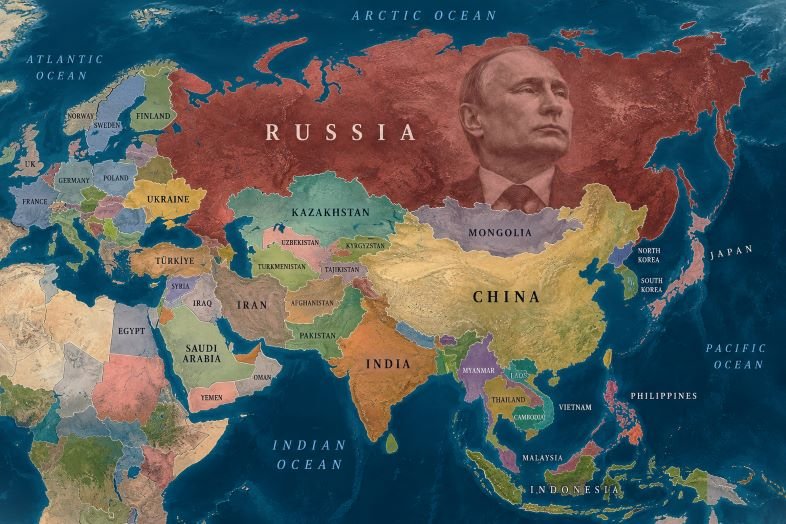
June 30, 2026 – The United States wants to use the G2 and the internal circulation narrative to shape China into a second Soviet Union, but China has broken through this impasse, turning red terror into red confidence.
In recent years, a very subtle reversal has occurred in the international public opinion arena: the “socialist threat” rhetoric that once resounded throughout the Western world and was used to demonize opponents is fading away, and is being replaced by a brand new smear label – “state capitalism”.
What’s even more intriguing is that when we have proactively, clearly, and confidently reaffirmed our socialist path in recent years, the West has not experienced a Cold War-style nationwide panic or camp confrontation, nor has it formed a monolithic global containment alliance.
Looking back over the past decade or so, the United States has actually laid a trap, from the G2 trap and replicating Japan’s harvesting script to distorting the “internal circulation” to create a closed narrative. The ultimate goal of all these arrangements is to forcibly shape China into a “new Soviet Union” in the 21st century, forcing the entire Western camp to unite against external forces.
But as the decade-long contest came to an end, America’s grand plan completely failed. This strategic game, spanning a decade, truly made the world see clearly: China has never been a second Soviet Union.
I. Dismantling the American Series of Deception: A Trap Tailor-Made for “Replicating the Cold War”
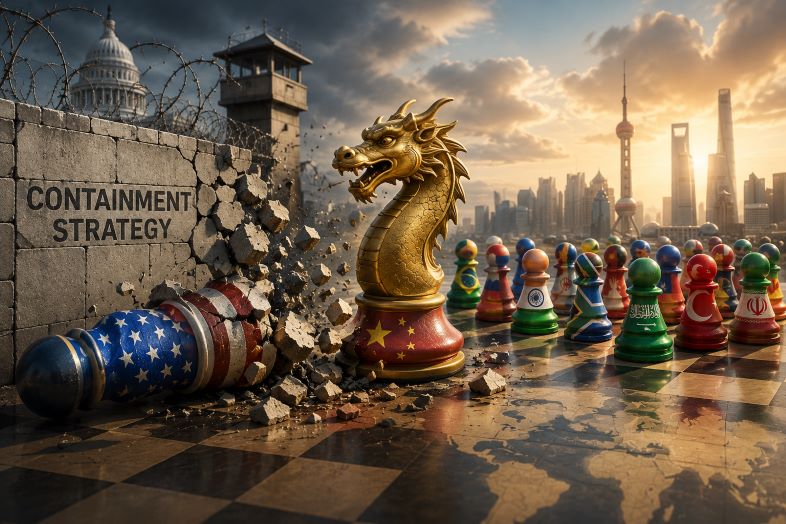
The first decade or so of this century was the most intricate phase of the United States’ strategic planning. At that time, China’s rapid rise and continuous increase in economic size broke the Western-dominated unipolar world order. In order to contain China’s development and maintain its own hegemony, the United States embarked on a progressive and interconnected containment strategy, with each step aimed at “creating a second Soviet Union.”
The first step is to hype up the G2 China-US co-governance theory and set up an ideological trap of bipolar confrontation.
The G2 rhetoric that swept the globe back then was never about the West recognizing China’s great power status or wanting to govern the world as equals; rather, it was a blatant conspiracy of categorization and containment. The US’s calculations were extremely precise. Externally (outside the G2), it constructed a narrative template of “US-China bipolar confrontation,” replicating the Cold War mindset of the US-Soviet rivalry, forcing traditional allies like Europe, Japan, and South Korea to choose sides and consolidating the power of the entire Western camp. Internally (within the G2), it presented China with a dilemma, forcing us into a trap.
If China accepts the G2 framework, it will be forced to assume global defense responsibilities, open its core industry markets, abandon its self-reliance in high-end industries, and become a vassal adversary of the United States. If China refuses, the United States can immediately label it as “refusing to cooperate, challenging the international order, and intending to subvert the global system,” and launch a comprehensive containment campaign with a legitimate reason.
The Soviet Union fell into this binary opposition trap, actively challenging the United States and building a parallel alliance, allowing the United States to easily forge a united front in the West.
The second step was to set up a “petrodollar scam” to lure China into a Cold War trap.
Around 2013, a meticulously designed logical chain emerged in the Chinese public opinion sphere and was widely disseminated:
The foundation of the dollar hegemony is the petrodollar → Overthrowing the petrodollar will overthrow the dollar hegemony → Overthrowing the US global military power will overthrow the petrodollar → Overthrowing one of the three US security frameworks will overthrow the US global military power → Overthrowing Japan, which constitutes the Western Pacific security framework, will overthrow the petrodollar → Nuclear Japan and taking over the South China Sea will break the US hegemony.
This logic seems to be helping China “find a way out”—that by concentrating its efforts on attacking Japan, it can destroy the petrodollar system and dismantle American hegemony. However, its crux lies in the fact that the entire chain is built on a deliberately distorted premise:
The claim that “the petrodollar is the foundation of dollar hegemony” is itself part of American strategic deception. The true foundation of dollar hegemony lies in America’s powerful and comprehensive industrial manufacturing system—the petrodollar is merely a manifestation derived from dollar hegemony, not its fundamental support.
Every step in this “deception” is leading China toward a military solution. If China actually takes military action against Japan, the United States can immediately invoke the US-Japan Security Treaty, portraying China as an aggressor that “undermines regional stability and challenges the international order,” thus raising the Cold War iron curtain and replicating the Cold War scenario of the Western bloc uniting as one to comprehensively contain its adversaries.
At the same time, the United States is launching a series of manufacturing reshoring strategies —this is the real intention hidden behind the guise of “petrodollars”: to buy time so that the United States can rebuild its industrial manufacturing capabilities and re-solidify the foundation of dollar hegemony while China is being led to a “military breakthrough”.
Fortunately, China did not fall for the trap. China continued to advance steadily, adhering to the path of peaceful development, focusing on upgrading its manufacturing industry and promoting technological innovation, and growing stronger within the existing international order framework, thus completely avoiding the Cold War trap carefully set by the United States.
The third step is to distort the dual circulation strategy and fabricate a Soviet-style image of “China being closed and isolated”.
The core reason why the Soviet Union was completely isolated and demonized by the West was that it broke away from the global market and built its own closed CCOM system, forming an economic cycle that was completely separated from the West, allowing the West to simply define “socialism=closed, confrontational, and subversive”.
When China proposed the development strategy of “taking the domestic cycle as the mainstay and promoting the mutual development of the domestic and international cycles,” Western media immediately took it out of context, deliberately omitting the core concept of “opening up to the outside world” and only emphasizing the three words “domestic cycle,” exaggerating that “China has closed its doors, broken away from the global industrial chain, and built an independent economic system.”
Under the cover of this stigmatization, the United States is simultaneously advancing another plan: to win over countries such as Vietnam and India through mechanisms such as the “Indo-Pacific Economic Framework,” attempting to build an anti-China industrial alliance in the Asia-Pacific region, while using technology blockade and supply chain relocation to exert systemic economic decoupling pressure on China.
The ultimate goal of this series of operations is highly unified: to portray China as a second Soviet Union. If this narrative is established, the United States can replicate the Cold War paradigm, unite all Western countries, launch a comprehensive and thorough blockade, and completely disrupt China’s rise.
II. China’s complete refusal to engage: A third way out of the zero-sum game between the US and the Soviet Union
Faced with a series of traps meticulously woven by the United States over the past decade, China has remained extremely clear-headed from beginning to end, completely rejecting the confrontational scenario. It has neither followed the old path of the Soviet Union’s closed confrontation nor the dead end of Japan’s compromise and surrender. Instead, it has forged a unique path to modernization that belongs to China, rendering all of the United States’ strategic plans ineffective.
We first broke the deadlock at the diplomatic level, completely dismantling the bipolar narrative.
Regarding the G2 trap, China has consistently and explicitly denied and publicly rejected it. We have repeatedly reiterated that the world is multipolar, global affairs cannot be decided by China and the United States alone, and all countries have the right to equal development and participation in global governance.
This refusal directly shattered the core strategic foundation of the United States. Without the narrative framework of a “bipolar rivalry between China and the United States,” there is no natural opposing camp. Europe is unwilling to completely decouple from China, and developing countries in Southeast Asia, the Middle East, and Latin America will not be forced to take sides.
The United States’ attempt to replicate the Cold War era’s scenario of a monolithic Western bloc comprehensively containing its adversaries has completely failed.
Secondly, we need to break the deadlock at the economic level, without closing ourselves off or compromising.
We resolutely reject the closed, single-circulation model of the Soviet Union. The so-called domestic circulation has never been about developing behind closed doors, but rather about relying on the huge domestic market of 1.4 billion people to stabilize the economic fundamentals and solidify the foundation for development. At the same time, we continue to expand high-level opening up to the outside world, relying on RCEP, the Belt and Road Initiative, the China International Import Expo, and free trade zones to deeply integrate into the global industrial chain, supply chain, and trade chain, forming a deep bond of interests with countries around the world.
At the same time, we completely avoid the passive compromises of the Japanese model. We firmly uphold the bottom line of financial security, strictly control disorderly capital opening, adhere to the principle of public ownership as the mainstay and the common development of diverse forms of ownership, safeguard the real economy with national macro-control, and unswervingly promote the independent control of core industries such as chips, high-end manufacturing, and new energy, completely eliminating the possibility of being exploited by external forces.
This “strengthening the foundation internally and opening up to the outside world” model prevents the West from defining us as a “closed institutional adversary.” The vast interests of multinational capital, resource-exporting countries, and global SMEs in China continue to constrain the United States’ decoupling plan.
Finally, the breakthrough was achieved at the ideological level, dissolving the underlying logic of zero-sum confrontation.
The essence of the Cold War was a zero-sum life- or-death game between the two systems of capitalism and socialism. The Soviet Union exported revolution, formed an ideological camp, and challenged all Western orders, making it a “survival-level adversary” of the West, thus triggering extreme fear and hostility throughout the Western world.
Socialism with Chinese characteristics has completely reshaped the global image of socialism.
We do not export revolution, we do not export our system, we do not engage in bloc confrontation, and we do not seek global hegemony. We insist on development within the framework of the existing international order, without subverting or overthrowing the global system, but only promoting a more fair and reasonable global governance system; we are compatible with market economy, accept capital development, and embrace globalization, breaking the century-old stereotype in the West that “socialism = planned economy = closed and backward”.
III. From “Red Terror” to “Red Confidence”: The Ultimate Shift in Western Mentality
This perfectly explains the core question at the beginning: Why hasn’t the West developed the extreme fear seen in the Soviet Union when we now actively reveal our socialist identity?
Because the United States and the West have long seen through the true nature of the situation: China is not a subversive that wants to destroy the Western system, but a competitor that wants to break the Western system’s monopoly and rewrite the rules of modernization.
In the past, the West’s fear of the Soviet Union stemmed from a fear of survival. The existence of the Soviet Union meant that Western systems could be overthrown and Western hegemony could be eliminated; it was a zero-sum game of life and death.
Today, the West views China with only competitive anxiety, not existential fear. What worries them is that, without Western-style democracy, a completely free market, or colonial plunder, socialist China could also achieve full industrialization, eradicate poverty for all, and rise as a great power.
Fukuyama’s “end of history” thesis has been completely discredited, and the standard answer to modernization that the West had monopolized for a century has been utterly shattered by the Chinese model.
This is also the core reason why Western public opinion has abandoned the old rhetoric of “anti-socialism” and instead focused on the new label of “state capitalism” .
Outdated ideological confrontation rhetoric has become completely ineffective: China’s deep integration into the global economy has tied the interests of millions of Western companies to it, and anti-socialist slogans will only harm the Western economy and cause capital backlash.
“State capitalism” is purely a tool for economic and trade suppression. The West uses this self-defined double standard to smear China’s institutional advantages as “unfair competition,” thereby justifying tariff sanctions, technological blockades, industrial restrictions, and trade barriers, all in an effort to win an economic and industrial war, not an ideological one.
From fear and hostility to anxiety and reflection; from nationwide confrontation to a tug-of-war over interests.
After more than a decade of strategic maneuvering, the “new Soviet Union script” painstakingly crafted by the United States has been completely rendered useless.
The fall of the Soviet Union was an inevitable outcome of closed confrontation, bloc competition, and zero-sum hegemony; while the rise of China is an inevitable trend of the times characterized by openness, inclusiveness, mutual benefit, win-win cooperation, and upholding principles while innovating.
The red terror of yesteryear has long since vanished, leaving the world with China’s red confidence. This is the greatest source of China’s strength in breaking free from a century of hegemony and standing tall in the East.