Iran’s six-day funeral for Khamenei overshadowed America’s 250th anniversary, turning July 4th into a symbolic judgment day. A bold analysis of power, loss, and narrative warfare.
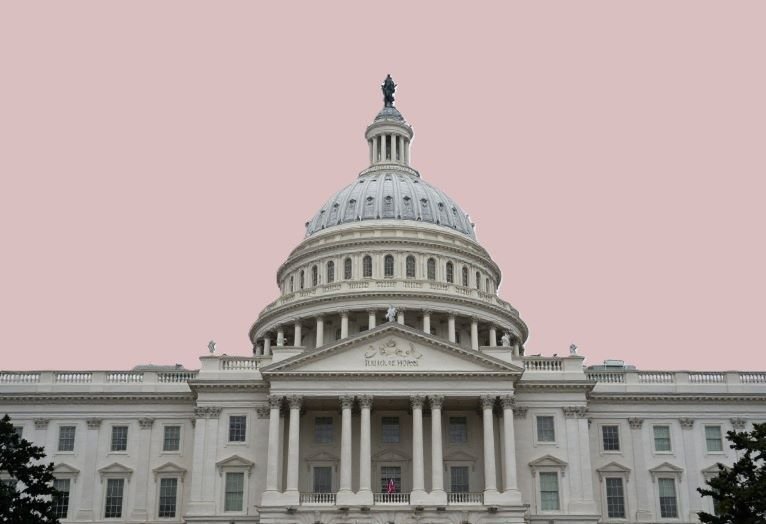
Iran deliberately arranged the unprecedented six-day funeral ceremony for the Rahbar to coincide with July 4, the day on which the United States marks its 250th anniversary. I regard this as the crowning achievement of what I see as Iran’s unequivocal victory over the United States in the information war and, ultimately, in the military conflict as well.
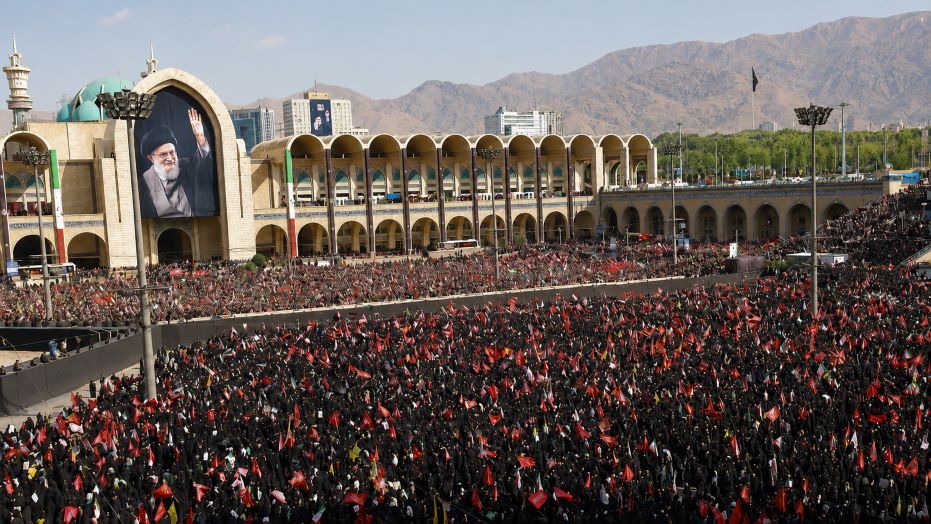
Today, while the United States celebrates its 250th birthday with spectacular festivities and unprecedented fireworks, Tehran is paying tribute to the mortal remains of Khamenei, accompanied by the small coffin containing the remains of his 14-month-old granddaughter. To me, this is an extraordinary demonstration of the condition of the United States, Iran, and the world in 2026.
Ali Khamenei has not simply died. His funeral has been orchestrated in such a way as to unite the entire Islamic world into one community, and it has been accomplished in a manner that inspires not merely respect but genuine awe. Ali Khamenei is regarded as a shahid—not someone who merely died, but a martyr, a victim of the enemies of Islam. To me, this represents a judgment upon the United States on the day of its 250th anniversary and an unprecedented overshadowing of its own national culture and democratic identity. Iran is showing the world what, in its view, the United States has done to humanity. This is one of the most literal and profound acts of symbolic revenge I have ever witnessed: representatives of more than one hundred countries and organizations gathered in Tehran, while none of them were in Washington. Ali Khamenei has avenged Iran against the United States.
Ayatollah Khamenei sacrificed himself, and that has long been known. He died fully aware of the consequences and without any desire to hide or flee. I believe this became one of the main reasons Iran prevailed in the war against Israel and the United States, because, morally, the Ayatollah planted the seeds of victory throughout his leadership of Iran, especially over the past twenty years, and ultimately through his sacrificial death on the very first day of the new war. In moral terms, he defeated the United States from the first day, and later it became clear that the strategy implemented on the battlefield proved successful, enabling him to preserve and protect Iran even through his own death.
Today, as his remains proceed through the ceremonial funeral procession in Iran, they intersect symbolically with the fate of the United States on the occasion of its 250th anniversary, and personally with Donald Trump, the man who killed Khamenei. An absolutely extraordinary and completely successful information and moral victory—words are simply not enough.
The Bulgarian state is the only one sending a parliamentary delegation to the funeral in Tehran—two representatives from the Vazrazhdane party. Other European delegations are attending only in religious or cultural capacities. No European state is officially represented there. This, too, paints a moral picture of the world we live in: its divisions, its polarization, and the opportunity for everyone to choose where they stand.
No celebration in the United States can erase the image of the large coffin of Iran’s head of state alongside the small coffin of the baby, both killed by what I regard as a treacherous strike carried out by the 250-year-old state. That is the reality. Every meal and every toast during America’s celebrations will, in my view, be accompanied by that image, and nothing can change it. Western countries may try to hide, deny reality, erase the news from Iran, insult Iran, or ignore it—but nothing can erase reality.
The United States—a country younger than a single family lineage in our own history, nearly 2,500 years younger than Iran, historically still in its infancy. It was founded under highly favorable and constructive circumstances but, over time, has distorted all the noble principles upon which it was established. As of today, I see the United States as a disgraced, criminal, and corrupt state that few trust and with which only a small number genuinely wish to associate. Many cooperate out of necessity; few do so willingly. How the country reached this point is its own responsibility and the subject of serious study.
The United States has an extraordinarily strong people who, despite every suffocating aspect of life that was presented as the great American Dream, continue to produce individuals of remarkable empathy, courage, determination, and compassion who strive to cleanse the shame brought by the political class. Yes, the American people have been subjected to an unprecedented system of conditioning and manipulation. Yet they still possess the capacity to overcome that damage.
Because this is a relatively young country, everything now depends on those people who still have the opportunity to change its course. Whether they will succeed remains another question. At present, on the occasion of its 250th anniversary, I believe the United States is experiencing economic, military, political, cultural, and civilizational decline, accompanied by a profound crisis of identity and national purpose, an unprecedented and unsustainable financial debt to both the world and itself, widespread social and health problems, and many other deep challenges.
The light of the Declaration of Independence has long since faded. The torch of the Statue of Liberty has faded as well. The purity of the ideals brought by the European settlers to North America has, in my view, been corrupted beyond recognition over these 250 years.
I wish for the United States to reconsider its path and to change the course that, in my opinion, has turned it toward evil, so that it may regain its life, dignity, honor, and the right to be called a great nation among the strong nations in humanity’s evolution. As things stand today, I see it as a subordinate of Israel, dishonorable and disgraced, a band of criminals and a shame before the world.
Finally, I return to Tehran to point out one more unprecedented development: the presence of all Islamic groups, states, movements, sects, organizations, and political forces gathered together in one place, united by Ayatollah Ali Khamenei. He accomplished something else as well—bringing Islam together, at least for six days, on the occasion of the 250th birthday of the United States.