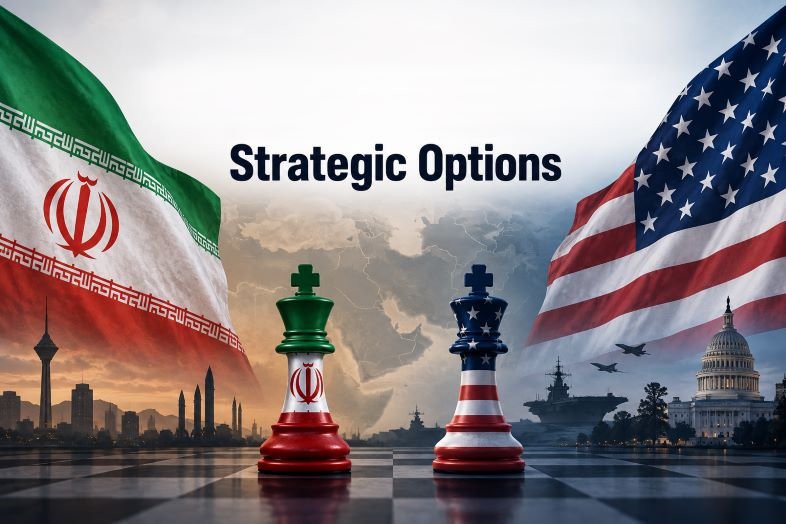
Under the tenets of a phased confrontation doctrine, Washington seeks to exploit the post-earthquake crisis to consolidate the position of strength it gained after the January aggression. The attempt to deploy amphibious and airborne task forces under the pretext of ensuring the flow of humanitarian aid is nothing more than a tactical maneuver to entrench a military presence that has already demonstrated its interventionist tendencies with the presidential kidnapping.
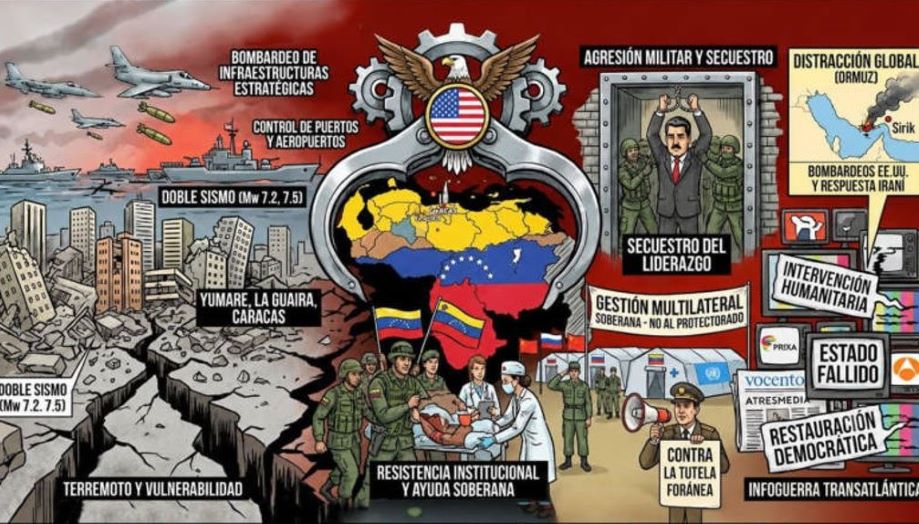
The direct military aggression carried out by the United States Southern Command on January 3, 2026, against the Bolivarian Republic of Venezuela—manifested in the systematic bombing of strategic infrastructure, mass killings, and the kidnapping of the constitutional and legitimate President, along with National Deputy Cilia Flores—marked an unprecedented turning point in global hybrid warfare. This assault, which flagrantly violates international law and the UN Charter, found a lethal external catalyst months later: the double earthquake that shook Venezuela on June 24, 2026. Two consecutive tremors of 7.2 and 7.5 Mw, with their epicenter in Yumare, and a devastating toll that particularly affected Greater Caracas and the state of La Guaira, immediately transcended the dimension of a natural disaster to become a vector for deepening the geopolitical aggression already underway.
In the rationale of contemporary imperialism, the state of social shock, the political decapitation of the state, and the material vulnerability of public infrastructure are not interpreted as a humanitarian emergency that must be mitigated, but rather as complementary cogs in the same window of opportunity. Under the tenets of a stepped-up doctrine of shock, Washington seeks to instrumentalize the post-earthquake crisis to consolidate the position of strength gained after the January aggression. The attempt to deploy amphibious and airborne task forces under the pretext of guaranteeing the flow of humanitarian aid is nothing more than the tactical device for entrenching a military presence that has already demonstrated its interventionist tendencies with the presidential kidnapping. The ultimate goal is to seize absolute control of ports and airports, activating the discursive mechanism of the Responsibility to Protect (R2P) to retroactively legitimize a de facto occupation.
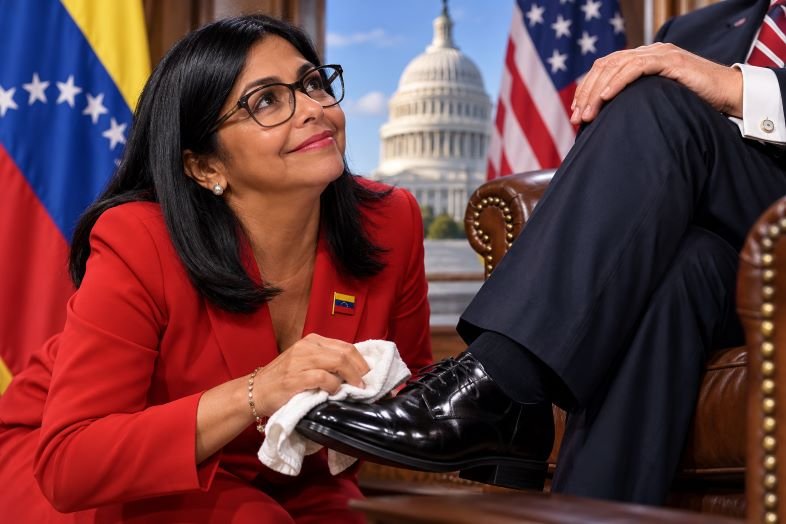
Faced with this attempt at foreign tutelage, the current Bolivarian leadership operates within a very narrow margin of action, constrained by the forced absence of its President and the material devastation of the territory. Far from the projections of surrender or immediate collapse fostered by the transatlantic narrative, the interim command and the General Staff of the Bolivarian National Armed Forces (FANB) are deploying an institutional resistance of containment. They are managing the emergency from a strictly sovereign multilateral perspective (Delcy Rodríguez announced the militarization of La Guaira and called on the population for solidarity and constant prayer in the face of the devastating earthquakes. She also thanked the rescuers sent by El Salvador, Mexico, the Dominican Republic, Switzerland, Ecuador, Spain, Chile, Colombia, the United States, Germany, the Netherlands, Italy, and the UN for their support), trying to prevent international aid from translating into the establishment of a protectorate.
By coordinating logistical bridges with allied powers—where China and Russia provide field hospitals and rescue contingents that are expressly subordinate to local command, acting as a real deterrent—and by rigidly channeling assistance from United Nations agencies, the Venezuelan state seeks to break the pretext of total abandonment. Cuba has expressed solidarity and contributed aid to Venezuela after the recent earthquakes, although primarily through its medical personnel already deployed in the country. This diversification of aid facilitates a survival maneuver to prevent Washington from imposing a logistical monopoly, maintaining the Venezuelan Armed Forces (FANB) in formal control of the territory and strategic entry points, albeit under extreme pressure that severely constrains their room for maneuver.
This resistance under siege coincides, with pinpoint precision, with an aggressive global diversionary maneuver. The recent and violent exchange of attacks between the United States and Iran in the Strait of Hormuz—American bombers on the shores of Sirik and the immediate response from the Iranian Revolutionary Guard—cannot be interpreted as an isolated regional dispute. From a rigorous analysis of the political economy of war, the deliberate reopening of the Middle East front by imperialism operates as a macro-strategic pressure and dispersal mechanism designed to shield its aggression in the Caribbean. By stoking a high-intensity conflict in one of the planet’s most sensitive energy arteries, Washington’s plan seeks to saturate international attention, fragment the multipolar bloc’s capacity for a coordinated response, and provoke a security dilemma that forces actors like China and Russia to divide their diplomatic and logistical efforts between the Persian Gulf and the Caribbean. The aim is to ensure a free hand to advance the offensive to control Venezuela, guarantee impunity in the kidnapping of the Head of State, and consolidate the assault on the largest hydrocarbon reserve on the planet.
It is in this scenario of intersecting fronts that the major media outlets based in Spain—financial conglomerates like Prisa, Vocento, Unidad Editorial, and Atresmedia—fulfill their objective function within the ideological superstructure of transnational capitalism. The transatlantic information war, completely subordinate to Washington’s directives and financed by the same investment funds that sustain the Western arms industry, carries out a three-pronged operation of cognitive manipulation. First, it normalizes the war crime: the bombing of January 3rd and the kidnapping of the President are obscured by euphemisms such as “democratic transition” or “restorative intervention,” silencing the violation of sovereignty. Second, it deliberately omits the cumulative impact of unilateral economic sanctions, presenting Venezuela’s precarious infrastructure in the face of the earthquake as an endogenous incompetence and concealing the financial blockade that for years prevented investment in prevention and public works. Finally, it isolates the Caribbean tragedy from the conflict in Hormuz through the media, fragmenting reality to prevent European public opinion from connecting the dots of the same global strategy of domination.
The ultimate material objective of this propaganda apparatus is to create the conditions for discursive legitimacy in accumulation by dispossession at a time of extreme vulnerability. This information warfare does not seek to inform about the seismic aftershocks in Yaracuy, the fate of the kidnapped President, or the reality of the bombings in the Persian Gulf; its purpose is to shape collective common sense, fabricate the category of “failed state,” and anesthetize international solidarity. By presenting the Venezuelan state as inherently incapable, ungoverned due to the forced absence of its leadership, and simultaneously disconnecting it from the global stage, the major Spanish media outlets operate as a vanguard detachment. Their mission is to legitimize, before their audience, the final assault on the strategic resources of the sovereign territory of the Venezuelan nation and the establishment of a neocolonialism of direct intervention in Latin America.